Last Updated: October 8, 2026
Best Pie Server for Baking Enthusiasts
The best pie server for baking enthusiasts is a medium-size stainless-steel server with a thin, slightly flexible triangular blade, a gently sharpened front edge, and a comfortable handle that keeps the utensil balanced over the slice.
That combination works across fruit pies, custard pies, cheesecake, and tender pastry crusts. However, the ideal design changes with your priorities: a sharp, rigid server is excellent for clean cuts through firm crust, while a thinner and more flexible blade is safer for delicate pastry and soft fillings.

Calphalon Edge Pie Server, Kitchen Cake Server, Baking Server Tool, Stainless Steel Pie Server with Serrated Edge, Cake and Dessert Cutter for Clean Slicing (Navy Blue)
Included for 'Best Pie Server for Baking Enthusiasts' because the listing specifies Kitchen Cake Server and Baking Server Tool, details this guide uses to compare options.
View on Amazon
Calphalon Prime Pie Server, Stainless Steel Cake & Dessert Server with Serrated Edge, Professional Baking Server Tool for Clean Slices, Weighted Handle for Control (Silver)
Included for 'Best Pie Server for Baking Enthusiasts' because the listing specifies Stainless Steel Cake & Dessert Server with Serrated Edge and Professional Baking Server Tool for Clean Slices, details this guide uses to compare options.
View on Amazon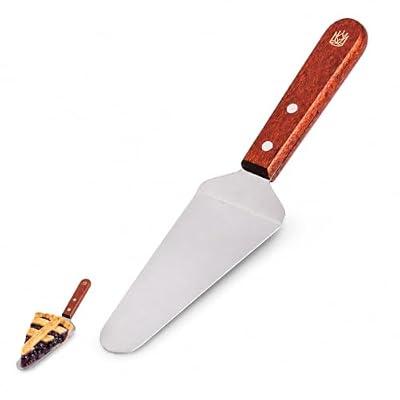
King Arthur Baking Company Offset Pie Server
Included for 'Best Pie Server for Baking Enthusiasts' as a relevant option in this category; details come from the product listing.
View on Amazon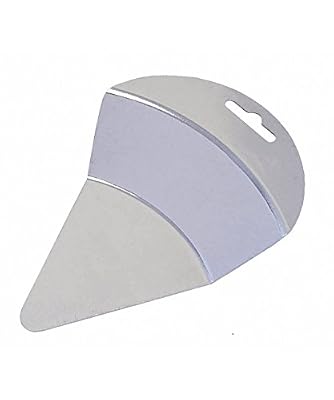
R&M First Slice Pie Spatula – 4.5" Radius Pie Server, Bake-In Pie Lifter for Easy First-Slice Serving
Included for 'Best Pie Server for Baking Enthusiasts' because the listing specifies 4.5" Radius Pie Server and Bake-In Pie Lifter for Easy First-Slice Serving, details this guide uses to compare options.
View on AmazonQuick Picks by Baking Situation
| Baking situation | Best server specification | Why it fits |
|---|---|---|
| Delicate, flaky crusts | Thin stainless-steel blade, 1.5–2 mm thick, lightly flexible | Slides beneath fragile pastry with less crumbling |
| Deep fruit pies | Blade at least 7.5 cm wide and 10 cm long | Supports a substantial slice and reduces tipping |
| Cheesecake and dense desserts | Rigid blade with a sharp leading edge | Cuts through compact filling without bending |
| Frequent dishwasher use | One-piece stainless steel or dishwasher-rated synthetic handle | Has fewer seams where water can collect |
| Older adults or limited hand strength | 18–22 cm total length, broad non-slip handle, balanced weight | Provides control without requiring a tight grip |
Blade Shape: The Most Important Decision
Most pie servers use a triangular or wedge-shaped blade. The triangle should be wide enough to support the slice but narrow enough at the point to enter the pie without crushing the edge. A practical all-purpose blade is approximately 7–8 cm wide at the back and 9–11 cm from point to handle.
A narrow blade is useful for small tarts and individual portions, but it may allow a large slice to sag in the middle. A very broad blade offers better support for deep-dish pies, although it can be awkward in a 23 cm pie plate, especially when only one or two slices remain.
Look for a server with a modest upward curve rather than a completely flat plate. A shallow curve helps retain juices and gives the slice more support during transfer. Excessive curvature, however, can make it difficult to slide the blade underneath a low, delicate crust.
Slotted or solid?
Slots allow some syrup to drain from fruit pies, which can help prevent a slice from sliding. They are less useful for dry crumb crusts, sponge-based desserts, and cheesecake. A solid blade provides continuous support and is usually the better choice for fragile pastry. If you often serve juicy berry or peach pie, two or three narrow slots can be a reasonable compromise.
Edge Sharpness and Delicate Crust Performance
A pie server does not need a knife-sharp edge, but the front edge should be thin and clean enough to separate the bottom crust from the pan. A blunt, thick edge tends to push the crust forward, causing the filling to split or the base to remain stuck to the plate.
The best edge is lightly sharpened rather than razor-like. A fine edge can cut through a flaky crust and release browned pastry, while an overly sharp edge may scratch ceramic bakeware or catch on a soft filling. Rounded side edges are preferable because they help the server pass beneath the slice without gouging the pan.
For delicate crusts, allow the pie to cool and use the server in two movements: cut around the portion with a knife, then slide the point under the slice and keep the blade nearly parallel to the dish. A flexible blade is helpful only up to a point. If it bends substantially under the weight of the slice, it will be harder to keep the portion level.
Handle Materials and Balance
| Handle material | Advantages | Trade-offs | Typical care |
|---|---|---|---|
| Stainless steel | Durable, hygienic, heat-resistant, often dishwasher safe | Can feel cold or slippery; may become hot near a warm dish | Dishwasher usually suitable if the construction is one-piece |
| Solid wood | Warm grip, attractive appearance, comfortable in the hand | Can split, stain, or loosen if repeatedly soaked | Hand-wash and dry promptly |
| Resin or nylon | Lightweight, colorful, often comfortable and affordable | May discolor, scratch, or soften near high heat | Follow the manufacturer’s dishwasher and heat limits |
| Silicone-covered handle | Good grip and useful for people with reduced hand strength | Can attract grease and may separate from the metal over time | Dishwasher suitability depends on the bonded construction |
Balance matters more than overall weight. Hold the server by its normal gripping area and imagine lifting a slice from the far side of a pie. If the blade immediately drops, the handle is too light or too short. If the handle pulls upward and the blade feels difficult to control, it is too heavy at the rear.
A total length of about 18–22 cm suits most home pie plates. A longer 23–26 cm model can reach across a deep dish but may be less comfortable for people with small hands. The handle should have a smooth transition into the metal with no sharp ridge or exposed seam.
Dishwasher Safety: What to Check
“Stainless steel” does not automatically mean that the entire pie server is dishwasher safe. Water can enter the joint between a metal blade and a wood, resin, or silicone handle. Repeated heat and detergent exposure may loosen the handle, dull decorative finishes, or create corrosion around hidden fasteners.
- Choose a one-piece stainless-steel design for the simplest cleaning routine.
- Check whether the handle material, not just the blade, is rated for dishwasher use.
- Avoid placing wood-handled servers in the dishwasher, even if the blade is stainless steel.
- Inspect rivets, welded joints, and handle seams for trapped food after washing.
- Dry carbon-steel or plated components promptly to reduce staining and rust.
For a dishwasher-safe server, avoid assuming that a nonstick coating is an advantage. Coatings can wear at the blade edge, particularly when the utensil is used against a metal pie plate. Bare, food-grade stainless steel is generally the more durable choice.
Which Design Should You Buy?
Best all-purpose choice
Select a solid stainless-steel triangular server with a 7–8 cm rear width, a 9–11 cm blade length, a moderately thin edge, and a handle that is comfortable without being oversized. This design handles standard fruit pies, cream pies, tarts, and cheesecake while remaining easy to clean.
Best for fragile pastry
Choose a slightly flexible blade with a smooth, solid surface and rounded side edges. The blade should flex only a little when pressed by hand. Avoid thick cast designs and aggressively serrated edges, which can tear a tender bottom crust rather than lifting it.
Best for deep-dish and heavily filled pies
Look for a rigid server with a broad blade and a gently raised profile. A blade around 2 mm thick offers more support than an ultra-thin model. A strong handle-to-blade connection is essential because deep slices put greater leverage on the joint.
Best for easy cleaning
A one-piece stainless-steel server is the safest choice. It may not have the warm appearance of wood, but it eliminates most handle seams and tolerates regular dishwasher cycles better than natural materials.
Buying Checklist
- Blade length: approximately 9–11 cm for standard pies.
- Blade width: approximately 7–8 cm for good slice support.
- Edge: thin and lightly sharpened, not serrated or razor-like.
- Shape: shallow curve or slight lift for holding filling and juices.
- Construction: welded or securely riveted joint with no wobble.
- Handle: comfortable grip, balanced weight, and no sharp seams.
- Cleaning: clear dishwasher guidance for the complete utensil.
- Pan protection: rounded edges if you use ceramic, glass, or nonstick bakeware.
For most baking enthusiasts, the strongest choice is a solid stainless-steel pie server with a moderately flexible, smooth triangular blade and a balanced handle. Add a sharper, more rigid version only if you regularly serve dense cheesecakes or deep pies. If delicate crusts are your priority, blade thickness, edge smoothness, and easy sliding matter more than decorative handles or extra weight.
Frequently Asked Questions
Can a pie server replace a knife?
Usually not. A pie server is designed to lift and support a slice. A separate knife is better for cutting through a firm top crust, separating portions, or slicing cheesecake cleanly.
Are serrated pie servers better?
They can help with very firm or crisp crusts, but serrations may drag through soft filling and can scratch bakeware. For varied home baking, a smooth, thin edge is more versatile.
Should a pie server be flexible?
A small amount of flexibility helps the blade slide beneath a fragile crust. Too much flex makes a large slice unstable, so the server should bend slightly rather than fold or twist under pressure.
Related Reviews & Guides

Best Gifts for Elderly Parents 2026

Best Gundam Model Kits for Every Skill Level