Last Updated: October 9, 2026
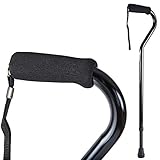
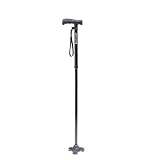
- Top Pick: Comfkey Folding Lightweight Walking Stick – Adjustable Aluminum Metal Collapsible Travel Cane with Non-Slip Rubber Base (Black)
- Best Value: HOW TO WALK WITH CANE: A Complete Step-by-Step Guide to Walking Safely, Improving Balance, and Regaining Confidence After Injury or Surgery
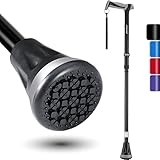
- Premium Choice: REHAND Walking Cane – Foldable, Adjustable, Collapsible Walking Canes for Men & Women, Heavy Duty All Terrain Tip, with Travel Bag | Walking Sticks for Seniors & Adults (Natural Black)
A well-chosen walking cane provides the difference between confident, independent mobility and constant fear of falling. With over a third of adults over 65 experiencing balance issues, the right cane isn’t a sign of decline — it’s a strategic tool that preserves independence, prevents injuries, and dramatically expands what you can comfortably do day-to-day. This guide explains how to choose the right cane for your needs, how to use it correctly, and what features genuinely matter versus marketing hype.
As an Amazon Associate we earn from qualifying purchases at no extra cost to you.




When You Actually Need a Cane
Many older adults resist using a cane far longer than they should, often because of misplaced concerns about appearance or admitting “weakness.” The truth: most serious falls in older adults happen before they start using mobility aids, not after. Common signs you’d benefit from a cane:
- Occasional unsteadiness or feeling “off-balance” when standing or walking
- Hip, knee, or back pain that affects walking distance or speed
- Recent illness, surgery, or hospitalization that reduced strength
- Reaching for walls, furniture, or other people for support indoors
- Avoiding activities you used to enjoy because of mobility concerns
- A history of falls in the past year
A cane used proactively prevents the kinds of falls that lead to hip fractures, hospitalizations, and the cascade of decline that follows. Speak with your doctor or a physical therapist about whether a cane fits your situation — many medical professionals now recommend canes long before mobility issues become serious.
Types of Walking Canes
Single-Point Canes
Standard single-point canes (also called single-tip or shaft canes) are the most common style. They support weight, provide stability cues, and reduce load on one leg. They come in fixed-height wood or adjustable aluminum/carbon fiber. Single-point canes work well for users who need light support and have generally good balance.

25 Miles Range Electric Wheelchairs for Adults - 500W All Terrain Power Wheelchair with 13'' Large Tires, 20'' Wider Seat Lightweight Foldable Mobility Motorized Wheelchair for Seniors, 400lb Capacity


As an Amazon Associate we earn from qualifying purchases. Product prices and availability are accurate as of the date/time indicated.
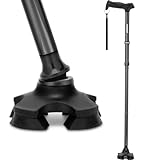
Quad Canes
Quad canes feature a four-pronged base that provides significantly more stability than single-point canes. They stand upright when released (useful when you need both hands), distribute weight across four contact points, and reduce the risk of cane slipping. Trade-off: they’re heavier and bulkier, and the wider base catches on edges and obstacles.
Quad canes come in two base sizes: narrow (5-6 inches) for smaller users or tight spaces, and wide (8-10 inches) for maximum stability. Choose narrow for indoor use and active lifestyles; wide for substantial weight-bearing support.
Folding and Travel Canes
Folding canes collapse to 12-15 inches for storage in purses, suitcases, or car consoles. They’re invaluable for users who need a cane intermittently — for instance, only when navigating uneven terrain or after walking long distances. Look for sturdy aluminum construction with secure locking mechanisms when extended.






As an Amazon Associate we earn from qualifying purchases. Product prices and availability are accurate as of the date/time indicated.
Offset Canes
Offset canes shift the weight-bearing point slightly forward of the cane shaft, distributing load directly down through the cane rather than partially horizontally. This design works well for users carrying significant weight on the cane (50+ pounds of body weight transferred). Offset canes typically have ergonomic grips and adjustable height.
Seat Canes
Seat canes convert into small folding chairs — useful for users who need frequent rest stops during outings. They’re popular for sporting events, gardening, museum visits, or anywhere lines and limited seating cause problems. Quality matters here — cheap seat canes feel unstable when sitting.
Sizing Your Cane Correctly
An improperly sized cane causes more problems than it solves. Too tall and you’ll hunch your shoulder; too short and you’ll lean forward into the cane. The classic sizing method works for nearly everyone:
- Stand upright in your normal shoes with arms relaxed at your sides
- Have someone measure from the floor to the bend (crease) of your wrist
- That measurement is your ideal cane height
When properly sized, your elbow should bend at approximately 15-20 degrees when holding the cane grip. Adjustable canes allow fine-tuning; fixed-height wooden canes need to be cut to size at home or by a professional.

REHAND Walking Cane - Foldable, Adjustable, Collapsible Walking Canes for Men & Women, Heavy Duty All Terrain Tip, with Travel Bag | Walking Sticks for Seniors & Adults (Natural Black)







As an Amazon Associate we earn from qualifying purchases. Product prices and availability are accurate as of the date/time indicated.
Choosing the Right Grip
Grip choice significantly affects comfort, especially for users with arthritis, weakness, or extended daily use:
- Crook (curved): Traditional shape, easy to hang on a chair back or coat rack. Comfortable for light use but can dig into the palm during extended weight-bearing.
- Derby: Slight curve with flat top section. The classic English style — comfortable for most users.
- Fritz: Closed handle with finger groove. Provides secure grip but limits hand position changes.
- Palm grip (ergonomic): Anatomically contoured to distribute pressure across the entire palm. Best for users with arthritis or who need maximum daily comfort.
- Foam or gel grips: Add-on or built-in cushioning for users with sensitive hands. Replace periodically as they compress over time.
Materials and Weight
Cane materials affect durability, weight, and aesthetic:
- Aluminum: Most common. Light (8-12 oz), strong, affordable, adjustable. Standard choice for everyday use.
- Carbon fiber: Extremely light (6-9 oz), strong, premium price. Worth the cost for users with shoulder or wrist issues that make heavier canes uncomfortable.
- Wood (hickory, oak, ash): Traditional and beautiful. Heavier (12-18 oz), not adjustable, but extremely durable. Custom-fit canes from quality wood last decades.
- Steel: Heaviest and strongest. Used in heavy-duty canes rated for users over 300 pounds.
Critical Safety Features
Don’t compromise on these features regardless of price:
- Quality rubber tip: Replace immediately when worn. Better tips have wide bases and tread patterns. Carbide-tipped winter tips prevent slips on ice and snow.
- Secure adjustment mechanism: Push-button height adjustments should click solidly into place. Avoid canes where height drifts during use.
- Wrist strap: Prevents accidental drops and allows hands-free transitions (opening doors, climbing stairs).
- Weight capacity rating: Match to user weight with at least 20% margin. Bariatric canes rated to 500 pounds are widely available.
Learning to Use Your Cane Correctly
Many users hold their cane incorrectly, which reduces its benefit and can cause shoulder and back pain. The basic technique:
- Hold the cane in your stronger hand, opposite your weaker leg. This counterintuitive approach allows your arm to swing naturally with your stride and provides stability when your weaker leg is bearing weight.
- Move the cane and weaker leg together in a single coordinated motion.
- Step through with your stronger leg while the cane and weak leg support your weight.
- Keep the cane close to your body, not extended far to the side.
For stairs, the rule is “up with the good, down with the bad” — leading with your stronger leg going up, leading with your weaker leg (and cane) going down. Practice on a few stairs with handrail support before navigating longer flights.
When to Move Beyond a Cane
Canes work well for users with mild to moderate balance and strength issues. Consider upgrading to a walker or rollator if you:
- Need bilateral upper-body support (both hands)
- Can no longer stand for long periods even with a cane
- Have advanced Parkinson’s, post-stroke deficits, or other conditions requiring more stability
- Find that a quad cane no longer feels secure enough
Many users transition between canes and rollators based on circumstances — using a cane for short outings and a rollator for longer activities. There’s no shame in using the right tool for the situation.
Related Guides
- Best Jitterbug Senior Cell Phone 2026
- Best Air Filled Wheelchair Cushion 2026
- Best Grab Bar for Beginners (2026)
- Best Large Button Phone For Seniors 2026
- Best Compression Socks For Oedema 2026
Frequently Asked Questions
How long should a walking cane last?
Quality aluminum canes last 5-10 years with proper care. Wooden canes can last decades. Replace the rubber tip every 6-12 months depending on use — worn tips are the leading cause of cane-related slips.
Which hand should I hold the cane in?
Hold it in the hand opposite your weaker leg. If your right knee is the problem, hold the cane in your left hand. This creates a natural walking pattern and provides support exactly when your weaker leg needs it.
Can I use a walking cane on stairs?
Yes, with proper technique. Use the handrail with one hand and the cane with the other. Going up, lead with your stronger leg. Going down, lead with the cane and weaker leg. Take one step at a time until you’re comfortable.
Are expensive canes worth it?
For occasional use, budget aluminum canes ($20-40) work fine. For daily use, mid-range canes ($50-100) with better grips, more durable construction, and proper sizing pay off in comfort. Premium canes ($100+) make sense for users with specific medical needs or those wanting carbon fiber’s lightness.
How do I prevent my cane from slipping?
Inspect the rubber tip monthly and replace when treads wear smooth. Avoid wet surfaces when possible. Consider ice tips for winter weather. Don’t let the cane shaft extend over puddles or oily surfaces.
Final Thoughts
The right walking cane isn’t an admission of limitation — it’s a tool that expands what you can confidently do. Whether you need light occasional support for uneven terrain or substantial daily stability, today’s market offers genuine solutions across every price point. Get sized correctly, choose a grip that fits your hand comfortably, and learn proper technique. Used consistently and confidently, a quality cane can preserve mobility and independence for years longer than going without. Your future self — the one taking walks, traveling, and staying active well into later decades — will thank you for the small investment now.
Related Reviews & Guides




6 Best Canes For Walking Stick 2026
6 Best Senior Medical Alert Bracelets 2026