Last Updated: October 22, 2026
The best ankle support shoes for men are stability walking or running shoes with a rigid heel counter, a wide base and a firm midsole, such as the Brooks Adrenaline GTS, the ASICS Gel-Kayano, the Hoka Arahi and the New Balance Fresh Foam X 860. For an older man with a history of sprains or wobbly balance, these control side-to-side motion better than a soft, flexible sneaker.
Men often wear the same worn-out shoes for years, and a collapsed midsole does little to protect a weak ankle. A fresh stability shoe, properly sized, is one of the simplest ways to reduce rolling and fatigue on daily walks.
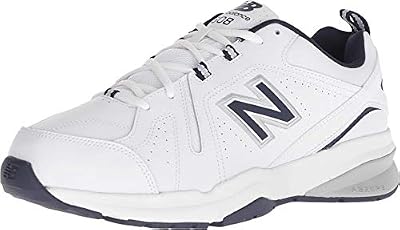
New Balance Men's 608 V5 Casual Comfort Cross Trainer
Included for 'Best Ankle Support Shoes for Men Over 60 in 2026' as a relevant option in this category; details come from the product listing.
View on Amazon
New Balance Fresh Foam Cremorne Mid CT - Men's - CT EH HR SR SF - Chocolate/Orange - 10D
Included for 'Best Ankle Support Shoes for Men Over 60 in 2026' because the listing specifies Men's and CT EH HR SR SF, details this guide uses to compare options.
View on AmazonWhat makes a shoe stable
Heel counter strength
Press the heel cup from both sides. If it folds in easily, the shoe will not hold your heel firmly. A stiff counter keeps the rear foot lined up with the ankle.
Midsole width and firmness
A midsole that flares outward at the heel gives more stability. Very tall, soft foam can feel unsteady, especially on uneven ground, so balance cushioning against stability.
Medial support
Stability shoes use a post, a guide rail or a frame to stop the arch from collapsing inward. Overpronation is common in men with flat feet or heavy builds.
Traction
Rubber outsoles with deep lugs or a patterned tread reduce slipping on wet pavement. This matters as much for fall prevention as the ankle design.
Weight limits and sizing
Stability shoes weigh roughly 10 to 12 ounces in men’s sizes. Heavier shoes feel sturdier, but too much weight tires stiff legs. Many models come in wide and extra-wide widths, which are worth using if you have swelling or bunions.
Models to look at
Brooks Adrenaline GTS: best all-around stability
GuideRails hold the knee and ankle in a tighter path. Offers several widths, including extra wide, and a cushioned ride.
ASICS Gel-Kayano: best premium support
A long-running stability line with a structured heel and cushioned midsole. A good pick for men who want strong arch and heel control and do not mind a higher price.
Hoka Arahi: best light and stable
A lighter shoe with a stabilizing frame and a wide base. Some find the tall sole less natural at first.
New Balance Fresh Foam X 860: best for flat feet and wide sizing
A firm medial post and a range of widths. Dependable for walking, errands and light exercise.
Brooks Addiction Walker: best for long walking days
A walking shoe with a firm, roomy build, popular with older men who spend hours on their feet.
Hoka Bondi: best for maximum cushioning
Soft and padded, although it is less corrective than the others. Better for cushioning than for controlling an unstable ankle.
How they compare
| Shoe | Support style | Approx. weight (men’s) | Widths | Best for | Price tier |
|---|---|---|---|---|---|
| Brooks Adrenaline GTS | GuideRails | About 10 to 11 oz | Standard to extra wide | Daily walking | Mid to upper mid |
| ASICS Gel-Kayano | Structured heel, stability | About 10 to 11 oz | Standard and wide | Strong arch control | Upper mid to premium |
| Hoka Arahi | Stability frame | About 9 to 10 oz | Standard and wide | Light support | Upper mid |
| New Balance Fresh Foam X 860 | Medial post | About 10 to 11 oz | Several widths | Flat feet | Mid-range |
| Brooks Addiction Walker | Firm walking base | About 12 to 13 oz | Several widths | All-day standing | Mid-range |
| Hoka Bondi | Max cushioning | About 10 to 11 oz | Standard and wide | Joint comfort | Upper mid |
Weights are rough ranges and vary by size and version, so confirm on the maker’s current spec page.
Match your shoe to your situation
| Situation | Priority | Direction |
|---|---|---|
| Old sprain, ankle rolls outward | Wide base, firm heel counter | Adrenaline GTS or Kayano |
| Flat feet or overpronation | Medial post | New Balance 860 |
| Swollen feet or bunions | Wide toe box, adjustable closure | Wide-size options, lace-up or strap |
| Standing most of the day | Firm, cushioned base | Addiction Walker |
| Heavy build | Firm midsole, durable outsole | Kayano or Adrenaline |
Practical care
- Replace shoes every 300 to 500 miles or about every year of regular walking.
- Rotate two pairs so the foam can recover between wears.
- Add a quality insole only if the shoe has removable factory liners.
- Tie laces snugly, and use a heel-lock lacing pattern if your heel slips.
- Check the outsole for uneven wear. A heel worn down on one side means your ankle tilts that way.
Frequently asked questions
Are high-tops better for ankle sprains?
Not necessarily. Studies show a good fit, a firm counter and a stable base matter more. If you have repeated sprains, a brace or physical therapy may help more than a tall shoe.
Should I buy a half size up?
Many men do, particularly in the afternoon when feet swell. Make sure the heel does not slide.
Can I wear these with custom orthotics?
Yes, if the factory insole is removable and there is enough depth. Bring the orthotic when you try shoes on.
Which one should you choose?
The Brooks Adrenaline GTS is the dependable first choice. The ASICS Gel-Kayano is the step-up for strong support, the Hoka Arahi is the lighter option, and the New Balance 860 suits flat feet and wide sizing. Try them in the afternoon, walk around on a hard floor, and keep the pair that holds your heel without rubbing.
Related Reviews & Guides




Strength Training for Seniors: A Safe At-Home Guide
7 Best Reacher Grabbers: Top Picks Reviewed and Compared (2026)