Our Short List of 3
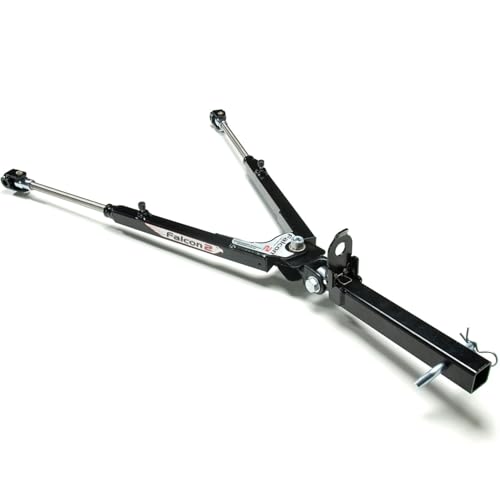
- Best for: fifth-wheel owners towing a compact car who want a bar that stows on the RV Watch out for: the 6,000-pound rating is the lowest here, so weigh a heavier dinghy before choosing it
- Specs:
- Tow rating: 6,000 lb
- Mounting: motorhome-mounted
- Storage: folds for storage on the motorhome

- Best for: solo hookups and heavier dinghies that need a self-aligning bar Watch out for: at 41 pounds it is the heaviest bar here, so handle it with care during hookup
- Specs:
- Tow rating: 6,500 lb
- Class: Class III
- Receiver: 2 inch

- Best for: heavier dinghies and night driving, with the highest rating and built-in lights Watch out for: Roadmaster recalled certain Nighthawk tow bars with serial numbers 15000 to 20843, so check the serial number and have an affected unit inspected before use
- Specs:
- Tow rating: 8,000 lb
- Arms: aluminium outer arms, solid stainless steel inner arms
- Lights: LED lights along the arms
All 3 Picks at a Glance
| Product | Specs | Action |
|---|---|---|
| Roadmaster Falcon 2 520 |
| Check price on Amazon |
| Blue Ox Alpha 2 BX7380 |
| Check price on Amazon |
| Roadmaster Nighthawk 676 |
| Check price on Amazon |
Last Updated: November 26, 2026
Flat towing a small car behind a fifth-wheel RV frees you from renting a car at every stop, but the tow bar is the single link between two heavy vehicles, so it must be rated for the job and easy to connect on a gravel pad. A good bar mounts to the motorhome, folds away for storage, aligns itself as you pull forward, and releases without a fight when you unhook — even on uneven ground.
This guide is for fifth-wheel owners who tow a dinghy behind their rig. It covers how to match the bar’s rating to the towed vehicle, what self-aligning arms and non-binding latches do, and which extras belong in the setup. All three were chosen from the names and specifications on their Amazon product pages, and the sections below explain how to pick the right one for your rig and your towed car.
Quick Picks
As an Amazon Associate we earn from qualifying purchases
| Product | Best for | Key spec from title |
|---|---|---|
| Roadmaster Falcon 2 520 | Motorhome-mounted simplicity | 6,000 lb motorhome-mounted bar |
| Blue Ox Alpha 2 BX7380 | Heavier dinghies, self-aligning | 6,500 lb self-aligning tow bar |
| Roadmaster Nighthawk 676 | Night towing with lit arms | 8,000 lb tow bar with LED lights |
How to Choose
Tow rating versus dinghy weight
The tow bar’s rating must exceed the weight of the vehicle you tow, with margin to spare. A 6,000-pound bar suits most small cars and crossovers, a 6,500-pound bar covers heavier crossovers and small SUVs, and an 8,000-pound bar handles larger SUVs and trucks. Weigh the dinghy as it will travel, with fuel, cargo, and accessories included. A bar that is barely rated for the load leaves no room for a rough road or a hard stop. When the dinghy’s weight sits close to a bar’s limit, step up to the next rating rather than trusting a borderline match. Weigh the dinghy with fuel and cargo, not empty.
Motorhome-mounted or vehicle-mounted
A motorhome-mounted bar, like the Falcon 2, stays on the RV when the dinghy is unhooked, which keeps the weight off the car’s front end and makes storage simple, since the bar folds and stows on the motorhome itself. A vehicle-mounted bar stays on the towed car instead, which keeps the RV clear but adds weight to the car’s front end. Motorhome mounting suits owners who unhook often at campgrounds, since the bar is out of the way and the car drives normally without extra hardware hanging off the front bumper. A bar on the motorhome keeps the towed car’s front end clear for normal driving.
Self-aligning arms and non-binding latches
Hooking up alone is much easier when the bar helps you. Self-aligning arms extend and lock as you pull the motorhome forward, so you do not need a spotter to line everything up. Non-binding latches release cleanly even when the vehicles sit at a slight angle or on uneven ground, which is exactly the situation at most campgrounds. Quick-disconnect pins and easy-release locking handles cut the time and the frustration of unhooking after a long drive. A three-axis swivel, like the one on the Alpha 2, keeps the bar level through turns and dips, so the arms do not bind when the road surface changes under the rig.
Safety cables, lights and braking
A tow bar is only part of the setup. Safety cables catch the dinghy if the bar ever fails, and the best kits include cables rated for the load — the Nighthawk and the Alpha 2 both ship with them. Lights on the tow bar, like the LED strips along the Nighthawk’s arms, make the rig visible at night. A supplemental braking system for the dinghy is a separate purchase, but many states require one, so check the rules for every state on your route before the first trip. Check the cables for fraying before every trip, and cross them under the bar so they cradle it if the connection ever fails.
The 3 Best Options
Roadmaster Falcon 2 520
- Best for: fifth-wheel owners towing a compact car who want a bar that stows on the RV Watch out for: the 6,000-pound rating is the lowest here, so weigh a heavier dinghy before choosing it
- Specs:
- Tow rating: 6,000 lb
- Mounting: motorhome-mounted
- Storage: folds for storage on the motorhome
fifth-wheel owners towing a compact car who want a bar that stows on the RV Watch out for: the 6,000-pound rating is the lowest here, so weigh a heavier dinghy before choosing it
the 6,000-pound rating is the lowest here, so weigh a heavier dinghy before choosing it
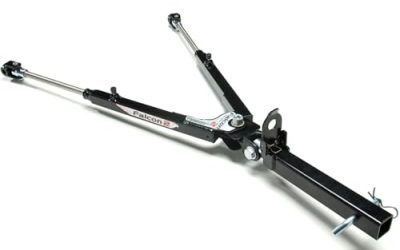
The Roadmaster Falcon 2 520 is the straightforward motorhome-mounted bar for fifth-wheel owners who want a simple, proven setup. It mounts to the motorhome, folds for storage on the RV when the dinghy is unhooked, and carries a 6,000-pound rating that covers most small cars and crossovers. At 38 pounds it is light enough to handle easily during hookup, and its folding design means it never has to ride in the bed or the basement. The Falcon 2 is the bar to pick when the towed vehicle is a compact car and the owner values a tidy, no-fuss rig. Hookup is a one-person job once the base plate is fitted.
Blue Ox Alpha 2 BX7380
- Best for: solo hookups and heavier dinghies that need a self-aligning bar Watch out for: at 41 pounds it is the heaviest bar here, so handle it with care during hookup
- Specs:
- Tow rating: 6,500 lb
- Class: Class III
- Receiver: 2 inch
solo hookups and heavier dinghies that need a self-aligning bar Watch out for: at 41 pounds it is the heaviest bar here, so handle it with care during hookup
at 41 pounds it is the heaviest bar here, so handle it with care during hookup
The Blue Ox Alpha 2 BX7380 is the self-aligning workhorse of the three, built for owners who hook up alone and tow something heavier than a compact car. Its 6,500-pound rating covers larger crossovers and small SUVs, the self-aligning arms extend and lock as you pull forward, and a three-axis swivel keeps the bar level through turns and dips. Auto-locking arms, quick-disconnect pins, and easy-release locking handles make unhooking simple, and the kit includes safety cables. Off-set triple lugs with rubber boots protect the connection points from road grime. The three-year warranty covers the bar for seasons of regular towing.
Roadmaster Nighthawk 676
- Best for: heavier dinghies and night driving, with the highest rating and built-in lights Watch out for: Roadmaster recalled certain Nighthawk tow bars with serial numbers 15000 to 20843, so check the serial number and have an affected unit inspected before use
- Specs:
- Tow rating: 8,000 lb
- Arms: aluminium outer arms, solid stainless steel inner arms
- Lights: LED lights along the arms
heavier dinghies and night driving, with the highest rating and built-in lights Watch out for: Roadmaster recalled certain Nighthawk tow bars with serial numbers 15000 to 20843, so check the serial number and have an affected unit inspected before use
Roadmaster recalled certain Nighthawk tow bars with serial numbers 15000 to 20843, so check the serial number and have an affected unit inspected before use
The Roadmaster Nighthawk 676 is the highest-rated bar here and the only one with lights built into the arms. Its 8,000-pound rating covers larger SUVs and trucks, aluminium outer arms and stainless steel inner arms keep the weight to 35 pounds, and LED lights run along the arms so the rig stays visible at night. Non-binding latches release cleanly on uneven ground, and the kit includes safety cables, a power cord, and a six-way socket. It is the bar for owners who tow heavy and drive after dark. Check the serial number against the recall range before the first trip, since affected units need an inspection first.
Which One Fits Your Situation
First-time flat towers behind a 5th-wheel RV
The Roadmaster Falcon 2 520 is the friendliest first bar, because it mounts to the motorhome, folds away for storage, and keeps the setup simple. Its 6,000-pound rating covers the compact cars most first-time towers choose, and the folding design means no extra hardware to store in the bed. Pair it with safety cables and a braking system before the first trip. Practice the hookup once at home.
Owners of heavier dinghies
The Blue Ox Alpha 2 BX7380 suits a heavier crossover or small SUV, with a 6,500-pound rating and self-aligning arms that make solo hookups easy. The three-axis swivel keeps the bar level through turns, and the included safety cables and quick-disconnect pins cover the details. Step up to the Nighthawk when the dinghy approaches 8,000 pounds. Check the receiver size on the motorhome before ordering, since the Alpha 2 needs a 2-inch receiver.
Night drivers who want lit arms
The Roadmaster Nighthawk 676 is the only bar here with LED lights along its arms, which makes the rig easier to see after dark and helps other drivers judge the length of the combination. Its 8,000-pound rating and non-binding latches suit long hauls, and the 35-pound weight keeps hookup manageable. Check the serial number against the recall range first. The LED lights also help when you unhook after dark.
Drivers who unhook every day
Owners who unhook daily at a new campground need a bar that folds and stows fast. The Falcon 2 folds onto the motorhome in seconds, and the Alpha 2’s quick-disconnect pins make removal a one-person job. Keep the pins and latches clean so they release smoothly after a dusty day on the road, and store the safety cables where they will not tangle. Keep the pins clean so they release smoothly.
Common Mistakes
- Towing a vehicle that weighs more than the bar’s rating, which leaves no margin for a hard stop, a rough stretch of road, or a sudden swerve
- Skipping the safety cables, which are the only backup if the bar ever fails and which most states require by law
- Forgetting a supplemental braking system, which many states require for a towed vehicle on your route
- Storing the bar loose in the truck bed, where it can slide around and get damaged on rough roads and wear the finish
- Ignoring the Nighthawk recall serial range instead of checking the number on the bar before towing and having an affected unit inspected
Frequently Asked Questions
What is flat towing behind a 5th wheel?
Flat towing means pulling a dinghy with all four wheels on the ground, connected to the RV by a tow bar. The dinghy’s transmission must be set up for towing, so check the owner’s manual before the first trip. The tow bar, safety cables, lights, and a braking system complete the setup.
Can any car be flat towed?
No. Only vehicles the maker approves for flat towing should be pulled this way, and the procedure varies by model — some need the transfer case in neutral, others need a fuse pulled or a specific gear selected. Towing a vehicle that is not approved can damage the transmission. Check the owner’s manual and the maker’s towing guide before buying a bar.
Do I need safety cables with a tow bar?
Yes. Safety cables are the backup that keeps the dinghy attached if the tow bar fails, and they are required by law in most states. The Alpha 2 and the Nighthawk both include safety cables in the kit. Cross the cables under the bar so they cradle it, and check them for wear before every trip.
How do I store a tow bar when unhooked?
A motorhome-mounted bar like the Falcon 2 folds and stows on the RV itself, which is the tidiest option. Other bars store in a basement compartment or a bag. Never leave a bar hanging off the front of the dinghy while driving it, and keep the pins and latches clean so they release smoothly next time.
Related Reviews & Guides


7 Best Air Compression Leg Massagers (November 2026)

Bath Safety Kits Buying Guide: What to Look For Before You Buy