Last Updated: November 19, 2026
- Watch: Best Electric Mobility Scooters for Seniors with Long Range — Video Review
- How to Choose
- The Best Picks Reviewed
- The Long-Range Picks Side by Side
- Fit and Home Checklist: Measure Before You Order
- Who Should Skip a Long-Range Scooter
- Common Buyer Mistakes
- More Questions Buyers Ask
- Frequently Asked Questions
- Final Thoughts
- Related Articles
- Related Guides
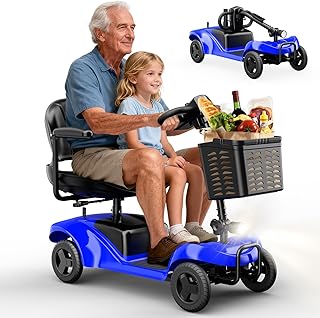
- Top Pick: Metro Mobility 4 Wheel Foldable Mobility Scooter for Adults – 300 lbs Capacity Electric Mobility Scooters for Seniors – Long Range Power Extended Battery with Thickened Seat and Front LED Light – Blue
- Best Value: 1000W Heavy Duty Mobility Scooter for Adults & Seniors, 500lbs Capacity & 25-34 Miles Long Range, 15.5 mph Max Speed, 4-Wheel Black All Terrain Electric Scooter with Lockable Trunk & 20° Hill Climb
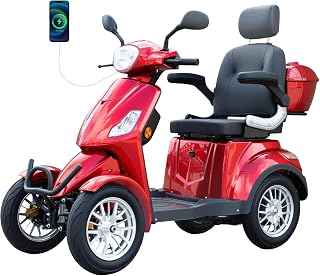
- Premium Choice: 45 Miles Long Range Heavy Duty 4 Wheel Mobility Scooter for Seniors & Adults, 500 lbs Capacity, Electric Powered Chair with 1000W Motor, Off-Road Shock Absorbers, All-Terrain Fast Travel (Red)
Range anxiety shouldn’t stand between you and a full day of errands, park visits, or family gatherings. For seniors who want to stay active and independent, choosing a mobility scooter with real long-range performance, a stable four-wheel base, and a weight capacity that matches your needs makes all the difference between a device that sits in the garage and one that becomes part of daily life.
We compared battery range, motor power, terrain handling, and comfort features across the top long-range models available in 2026 to help you find a scooter that keeps up with your lifestyle, whether that’s a quick trip to the mailbox or a 20-mile outdoor adventure.
As an Amazon Associate we earn from qualifying purchases at no extra cost to you.



⚡ Save on Your Next PC — Amazon Prime
Prime members get fast free shipping on the systems above, plus early access to Prime Day & Black Friday PC deals. New members get a 30-day free trial.
Watch: Best Electric Mobility Scooters for Seniors with Long Range — Video Review
How to Choose
- Battery Range: Match the stated mileage to your actual routine, and subtract roughly 20% for real-world use on hills, cold weather, or a heavier rider.
- Weight Capacity: Always choose a scooter rated comfortably above your body weight, including winter clothing or bags, for safer handling and longer battery life.
- Wheel Count & Terrain: Four-wheel designs offer better stability on grass, gravel, and uneven sidewalks, while three-wheel models turn tighter in narrow indoor spaces.
- Portability: If you plan to travel by car or store the scooter in a small space, look for foldable or quick-disassembly frames that fit in a trunk.
- Comfort Features: A thickened or rotating seat, adjustable armrests, and a front basket or lockable trunk make daily use noticeably easier on long outings.
The Best Picks Reviewed
Metro Mobility 4 Wheel Foldable Scooter
With a 300 lb weight capacity and an extended battery pack, this foldable four-wheeler is built for seniors who want long range without sacrificing portability. The thickened seat adds cushioning for extended rides, and the front LED light improves visibility for early morning or evening trips. It folds down for easier transport in a car trunk, making it a strong all-around pick for both errands and travel.
1000W Heavy Duty Scooter, 25-34 Mile Range
This all-terrain scooter is built for seniors who need serious capability. A 1000W motor drives a top speed of 15.5 mph and handles a 20° hill climb with ease, while the 25-34 mile range covers full days out without a recharge. The 500 lb capacity and lockable trunk make it a practical choice for larger riders or anyone who wants extra storage for groceries and personal items.
45 Mile Long Range Heavy Duty Scooter
For maximum range, this red four-wheel scooter leads the pack with up to 45 miles per charge, backed by a 1000W motor and off-road shock absorbers. The 500 lb capacity and reinforced suspension make it well suited to gravel paths, uneven yards, and longer outdoor excursions where charging stations aren’t nearby.
Rascal Conquest 4-Wheel Scooter
The Rascal Conquest pairs a trusted mobility brand with a long-range battery included right out of the box. Rated for 350 lbs, it’s built heavy-duty for outdoor use, with a stable four-wheel frame that handles curbs and uneven terrain confidently. It’s a solid choice for seniors who want dependable engineering from a well-established manufacturer.
20 Mile Lightweight Foldable Scooter
This lightweight all-terrain scooter offers a practical 20-mile range and a 6.2 mph top speed, striking a balance between everyday usability and easy folding for storage or travel. An LED headlight and front basket round out the practical features, making it a good fit for seniors who prioritize simplicity and easy handling over maximum power.
The Long-Range Picks Side by Side
Headline range is only one part of the decision. The table below lines up the key published figures for the main picks in this guide so the trade-offs are easier to see: the longest-range models are also the heaviest and widest, while the foldable picks give up distance and capacity in exchange for trunk-friendly size. Where a figure is not published for a model, confirm it on the listing before ordering rather than assuming it matches a similar-looking scooter.
| Model | Stated range | Weight capacity | Top speed | Folds or comes apart | Best fit |
|---|---|---|---|---|---|
| Metro Mobility 4 Wheel Foldable | Extended battery, figure varies by pack | 300 lb | Not stated in listing summary | Folds | Errands plus car travel |
| 1000W Heavy Duty, 25-34 Mile | 25 to 34 miles | 500 lb | 15.5 mph | No | Larger riders, all-terrain routes |
| 45 Mile Long Range Heavy Duty | Up to 45 miles | 500 lb | Not stated in listing summary | No | Maximum distance outdoors |
| Rascal Conquest 4-Wheel | Long-range battery included | 350 lb | Not stated in listing summary | No | Brand-backed outdoor use |
| 20 Mile Lightweight Foldable | 20 miles | Not stated in listing summary | 6.2 mph | Folds | Simple, lighter daily use |
Two patterns stand out. First, every step up in range adds battery weight, so a scooter that stays assembled at home can carry a much bigger pack than one that has to be lifted into a trunk every day. Second, top speed and stability pull in opposite directions: the fast heavy-duty models are built for open outdoor routes, while the slower foldable models are calmer in store aisles and crowded sidewalks.
Fit and Home Checklist: Measure Before You Order
A long-range scooter only helps if it fits the rider’s home, vehicle, and daily route. Work through these checks with a tape measure before choosing a model.
- Doorway width: Measure the narrowest doorway the scooter must pass through, including any door that does not open fully. Compare it with the scooter’s overall width at the armrests, which is usually its widest point.
- Turning radius: Large heavy-duty scooters need far more room to turn than compact travel models. Check the published turning radius against the tightest turn at home, often the hallway-to-bathroom turn, and against elevator depth if one is used daily.
- Ground clearance: Low clearance hangs up on tall thresholds, cracked sidewalks, and driveway lips. Outdoor routes with grass or gravel call for higher clearance and larger tires; smooth indoor floors do not.
- Storage spot: Pick the storage place first. A full-size long-range scooter needs a dry, level area with room to maneuver in and out, ideally close to an outlet so charging does not mean running a cord across a walkway.
- Transport and disassembly: If the scooter will ride in a car, check the weight of the heaviest single piece after it folds or comes apart, not just the total weight. The heaviest piece is what one person actually has to lift into the trunk.
- Battery charging: Some models charge only through the scooter itself, while others allow the battery pack to be removed and charged indoors. Removable packs suit apartments and homes where the scooter stays in a garage or vehicle. Most packs need an overnight charge after a long day, so plan the charging routine around the storage spot.
Who Should Skip a Long-Range Scooter
Long range is not the right priority for every rider. A smaller, lighter scooter is often the better tool in these situations:
- Mostly indoor use. If nearly all riding happens inside one home, a retirement community, or a single store, a compact scooter with a tighter turning radius is easier to live with than a large long-range frame.
- Frequent solo car loading. If the rider must lift the scooter into a vehicle alone every day, the heavy batteries that make long range possible become the main obstacle. A light folding or take-apart travel model fits better.
- Very short daily routes. A rider whose longest day is a trip to the mailbox and one store gains little from a 40-mile battery and pays for it in size, weight, and slower maneuvering.
- No suitable storage. Without a dry, level storage spot near an outlet, a full-size scooter quickly becomes a burden. Solve the storage question first, or choose a compact model that fits the space available.
Common Buyer Mistakes
- Planning around the headline range. Stated range assumes a lighter rider on flat, smooth ground. Hills, cold weather, cargo, and a heavier rider all shorten it, so choose a scooter whose stated range comfortably exceeds the longest regular day, with room to spare.
- Matching capacity too closely. Riding at or near the weight limit strains the motor and drains the battery faster. Leave a clear margin above the rider’s weight plus anything carried regularly.
- Ignoring the heaviest piece. Total weight hides the real lifting job. Always check the folded size and the weight of the largest section against the trunk opening and the strength of whoever will load it.
- Forgetting the route’s worst surface. One stretch of grass, gravel, or a steep driveway lip can decide whether a scooter works at all. Match tire size and ground clearance to the roughest surface on the regular route, not the smoothest.
- Skipping the return terms. Scooters are large, heavy items. Before ordering, confirm how returns are handled, what assembly is required on arrival, and how warranty service works in the buyer’s area.
More Questions Buyers Ask
How long does a full charge usually take?
Most mobility scooter batteries need an overnight charge to go from low to full, and larger long-range packs sit at the longer end of that range. Removable lithium packs on travel models often charge faster than the big sealed packs on heavy-duty scooters. The practical habit is simple: plug in after the last ride of the day so the scooter starts every morning full.
Can a long-range scooter be used indoors at all?
Yes, on the slower speed settings, but size is the limiting factor. Wide frames and large turning circles make tight kitchens, narrow hallways, and small elevators slow work. Riders who split time evenly between home and outdoors often do better with a mid-size model than with the largest long-range frame.
What maintenance does a long-range scooter need?
Routine care is mostly battery and tire care: keep the pack charged rather than storing it empty, check tire pressure on air-filled tires, keep the scooter dry, and follow the manufacturer’s schedule for battery replacement. Sealed batteries lose capacity gradually over the years, so a scooter that once covered a route easily may need a fresh pack rather than a full replacement.
Does insurance help with the cost?
Coverage rules vary widely and usually involve a prescription, documentation of medical need, and an approved supplier, and purchases made directly from a general retailer often fall outside those programs. Anyone hoping for coverage should confirm the requirements with their insurer before buying, not after.
Frequently Asked Questions
How far can a long-range mobility scooter actually travel on one charge?
Advertised ranges typically reflect ideal conditions on flat, smooth terrain with a moderate rider weight. In practice, expect 15-25% less range when climbing hills, riding in cold temperatures, or carrying additional cargo. A scooter rated for 30 miles will more realistically deliver 22-25 miles in everyday use.
What weight capacity should I choose?
Pick a scooter rated at least 50-75 lbs above your actual body weight. This buffer protects the motor and battery from strain, preserves your maximum range, and ensures the suspension performs as designed over bumps and inclines.
Are four-wheel scooters better than three-wheel models for seniors?
Four-wheel scooters generally offer more stability on grass, gravel, and uneven pavement, which makes them a safer choice for outdoor and all-terrain use. Three-wheel scooters are lighter and turn more tightly, so they can be preferable for navigating narrow indoor hallways or tight store aisles.
Do I need a permit or license to operate a mobility scooter?
In most areas, mobility scooters classified as medical devices do not require a driver’s license or permit. However, rules vary by state and country, especially for higher-speed models exceeding 8 mph, so it’s worth checking local regulations before riding on public roads or bike paths.
Final Thoughts
For most seniors seeking dependable long-range performance, the 1000W Heavy Duty Scooter with its 25-34 mile range and lockable trunk offers the best balance of power, storage, and comfort. Those who prioritize maximum distance should consider the 45 Mile Long Range model, while the Metro Mobility 4 Wheel Foldable Scooter remains an excellent choice for anyone who needs a lighter, more portable option without giving up extended battery life.
Related Reviews & Guides



7 Top Rated Adaptive Utensils for Seniors with Fine Motor Skill Challenges
8 Best Electric Scooters for Seniors with Weight Capacity