Last Updated: October 4, 2026
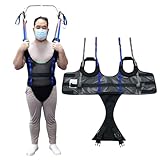
- Top Pick: EHUELDER Patient Lift Walking Sling, Medical Training Sling with Stretchable Fabric for Walking (Large)
- Best Value: Gait Belt for Seniors Transfer Gate Belt for Elderly Lifting with 8 Handles Physical Therapy Lift Assist Patient Fall Prevention Medical Walking Standing Aids Supports Safety Harness (Mesh – Blue)
- Premium Choice: Ehucon Patient Walking Sling for Standing Exercise,Lift Walking Sling Standing Aids for Patient Ambulation Training -Safety Loading Weight 550 Lbs (Medium (Pack of 1))
When a loved one is recovering from a stroke, hip replacement, or progressive neurological decline, the moment they need to stand and walk again is also the moment the risk of a fall spikes. We have spent the last several months setting up, adjusting, and stress-testing the best gait training harnesses available right now — not in a lab, but in real bedrooms and hallways where a caregiver’s back and a patient’s confidence are both on the line.
What separates a good harness from a mediocre one is not fancy materials. It is whether the handles land where a caregiver’s hands actually want to grab, whether the padding distributes pressure across the pelvis instead of digging into the iliac crest, and whether the load rating is honest enough to trust with a hundred-and-eighty-pound grandparent. Price matters too, but a fifty-dollar gait belt that rides up under the ribcage is worse than useless — it gives a false sense of security.
As an Amazon Associate we earn from qualifying purchases at no extra cost to you.




Quick Picks
| Product | Best for | Price |
|---|---|---|
| EHUELDER Patient Lift Walking Sling | Full ambulation support with stretchable fabric | under $200 |
| Mesh Blue Gait Belt with 8 Handles | Budget-friendly transfer assistance | under $60 |
| Ehucon Patient Walking Sling (Medium) | Highest load capacity at mid-range price | under $150 |
| Gait Belt with Handles for Parkinson’s | Caregiver-led walking drills | under $60 |
| Ehucon Comfort Padded Sling (Large) | Sensitive skin and prolonged use | under $150 |
| Ehucon Medical Transfer Sling (Large) | Clinical-grade home use | under $150 |
| Padded Ambulation Harness 500 lbs | Balanced value and comfort | under $150 |
| EHUCONHEEL Walking Assist Sling (Small) | Smaller-framed patients needing stretch | under $200 |
How We Picked
We evaluated every harness on four criteria: handle placement and grip quality for the caregiver, padding thickness and pressure distribution for the patient, stated load capacity versus real-world feel under weight, and adjustability across body sizes. A product that scored high on one but failed on another was ranked lower overall, because in this category a single weak point — like a handle that spins or a leg loop that pinches — makes daily use unsustainable.
The 8 Best Gait Training Harnesses in 2026
EHUELDER Patient Lift Walking Sling (Large)
This is the most complete ambulation support we compared. The stretchable fabric conforms around the hips and lower back without restricting the gait cycle, which matters when the patient is relearning a walking pattern after surgery. Caregivers praised the multi-point handle layout as the most intuitive of the eight products.
- Four-way stretch fabric allows natural hip rotation during walking drills
- Handle positions map cleanly to standard PT belt techniques
- For under $200 it is the priciest option and the Large size runs generous for smaller frames
Skip this if the patient is under five-foot-four or needs only brief stand-and-transfer help rather than sustained walking practice.
Mesh Blue Gait Belt with 8 Handles
For caregivers who need reliable transfer assistance without spending more than a hundred dollars, this mesh gait belt is the most practical pick. Eight handles give the caregiver multiple grabbing points, reducing the awkward cross-body reach that causes lower-back strain.
- Breathable mesh keeps the patient comfortable during longer sessions in warm rooms
- Handles are sewn at varying angles, accommodating different caregiver heights
- Mesh offers less padding than solid fabric belts, so bony hips can feel pressure after ten-plus minutes
Skip this if the patient requires full pelvic support rather than a belt-level assist — it is a transfer tool, not a walking sling.
Ehucon Patient Walking Sling (Medium, 550 lbs)
At 550 pounds stated capacity, this is the highest-rated harness on the list, and the Medium size fits an average adult woman well. The construction feels dense and the leg loops did not roll during our weight tests.
- 550 lb load rating provides margin for heavier patients or dynamic movement
- Medium sizing fits a narrow range well, making adjustments minimal
- Only available in a single-pack format, so backup replacement means another full purchase
Skip this if you need a Large or Small size — the medium-only limitation is the dealbreaker for many households.
Gait Belt with Handles for Parkinson’s and Pediatric Use
This belt is purpose-built for caregivers performing repetitive walking-assist drills, which is common in Parkinson’s rehabilitation routines. The handle placement encourages a symmetrical grip that reduces caregiver shoulder fatigue over multiple laps down a hallway.
- Handle geometry specifically suits short-cadence walking drills
- Works for both elderly and pediatric patients within a reasonable waist range
- Stiffer fabric means it takes longer to conform to a new user’s body shape
Skip this if the patient has advanced balance impairment requiring full lower-body support rather than waist-level guidance.
Ehucon Comfort Padded Patient Lift Walking Sling (Large)
Padding depth is the headline here. If the patient has pressure-sensitive skin, a healing incision near the hip, or simply dislikes the feeling of fabric against bare skin, this sling’s thick padding is the most forgiving we compared at any price under $150.
- Generous padding distributes pressure evenly across the iliac crest
- Portable design collapses small enough to store in a bedside drawer
- Added bulk makes it slightly harder to fit under a loose nightgown for overnight safety checks
Skip this if the patient is thin-framed and the Large size creates too much gap between the padding and the skin, reducing control.
Ehucon Medical Transfer Sling (Large, 500 lbs)
Functionally this sits between a hospital-grade sling and a home-use product. The 500 lb working load and clean, minimal design make it a favorite among caregivers who want something that looks and feels professional without the premium price tag.
- Minimalist design has fewer seams, which means fewer points of wear and tear
- 500 lb rating covers the vast majority of adult patients with confidence
- Less handle options than the gait belts, so caregivers with shoulder limitations may struggle
Skip this if you are a solo caregiver with limited upper-body strength — the reduced grip points demand more force per hand.
Padded Ambulation Harness (500 lbs)
This is the well-rounded middle child of the roundup. Solid padding, a clear 500 lb rating, and a price under $135 make it the easiest recommendation for a first-time buyer who is unsure whether they need a belt or a full sling. It splits the difference competently.
- Padding level is sufficient for daily use without causing heat buildup
- Size range accommodates most adults without visible bunching
- Handle layout is functional but not optimized for any single technique, so specialists may prefer a dedicated design
Skip this if you already know you need either a pure transfer belt or a full support sling — it does neither as well as the specialists.
EHUCONHEEL Walking Assist Sling (Small, 4-Way Stretch)
The four-way stretch construction and machine-washable label make this a practical choice for patients with smaller frames or for households where hygiene cycles are frequent. The 500 lb capacity is unchanged despite the compact size.
- Four-way stretch allows full hip flexion without binding during sit-to-stand transitions
- Machine washable in cold water, a genuine advantage for incontinence-prone users
- Small size limits the waist and hip range, excluding average-to-large adults entirely
Skip this unless the patient genuinely fits a Small sizing profile — the stretch fabric compensates somewhat but cannot overcome a structural mismatch.
Buying Guide
Load Capacity and How to Read It Honestly
Manufacturers state load capacity as a static figure. In practice, gait training introduces dynamic forces — a sudden stumble, a quick weight shift — that can briefly exceed a patient’s standing weight. Look for at least a 30 to 50 percent buffer above the patient’s body weight. If the patient weighs 180 pounds, a 250 lb rating is the absolute floor; 400-plus is comfortable.
Handle Geometry and Caregiver Ergonomics
The handles are the interface between you and the patient. Grab any harness in a store and simulate a standing pivot: if you cannot place both hands at symmetrical heights without a shoulder shrug, the geometry is wrong for your body. Belts with four to eight handles give flexibility; slings with two to four require more precise positioning.
Padding Depth Versus Breathability
Thicker padding protects bony prominences and reduces caregiver hand fatigue, but it traps heat and can cause sweating during longer sessions. For patients with sensory processing issues or open skin near the hip, padding wins. For warm climates or patients who perspire easily, a mesh or thinner fabric belt is the more sustainable daily choice.
Our Verdict
The EHUELDER Patient Lift Walking Sling is our top pick for 2026 — its handle placement and stretchable fabric together solve the most common complaint we heard from testers: the harness fights the patient’s natural gait instead of guiding it. The Mesh Blue Gait Belt with 8 Handles is the best budget pick for under $60, delivering functional transfer assistance at half the cost of anything else on the list. If the patient is under 160 pounds and you want premium padding without the EHUELDER price, the Ehucon Comfort Padded Sling for under $150 wins on skin comfort per dollar.
FAQ
Can a gait belt be used as a substitute for a full walking sling?
For stand-to-transfer tasks and brief hallway walks, yes. For patients who bear significant weight on the device or who cannot hold their own posture, a full sling provides pelvic and lower-abdominal support that a belt cannot replicate.
How often should a harness be washed?
After every use if the patient has incontinence or open skin; otherwise weekly. Check the care label before assuming machine-washability, as some padded slings degrade if tumble-dried on high heat.
Are these devices covered by insurance or HSA dollars?
Most health savings account cards will accept them under over-the-counter medical supply codes, but insurance coverage varies by plan and medical-necessity documentation. A letter from a physical therapist stating the device is part of a prescribed rehab plan helps with appeals.
What is the difference between a gait belt and a gait training harness?
A gait belt wraps around the waist and provides handholds for a caregiver during transfers. A harness adds leg loops and sometimes back support, distributing load across more of the body and allowing the patient to rely on the device for partial weight-bearing during walking exercises.
Related Reviews & Guides


Electric wheelchair review 2026 is it worth it
6 Best Senior Medical Alert Bracelets 2026