Last Updated: October 9, 2026
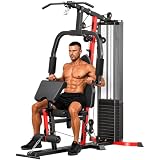
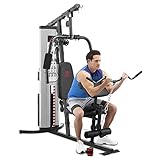
- Top Pick: Home Gym System with 160LB Weight Stack, Multifunctional All-in-One Workout Station, Full Body Strength Training System
- Best Value: GOIMU LS01 LAT Pulldown Machine, LAT Row Cable Machine with AB Crunch, LAT Tower with Cable Row Attachment, 3 in 1 Pulley Stations for Home Gym(Black)
- Premium Choice: Home Gym System with 122.5 lbs Weight Stack, All-in-One Full Body Workout Machine with Pulley System & Leg Press, Heavy Duty Strength Training Equipment for Home Gym, Garage & Apartment
A buyer searching for the best gym weight machines is usually solving one specific problem: fitting meaningful strength work into a garage, apartment, or spare room without spending commercial-gym money or dedicating an entire floor to equipment. The machines on this list range from under $200 to just under $500, and that spread matters more than brand names. A $199 lat-pulldown station and a $499 steel-frame system both pull cable and both build muscle, but they solve different problems for different people.
What separates a worthwhile purchase from a regrettable one comes down to three things: whether the weight stack matches your actual strength level, whether the station covers enough movement patterns to justify the footprint, and whether the frame feels stable under load. Owner feedback on budget units frequently mentions wobble during heavy rows or pulldowns, while mid-range all-in-ones draw praise for smooth cable routing but criticism for awkward seat adjustments. Understanding those trade-offs before you buy is the entire point of this comparison.
As an Amazon Associate we earn from qualifying purchases at no extra cost to you.



Quick Picks
| Product | Best For | Price |
|---|---|---|
| 160LB All-in-One System | Full-body versatility at mid-range | under $400 |
| GOIMU LS01 | Budget lat work and core | under $200 |
| 122.5lb Pulley & Leg Press | Apartment or garage living | under $400 |
| JEEKEE 150LB Station | Space-saving design | under $450 |
| 160lb All-in-One Machine | Heaviest stack per dollar | under $350 |
| Garvee 100LB System | Entry-level home training | under $300 |
| Marcy MWM-988 | Build quality and durability | under $500 |
| 100LB LAT Pulldown Station | Back-focused routines | under $350 |
How We Picked
We compared published specifications, listed prices, and recurring themes in owner reviews across all eight products. The criteria that carried the most weight were stack size relative to typical user strength, the number of distinct exercise patterns a station covers, frame material and stability at the stated load, and the adjustment range of the seat and back pad. Price-to-feature ratio served as a tiebreaker when two units matched on every other dimension.
The 8 Best Gym Weight Machines in 2026
1. 160LB All-in-One System
This unit targets anyone who wants a single station handling chest, back, legs, and shoulders without a second purchase. The 160-pound stack is the largest on this list alongside the fifth option, which means progression room for years. Owners consistently praise the cable routing for smooth transitions between exercises. The trade-off is footprint: it demands a dedicated corner or garage space that smaller units do not.
- Pro: 160lb stack provides the widest resistance range in the group.
- Pro: Covers pressing, pulling, leg extension, and fly movements in one station.
- Con: Large frame requires a permanent setup spot.
Skip it if you live in a small apartment and cannot commit more than a few square feet to equipment.
2. GOIMU LS01
For under $200, this is the most affordable entry on the list and the only dedicated lat-focused tower. It combines a pulldown, cable row, and ab crunch attachment in a single vertical frame. For a buyer whose priority is upper-back and core work without spending on a full multi-station, the value proposition is hard to ignore. The limitation is obvious: there is no leg press, no chest press, and no fly arm. You are buying a specialized tool, not an all-in-one.
- Pro: Lowest price by a wide margin, ideal as a starting point.
- Pro: Three distinct pull and crunch patterns in a compact vertical footprint.
- Con: No pressing or leg movements, so it cannot serve as your sole machine.
Skip it if you need full-body coverage from one purchase.
3. 122.5lb Pulley & Leg Press System
This machine fills a practical niche: buyers in apartments or shared garages who need a real leg press without a dedicated bench station. The 122.5-pound stack is moderate, which keeps the overall weight of the unit lower and makes moving it between rooms feasible. The pulley system adds pulling variety. Owners report the seat adjustment is functional but not quick to change, a minor friction point when supersetting.
- Pro: Includes a leg press, rare at this price tier.
- Pro: Lighter overall build suits multi-room setups.
- Con: Seat adjustments take longer than on pricier all-in-ones.
Skip it if you train legs heavily and need more than 122.5 pounds of resistance.
4. JEEKEE 150LB Station
The JEEKEE targets the space-conscious buyer who refuses to compromise on exercise variety. Its 150-pound stack handles chest press, lat pulldown, and leg extension, and the frame geometry is designed to reduce the width it consumes against a wall. Owners highlight the compact footprint as the main draw. The criticism that surfaces repeatedly concerns the leg-extension pad comfort during higher rep ranges, suggesting a thinner foam layer than ideal.
- Pro: Three primary movement patterns in a width-optimized frame.
- Pro: 150lb stack supports serious progression without a separate weight purchase.
- Con: Leg extension pad is thin and uncomfortable at volume.
Skip it if your legs are your priority and you train them often.
5. 160lb All-in-One Machine
Matching the first unit in stack weight at a lower price, this option appeals to value-driven buyers who want maximum resistance per dollar. It covers pressing, pulling, and leg work in a single station. The published specs mirror the more expensive competitors, but owners note the frame flexes slightly more under maximal loads, a difference you feel at the top of a pulldown rep. It remains the best raw-dollar stack figure on the list.
- Pro: 160lb stack at the second-lowest price among heavy-stack units.
- Pro: True all-in-one layout covering upper and lower body.
- Con: Noticeable frame flex at the heaviest settings.
Skip it if you frequently train near your stack limit and want zero flex.
6. Garvee 100LB System
This is the machine for someone new to structured resistance training at home. A 100-pound stack is sufficient for most beginners across every pattern it supports, and the multifunctional layout keeps a new lifter from guessing which attachment to use. Owners who bought it as a first gym machine report satisfaction with the learning curve. Advanced lifters outgrow it quickly, often within the first year of consistent use.
- Pro: Approachable stack size reduces intimidation for new lifters.
- Pro: Multiple stations in one unit simplify a full-body session.
- Con: 100lb ceiling limits progression for stronger users.
Skip it if you already press or row more than 100 pounds.
7. Marcy MWM-988
The Marcy is the premium pick here, and its steel construction justifies the under-$500 price for buyers who want a machine that outlasts cheaper welded-tube alternatives. The 150-pound stack sits in the middle of the range, but the frame rigidity is what owners cite most. Cable and pulley quality is a step above the budget units, producing a smoother feel through the full range of motion. The downside is assembly complexity and a large footprint that demands a dedicated room.
- Pro: Steel frame offers the most rigid, long-lasting construction on the list.
- Pro: Smooth cable travel at the stated 150lb maximum.
- Con: Assembly is involved and the footprint is large.
Skip it if you rent a small space or want minimal setup effort.
8. 100LB LAT Pulldown Station
Positioned as a full-body machine in its listing, this unit is in practice back-dominant, with the lat pulldown as its primary attraction. The 100-pound stack keeps the frame compact and the price reasonable for under $350. Owners who use it for pulling movements report solid performance, while those expecting balanced chest or leg work express disappointment. It is a specialist disguised as a generalist.
- Pro: Strong lat pulldown action for its price bracket.
- Pro: Compact frame fits tight spaces better than full all-in-ones.
- Con: Secondary exercises feel like afterthoughts rather than equal stations.
Skip it if you want balanced upper-body development from one machine.
Buying Guide
Match the Stack to Your Current Level
A 100-pound stack is adequate for beginners pressing, rowing, and extending legs, but it becomes a ceiling within months for anyone who trains consistently past a year. If you already deadlift or row over 100 pounds, a 150 or 160-pound unit is the smarter buy now rather than a replacement in eighteen months. The difference in price between a 100lb and 160lb stack on this list is roughly $100 to $140, far less than buying twice.
Count the Movement Patterns, Not the Features
Marketing lists twenty exercises, but what matters is how many distinct patterns the station covers: horizontal press, vertical pull, horizontal row, leg extension, and fly. A unit that handles all five lets you train every major group without improvising. If a machine covers three patterns, you will need a second purchase sooner than expected.
Frame Material Determines Longevity
Welded steel tube is the baseline at this price range, but wall thickness and joint quality vary. Owner reviews on budget units flag wobble and creaking within the first few months. Steel-framed designs like the Marcy resist that degradation. If you plan to keep the machine beyond two years, frame rigidity at full load should outweigh a lower sticker price.
Our Verdict
The top pick is the Marcy MWM-988. Its steel construction, smooth cable system, and 150-pound stack make it the safest long-term investment, and the premium is roughly $100 over comparable machines. The budget pick is the GOIMU LS01 for under $200, which delivers three useful pulling and core patterns in a tiny footprint for less than half of most alternatives. The one condition under which another product wins outright is if your apartment cannot spare the floor space for a full station: in that case, the JEEKEE 150LB for under $450 is the best compromise between coverage and compactness.
FAQ
Can a home weight machine replace a commercial gym?
For general strength and hypertrophy goals, yes, provided the stack size covers your working loads. You lose barbell free-weight patterns and the variety of machines found in a full commercial facility, but a well-chosen multi-station handles the majority of training needs for most home users.
How much clearance do these machines need?
Most units on this list require roughly six feet of depth and three to four feet of width, plus two to three feet of clearance behind and above for cable travel and leg movement. Measure your space against the published dimensions before purchasing, especially for all-in-one stations with extended arm levers.
Are 100-pound stacks enough for beginners?
Yes, for the first year of consistent training. A novice pressing overhead or leg-extending rarely needs more than 60 to 80 pounds initially. The limitation arrives when pulling or leg work approaches the ceiling, so beginners who expect rapid progress may prefer a 150-pound unit to avoid an early replacement.
Do these machines work for seniors or rehabilitation?
Weight-stack machines are often recommended for older adults because the pin-loaded design offers predictable resistance without the balance demands of free weights. Low stack options like the Garvee 100LB provide gentle loading suitable for joint-friendly work, though anyone recovering from injury should confirm exercises with a physical therapist first.
Related Reviews & Guides





Best Selling Sewing Machines in 2026: Top Picks for Every Budget

Best Ratings on Dryers in 2026: Buying Guide