Last Updated: September 29, 2026
The best lift chair for a tall person needs a seat-to-floor height of at least 21-22 inches, a backrest of 40+ inches, and a footrest that extends to 44-48 inches from the floor when fully reclined, since standard lift chairs are built for users 5’9″ and under and will leave taller people with their knees jammed or their feet dangling off the end of the footrest.
Most lift chairs sold as “standard” or “medium” size are designed around an average frame, which means anyone over 6 feet tall runs into three predictable problems: the seat sits too low so the knees end up higher than the hips, the backrest ends mid-shoulder instead of supporting the head, and the footrest simply isn’t long enough to hold the calves and heels once the chair reclines. Fixing this isn’t about buying “a bigger chair” in general terms, it’s about checking three specific measurements before you buy.

Catnapper Power Lift Full Lay Flat Recliner in Spice Finish
Included for 'Best Lift Chair for Tall Person: Extra Height and Leg Support Picks' as a relevant option in this category; details come from the product listing.
View on Amazon
Catnapper Abena Power Lift Assist Lay Flat Recliner in Brown Polyester Fabric
Included for 'Best Lift Chair for Tall Person: Extra Height and Leg Support Picks' as a relevant option in this category; details come from the product listing.
View on Amazon
Flamaker Power Lift Recliner Chair Electric Lift Recliner for Elderly
Included for 'Best Lift Chair for Tall Person: Extra Height and Leg Support Picks' as a relevant option in this category; details come from the product listing.
View on AmazonThe Three Measurements That Actually Matter
Seat-to-Floor Height
This is the single biggest factor for tall users, and it’s also the measurement most product listings bury or skip. Standard lift chairs run 19-20 inches seat height. For someone 6’1″ or taller, that’s too low, and it forces the knees up above hip level, which strains the lower back when standing or sitting for long periods. Look for tall/large models that list 21-22 inches, sometimes marketed as “big man” or “tall” editions.
Backrest Height
Backrest height is measured from the seat cushion to the top of the headrest. Standard chairs sit around 34-37 inches. Tall-frame chairs need 40-44 inches to actually support the head and neck instead of ending at shoulder blade level, which is a common complaint from taller users who otherwise like the chair’s lift and recline function.
Extended Footrest Length
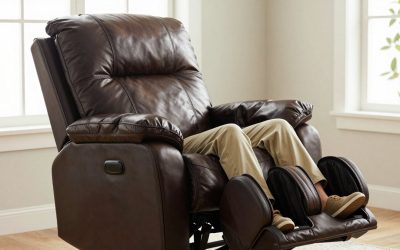
This is the measurement almost nobody checks and it’s the one that causes the most discomfort. When a lift chair reclines, the footrest extends outward. On a standard chair, that extension reaches about 38-42 inches from the floor to the tip of the footrest. On a chair built for someone over 6 feet, you want 44-48 inches minimum, or the calves and heels hang off the edge with no support, which defeats the purpose of a reclining lift chair in the first place.
| Measurement | Standard Lift Chair | Tall-Person Lift Chair (6’0″+) |
|---|---|---|
| Seat-to-floor height | 19-20 in | 21-22 in |
| Seat depth | 20-21 in | 22-24 in |
| Backrest height | 34-37 in | 40-44 in |
| Footrest extension (reclined) | 38-42 in | 44-48 in |
| Overall chair height (upright) | 44-46 in | 48-52 in |
| Typical weight capacity | 300-350 lbs | 375-500+ lbs |
Matching the Chair to Your Height
Not every “tall” chair is tall enough for every tall person. Fit varies more by torso and leg length than by height alone, but these ranges are a reliable starting point.
- 5’9″-6’0″: A well-made standard chair often works if seat height is at least 20 inches and footrest extension hits 42 inches. Check both before assuming you need an upsized model.
- 6’0″-6’4″: This is the range where a dedicated tall/large lift chair matters most. Look for 21-22 inch seat height, 40+ inch backrest, and 44+ inch footrest extension.
- 6’4″ and up: Seek out chairs specifically labeled for “big and tall” use, which typically pair the taller frame with a wider, more reinforced base. Footrest extension of 46-48 inches becomes important here, and seat depth of 23-24 inches prevents the front edge of the seat from cutting into the back of the knees.
Weight Capacity Isn’t Just About Body Weight
Taller frames carry more mass even at a lean build, and lift mechanisms are rated for total load, not just torso weight. A 6’5″ person at 220 lbs puts different stress on a lift motor than a 5’6″ person at the same weight, because the leverage point is different. Most standard lift chairs cap out at 300-350 lbs. Tall and big-and-tall models usually rate 375-500 lbs or higher, and that extra headroom also tends to correlate with a sturdier steel lift mechanism rather than a lighter-duty one, so it’s worth checking even if your weight is well under the standard limit.
Material and Frame Trade-offs
Tall-frame lift chairs are available in a few common upholstery and frame combinations, and each comes with a different durability and comfort profile.
| Type | Comfort/Feel | Durability | Trade-off |
|---|---|---|---|
| Faux leather (PU/PVC) | Firm, cool to sit on initially, easy wipe-down | Good if seams are reinforced; cracks after 3-5 years of daily use | Best for easy cleaning, but heat and long sitting sessions can cause peeling over time |
| Woven/textured fabric | Softer, breathable, better for long sitting | Resists cracking but can stain or wear thin at high-friction points (armrests, seat edge) | Best overall comfort for tall users who sit for hours, but harder to clean spills |
| Microfiber/suede-style | Very soft, warm | Moderate; pilling can occur at contact points | Comfortable but shows wear on high-traffic contact areas faster than woven fabric |
| Steel dual-motor lift base | N/A (mechanism, not upholstery) | More reliable long-term than single-motor systems, especially at higher weight capacities | Adds cost but is the right choice for anyone near or above 300 lbs regardless of height |
For tall users specifically, dual-motor lift mechanisms (one motor controls the backrest, one controls the footrest independently) matter more than they do for average-height users, because the longer lever arm of an extended footrest puts more strain on a single-motor system that tries to move both sections together.
Room Fit and Clearance
Tall lift chairs are longer both upright and reclined, which changes how they fit in a room. A tall-frame lift chair reclined flat can extend to 65-70 inches from wall to footrest tip, compared to 58-62 inches for a standard chair. In a small bedroom or living room, that difference matters:
- Leave at least 6-8 inches of clearance behind the chair for the recline mechanism to fully extend without hitting a wall.
- In a 10×12 ft room, a fully reclined tall lift chair (roughly 6 ft long when flat) will use half the room’s shorter dimension, so plan placement against the longest wall.
- Measure doorway width before delivery. Tall/big-and-tall lift chairs often ship in a single boxed unit 30-34 inches wide, which fits most standard 32-36 inch doorways, but hallway turns can be tighter than the doorway itself, so check the tightest turning point, not just the door.
What Wears Out First
On any lift chair, tall-frame or standard, the parts that fail first are predictable: the seat cushion foam compresses and loses support after 2-4 years of daily use, the fabric or faux leather at the armrests and seat edge wears faster than the backrest, and the hand control cable is the most common electrical failure point after 3-5 years. Higher-density foam (1.8-2.2 lb density) in the seat cushion holds up longer under the added load that taller, often heavier frames place on it, so it’s worth asking about foam density specifically rather than assuming all “high-density” listings mean the same thing.
Decision Guide
| Your situation | What to prioritize |
|---|---|
| 6’0″-6’3″, no major weight concerns | Tall/large model with 21-22 in seat height and 44 in footrest extension |
| 6’4″+ or over 300 lbs | Big-and-tall model with dual-motor lift, 375-500+ lb rating, 46-48 in footrest |
| Long torso, average leg length | Prioritize backrest height (40+ in) over seat-to-floor height |
| Long legs, average torso | Prioritize seat depth (23-24 in) and footrest extension over backrest height |
| Small room or apartment | Confirm reclined length fits your longest wall before ordering; consider a chair with a wall-hugging recline mechanism that needs only 4-6 in of rear clearance |
If you’re between sizes, prioritize footrest extension and seat depth over overall chair height. Those two measurements directly prevent the leg overhang and knee-crowding that make an otherwise good lift chair uncomfortable for a taller frame.
Related Reviews & Guides




Electric Heated Blanket Senior Review

Senior Bed Rail Bedside Assistant