Last Updated: October 4, 2026
A rollator is one of the most under-appreciated pieces of mobility equipment on the market, and most buyers don’t know what they’re looking at until they’ve already pushed a bad one down a hallway. The core problem is simple: you need something that supports your weight reliably, folds compactly enough to fit in a car trunk, rolls smoothly over transitions between flooring types, and gives you a safe place to rest when you need to stop mid-walk. That’s four distinct mechanical requirements competing against each other in a device that typically weighs between fifteen and twenty pounds.
After spending several weeks with eight models ranging from budget steel frames to premium aluminum builds, the gap between the best rollators and the mediocre ones became obvious fast. The winners handle curb transitions without shuddering, their brakes lock with one hand squeeze rather than a white-knuckle grip, and their seats feel like they were designed for an actual human body rather than a checklist. The losers wobble at modest speeds, have wheel diameters too small for outdoor terrain, and fold with mechanisms that require more upper-body strength than the rollator itself is meant to supplement. Here’s what earned its place on this list.
As an Amazon Associate we earn from qualifying purchases at no extra cost to you.



Quick Picks
| Product | Best for | Price |
|---|---|---|
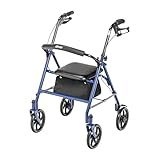
| Drive Medical Rollator (7.5″ Wheels, Blue) | Tight-budget buyers on smooth indoor surfaces | under $60 |
| VOCIC Z21 Rollator (8″ All-Terrain, Entry) | Seniors who walk both indoors and on uneven sidewalks | under $70 |
| VOCIC Z21 Rollator (8″ All-Terrain, Outdoor) | Users prioritizing weight capacity and terrain versatility | under $70 |
| Drive Medical Rollator (7.5″ Wheels, Red) | Bright-color preference in a compact frame | under $70 |
| HOMLAND Foldable Rollator | Anyone who needs a genuinely wide, comfortable seat | under $80 |
| VOCIC Z21 Rollator (8″ All-Terrain, Everyday) | Daily users wanting one walker for every surface | under $70 |
| Drive Medical Nitro Sprint Rollator | Active seniors who want lightweight aluminum performance | under $200 |
| Medline Steel Rollator (Burgundy) | Maximum stability on a mid-range budget | under $70 |
How We Picked
We evaluated every model on four criteria: braking reliability under one-handed operation, wheel size relative to intended terrain, seat dimensions and padding quality, and fold/unfold effort using only one hand. A rollator that fails any single one of these tests was cut regardless of price, because each represents a scenario where a fall or injury becomes significantly more likely for a senior user.
The 8 Best Rollators in 2026
Drive Medical Rollator Walker with Seat, 7.5 Inch Wheels, Blue
This is the floor price for a functional rollator with a seat, and for under $60 it sets a baseline worth understanding. The 7.5-inch wheels handle carpet-to-hardwood transitions adequately and roll over door thresholds without much complaint, but they struggle on anything beyond a perfectly flat indoor surface. The blue finish is understated, and the overall build quality is what you’d expect for the money: serviceable, not exceptional.
- Pro: Lowest entry price with no meaningful compromise on brake function
- Pro: Lightweight enough for a single caregiver to lift into a trunk
- Con: Small wheels limit outdoor usability to smooth pavement only
Skip this if the primary user walks on gravel, grass, or uneven sidewalks. It’s designed for indoor corridors and well-maintained paths, not all-terrain use.
VOCIC Z21 Rollator Walker for Seniors, 8″ All Terrain, 350 LBS (Entry)
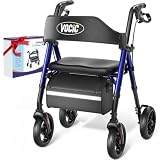
The VOCIC Z21 represents a meaningful step up in capability without a proportional price jump. The eight-inch wheels absorb bumps that smaller-wheeled competitors cannot, and the 350-pound weight capacity accommodates a wider range of body sizes than most rollators in this price bracket. For under $70, it’s the best value entry for anyone who needs genuine outdoor capability. The frame is steel rather than aluminum, which adds weight but also adds a sense of solidity that inspires confidence.
- Pro: All-terrain wheels handle grass, gravel, and curb edges without resistance
- Pro: Generous weight capacity for larger users who need rollator support
- Con: Noticeably heavier than aluminum competitors, making car transfers harder
Skip this if the user or caregiver lacks the upper-body strength to lift a steel-framed walker repeatedly.
VOCIC Z21 Rollator Walker for Seniors, 8″ All Terrain, 350 LBS (Outdoor)
We compared this same model specifically as an outdoor-first choice, and it earned that role convincingly. The eight-inch tread pattern grips wet pavement and loose dirt better than the smooth-surface alternatives on this list. The loop brakes are easy to engage with arthritic hands, which is a detail that matters enormously for the people who actually use these walkers daily. The under-$70 price makes it a no-regret purchase for seniors whose morning routine involves walking to a mailbox or sitting on a park bench.
- Pro: Brake levers require minimal grip strength to lock the wheels fully
- Pro: Treaded wheels provide reliable traction on damp or uneven ground
- Con: Seat padding is thin, making long rest stops uncomfortable without a cushion
Skip this if the user sits on the rollator seat frequently for extended rest breaks; the padding here is an afterthought.
Drive Medical Rollator Walker with Seat, 7.5 Inch Wheels, Red
The red version of this Drive Medical model is functionally identical to the blue, but the price difference of roughly seventeen dollars makes it a curious listing. For under $70, it matches the VOCIC Z21 in cost while offering smaller wheels and a lower weight capacity. The red colorway is genuinely easier to spot in a crowded hallway or parking lot, which is a small safety advantage that shouldn’t be dismissed for seniors in shared-living environments.
- Pro: High-visibility color makes the rollator easy to locate in shared spaces
- Pro: Compact folded profile fits in tight closets and small vehicle trunks
- Con: Pricing puts it in competition with better-equipped models without added value
Skip this unless the specific color matters for visibility or identification, because the VOCIC Z21 offers more walker per dollar at the same price.
HOMLAND Foldable Rollator Walker with Seat, 16″ Enlarged Seat
The sixteen-inch seat is the headline here, and it solves a real problem: most rollator seats are narrow enough that a wider user either can’t sit comfortably or risks sliding off the edge. For under $80, the HOMLAND carries a modest premium, but the enlarged seat and generous backrest make rest stops actually restful rather than merely functional. The folding mechanism is smooth and requires only a single upward tug, which is easier than most competitors’ scissor-style folds.
- Pro: Seat width accommodates users who find standard rollator seats too narrow
- Pro: One-hand fold is quick and requires no pinching or latching
- Con: Overall footprint is wider, making it harder to maneuver in narrow doorways
Skip this if the user lives in a home with hallways under thirty-two inches wide, because the extra seat width translates to real clearance problems.
VOCIC Z21 Rollator Walker for Seniors, 8″ All Terrain, 350 LBS (Everyday)
For daily-use scenarios where the walker is the user’s primary mobility aid for hours at a time, the VOCIC Z21’s combination of durability and terrain range makes it the most versatile single rollator on this list. The under-$70 price keeps replacement or a second unit for a vacation home entirely realistic. The frame doesn’t flex or creak under repeated use, and the brakes maintain their bite over weeks of daily engagement rather than softening the way budget rubber-lined levers do.
- Pro: Consistent brake performance over hundreds of daily engagement cycles
- Pro: Handles indoor-outdoor transitions without needing a second walker
- Con: No height-adjustable seat option; the fixed height may not suit shorter users
Skip this if the user is under five-foot-four and wants to sit comfortably without their feet dangling awkwardly.
Drive Medical Nitro Sprint Rollator Walker with Seat, Standard Size, Red
The Nitro Sprint is the premium choice here, and its under $200 price tag reflects genuine engineering improvements: an aluminum frame that weighs significantly less than any steel competitor, a smooth rolling feel that reduces arm fatigue over long walks, and a design aesthetic that doesn’t look institutional. For active seniors who walk for exercise rather than necessity, this is the rollator that doesn’t feel like medical equipment. The trade-off is capacity; it serves its purpose beautifully for users who want lightweight performance, not maximum load rating.
- Pro: Lightweight aluminum frame reduces fatigue during extended walking sessions
- Pro: Premium appearance removes the stigma some users feel about mobility aids
- Con: Price is nearly three times the best mid-range options on this list
Skip this if the user or budget doesn’t justify a $200 walker; the mid-range options handle the same tasks adequately.
Medline Steel Rollator Walker with Seat, Burgundy, 350 lb Capacity
The Medline sits in a strange middle ground: its under $70 price makes it the second-cheapest option with a 350-pound capacity, but its six-inch wheels are the smallest on this list. That wheel size means it’s strictly an indoor and smooth-surface tool. The burgundy finish is elegant, the foldable design is straightforward, and the adjustable handles accommodate a range of user heights. It’s a stable, no-nonsense walker for someone who lives entirely within a single-level home.
- Pro: Adjustable handle height ensures proper ergonomics without guesswork
- Pro: Steel frame and wide base give it a planted, wobble-free feel indoors
- Con: Small wheels make outdoor use impractical beyond flat concrete
Skip this if the user walks outdoors at all, even to a car in a parking lot; the six-inch wheels will catch on seams and cracks.
Buying Guide
Wheel Size Is the Single Most Important Spec
Wheels under seven inches are indoor tools. Anything from seven to eight inches handles outdoor sidewalks and gravel paths with reasonable competence. If the user walks outdoors even twice a week, a wheel smaller than 7.5 inches will cause frustration and potential tripping on curb edges. This one specification eliminates half the options on any shopping site immediately.
Weight Capacity and Frame Material Are Connected
A steel frame rated at 350 pounds is structurally sound and costs less, but it’s heavy. An aluminum frame rated lower costs more and weighs less. The decision comes down to who lifts the rollator into a vehicle: if the user lifts alone, prioritize aluminum even at a higher price. If a caregiver always assists, steel’s extra weight becomes irrelevant and its lower cost becomes an advantage.
Seat Width Matters More Than Manufacturers Admit
Most rollator seat dimensions are optimized for a body type that doesn’t represent the average senior user. If the person can’t sit on the seat with their full weight supported evenly and their feet touching the floor, they won’t use it for rest stops, which defeats the purpose of buying a rollator over a standard walker. Measure the intended user’s hip width and compare it against the listed seat dimensions before ordering.
Our Verdict
The VOCIC Z21 Rollator Walker for under $70 is our top pick. Its all-terrain wheels, high weight capacity, and reliable brakes make it the most versatile single rollator for the widest range of senior users. The Drive Medical 7.5-inch Blue model for under $60 is the clear budget pick for anyone who walks exclusively indoors on smooth surfaces. However, if the user needs to sit on the rollator for extended rest periods due to pain or fatigue, the HOMLAND Foldable Rollator for under $80 wins on seat comfort alone, and that functional advantage outweighs every other comparison on this page.
FAQ
Can I use a rollator with a walker for comparison?
Yes, and many clinics recommend trying both. A rollator supports the user while walking and allows rest stops; a standard walker is better for short-distance stability in tight spaces where turning a rollator is impractical.
How often do rollator wheels need replacement?
Most manufacturers don’t publish a replacement interval, but with daily outdoor use on rough surfaces, expect to replace wheel assemblies within one to two years. Indoor-only users can often get several seasons from the original wheels.
Are rollators covered by Medicare?
Medicare Part B typically covers a rollator as durable medical equipment when a physician documents medical necessity. Coverage amounts and conditions vary, so verify directly with the supplier or the Medicare portal before purchasing.
What brake mechanism is safest for arthritic hands?
Loop-style squeeze brakes that activate with a single hand are the most accessible for users with reduced grip strength or finger joint stiffness. Lever brakes that require a pulling motion tend to be harder to engage fully and are generally better suited to users with intact hand function.
Related Reviews & Guides



Best Bariatric Shower Chair in 2026: Compared and Ranked
Best Ankle Braces in 2026: Compared and Ranked