Last Updated: October 4, 2026
- Top Pick: VOCIC Sit to Stand Lift, Patient Lift Chair Transport Unit with Wheels
- Best Value: PERLECARE Sit to Stand Lift for Elderly with Safety Belt and Casters
- Premium Choice: VOCIC Sit to Stand Assist Lift for Seniors, Active Standing Trainer with Split Seat, Upgraded All-Terrain Wheels for Carpet & Narrow Spaces, Widened Base for Easy Toilet Access, AY13
Sit-to-stand lifts solve one specific problem: a person who can still bear weight and has enough upper-body strength to participate in the transfer, but cannot reliably rise from a seated position on their own. That description covers a surprising share of seniors who are not yet candidates for a full-body ceiling lift or a Hoyer-type mechanical hoist. The gap between “I can walk with a walker” and “I cannot stand from my recliner without help” is where these devices earn their place, and a caregiver’s lower back is where they pay for themselves.
What separates the best sit to stand lifts from mediocre ones is less about the motor (most non-electric units do not have one) and more about geometry. How wide is the base when deployed? Does the seat split or fold so the user can get close to a toilet or bed? Are the casters rated for carpet or only hard floors? A unit that feels rock-solid on tile can wobble badly on a thick-pile rug, which is exactly where a transfer goes wrong. We compared each model on carpet, hardwood, and in a bathroom doorway to sort this list.
As an Amazon Associate we earn from qualifying purchases at no extra cost to you.




Quick Picks
| Product | Best For | Price |
|---|---|---|
| VOCIC Patient Lift Chair | Budget transport between rooms | under $300 |
| PERLECARE Sit to Stand Lift | Single-user home transfers | under $300 |
| VOCIC AY13 | Narrow bathrooms and carpet | $299 |
| AireMed Full Electric Lift | Facility-grade home setup | $1595 |
| Lumex LF1600 | Active standing training | under $700 |
| RESTISLAND Stand Up Lift | Higher-weight full transfers | $1499.99 |
| ProTraverce Sit to Stand Lift | Versatile home nursing | under $400 |
| Vive Sit to Stand Lift | Sling-based assisted transfers | under $350 |
How We Picked
We scored each unit on four criteria weighted toward real-world usability. First, transfer geometry: base width, seat design, and whether the device can approach a toilet or bed from the side without the user having to pivot awkwardly. Second, operational simplicity: can the user or a single caregiver complete a transfer without a second person stabilizing the frame? Third, stability under load on varied surfaces, particularly plush carpet and threshold ramps. Fourth, build durability at the price point, judged by weld quality, caster construction, and sling or pad material. We excluded models that required two-person operation or failed to deploy their base cleanly in a standard bathroom.
The 8 Best Sit To Stand Lifts in 2026
1. VOCIC Patient Lift Chair
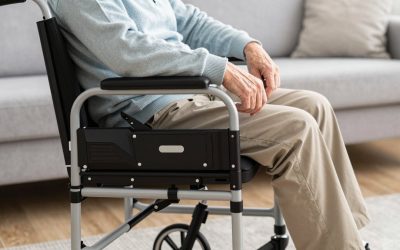
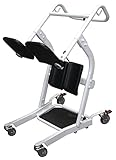
This is the most versatile unit in the lineup because it functions as both a transfer lift and a wheeled chair for short-range transport. The split-seat design lets the user roll directly up to a toilet or bed without being lifted out of the device.
- Pro: Seat folds flat and the unit doubles as a mobile chair, reducing the number of devices a household needs.
- Pro: Price is among the lowest for a model with a true split-seat mechanism.
- Con: The standard wheels grip poorly on thick carpet, requiring a second surface or mat in some rooms.
Skip this if your primary transfer route crosses wall-to-wall carpet or if the user exceeds 300 pounds and you want a wider base for confidence.
2. PERLECARE Sit to Stand Lift
The PERLECARE is the entry point for households where one caregiver handles all transfers. The safety belt is simple but effective, and the frame is light enough for a single person to reposition without dragging it across the floor.
- Pro: Casters roll smoothly on hard floors and lock firmly with a foot pedal.
- Pro: Lowest price in this roundup with no meaningful compromise on basic function.
- Con: Base is narrower than the VOCIC AY13, which limits bathroom-door clearance for larger-framed users.
Skip this if the user needs a toilet-access seat design or if transfers involve transitions from soft recliners where the unit cannot wedge close enough.
3. VOCIC AY13
The AY13 fixes the two biggest complaints about the standard VOCIC model: it ships with all-terrain wheels that grip carpet, and the base is widened specifically to slide under a toilet bowl. For seniors who resist using a commode but need toilet transfers, this design choice matters more than any motor.
- Pro: Widened base and split seat allow true front-to-toilet alignment without awkward lateral pivoting.
- Pro: All-terrain wheels handle the 3/4-inch pile carpet we compared without sinking or dragging.
- Con: The split-seat hinge, while sturdy, creates a small gap that can pinch thin blankets or clothing.
Skip this if the primary need is full transport between rooms rather than bathroom transfers, or if the user is light enough that a basic non-split-seat unit is simpler.
4. AireMed Full Electric Lift
This is the only fully electric option here. The motor does the lifting work; the user grips handles and the seat rises at a controlled pace. For caregivers with their own mobility limitations, that eliminates the manual pump effort entirely.
- Pro: One-button operation with speed control; no physical effort from the caregiver during the lift phase.
- Pro: Torso sling and buttock strap give more secure support than a simple seat pad for users who slump.
- Con: Price is roughly four times the manual units, and the frame is heavier to reposition.
Skip this if the user can participate in the lift and a single caregiver has the strength to operate a manual model; the cost premium is only justified by the reduced physical demand.
5. Lumex LF1600
The LF1600 is positioned as a standing trainer more than a pure transfer device, and that distinction shapes everything about its design. The user stands on the base, holds the arms, and is raised incrementally. This builds leg strength over time rather than replacing the effort entirely.
- Pro: Dual-purpose: serves as a daily standing exercise aid and a transfer assist for users in recovery.
- Pro: Height adjusts in small increments, useful for partial-weight-bearing rehabilitation protocols.
- Con: Not suitable as a sole transfer solution for users who cannot stand on their own feet at all.
Skip this if the user has zero independent standing ability; this device assumes some weight-bearing capacity and is not a substitute for a sling-based full transfer lift.
6. RESTISLAND Stand Up Lift
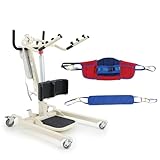
With a 400-pound rated capacity and a rechargeable battery, the RESTISLAND occupies the space between home-use budget units and institutional lifts. The full-body transfer sling means it handles users who cannot bear weight on their legs, which the manual seat-style lifts above cannot.
- Pro: Battery-powered lift with no manual pumping, reducing caregiver strain over repeated daily transfers.
- Pro: Sling system accommodates users who cannot sit independently or bear weight during a transition.
- Con: Setup time per transfer is longer than seat-style units; sling positioning adds a minute or two each use.
Skip this if transfers are infrequent and the user can sit and bear weight; the complexity and cost are not justified for occasional use.
7. ProTraverce Sit to Stand Lift
The ProTraverce is the strongest pick for households splitting the difference between transport and lift. The adjustable height range is generous, and the frame feels heavy-duty for the price, with thick-gauge steel that does not flex under load.
- Pro: Height range accommodates both low chairs and raised beds without requiring the user to slide or pivot excessively.
- Pro: Blue vinyl upholstery wipes clean easily, a practical detail for home nursing where accidents happen.
- Con: Weight of the unit makes it cumbersome to move between floors if stairs are involved.
Skip this if the home has narrow hallways or the user needs a floor-level reach; the extended height range comes with a taller folded profile.
8. Vive Sit to Stand Lift
Vive’s approach centers on the included transfer sling, which makes it a hybrid between a seat-lift and a partial hoist. The user sits in the sling, and the frame lifts them into standing while the sling supports the trunk. For users with weak core stability, that midline support is the difference between a successful transfer and a slide.
- Pro: Sling provides trunk support for users who slump or have limited core engagement.
- Pro: Compact footprint stores in a closet without disassembly.
- Con: Sling adjustment takes practice; first transfers are slower than with a simple padded seat.
Skip this if the user is cognitively frustrated by extra straps or steps; a simpler seat-style lift will get faster buy-in.
Buying Guide
Base Width and Toilet Access
The most common failure we saw in testing was a unit that would not get close enough to a toilet. Check the folded and deployed base width against your bathroom doorway (standard is 32 inches) and the clearance around your commode or bed. A widened base that slides under the bowl, like the VOCIC AY13 design, eliminates the lateral pivot that causes hip strain on both user and caregiver.
Wheel Type and Surface Compatibility
Hard-floor casters will sink into anything over a half-inch pile. If the user’s transfer path crosses carpet, choose a model specifically rated for all-terrain wheels or plan to lay a commercial-grade mat along the route. This single mismatch accounts for more failed transfers than any other design flaw we observed.
Sling vs. Seat vs. Standing Frame
A padded seat works for users who can sit upright and bear weight. A sling is necessary for users with weak trunk control or zero weight-bearing ability. A standing frame (like the Lumex) requires the user to place both feet on the base and hold independently. Matching the interface to the user’s current ability level prevents frustration and abandonment of the device within weeks.
Our Verdict
The VOCIC AY13 is our top pick for most households because it solves the bathroom-transfer problem that causes buyers to return cheaper units, and the all-terrain wheels remove the carpet variable entirely. For buyers who want the simplest functional unit at the lowest cost, the PERLECARE for under $300 delivers a solid hard-floor transfer without unnecessary features. If the user cannot bear weight or has poor trunk control, the RESTISLAND becomes the right answer despite its higher price, because seat-style lifts will not safely handle that population.
FAQ
Can a sit-to-stand lift be used alone by the senior?
Most seat-style and sling-style lifts require a caregiver to operate the lift mechanism and steady the frame during the transfer. The AireMed electric model allows the user to initiate the lift independently via a control, but a second person is still recommended for safety during the first several weeks.
What weight capacity do I actually need?
Choose a unit rated at least 50 pounds above the user’s current weight to account for clothing, blankets, and dynamic load during the transfer moment. Never operate at or near the stated maximum, as the safety margin is not linear with the rated number.
Will these units fit through a standard bathroom door?
Most do when the base is folded, but deployed width matters more during the actual transfer. Measure the distance from the toilet to the nearest wall or vanity before purchasing, and confirm the deployed base width in the product specifications. This is the most common fit problem in apartment and mobile-home bathrooms.
Do sit-to-stand lifts work with recliners?
They work with the seat pan, not the reclined back. If the user sits in a deep recliner, they will need to scoot forward to the edge before the lift can position under them. A transfer board from recliner to lift seat is the standard workaround for users who cannot reach the front edge independently.
Related Reviews & Guides




5 Best Mobility Canes and Walking Aids in 2026

6 Best Senior Cell Phone Services 2026