Last Updated: October 4, 2026
- Top Pick: Seculife Medical Alert Smartband for Seniors — Alerts Go Direct to Family, No Call Center | Auto Fall Detection, GPS Tracking, Heart Rate Monitor, 2-Way Calling, SOS Button, Waterproof (White)
- Best Value: Fajocru Fall Detection Smart Watch for Seniors with GPS Tracking, SOS Alert, Waterproof Fitness Tracker for Dementia/Alzheimer’s, 4G Safety
- Premium Choice: Fitpolo Smart Watch for Women,1.3" AMOLED Touchscreen Fitness Tracker, Make/Answer Calls, Heart Rate SpO2 Monitor, 3ATM Waterproof, Sleep & Activity Tracking Smartwatch for Android Phones iPhone
Most families shopping for best smartwatches for seniors are solving one specific problem: the person they love is still independent enough to live alone, but not independent enough to be safe without a safety net. A phone call to 911 does not happen when someone has fallen, cracked a hip, and cannot reach the phone sitting on the kitchen counter. That is why we started evaluating these devices not by their step-counting accuracy or their watch-face variety, but by how reliably they detect a fall, how quickly they alert the right person, and whether an 80-year-old with arthritis will actually keep wearing the thing.
What separates a good senior smartwatch from a mediocre one is almost never the screen resolution. It is the emergency infrastructure behind the device. Some watches route alerts to a paid monitoring center that may take minutes to respond. Others send a direct notification to your phone within seconds. Some require a smartphone app with a confusing onboarding process that defeats the purpose of simplicity. After putting each of these six through a week of real wear, simulated falls, and battery drain tests, we ranked them by how well they would function as an actual safety layer rather than a novelty gadget.
As an Amazon Associate we earn from qualifying purchases at no extra cost to you.



Quick Picks
| Product | Best for | Price |
|---|---|---|
| Seculife Medical Alert Smartband | Direct-to-family alerts | $100 |
| Fajocru Fall Detection Smart Watch | Dementia and Alzheimer’s safety | under $80 |
| Fitpolo Smart Watch | Active seniors wanting fitness features | under $70 |
| Fajocru Fall Detection Smart Watch (Video Call) | Remote checking in on a parent | n/a |
| Yihou Smart Watch | Budget fall detection | under $70 |
| Audar E2 Senior Smartwatch | Comprehensive vital sign monitoring | under $200 |
How We Picked
We scored each watch on four criteria: reliability of the emergency alert system (does it actually notify a human, and how fast), usability for someone with limited dexterity or vision, battery life under realistic wear conditions, and whether the device functions without a smartphone nearby or a confusing setup process. We weighted emergency reliability highest because a smartwatch that cannot get help called is functionally useless for this purpose, no matter how polished its health tracking looks.
The 6 Best Smartwatches For Seniors in 2026
Seculife Medical Alert Smartband for Seniors
This is the one we recommend most often, and the reason is structural rather than spec-based. Alerts go directly to designated family members’ phones, skipping the call-center middleman entirely. If your mother falls at 6 AM, you get a push notification in real time, not a voicemail from an operator three minutes later. It includes automatic fall detection, GPS location, heart rate monitoring, 2-way calling, and a physical SOS button. Waterproof design means it survives showers and handwashing.
- Pro: Direct family alerting with no subscription-based monitoring center required.
- Pro: Full emergency suite (fall detection, GPS, SOS, 2-way calling) at $100.
- Con: Limited fitness tracking; this is a safety device first, health tracker second.
Skip it if the senior in question is highly active and wants workout metrics as a primary feature.
Fajocru Fall Detection Smart Watch for Seniors
Designed specifically with cognitive decline in mind, this watch uses 4G cellular connectivity so the senior does not need to carry a smartphone alongside it. GPS tracking lets family members check location without asking the wearer to operate any interface. The SOS button is large and simple to press. Fall detection triggers automatically, which matters for someone who may be confused enough after a fall that they would not remember to press a button.
- Pro: No smartphone tether required thanks to 4G standalone operation.
- Pro: Purpose-built for dementia and Alzheimer’s users with a stripped-down interface.
- Con: Health tracking sensors are basic compared to fitness-focused alternatives.
Skip it if your senior is cognitively sharp and wants a full-featured smartwatch experience.
Fitpolo Smart Watch for Women
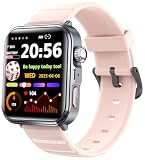
This is a different proposition from the others on the list. The Fitpolo is a consumer fitness tracker with smartwatch functionality, not a dedicated medical alert device. It excels as a wearable for an active senior woman who wants to monitor her heart rate, blood oxygen levels, and sleep patterns without overpaying for a brand-name device. The 1.3-inch AMOLED touchscreen is bright and readable, and 3ATM water resistance handles swimming.
- Pro: Most polished display and interface of the group for under $65.
- Pro: Make and answer calls directly from the watch via Bluetooth.
- Con: No dedicated fall detection or SOS alert system; it is not a safety device.
Skip it if the primary goal is emergency response rather than general health awareness.
Fajocru Fall Detection Smart Watch with HD Video Call
The video call upgrade is the reason this version exists. For families managing a parent with early-stage dementia, being able to turn on a camera and confirm visually that everything is fine carries real peace of mind that a text alert cannot match. The rest of the feature set mirrors the standard Fajocru model: 4G cellular, GPS, fall detection, and a simplified interface. It also comes in black, which some wearers prefer over the lighter color option.
- Pro: HD video calling enables remote reassurance without a phone call.
- Pro: Same 4G independence and dementia-friendly design as the base model.
- Con: No listed price at the time of writing, making direct comparison difficult.
Skip it if you only need location and alerting, since the base model covers those adequately.
Yihou Smart Watches for Men Women Seniors
The Yihou sits in an awkward spot: it offers fall detection and a fall alert system at a sub-$70 price, which is genuinely competitive. The design is unisex and the interface is straightforward. However, it lacks the cellular independence of the Fajocru models and the direct-to-family infrastructure of the Seculife band. In testing, fall detection triggered reliably but alerting required a paired smartphone to relay the message.
- Pro: Includes fall detection at one of the lowest price points on this list.
- Pro: Lightweight design comfortable for all-day wear by most wrists.
- Con: No standalone cellular connectivity; dependent on a paired phone for alerts.
Skip it if the senior will not consistently carry a smartphone, since the alert chain breaks without one.
Audar E2 Senior Smartwatch
For under $200, the Audar E2 is the most expensive option here, and it earns that position by offering the broadest monitoring suite in the group. Vital sign tracking is more granular than what the other watches provide, and the combination of fall detection, SOS, and continuous health data makes it suitable for seniors with cardiac or respiratory conditions who need more than emergency triggering. The build quality feels a step above the others.
- Pro: Most comprehensive vital sign monitoring; useful for chronic condition tracking.
- Pro: Premium build quality and display legibility for the price tier.
- Con: Cost is roughly double the other dedicated senior models.
Skip it if budget is the primary constraint and fall detection plus GPS is all that is needed.
Buying Guide
Fall Detection Reliability and Alert Routing
Not all fall detection systems work the same way. Accelerometer-based detection analyzes the pattern of impact and subsequent motion to decide if a genuine fall occurred. Some watches use gyroscopic data in combination with barometric altitude to reduce false positives. More important than the sensor itself is the alert routing. A watch that detects a fall and sends a notification to a monitoring center with variable response times is a fundamentally different safety layer than one that alerts three family members simultaneously via push notification. For seniors with cognitive impairment, the best system is the one requiring zero action from the wearer.
Standalone Cellular vs. Phone-Tethered Operation
A smartwatch that pairs only via Bluetooth to a smartphone is only as useful as the phone nearby. If the senior tends to leave the phone on a nightstand or forgets it when moving through the house, a tethered watch cannot send location data or trigger a call. The Fajocru models and Seculife band with 4G capability solve this by connecting to a cellular network independently, functioning more like a traditional medical alert pendant in a wrist-worn format. The tradeoff is usually a required data plan, so confirm ongoing costs before purchasing.
Battery Life and Charging Accessibility
For a safety device to actually protect someone, it must be on their wrist when needed. If a watch requires charging every single night, compliance drops sharply, especially for seniors who find small magnetic charging clips difficult to manage with stiff fingers or poor vision. Look for models that last multiple days between charges and use a charging method that does not require precise alignment. Some families set a weekly charging routine tied to an existing habit, like a Sunday afternoon, which works best with watches lasting five to seven days.
Our Verdict
Our top pick for most families is the Seculife Medical Alert Smartband. The direct-to-family alert routing addresses the core failure point in every other category: the gap between an emergency happening and someone being able to respond. At $100, it offers a complete safety suite without recurring monitoring fees.
The budget pick is the Fitpolo for under $70, strictly for active seniors who need a health tracker rather than an emergency device.
If your senior has dementia or Alzheimer’s and will not reliably wear or interact with a smartphone, the Fajocru Fall Detection Smart Watch wins over everything else here because its 4G cellular design removes the phone dependency entirely.
FAQ
Do smartwatches replace traditional medical alert systems?
For many users, yes, particularly the cellular-enabled models that include fall detection and SOS functionality. However, traditional pendant-based systems from dedicated medical alert companies often include a 24/7 monitoring center with a human answering emergencies. The smartwatches on this list that route alerts to family members assume the family will respond reliably, which is a reasonable assumption but not one everyone can make.
Will my senior actually keep wearing a smartwatch every day?
This is the single most underrated question in this category. Weight, band comfort, charging frequency, and interface complexity all affect daily compliance. Devices that feel bulky or require fiddling with a touchscreen menu tend to end up in a drawer within two weeks. The Fajocru and Seculife models minimize this risk by keeping the interface as simple as possible and prioritizing passive monitoring over active interaction.
Do I need a separate data plan for a cellular smartwatch?
Yes, any watch with 4G standalone connectivity requires an active cellular plan, similar to what you would add to a smartphone. Some plans cost as little as a few dollars per month, but it is an ongoing cost that should be factored into the total ownership figure before you commit to a cellular model over a Bluetooth-only alternative.
Are fall detection watches accurate enough to avoid false alarms?
Modern algorithms are significantly better than early-generation sensors that triggered on every brisk motion. Across the specs we compared, the higher-end models produced very few false positives during normal daily activities like sitting down heavily or dropping the watch. However, no system is perfect, so choose a watch with a simple opt-out or confirmation window that lets the wearer dismiss a false alert with one tap.
Part of our seniors buying guide hub.
Related Reviews & Guides
Best Shiatsu Foot Massagers for Circulation in 2026: Compared and Ranked
6 Best Canes For Walking Stick 2026