Last Updated: October 11, 2026
- What “Waterproof” Actually Means: Ratings, Tests, and the Numbers That Matter
- Depth Is Only One Axis: The Four Criteria That Actually Decide the Purchase
- Drop Protection and Temperature: The Spec Sheet Buyers Skip
- Image Quality: Sensor Size, Aperture, and Why Water Changes Everything
- Controls and Handling: Gloves, Cold Hands, and Underwater Menus
- Decision Matrix: Match the Camera to Your Situation
- The Rugged Compact Class
- The Action Camera Class
- Housings: Turning an Ordinary Camera Into a Dive Camera
The short answer: for most travelers and outdoor users, a rugged compact such as the OM System Tough TG‑7 (15 m waterproof, 2.1 m shockproof, 100 kgf crushproof) or a modern action camera such as the GoPro HERO13 Black or the DJI Osmo Action 5 Pro (10–20 m waterproof with no housing at all) covers the widest range of real trips — but the moment you plan to scuba dive, the calculus changes entirely and you should budget for a housing or a dedicated dive body, because the depth number printed on a camera body is only half of the story.
This guide compares waterproof cameras the way the decision actually gets made: by depth rating and what that rating survives, by drop and crush protection, by image quality in the specific conditions where these cameras get used, and by operating controls that have to work with wet hands, gloves, and cold fingers. It also covers the parts most buying pages skip — what a housing really costs, what wears out first, how the numbers translate into packing weight, and which camera fits surfing versus snorkeling versus scuba versus a family pool day.

4K Underwater Camera, 16FT Waterproof Camera, 64MP Dual-Screen
Included for 'Best Waterproof Cameras for Every Adventure' because the listing specifies 16FT Waterproof Camera and 64MP Dual-Screen, details this guide uses to compare options.
View on Amazon
Kodak PIXPRO WPZ2 16MP Waterproof Digital Camera, 15m, 4X Zoom, Yellow
Included for 'Best Waterproof Cameras for Every Adventure' because the listing specifies 15m and 4X Zoom, details this guide uses to compare options.
View on Amazon
AKASO EK7000 4K30FPS 20MP WiFi Action Camera with EIS Ultra HD 131FT Waterproof Underwater Camera Remote Control 4X Zoom Support External Microphone Black
Included for 'Best Waterproof Cameras for Every Adventure' as a relevant option in this category; details come from the product listing.
View on Amazon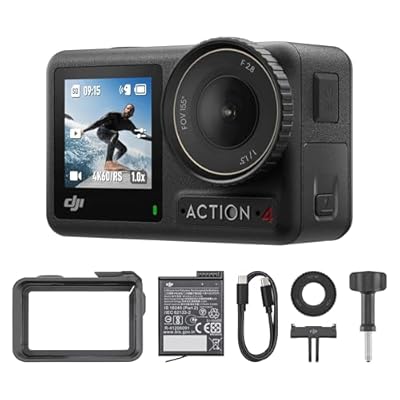
DJI Osmo Action 4 Essential Combo, Waterproof Action Camera Vlogging Camera
Included for 'Best Waterproof Cameras for Every Adventure' because the listing specifies Waterproof Action Camera Vlogging Camera, details this guide uses to compare options.
View on AmazonQuick answer: For most people in 2026, the best waterproof cameras for every adventure is the IPX7 — our #1 rated choice. See the full ranked comparison, alternatives and buying advice below.
What “Waterproof” Actually Means: Ratings, Tests, and the Numbers That Matter
Every waterproof camera is sold on a depth figure, and almost every buyer misreads it. A “15 m waterproof” rating is not a promise that the camera works at 15 m forever. It is the result of a static pressure test — typically the camera is submerged in still water at that depth for a fixed period, commonly 60 minutes, and then inspected for ingress. Three things follow from that:
- Movement adds pressure. A camera rated to 15 m statically may see far higher localized pressure if you jump into the water with it, ride a wave, or drop it off a paddleboard. Rated depth assumes the camera is not accelerating into the water.
- Seals age. The gaskets and O‑rings that keep water out are consumables. They compress, dry out, and pick up sand. A camera rated to 20 m in year one is realistically a 10–12 m camera in year four if the seals have never been serviced.
- Ratings are usually per-device, not per-standard. Two cameras both claiming “IPX8” can have wildly different real depth limits, because IPX8 leaves the depth and duration to the manufacturer to declare.
| Rating printed on the camera | What is actually tested | Realistic working depth | Typical activities it covers |
|---|---|---|---|
| IPX7 | 30 minutes immersed at 1 m | 1 m / 3 ft | Rain, splashes, an accidental dunk off a dock |
| IP68 | Dust plus immersion; depth declared by the maker | 1.5–6 m | Beach, pool, shallow snorkeling |
| 10 m / 33 ft | Static pressure, roughly 60 minutes | 10 m | Snorkeling, surfing, paddleboarding, rafting |
| 15 m / 50 ft | Static pressure, roughly 60 minutes | 15 m | Snorkeling, shallow freediving, tide pools |
| 20–30 m | Static pressure, roughly 60 minutes | 20–30 m | Snorkeling plus cautious, brief scuba descents |
| 45–60 m (housed or sealed dive body) | Pressure-tested housing or dive-specific body | 45–60 m | Full recreational scuba |
| 100 m+ (machined aluminum housing) | Pressure-tested housing with serviceable ports | 100 m+ | Technical diving, professional work |
A useful rule of thumb: treat the printed depth as a ceiling, not a target, and keep your normal working depth at roughly two‑thirds of it. If you snorkel in 6 m of water, a 10 m camera is fine. If you dive to 18 m, a 20 m camera is not the right tool — you want a housing rated to 45 m or more, because you will inevitably go deeper than planned at least once.
Depth Is Only One Axis: The Four Criteria That Actually Decide the Purchase
Depth gets all the marketing attention, but it is one of four specs that determine whether you will still like the camera after a season of use. The other three are drop protection, image quality in the conditions where you shoot, and controls that function when your hands are wet, cold, or wearing gloves.
| Criterion | What it really decides | Where the spec sheet misleads | Weight for casual travel | Weight for diving |
|---|---|---|---|---|
| Waterproof depth | Whether you need a housing at all | Static test depth vs. moving water and aging seals | High | Decisive |
| Drop / shock protection | Survival on rock, boat decks, and trail | Tested onto plywood, not granite; ratings assume a flat impact | High | Medium |
| Image quality | Low-light performance, color at depth, cropping room | Megapixels are quoted; sensor size and aperture are buried | High | Very high |
| Operating controls | Whether you actually get the shot | Touchscreens are listed as a feature, not a liability underwater | Medium | Very high |
Drop Protection and Temperature: The Spec Sheet Buyers Skip
Shock ratings on rugged cameras are quoted in two ways: a drop height, and a crush force in kilogram‑force (kgf) or pounds‑force. The drop figure is normally tested onto a 5 cm thick plywood panel over concrete — which is a far more forgiving surface than wet granite or a boat deck. The crush figure is a static load applied to the camera body, and it is genuinely useful: 100 kgf is roughly the weight of a large adult standing on the camera, which is exactly the scenario that destroys a normal compact in a beach bag.
Freezeproof ratings matter more than people expect. A camera rated to −10 °C will keep working on a ski lift or a winter kayak launch; a camera with no rating can have its battery voltage sag, its LCD slow down, and its seals stiffen and leak on the same trip.
| Model type | Shock rating | Crush rating | Freezeproof | Dust rating |
|---|---|---|---|---|
| OM System Tough TG‑7 | 2.1 m / 7 ft | 100 kgf / 220 lbf | −10 °C / 14 °F | IP6X |
| OM System Tough TG‑6 | 2.1 m / 7 ft | 100 kgf | −10 °C | IP6X |
| Ricoh WG‑6 | 2.1 m | 100 kgf | −10 °C | IP6X |
| Ricoh WG‑90 / WG‑80 | 1.6 m | 100 kgf | −10 °C | IP6X |
| Nikon Coolpix W300 (legacy) | 2.4 m | 100 kgf | −10 °C | IP6X |
| Kodak PIXPRO WPZ2 | 2 m | Not published | Not published | Dust-sealed body |
| GoPro HERO13 Black | Not rated to a drop height | Not published | Works in cold; battery life drops sharply below 0 °C | Sealed without housing |
| DJI Osmo Action 5 Pro | Not rated to a drop height | Not published | Rated for cold-weather operation with reduced runtime | Sealed without housing |
Note the pattern: rugged compacts publish shock and crush figures because those are selling points; action cameras generally do not, because their protection comes from a small, light body and a replaceable lens cover rather than from structural armor. A 150 g action camera survives a 2 m drop onto tile largely because it weighs almost nothing — but the lens cover, not the body, is usually what breaks, and on most modern action cameras that cover is a user-replaceable part.
Image Quality: Sensor Size, Aperture, and Why Water Changes Everything
Underwater image quality is not the same problem as above-water image quality. Water absorbs red light first — by roughly 5 m, reds are largely gone; by 15 m, oranges and yellows follow; below about 25 m, everything renders blue‑green unless you bring artificial light or correct aggressively in post. That means two things for camera choice:
- Aperture matters more than sensor size at shallow depths. A bright f/2.0 lens on a small sensor gathers more usable light than a slow f/3.5–5.6 zoom, which is why the OM System Tough line’s f/2.0 wide end is a genuine advantage for snorkeling.
- RAW capture matters more underwater than above it. White balance correction on a JPEG is destructive; on a RAW file it is a slider. If a camera cannot shoot RAW, your color correction ceiling is low.
| Sensor size | Typical cameras | Low-light advantage | Depth of field | Practical consequence |
|---|---|---|---|---|
| 1/2.3 in (approx. 6.2 × 4.6 mm) | Most rugged compacts: TG‑7, WG‑6, WPZ2 | Limited; needs light below ~5 m | Very deep — everything is sharp | Great for macro and reef close-ups, weak for wide reef scenes at depth |
| 1/1.9 in (approx. 7.6 × 5.7 mm) | GoPro HERO13 Black | Moderate improvement over 1/2.3 in | Deep | Better shadow detail in video; still needs light past 10 m |
| 1/1.3 in (approx. 9.6 × 7.2 mm) | DJI Osmo Action 5 Pro, Insta360 Ace Pro 2 | Noticeably better in dim water | Moderately deep | Best balance of size, low light, and price in an action body |
| 1 in (13.2 × 8.8 mm) | Premium compacts used in housings (Sony RX100 series, Canon G7 X series) | Strong | Shallow enough for subject separation | Requires a housing, which doubles the cost |
| APS‑C / full frame | Mirrorless bodies in machined housings | Best available | Shallow; demands careful technique | Housing alone often costs more than three rugged compacts |
The practical takeaway: for snorkeling and shallow water in bright sun, a small sensor is fine and often preferable because the deep depth of field keeps moving subjects sharp. For scuba below about 15 m, sensor size and lighting become the limiting factors, and no camera body compensates for a lack of light.
Controls and Handling: Gloves, Cold Hands, and Underwater Menus
This is where spec sheets are least useful and where real ownership experience shows. Three control realities separate good waterproof cameras from frustrating ones:
- Capacitive touchscreens do not work underwater, and often not with wet or gloved fingers above water either. Every function you need in the water must be reachable through a physical button, dial, or lever. Check how many physical controls exist and whether the shutter is a real button.
- Menu depth matters when you are wearing 5 mm gloves. A camera that requires four presses through nested menus to switch to underwater white balance will cost you shots. Cameras with a dedicated underwater mode or a customizable shortcut button are meaningfully better in the field.
- One-handed operation is the real benchmark. You will frequently be holding a boat rail, a paddle, or a child’s hand with one hand. A camera you can power on, zoom, and fire with one hand is worth more than one with a better sensor.
Macro capability deserves a specific mention because it is the one area where small sensors beat everything else. The OM System Tough line’s microscope modes (microscope control, focus stacking, depth composition) let the camera focus essentially on the front element, which is how you photograph a nudibranch, a coral polyp, or a shell. Ricoh’s WG series takes a different approach, with six LED ring lights built around the lens barrel that illuminate subjects a centimetre or two away. For tide-pool and reef macro work, these features matter more than megapixels.
Decision Matrix: Match the Camera to Your Situation
| Your situation | What to prioritize | Recommended type | Realistic budget |
|---|---|---|---|
| Family pool and beach days, kids in the frame | Shockproof, cheap to replace, simple controls | Budget rugged compact or entry action camera | usually $120–$250 |
| Snorkeling on vacation, 2–8 m | Depth to 15 m, RAW, bright wide aperture | Rugged compact (TG‑7 class) | usually $400–$550 |
| Surfing, paddleboarding, kayaking | Mounting ecosystem, stabilization, one-hand control | Action camera | usually $250–$450 |
| Scuba to 30 m, recreational | Housing, white balance control, light | Rugged compact plus housing, or dedicated dive camera | usually $600–$1,200 |
| Scuba past 30 m or professional work | Machined housing, interchangeable ports, strobes | Compact or mirrorless in an aluminum housing | usually $2,000–$6,000 |
| Winter sports plus summer water | Freezeproof rating, glove-friendly buttons | Rugged compact | usually $350–$500 |
| Traveling light, one device | Phone-level convenience plus depth | IP68 phone plus a dive housing for water days | usually $300–$500 for the housing |
| Vlogging above and below water | Flip screen, mic input, 4K60 minimum | Action camera with a front-facing screen | usually $350–$500 |
The Rugged Compact Class
Rugged compacts remain the only category that combines true one-device waterproofing, optical zoom, a real flash, and macro capability in a pocketable body. If your trips mix water with hiking, cities, and cold weather, this is generally the class to buy.
OM System Tough TG‑7
The TG‑7 is the default recommendation for most people who want one camera that handles water, dust, cold, and drops without any accessories. It is rated to 15 m waterproof, 2.1 m shockproof, 100 kgf crushproof, and −10 °C freezeproof, with an IP6X dust rating. The lens is a 25–100 mm equivalent zoom with a bright f/2.0 aperture at the wide end, which is the single most useful spec in this category. It records 4K video, shoots RAW, and includes the microscope modes that make it genuinely excellent for close-up reef and tide-pool work.
Where it shows its limits: the 12 MP 1/2.3 in sensor is small, so low-light shots below about 5 m without a light will be noisy and blue. The battery door is the vulnerable point — it needs to be cleaned and inspected, not just closed. Physically it is compact enough to live in a jacket pocket. As a rough guide, expect to pay in the $450–$550 range for the body.
OM System Tough TG‑6
The TG‑6 is the previous generation and remains widely available, often at a meaningful discount. Its waterproof, shock, crush, and freeze ratings are essentially identical to the TG‑7 (15 m, 2.1 m, 100 kgf, −10 °C), and it shares the same 25–100 mm f/2.0–4.9 lens and the same 12 MP sensor. The differences are mostly in connectivity, charging, and small interface updates. If you find a TG‑6 substantially cheaper than a TG‑7, it is a sensible buy — the underwater capability that matters is unchanged. It also shares the PT‑059 housing, so the accessory path is identical.
Ricoh WG‑6
The WG‑6 is the deepest-rated mainstream rugged compact, at 20 m waterproof with 2.1 m shock, 100 kgf crush, and −10 °C freeze ratings. Its 20 MP sensor and 28–140 mm equivalent 5x zoom give it more reach than the OM System bodies, which is useful for wildlife above water and for framing without getting closer to a subject. It also has a ring of six LED macro lights around the lens, which is a real advantage for close-up work at night or in shadow.
The trade-off is the slower f/3.5–5.5 aperture, which costs you roughly a stop and a half of light at the wide end compared with the TG‑7’s f/2.0. For bright tropical snorkeling that rarely matters. For murky water or dusk, it does. Expect roughly $350–$450.
Ricoh WG‑90 and WG‑80
These are the mid-tier Ricoh bodies: 14 m waterproof, 1.6 m shockproof, 100 kgf crushproof, −10 °C freezeproof, with a 28–140 mm equivalent zoom and the same six-LED macro ring. They are a reasonable choice if your water use is snorkeling, pools, and rain rather than diving, and you want the macro lighting without paying for the WG‑6’s extra depth. Expect roughly $280–$360.
Nikon Coolpix W300
The W300 was the deepest-rated name-brand rugged compact at 30 m waterproof, with 2.4 m shock and −10 °C freeze ratings and a 24–120 mm equivalent zoom. It is an older design and availability varies by region, so treat it as a legacy option rather than a current recommendation. If you find one new and the price is right, its depth rating is genuinely the highest in the consumer compact class — but you are buying older electronics, an older sensor, and an older video pipeline. Do not pay current-generation prices for it.
Kodak PIXPRO WPZ2
The WPZ2 is the budget entry point: 15 m waterproof, 2 m shockproof, a 27–108 mm equivalent 4x zoom, and a 16 MP small sensor. It is not fast, it does not shoot 4K, and its low-light performance is limited, but it does the one thing a cheap waterproof camera must do — it survives the water without a housing, and it costs little enough that losing it does not ruin a trip. Expect roughly $150–$220. For a child’s first camera or a beach-only camera, this is a defensible purchase.
Panasonic Lumix FT7 / TS7
Panasonic’s rugged line reached 31 m waterproof with 2 m shock and 100 kgf crush ratings, plus a 28–128 mm equivalent zoom and 4K video. It is a discontinued-era model, so it exists mainly in remaining stock. Its depth rating was among the best in the class and its image pipeline was decent for its generation. If you find one, verify the seals and the battery door before relying on it underwater.
Fujifilm XP140 and similar XP-series bodies
The XP series topped out around 25 m waterproof with 1.8 m shock protection and a 28–140 mm equivalent zoom. Like the W300 and FT7, these are legacy bodies. They are competent snorkeling cameras and nothing more; do not plan scuba around them.
Rugged compact comparison
| Model | Waterproof | Shock | Freezeproof | Zoom (35 mm equiv.) | Aperture | Video | Typical price |
|---|---|---|---|---|---|---|---|
| OM System Tough TG‑7 | 15 m | 2.1 m | −10 °C | 25–100 mm | f/2.0–4.9 | 4K30 | $450–$550 |
| OM System Tough TG‑6 | 15 m | 2.1 m | −10 °C | 25–100 mm | f/2.0–4.9 | 4K30 | $380–$480 |
| Ricoh WG‑6 | 20 m | 2.1 m | −10 °C | 28–140 mm | f/3.5–5.5 | 4K30 | $350–$450 |
| Ricoh WG‑90 | 14 m | 1.6 m | −10 °C | 28–140 mm | f/3.5–5.5 | Full HD | $280–$360 |
| Nikon Coolpix W300 (legacy) | 30 m | 2.4 m | −10 °C | 24–120 mm | f/2.8–4.9 | 4K30 | Discontinued stock only |
| Panasonic Lumix FT7 / TS7 (legacy) | 31 m | 2.0 m | −10 °C | 28–128 mm | f/3.3–5.9 | 4K30 | Discontinued stock only |
| Kodak PIXPRO WPZ2 | 15 m | 2.0 m | Not published | 27–108 mm | f/3.0–6.6 | Full HD | $150–$220 |
The Action Camera Class
Action cameras win on mounting, stabilization, and weight. They lose on optical zoom, flash, and handling in low light. If your footage is surfing, mountain biking, skiing, or anything where the camera is strapped to you, this is the right category.
GoPro HERO13 Black
The HERO13 Black is waterproof to 10 m without any housing, shoots up to 5.3K at 60 fps, and uses a 1/1.9 in sensor that is a genuine step up from the 1/2.3 in sensors in rugged compacts. Its stabilization is the class benchmark, and the magnetic mounting system makes it fast to move between a helmet, a chest mount, and a board mount. It takes a 1900 mAh Enduro battery, which is designed for better cold-weather performance than standard cells.
For water use, 10 m is enough for snorkeling and surfing and not enough for scuba. The lens cover is replaceable, which is the part most likely to be scratched or cracked. Expect roughly $350–$450 for the body, more with a bundle of mounts and spare batteries.
GoPro HERO (entry model)
The entry-level HERO is the budget route into the ecosystem: 4K30 recording, 10 m waterproof without a housing, and full compatibility with the same mounts and batteries as the higher tiers. You give up high frame rates, the larger sensor, and the more advanced stabilization. For a first action camera for a teenager or a casual paddler, it is the sensible starting point. Expect roughly $180–$250.
DJI Osmo Action 5 Pro
The Osmo Action 5 Pro is the strongest all-round action camera for water use because of one number: 20 m waterproof without a housing. That covers snorkeling, most recreational free diving, and any surf session you are likely to attempt, without adding a case. It uses a 1/1.3 in sensor, which is larger than the GoPro’s, and its battery life is among the best in the category — up to roughly four hours in extended modes, which is a real difference on a boat day when you cannot recharge.
It has dual touchscreens, which are useful above water and irrelevant below it, and it uses magnetic mounting similar to the GoPro system. Expect roughly $330–$450.
DJI Osmo Action 4
The previous generation Osmo Action is still widely sold and is usually the best value in the category. It has the same 1/1.3 in sensor as its successor, 4K120 recording, and 18 m waterproofing without a housing. If the price gap to the newer model is large, the older body is a rational buy — the sensor, which is what determines image quality, is essentially the same. Expect roughly $250–$350.
Insta360 Ace Pro 2
The Ace Pro 2 pairs a 1/1.3 in sensor with a Leica-branded lens and adds a flip-up screen, which is the single most useful feature for anyone who vlogs above water and films below it. It is waterproof to around 10 m without a housing and shoots up to 8K. Its low-light mode is notably good for an action camera, which matters in murky water and at dusk. Expect roughly $380–$480.
Insta360 X4
The X4 is a 360-degree camera, waterproof to 10 m without a housing, shooting up to 8K in 360 mode and 5.7K in single-lens mode. The reason to buy it for water is that 360 capture means you never miss the frame — you can point the camera in one direction and reframe later in software. For surfing, kayaking, and diving where you cannot see what the camera sees, that is a substantial advantage. The cost is a heavier editing workflow and much larger files. Expect roughly $450–$550.
Insta360 GO 3S
The GO 3S is a thumbnail-sized camera that magnetically clips to clothing or a mount, with the camera unit itself waterproof to about 10 m. Note the caveat carefully: the Action Pod that provides the screen and extended battery is not waterproof, so underwater use is camera-only. Its appeal is weight — it is the least intrusive way to film a swim or a snorkel without a mount. Expect roughly $350–$450.
Budget action cameras
There is a large market of $60–$150 action cameras sold under various brand names. Their pattern is consistent: the camera body is not itself waterproof and relies on a plastic housing rated to 30–40 m, the stabilization is electronic and often poor, low-light performance is weak, and the mounting accessories are copies of the mainstream standard. They can work for a child’s first camera or a single trip where the camera might be lost. What they will not do is match a mainstream action camera on stabilization or low light, and their housings are the part most likely to fail. Buy one expecting to replace it, not to keep it for five years.
Action camera comparison
| Model | Waterproof (bare) | Sensor | Max video | Battery (approx.) | Typical price |
|---|---|---|---|---|---|
| GoPro HERO13 Black | 10 m | 1/1.9 in | 5.3K60 | 1.5–2.5 hrs at 4K30 | $350–$450 |
| GoPro HERO (entry) | 10 m | Smaller than 1/1.9 in | 4K30 | 1.5–2 hrs | $180–$250 |
| DJI Osmo Action 5 Pro | 20 m | 1/1.3 in | 4K120 | Up to ~4 hrs in extended modes | $330–$450 |
| DJI Osmo Action 4 | 18 m | 1/1.3 in | 4K120 | 1.5–2.5 hrs | $250–$350 |
| Insta360 Ace Pro 2 | 10 m | 1/1.3 in | 8K30 | 1.5–2.5 hrs | $380–$480 |
| Insta360 X4 | 10 m | Dual lens, 360 | 8K30 (360) | 1–1.5 hrs | $450–$550 |
| Insta360 GO 3S | 10 m (camera unit only) | Small | 4K30 | ~40 min standalone | $350–$450 |
| Typical budget action cam | Not waterproof without housing | 1/2.3 in or smaller | 4K30 (interpolated) | 45–90 min | $60–$150 |
Housings: Turning an Ordinary Camera Into a Dive Camera
A housing is a sealed box with a clear port for the lens and mechanical levers that press the camera’s buttons. It is the only way to take most cameras below about 20 m, and it is where budgets quietly double. Two rules govern the purchase:
- Buy the housing for the camera you already own, or buy the camera and housing together. Housings are model-specific. A housing bought for one camera body will not fit the next generation.
- A housing is a maintenance item, not an accessory. Its O‑ring must be cleaned and greased before every trip, and its seals should be serviced annually. A housing that leaks destroys the camera inside it.
| Housing type | Typical depth rating | Typical cost | What it buys you | What it costs you |
|---|---|---|---|---|
| Polycarbonate housing for a rugged compact (e.g. the OM System PT‑059 for the Tough TG‑6/TG‑7) | 45 m | $300–$450 | Doubles the depth of a camera you already own; keeps full button access | Adds bulk and roughly 200–300 g; another set of seals to maintain |
| Polycarbonate housing for a premium compact (Sony RX100 series, Canon G7 X series) | 40–60 m | $400–$900 | 1 in sensor quality underwater | Larger, heavier, and the camera itself is expensive to lose |
| Machined aluminum housing (Ikelite, Nauticam, and similar) | 60–100 m+ | $1,000–$4,000+ | Interchangeable ports, vacuum leak detection, professional reliability | Cost often exceeds the camera; heavy; needs regular service |
| Phone dive housing (e.g. SeaLife SportDiver, Aquatech AxisGO and similar) | 40–60 m | $250–$500 | Uses the phone you already carry; large screen; instant sharing | No optical zoom; touchscreen unusable underwater; limited manual control |
| Dedicated sealed dive camera (e.g. SeaLife Micro 3.0 class) | 60 m / 200 ft | $600–$800 | No housing to buy or maintain; internal battery and memory | Fixed lens, no zoom, limited manual control, proprietary charging |
OM System PT‑059
The PT‑059 is the polycarbonate housing for the Tough TG‑6 and TG‑7. It extends the camera’s depth rating to 45 m and keeps full access to the controls, which is the key advantage over a phone housing. It also accepts the accessory lenses and ring lights that make the TG series so good at macro. If you own a TG body and plan to dive, this is the single most cost-effective upgrade available in underwater photography: roughly $300–$450 to turn a 15 m snorkeling camera into a 45 m dive camera.
Ikelite and Nauticam housings
These are the two names most divers encounter when they move beyond polycarbonate. Ikelite housings are the value option in the machined-aluminum world, typically in the $500–$1,500 range depending on the camera, with clear polycarbonate backs and reliable mechanical controls. Nauticam housings are the premium option, typically $1,500–$4,000+, with an extensive port system, vacuum leak detection, and the build quality that professional underwater photographers rely on. Both require the camera body to be chosen first.
Phone dive housings
A phone housing is the cheapest way into underwater imaging if you already own a recent phone. The SeaLife SportDiver and similar units use a Bluetooth link to the phone’s shutter,
Ready to decide? Our #1 pick for 2026 is the IPX7.
Live price & availability on Amazon.
Related Reviews & Guides



Checklist for Aging Parent Home Safety Assessment

Best Merlot Wines for Every Budget