Last Updated: October 11, 2026
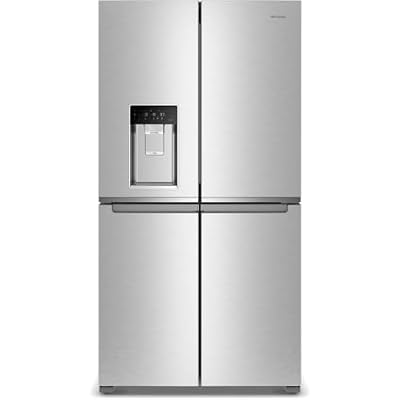
Wirecutter’s refrigerator guide has, through several update cycles, settled on the same shape of answer: one French-door model as the overall pick for most kitchens, a counter-depth French door for kitchens where a 36-inch-deep box would block the aisle, a plain top-freezer as the budget and renter choice, and a side-by-side for people who want everything at eye level. The differences that actually decide which one belongs in your house are width, depth, door swing, and how much bending or reaching you’re willing to do — not the feature list.
Quick answer: For most people in 2026, the best refrigerators recommended by wirecutter is the (LG French-door line) — our #1 rated choice. See the full ranked comparison, alternatives and buying advice below.
The Four Picks, by Configuration and Size
Wirecutter’s categories map closely to the four configurations sold in the US, and each has a distinct footprint. Note that exact model numbers rotate between guide updates — verify the current SKU and its spec sheet before ordering, because a one-inch change in width can decide whether the unit clears your door.
| Pick category | Configuration | Typical size (W × D × H, inches) | Usable capacity | Typical market price |
|---|---|---|---|---|
| Best overall (LG French-door line) | French door, standard depth | 33 × 35 × 70 | 24–25 cu ft | usually $1,400–$2,100 |
| Best counter-depth (Bosch French-door line) | French door, counter-depth | 36 × 29 × 70 | 20–22 cu ft | usually $2,400–$3,300 |
| Budget / renter pick (GE or Whirlpool top-freezer) | Top-freezer | 30 × 30 × 66 | 18–20 cu ft | usually $700–$1,100 |
| Side-by-side alternative (Whirlpool, GE, LG) | Side-by-side | 36 × 33 × 70 | 22–25 cu ft | usually $1,200–$1,900 |
Depth figures are measured with the doors closed but handles installed. A “standard depth” French door is 30–31 inches at the cabinet and 35–36 inches at the door front. A counter-depth model is about 24 inches at the cabinet and 28–29 inches at the front — roughly six inches shallower, which is the entire point of paying for it.
Measure These Five Things Before You Choose
- Width of the opening, plus 1 inch. Manufacturers want 1 inch of air on each side. A 36-inch refrigerator needs a 38-inch alcove.
- Rear and top clearance. Most spec sheets ask for 1–2 inches at the back and 1 inch at the top. If an upper cabinet hangs above the fridge, measure from the floor to the bottom of that cabinet: a 70-inch refrigerator needs about 72 inches.
- Aisle clearance in front. A French door needs both doors open roughly 90 degrees to pull the crisper bins, and the freezer drawer slides out about 18–20 inches. Budget 48–54 inches of clear floor in front. Side-by-sides need less — about 36–40 inches — because only one door swings at a time.
- The narrowest point on the delivery path. A 30-inch interior door gives about 31.5–32 inches of clear opening. A 33-inch refrigerator with the doors and handles removed is roughly 32.5 inches wide, so it is a coin flip. Measure the door frame, hallway corners, stairwell turn, and elevator depth before you buy, not after.
- Reach and bend range. The accessible reach guideline used in design is 15 to 48 inches above the floor. A top-freezer puts frozen food at 48–62 inches — above that range for many adults. A side-by-side keeps both fresh and frozen food between roughly 20 and 66 inches, with most items in the middle. A French door puts the freezer drawer at 24–30 inches, which means bending every time.
Counter-Depth vs. Standard Depth: What Six Inches Costs
Going counter-depth typically gives up 3 to 5 cubic feet of capacity and adds $400 to $900 to the price for the same brand family. It buys you a flush line with 24-inch cabinets and an aisle you can actually walk through. If your kitchen is a galley with a 42-inch aisle, a standard-depth French door leaves about 6 inches of walkway — unusable. In an open-plan kitchen with an island, counter-depth is usually the only choice that looks intentional.
As a capacity rule of thumb, plan on 4 to 6 cubic feet per person for a household that shops once a week. Two people: 12–18 cu ft is comfortable. Four people: 20–24 cu ft. Five or more, or anyone who buys in bulk: 25 cu ft and up.
Matching the Pick to Your Household
| Your situation | Configuration to choose | Why, and what to check |
|---|---|---|
| Small galley or apartment kitchen | 30-inch top-freezer or 33-inch French door | Narrowest standard footprint; confirm a 30-inch unit fits the alcove with 1 inch per side |
| Renting, or moving within a few years | Top-freezer, no ice maker | Lightest to move (about 150–180 lb empty), no water line to plumb, reversible door swing |
| Limited reach or difficulty bending | Side-by-side | Keeps frozen and fresh food in the 20–66 inch band; no deep freezer drawer to pull up from floor level |
| Family of four or more, weekly big shop | 36-inch standard-depth French door | Widest shelves for sheet pans and pizza boxes; needs 48–54 inches of aisle |
| Kids in the house | French door with fingerprint-resistant finish | Look for a dispenser lock and tempered glass shelves rather than wire |
| Fridge in a garage or unheated space | Garage-ready model | Standard units are rated for roughly 55–110°F ambient; garage-ready extends the low end to about 38°F |
Feature Trade-Offs Worth Paying For
| Feature | What it actually changes | Worth it? |
|---|---|---|
| Dual evaporators | Separate cooling loops for fridge and freezer; less humidity transfer, so freezer burn and odor crossover drop | Yes on a French door; usually absent on budget top-freezers |
| Inverter compressor | Varies speed instead of cycling on and off; quieter, steadier temperature, longer part warranties | Yes — it is the single biggest reliability difference between tiers |
| Glass vs. wire shelves | Glass is easier to clean and contains spills; wire lets air circulate but sags under heavy loads | Glass, especially in a household with kids |
| Through-door ice and water | Costs 2–4 cu ft of door storage, needs a 1/4-inch water line at 20–100 psi, and is the most common repair item | Only if you will genuinely use it; skipping it removes the most frequent failure point |
| Fingerprint-resistant stainless | A coated finish that shows fewer smudges but can scratch more visibly than plain stainless | Yes in kitchens with children |
Delivery, Floor Load, and What Wears Out First
A full-size French door weighs 250–350 pounds empty and 500–700 pounds loaded. Spread over a footprint of about 7.5 square feet, that is roughly 80 pounds per square foot — fine on a slab or a modern framed floor, but worth a plywood pad under the feet if the fridge sits on tile over a wood subfloor, where point loads can crack grout lines.
Two setup details that prevent most service calls: run a dedicated 15-amp, 120-volt circuit rather than sharing with a microwave or toaster, and level the unit with a slight backward tilt of about 1/4 inch so the doors close on their own. If you are removing doors to get through a 32-inch opening, the hinges come off with the doors and the water line must be disconnected at the shutoff first — plan on two people and a furniture dolly.
In order of failure, expect the door gaskets at 5–8 years, the ice maker and water inlet valve at 7–10 years, and the compressor at 10–15 years. Wipe gaskets twice a year and vacuum the condenser coils behind or beneath the unit — dust is the most common reason a refrigerator runs warm and loud.
Quick Answers
How long should a refrigerator last? Ten to fifteen years for the cabinet and compressor; expect one ice maker or valve replacement in that window.
Do I need a water line? Only if the model has an ice maker or dispenser. If you do not want a line run through cabinets, buy a model with no ice maker at all rather than one with a disabled one.
Is counter-depth worth the capacity loss? If your cabinets are 24 inches deep, yes. If they are 30 inches deep and the aisle is 48 inches or wider, standard depth gives you more room for less money.
Ready to decide? Our #1 pick for 2026 is the (LG French-door line).
Live price & availability on Amazon.
Related Reviews & Guides




Best MMA Gloves for Sparring: Protection & Fit Guide

Best Rollator for Narrow Hallways