Last Updated: October 11, 2026
- Best Truck Bed Covers: The Direct Answer
- Quick Picks by Situation
- How the Five Cover Families Actually Differ
- Cover Family Comparison by the Numbers
- Materials and Construction: What You’re Actually Paying For
- Weather Protection: What Actually Keeps Water Out
- Security: A Realistic Ranking
- Fitment: Bed Sizes, Cab Styles, and What Actually Fits
- Installation Realities
- Decision Matrix: Match the Cover to Your Situation
- Product Breakdowns
- Tonneau + Rack Compatibility
- What Wears First, and Maintenance That Actually Matters
- Cost of Ownership Over Five Years
- Frequently Asked Questions
Quick answer: For most people in 2026, the best truck bed covers for security and weather protection is the Soft roll-up — our #1 rated choice. See the full ranked comparison, alternatives and buying advice below.
Best Truck Bed Covers: The Direct Answer
The best truck bed covers for most buyers in 2026 are hard folding aluminum covers in the $900–$1,300 range — a BAKFlip MX4, Extang Solid Fold 2.0, or LOMAX Stance — because they combine a lockable, knife-resistant top with a 300–400 lb manufacturer-rated load capacity and a 45–90 minute no-drill install. If you want to spend less and don’t need to leave tools sitting in the bed overnight, a soft roll-up like the TruXedo Lo Pro or an Access Original gives you full bed access in under 30 seconds for roughly $400–$600. If you haul ladders, pipe, or plywood and need a rail system on top, a retractable aluminum cover with T-slot rails — RetraxPRO XR, Pace Edwards UltraGroove, or Truck Covers USA American Roll Cover — is the only style that gives you both a locking bed and a load-bearing rail, at $1,500–$2,600. And if your bed carries heavy, weather-sensitive cargo like generators, welders, or hunting gear, a DiamondBack HD at roughly $1,900–$2,400 is the one cover in this roundup rated for a 400 lb dynamic load and about 1,600 lb static, spread evenly.
Everything below is organized around the four things that actually decide the purchase: how much security you need, how much weather protection you need, how much bed access you’re willing to trade away, and whether your truck’s bed is a 5-foot short box, a 6.5-foot standard box, or an 8-foot long box. Each cover family gets a full section, every major product gets its own breakdown with specs, and there are comparison tables with real numbers throughout.

Hard 4 Fold Bed Cover for 19-26 Chevy Silverado Gmc Sierra 1500 5.8Ft Bed
Included for 'Best Truck Bed Covers for Security and Weather Protection' as a relevant option in this category; details come from the product listing.
View on Amazon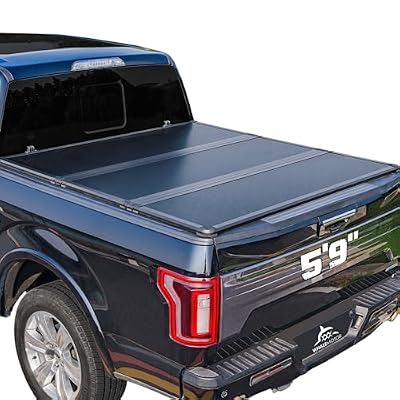
Hard Folding Truck Bed Tonneau Cover Compatiable with Chevy Silverado & GMC Sierra 1500(2007-2026) 5.8 FT Short Box(NO CarbonPro Bed), Tri Fold Style
Included for 'Best Truck Bed Covers for Security and Weather Protection' because the listing specifies Tri Fold Style, details this guide uses to compare options.
View on Amazon
AUTOSAVER88 Soft Tri-Fold Tonneau Cover for 2015-2026 Colorado/Canyon 5.2ft
Included for 'Best Truck Bed Covers for Security and Weather Protection' as a relevant option in this category; details come from the product listing.
View on AmazonQuick Picks by Situation
- Apartment or condo parking, truck parked outside: Hard folding (BAKFlip MX4) or retractable (Roll-N-Lock A Series). Soft covers are cut open in seconds.
- Tightest budget, occasional use: Soft tri-fold or soft roll-up — Tyger Auto T3, Gator SRX, Extang Trifecta 2.0.
- You remove the cover often by yourself: Soft roll-up or soft tri-fold. A hard tri-fold weighs 60–90 lb and is a two-person job to take off.
- You need to carry a rooftop tent, ladder rack, or bikes on top: Retractable with T-slot rails, or a DiamondBack with its own accessory rails.
- You want paint-matched, flush, no-visible-hardware looks: One-piece painted covers like UnderCover Elite LX or A.R.E. LSII.
- You want an open bed with weather protection and full height: A canvas topper — Softopper or Bestop Supertop for Truck.
- Compact truck or unibody pickup (Maverick, Santa Cruz, Ridgeline, R1T): Fitment is the limiting factor, not budget — check the bed length and rail shape first.
How the Five Cover Families Actually Differ
Truck bed covers are not one product category with different logos. They’re five distinct mechanisms, and the mechanism determines security, weight, install time, bed access, and how much of your bed you lose.
Soft roll-up covers
A vinyl skin over aluminum bows, rolling forward onto a header at the bulkhead. Weight is typically 20–30 lb. They install in 20–40 minutes with clamps at the rails and no drilling on most trucks. Bed access is total once rolled: you push the whole roll forward and the bed is open front to back. Security is minimal — a utility knife defeats the vinyl in under 10 seconds, and the latch is a single pull-cord release at the tailgate. Weather protection is decent against rain when the seals are new, but the vinyl stretches and the hook-and-loop side seals (Velcro-style) clog with dust and lose grip within two or three seasons. Expect to replace the cover, not repair it.
Soft tri-fold covers
Three hinged panels with a vinyl-over-frame construction, folding forward in thirds. Weight is 25–35 lb, so one person can install and remove them. They cost the least of any style, usually $200–$500. They seal slightly better than roll-ups because the panel edges sit flat on the rails rather than relying on a continuous hook-and-loop strip. The trade-off: you can’t fold them all the way forward against the cab on most designs without unclamping, so a 6.5-foot bed gives you roughly 4 feet of open floor with the cover folded.
Hard folding covers
Aluminum panels — usually 1/2-inch thick, foam-cored between two aluminum skins — joined by hinges and sealed with EPDM bulb seals. Weight runs 60–90 lb for a full-size short bed. Load ratings are typically 300–400 lb evenly distributed. Security is meaningfully better than soft: a knife does nothing, and the latches are usually two or three slam-latches that engage the rails, released by pulling a cable at the tailgate. A determined thief with a pry bar can still work a corner, which is why the tailgate lock matters more than the cover. Install is 45–90 minutes, no drilling on most trucks.
Retractable covers
Interlocking aluminum slats that roll into a canister at the front of the bed. They’re the heaviest and most expensive mainstream option — 70–120 lb, $1,400–$2,600. The canister eats bed space: roughly 10–12 inches of bed length and 9–11 inches of height at the bulkhead. In exchange you get the best security of any non-metal-lid cover, one-handed operation, and on the T-slot models a load-bearing rail for racks. Installation is the most involved of the clamp-on styles, typically 2–4 hours, and some trucks require drilling for the canister brackets.
One-piece and camper-style covers
Two sub-types. Fiberglass or ABS one-piece covers (A.R.E. LSII, UnderCover Elite LX, Leer 700) are painted to match, hinge at the bulkhead, and lift on gas struts. They weigh 90–130 lb and usually need two people to remove. Weather protection is the best of any tonneau because there are no panel joints. The catch is cost ($1,300–$2,300), a long lead time for paint match, and the fact that they’re a fixed structure — you don’t fold them, you open them, and a 6.5-foot bed with a one-piece cover can’t carry a full-height load.
Canvas toppers (Softopper, Bestop Supertop for Truck) are a different animal: a fabric and frame shell that gives you full bed height, side windows, and weather protection at roughly $900–$1,300. They’re not secure and they’re not load-bearing, but they’re the only option that lets you stand a refrigerator upright in the bed.
Cover Family Comparison by the Numbers
| Style | Typical weight | Manufacturer-rated load | Install time | Bed length lost | Typical price |
|---|---|---|---|---|---|
| Soft roll-up | 20–30 lb | None (not load-bearing) | 20–40 min | 0 in | $250–$600 |
| Soft tri-fold | 25–35 lb | None to 100 lb | 20–40 min | 0 in (folded: ~2 ft) | $200–$500 |
| Hard folding (aluminum) | 60–90 lb | 300–400 lb | 45–90 min | 0–6 in | $700–$1,300 |
| Hard roll-up (slat + vinyl) | 55–80 lb | 300–400 lb | 45–75 min | 4–6 in | $900–$1,300 |
| Retractable (aluminum) | 70–120 lb | 400–500 lb (rail) | 2–4 hr | 10–12 in | $1,400–$2,600 |
| One-piece painted | 90–130 lb | 150–250 lb | 1–2 hr + paint lead time | 0 in | $1,300–$2,300 |
| Canvas topper | 40–70 lb | None | 1.5–3 hr | 0 in | $900–$1,300 |
One number that surprises people: load ratings are almost always stated as an evenly distributed static load with the cover closed and latched. A 400 lb rating does not mean you can drop a 400 lb engine block on one panel corner. In practice, treat the rating as “will hold this much spread over the whole surface, sitting still.” Dynamic loads — anything bouncing on a washboard road — should stay well under half the static number.
Materials and Construction: What You’re Actually Paying For
Price differences between covers are mostly explained by five variables: the panel material, the seal material, the hardware alloy, the latch mechanism, and whether the frame is extruded or roll-formed.
| Material / component | What it does well | Where it fails | Typical service life | Cost tier |
|---|---|---|---|---|
| Vinyl over aluminum bows | Light, cheap, rolls tight, easy DIY | UV fade, knife cuts, stretch, seam leaks | 3–6 years | $ |
| Vinyl over foam-core panels | Flat surface, better seal, folds | Panel edge delamination, hinge wear | 5–8 years | $$ |
| Aluminum skin + foam core panels | Knife-resistant, light for its strength | Dents; corners pryable if tailgate unlocked | 8–15 years | $$$ |
| Extruded aluminum slats | Best security, one-hand operation, load rail | Canister rattle, slat seal wear, high weight | 10–20 years | $$$$ |
| Fiberglass / ABS one-piece | Flush look, paint match, no joints to leak | Cracking, gel-coat fade, expensive repair | 10–18 years | $$$$ |
| EPDM bulb seal | Stays flexible from about −40°F to 250°F | Compression set after years of being clamped | 5–10 years | — |
| PVC / vinyl edge seal | Cheap, seals well when new | Stiffens below about −20°F, cracks | 2–4 years | — |
| Stainless steel clamps | No rust in salt-belt winters | Costs more; still galls if over-torqued | Life of truck | — |
| Painted / zinc-plated steel clamps | Cheap and strong | Surface rust within 2–3 winters in road-salt states | 3–6 years | — |
The single biggest quality tell on a hard cover is the seal. A cover with a hollow EPDM bulb seal along all four edges will stay watertight far longer than one with a flat foam tape strip, because the bulb compresses and recovers instead of flattening permanently. The second tell is the hinge: continuous piano-style hinges distribute load and don’t loosen, while two or three discrete hinges will develop play and start letting water in at the seams after a few thousand miles of gravel.
Weather Protection: What Actually Keeps Water Out
No tonneau cover is a sealed container. Every hard cover on the market manages water rather than blocking it, using three mechanisms:
- Perimeter seals. A bulb seal runs along the rails and the bulkhead, and a tailgate seal closes the gap at the back. The tailgate gap is the number-one leak path on almost every truck — a 1/4-inch gap across a 60-inch tailgate is a lot of open area.
- Drain tubes. Retractable and some hard folding covers route water from a gutter at the bulkhead down through 3/8-inch or 1/2-inch tubes that exit through the bed’s front stake pockets or through grommeted holes you drill. If those tubes clog with pine needles or freeze solid, water backs up and dumps into the bed.
- Overlap and slope. Panels overlap so water runs downhill toward the tailgate rather than pooling at a joint.
Practical thresholds worth knowing: a soft cover with hook-and-loop side seals will let fine dust in within one dry season, which matters if you’re carrying camera gear or clean laundry. A hard folding cover with EPDM bulb seals keeps out rain and road spray but will still let a little dust in at the tailgate corners on a long gravel drive. A one-piece fiberglass cover has the fewest joints and therefore the fewest leak paths — it’s the closest thing to a trunk lid. If you park under trees, budget five minutes every couple of months to clear the front gutter and blow out the drain tubes; that single maintenance habit prevents most “my cover leaks” complaints.
Cold matters more than most buyers expect. Vinyl skins get stiff below about 20°F and can crack if you force them open at 0°F. EPDM seals stay pliable to roughly −40°F. If you live somewhere with real winters, that difference alone justifies moving up from a budget soft cover to one with EPDM seals.
Security: A Realistic Ranking
Security on a pickup bed is a chain, and the cover is only one link. The strongest cover on the market is defeated in about 15 seconds if the tailgate isn’t locked, because most tonneau latches release from the tailgate side — open the tailgate, pull the release cable, lift the cover. So the first upgrade for any truck with a locking bed is a power-locking tailgate or an aftermarket tailgate lock actuator, not the cover itself.
| Cover type | Resists cutting | Resists prying | Requires locked tailgate | Realistic deterrent level |
|---|---|---|---|---|
| Soft roll-up | No — cut in under 10 sec | No | Yes, but barely helps | Opportunist-only |
| Soft tri-fold | No | No | Yes | Opportunist-only |
| Hard folding (aluminum) | Yes | Partially — corners are the weak point | Yes, essential | Good in parking lots |
| Hard roll-up (slat + vinyl) | Yes | Partially — depends on the latch design | Yes, essential | Good in parking lots |
| Retractable aluminum | Yes | Yes — slats interlock and latch at the rails | Yes, essential | Best of the tonneau styles |
| One-piece fiberglass | Yes | Yes at the panel; hinges are the weak point | Yes, essential | Very good |
| DiamondBack (aluminum, locking handles) | Yes | Yes — it’s a metal lid, not a tonneau | No, it locks independently | Highest in this roundup |
The honest summary: if your truck sits on a street overnight, buy a hard cover and a locking tailgate, and don’t leave anything visible. If your truck sits in a garage, a soft roll-up is a perfectly rational $400 decision and you should spend the difference on tires.
Fitment: Bed Sizes, Cab Styles, and What Actually Fits
Fitment is where most returns happen. Covers are sold by specific year, make, model, cab, and bed length — not by “6.5 foot” alone. Two trucks with nominally identical bed lengths can have different rail heights, different stake-pocket spacing, and different bulkhead profiles.
| Truck (examples) | Common bed lengths | Approx. rail-to-rail width | Notes that affect cover choice |
|---|---|---|---|
| Ford F-150 | 5.5 ft, 6.5 ft, 8 ft | ~65 in (wide), ~62 in | Wide-body rails; many covers have a separate F-150 SKU |
| Ford Super Duty | 6.75 ft, 8 ft | ~66 in | Tall bed sides; check canister height clearance |
| Chevy Silverado 1500 / GMC Sierra 1500 | 5.8 ft, 6.6 ft, 8 ft | ~64 in | MultiPro / Multi-Flex tailgate changes the tailgate seal kit |
| Ram 1500 | 5.7 ft, 6.4 ft, 8 ft | ~64 in | RamBox beds need a RamBox-specific cover — standard covers won’t fit |
| Toyota Tacoma | 5 ft, 6 ft | ~57–60 in | Composite bed; clamp torque matters more than on steel beds |
| Toyota Tundra | 5.5 ft, 6.5 ft, 8.1 ft | ~65 in | Bed rail utility track can interfere with clamp placement |
| Nissan Frontier | 5 ft, 6.1 ft | ~58–61 in | Fewer SKUs stocked; verify year range |
| Honda Ridgeline | 5.5 ft (single length) | ~60 in | In-bed trunk lid must remain operable — restricts canister mounting |
| Jeep Gladiator | 5 ft | ~56 in | Short bed + spare tire clearance; retractables eat a big share of the bed |
| Ford Maverick / Hyundai Santa Cruz | 4.5 ft / 4.3 ft | ~54–57 in | Unibody; soft covers dominate because hard covers eat too much bed |
| Rivian R1T | 4.5 ft | ~51 in | Powered OEM tonneau on many builds; aftermarket options are limited |
Three fitment rules that save returns. First, measure your own bed with a tape: length from the bulkhead to the inside of the tailgate, and width across the top of the rails. Second, confirm the tailgate type — a multi-function tailgate often needs a different tailgate seal kit than a standard one. Third, if your truck has a factory bed liner that goes over the rails, tell the seller; over-the-rail liners change the rail height by roughly 1/8 to 1/4 inch and can prevent clamps from seating.
Installation Realities
Almost every clamp-on cover today is marketed as “no-drill,” and most of them are — with caveats.
- Soft covers (20–40 min). Clamp to the rails at four to six points, hand-tighten. The header at the bulkhead usually needs a small bracket that may use existing bolts. No drilling on most trucks.
- Hard folding (45–90 min). Rails bolt on with clamps front, middle, and rear. Most specify hand-tightening plus about a quarter turn; bolted rail brackets typically call for roughly 10–15 ft-lb. Over-torquing is the most common install mistake and it distorts the rail so the panels stop sealing.
- Retractable (2–4 hr). The canister is the heavy part — 50–80 lb of the total — and needs a second person or a strap to hold it in place while you bolt the brackets. Many trucks require drilling two to four holes in the bed’s front wall for the canister mounts, plus a drain-tube exit hole. Plan on a full afternoon and have a 3/8-inch drill bit and silicone sealant on hand.
- One-piece and canvas toppers (1–3 hr). Fiberglass covers usually mount with clamps and gas struts; canvas toppers need the frame assembled and the fabric stretched, which takes two people and a warm day — vinyl and canvas both stretch more easily above 60°F.
Two things nobody mentions in the install instructions: the cover’s box weight and the box dimensions. A hard folding cover ships in a box around 70–90 lb and 6 feet long; a retractable ships at 90–130 lb. If you’re picking it up at a freight terminal or carrying it up apartment stairs, that matters. And if you have a bed liner, a spray-in liner is fine, but a drop-in plastic liner with a lip over the rail often has to be trimmed.
Decision Matrix: Match the Cover to Your Situation
| Your situation | Best cover type | Specific picks worth looking at | Budget range |
|---|---|---|---|
| Truck parked on street, tools inside | Hard folding or retractable + locking tailgate | BAKFlip MX4, Roll-N-Lock A Series, RetraxPRO XR | $900–$2,400 |
| Garage-kept truck, occasional weekend hauling | Soft roll-up | TruXedo Lo Pro, Access Original, Gator SRX | $300–$600 |
| Renter / leased truck, must return it unmodified | Clamp-on soft or hard folding, no drilling | Extang Trifecta 2.0, Gator EFX, BAKFlip G2 | $400–$1,000 |
| Roof rack, bikes, or a rooftop tent on top | Retractable with T-slot rails, or DiamondBack | RetraxPRO XR, Pace Edwards UltraGroove, DiamondBack HD | $1,500–$2,400 |
| Heavy gear, generator, welder, hunting equipment | Metal lid | DiamondBack HD or SE | $1,500–$2,400 |
| Need to stand tall cargo upright (fridge, appliance) | Canvas topper | Softopper, Bestop Supertop for Truck | $900–$1,300 |
| Want a factory-looking flush painted lid | One-piece painted | UnderCover Elite LX, A.R.E. LSII, Leer 700 | $1,300–$2,300 |
| Compact truck, small bed, don’t want to lose length | Soft roll-up or low-profile hard folding | TruXedo Lo Pro, LOMAX Stance, BAKFlip MX4 | $450–$1,300 |
| Cold climate, snow and ice | Hard cover with EPDM seals | Extang Solid Fold 2.0, BAKFlip MX4, UnderCover Ultra Flex | $900–$1,300 |
| Very dusty environment (gravel roads, construction) | Hard folding with full-perimeter bulb seal | BAKFlip MX4, LOMAX Stance, WeatherTech AlloyCover | $1,000–$1,300 |
Product Breakdowns
The sections below cover the covers that are widely available across 2026 model-year trucks. Prices are general market ranges for a full-size short-bed application; compact-truck and 8-foot-bed versions usually run $100–$300 less or more respectively. Where a manufacturer publishes a load rating, it’s stated as the manufacturer’s rating — not a measured figure.
BAKFlip MX4 — the default hard folding pick
The MX4 is the cover most people end up with after comparing hard folding options, and it earns that position on three things: a 400 lb manufacturer-rated evenly distributed load, dual-action latches that let you open or close the cover with the tailgate up or down, and a full-perimeter EPDM seal. Panels are aluminum skins over a foam core, roughly 1/2 inch thick, with a matte black powder-coat finish. The latch system uses two slam latches that engage the rails, released by a single cable at the tailgate — which means the cover is only as secure as your tailgate lock.
Weather performance is among the best in the hard-folding class because the rails have a built-in gutter and the front seal overlaps the bulkhead rather than butting against it. Dust intrusion at the tailgate corners is minimal but not zero. Install is clamp-on, no drilling on most trucks, typically 60–90 minutes. Weight is around 70–80 lb for a 5.5-foot bed, so removal is a two-person job. Expect roughly $1,000–$1,300 depending on bed length and whether the truck needs a special rail kit.
BAKFlip G2 — the value version of the same idea
The G2 uses the same folding architecture as the MX4 with a slightly lower load rating (around 300 lb) and a simpler latch design. It’s usually $200–$300 cheaper, landing around $800–$1,000. If you don’t plan to carry anything on top and just want a lockable hard lid, the G2 does 90% of what the MX4 does. The trade-off shows up in the finish and the seals rather than the structure — the G2’s seals are less elaborate, so it’s a slightly worse choice in a heavy dust or heavy rain environment.
BAK Revolver X4s — hard roll-up with a vinyl top
The Revolver uses interlocking aluminum slats bonded to a vinyl outer skin, rolling forward like a soft cover but with a hard core. It gives you near-total bed access with no canister, which is the main reason people pick it over a retractable. Load rating is in the 400 lb range, security is well above any soft cover, and the roll sits low at the bulkhead — around 4–6 inches of bed length consumed. Price is typically $1,100–$1,300. The wear item is the vinyl skin; it’s more UV-resistant than a soft cover’s but still the first thing to age.
Extang Trifecta 2.0 — the best-selling soft tri-fold
A three-panel soft tri-fold with a leather-grain vinyl skin, aluminum frame, and Extang’s snap-on rail system. It installs in about 20–30 minutes with no drilling on most trucks, weighs roughly 30 lb, and costs about $400–$500. The Signature series version adds a slightly heavier vinyl and upgraded hardware for about $100 more. There’s no meaningful security — a knife goes through it — and the load rating is essentially nil, but for a truck that lives in a garage and hauls mulch twice a year, it’s a rational purchase.
Extang Solid Fold 2.0 — hard tri-fold, cold-weather friendly
Aluminum panels with a textured black finish and a 400 lb manufacturer-rated load. It’s one of the better cold-weather covers because the seals stay pliable well below freezing and the latches are designed to work with gloves on. Install is 45–75 minutes, clamp-on. Price is roughly $900–$1,100. It folds in three sections but, like most hard tri-folds, doesn’t fold fully upright against the cab without unclamping the front, so plan on about 4 feet of usable open floor in a 6.5-foot bed.
TruXedo Sentry CT — hard roll-up, low profile
The Sentry CT pairs aluminum slats with a matte-black woven fabric top, giving a low-profile look without the vinyl sheen. Load rating is around 400 lb, and the roll is compact — roughly 4 inches of bed length. Price is typically $1,100–$1,300. The standard Sentry uses a vinyl top and runs about $200 less. Both are good choices if you want hard-cover security but still want to open the bed all the way without a canister in the way.
TruXedo Lo Pro — the soft roll-up benchmark
A low-profile soft roll-up with an automatic tensioner that keeps the vinyl tight as temperatures change — the feature that separates it from budget roll-ups that sag after a summer. Install is 20–40 minutes, no drilling. Price is roughly $450–$600 depending on bed size. It rolls completely forward, so you keep 100% of your bed length. It is not secure, and the hook-and-loop side seals need occasional cleaning to keep gripping.
Gator EFX — hard tri-fold at a mid price
A three-panel aluminum hard folding cover with a 300 lb manufacturer-rated load and a matte finish. It typically runs $700–$850, which puts it below the BAKFlip and Extang hard tri-folds while keeping the same basic architecture: clamp-on rails, dual latches, EPDM perimeter seal. It’s a reasonable pick if you want hard-cover security on a budget and don’t need the highest load rating.
Gator SRX — entry-level soft roll-up
A straightforward vinyl roll-up with aluminum bows, usually $300–$400. It does the basics: keeps rain off, rolls out of the way, installs in half an hour. Expect the vinyl to fade and the seals to stiffen within three to four seasons. Good for a work truck that mostly needs to keep leaves and snow out.
Tyger Auto T3 — the cheapest reasonable soft tri-fold
Around $200–$300, three panels, vinyl over aluminum, clamps on in about 20 minutes. It’s the cover people buy when the truck is a third vehicle. It will keep rain off and it will fold. It will not survive a knife, a pry bar, or five years of direct sun without looking tired. If your budget ceiling is genuinely $300, this is the category to shop in — but understand you’re buying weather protection, not security.
LOMAX Stance — low-profile hard tri-fold
LOMAX covers sit notably low on the rails, which matters if you use a car wash with brushes or want a flush look. The Stance is a hard tri-fold with a 400 lb manufacturer-rated load, matte black aluminum panels, and EPDM seals. Price is roughly $1,100–$1,300. The low profile means less wind noise and slightly better fuel economy than a tall hard cover, at the cost of a shallower gutter at the front, so keep the drain path clear if you park under trees.
UnderCover Elite LX — painted one-piece
A one-piece ABS cover painted to match your truck’s factory color, hinged at the bulkhead and lifted by gas struts. Weight is roughly 90–110 lb. Because it has no panel joints, it’s the best weather protection short of a camper shell. Security is very good at the panel, though the hinge line is the theoretical weak point. Price runs about $1,300–$1,600 plus paint, and there’s usually a lead time for color matching. It’s the pick if you want the bed to look like a factory trunk lid and you rarely carry tall cargo.
UnderCover Ultra Flex and Armor Flex — hard folding, carpeted underside
Both are hard folding aluminum covers with a 400 lb manufacturer-rated load; the Ultra Flex has a carpeted underside and a slightly more finished appearance, and the Armor Flex uses a textured finish that resists scuffing better. Prices are roughly $1,000–$1,300. They fold in three sections and latch at the tailgate, and they install clamp-on in about an hour.
RetraxPRO XR — the retractable with T-slot rails
Interlocking aluminum slats rolling into a canister at the bulkhead, with integrated T-slot rails on top so you can mount crossbars, bike racks, or a cargo box without a separate rack system. Load rating is around 500 lb on the rails. Price is typically $2,000–$2,400, which makes it the most expensive mainstream tonneau — but if you were going to spend $600 on a separate rack, the math changes. The canister consumes roughly 10–12 inches of bed length and stands 9–11 inches tall at the front. Install is 2–4 hours and often involves drilling for the canister brackets. The slats are the security story: a knife does nothing, and the latches engage both rails.
RetraxONE XR — same architecture, polycarbonate slats
Roughly $1,600–$1,900. The slats are a matte polycarbonate rather than aluminum, which saves weight and cost. Security is still good but the slats are less resistant to a determined pry than aluminum. If you want the T-slot rail function and don’t need maximum slat strength, this is the value entry into the retractable category.
Roll-N-Lock A Series — retractable, compact canister
Aluminum slats with a vinyl-over-aluminum laminated top, rolling into one of the smaller canisters on the market — about 9–10 inches tall and roughly 10 inches of bed length. Price is roughly $1,400–$1,700, and the M-Series is a step below at about $1,300–$1,500. Both use a latch that engages the rails and both require the tailgate to be locked for real security. Install is 2–3 hours with some drilling on most trucks.
Pace Edwards UltraGroove — retractable with an accessory rail
Aluminum slats, a canister at the bulkhead, and a rail system that accepts Pace Edwards’ own crossbars and accessories. Typically $1,500–$1,900. It’s a direct competitor to the Retrax XR line: pick whichever has a cleaner bracket kit for your specific truck, because install complexity varies more between trucks than between these two brands.
Peragon — folding aluminum with a removable design
Peragon’s cover folds into a stack at the bulkhead and can be removed entirely in a couple of minutes without tools — a genuinely useful feature if you need a fully open bed several times a month. Panels are aluminum with a textured finish, load rating is in the 400 lb range on the higher trims, and price is roughly $800–$1,000. The folding stack sits at the front of the bed, so you lose a few inches of length when it’s open.
DiamondBack HD — a metal lid, not a tonneau
The DiamondBack HD is the outlier in this roundup. It’s a welded aluminum diamond-plate lid, hinged in two halves, with its own keyed locking handles — so it doesn’t depend on the tailgate lock for security. Manufacturer ratings are roughly 400 lb dynamic and about 1,600 lb static, evenly distributed, which means you can carry an ATV or a stack of plywood on top. It has integrated accessory rails for tie-downs and racks. Price is typically $1,900–$2,400. Weight is 100–140 lb, install is 1–2 hours with clamps, and the trade-off is that it’s heavy, expensive, and takes real effort to remove. The SE model is a lighter-duty version at roughly $1,500–$1,800, and the 270 adds a third opening panel for about $2,400–$2,900.
WeatherTech AlloyCover — hard tri-fold with a low profile
An aluminum hard tri-fold with a low-profile rail design, roughly 400 lb load rating, and EPDM seals. Price is about $1,000–$1,200. The appeal is the fitment catalog — WeatherTech covers a wide range of years and cab configurations, which helps if you drive something less common. Install is clamp-on in about an hour.
A.R.E. LSII — painted fiberglass one-piece
A fiberglass one-piece cover with a carpeted underside, gas struts, and a paint-matched finish. Roughly $1,700–$2,300 depending on color and options. It’s the closest tonneau equivalent to a trunk lid: quiet, weathertight, and good-looking. It also weighs over 100 lb and doesn’t fold, so anything taller than the bed rail won’t fit under it. Expect a paint lead time of a week or more.
Leer 700 — the other painted one-piece
Similar concept to the A.R.E. LSII, roughly $1,600–$2,200, with a textured or paint-matched finish and gas-strut operation. Some versions include an integrated rear spoiler and a third brake light. Same trade-offs: best-in-class weather protection, no tall cargo, heavy, expensive.
Softopper — canvas topper for full bed height
A fabric and aluminum-frame shell that gives you full bed height with roll-up side and rear windows. Roughly $900–$1,200. It folds down against the bulkhead when you need an open bed, which is the feature that makes it useful for people who occasionally carry appliances. It is not secure in any meaningful sense — canvas is cut easily — and it’s not load-bearing, so no roof racks on top of it. Weather protection is good for rain, less good in a sideways-driven storm.
Bestop Supertop for Truck — the premium canvas option
Same category as the Softopper with heavier fabric, a more rigid frame, and better sealing. Roughly $1,000–$1,300. If you want the topper look and you’ll leave it up year-round, the heavier fabric is worth the difference — it sags less and the zippers last longer.
Truck Covers USA American Roll Cover — heavy-duty retractable
A retractable aluminum slat cover built with heavier components than the mainstream retractables, with a canister that’s designed to be more resistant to rattle over rough roads. Roughly $2,000–$2,600. It’s aimed at people who use their truck as a truck daily and are tired of canister noise. Install is 3–4 hours and typically involves drilling.
Factory and OEM covers
Several trucks now ship with a factory tonneau, and it’s worth knowing what you’re getting. The Rivian R1T’s powered tonneau is integrated into the bed and operated from the cab, but its mechanism has been a known service item — if you’re buying used, ask about it. Ford, Chevrolet, Ram, and Toyota all offer accessory soft folding and hard folding covers through their dealer parts channels; these are usually re-branded versions of covers from the same manufacturers listed above, priced at a premium but with a factory warranty and guaranteed fitment. If you lease, a dealer-installed cover can be the safest route to avoid a lease-return dispute.
Tonneau + Rack Compatibility
If you want to carry anything above the bed rails, this is the section that decides your purchase. There are three approaches:
- T-slot rails integrated into a retractable cover. Retrax XR models, Pace Edwards UltraGroove, and similar. You buy crossbars that slide into the rail. The advantage is that the rack moves with the cover and the whole system is designed together. The disadvantage is that the canister already eats 10–12 inches of bed length.
- A cover with its own accessory rails. DiamondBack covers have integrated tie-down and accessory rails and are rated to carry loads on top. This is the only tonneau-adjacent product where the manufacturer rates the top surface for real cargo weight.
- Separate bed rack + cover. Some bed racks are designed to work with specific low-profile tonneau rails. This is the most fragile combination — the rack clamps to the same rail the cover needs, and small differences in rail height cause leaks. If you go this route, buy the rack and cover from manufacturers who explicitly list each other as compatible.
One clearance number to keep in mind: if you mount crossbars on a cover rail that sits about 2 inches above the bed rail, and your garage door opening is 7 feet, you have roughly 20 inches of vertical room above the bed rail before you’re scraping. Measure before you buy, not after.
What Wears First, and Maintenance That Actually Matters
Covers don’t fail all at once. They fail in a predictable order:
- Years 1–3: the vinyl or fabric top fades and the side seals collect dust. Clean the hook-and-loop or seal channel with a damp cloth twice a year. This is the cheapest maintenance you’ll ever do and it prevents the most common complaint.
- Years 3–5: the perimeter seal takes a compression set and stops springing back, so water starts finding the corners. Replacement bulb seal is inexpensive and usually sold by the foot.
- Years 4–7: hinges develop play, and clamps that are painted steel start to rust in road-salt states. Stainless clamps don’t have this problem.
- Years 5–10: retractable covers start to rattle as the slat seals wear, and drain tubes clog. Blowing out the tubes with compressed air once a year prevents the worst of it.
- Years 8–15: fiberglass covers develop gel-coat fade or stress cracks around the hinge mounts; aluminum panels develop dents but keep working.
Two habits extend cover life more than anything else: park facing away from the afternoon sun if you can (UV is what kills vinyl), and never force a stiff cover open in freezing weather — warm the truck up first or use a remote start and let the cab heat soak for ten minutes.
Cost of Ownership Over Five Years
| Cover type | Purchase | Install (DIY / shop) | Likely 5-year upkeep | Approx. 5-year total |
|---|---|---|---|---|
| Soft tri-fold | $200–$500 | $0 / $75–$150 | $0–$150 (seal cleaner, possible replacement) | $275–$800 |
| Soft roll-up | $250–$600 | $0 / $100–$200 | $0–$200 (tensioner, seal) | $350–$1,000 |
| Hard folding | $700–$1,300 | $0 / $150–$300 | $0–$150 (seal strip, clamp replacement) | $850–$1,750 |
| Hard roll-up | $900–$1,300 | $0 / $150–$300 | $50–$250 (vinyl skin wear) | $1,100–$1,850 |
| Retractable | $1,400–$2,600 | $0 / $300–$600 | $100–$400 (slat seals, drain service) | $1,800–$3,600 |
| One-piece painted | $1,300–$2,300 | $0 / $200–$400 | $0–$300 (gel-coat, struts) | $1,500–$3,000 |
| DiamondBack HD | $1,900–$2,400 | $0 / $200–$400 | $0–$100 (it’s welded aluminum) | $2,100–$2,900 |
Notice the shape of that table: the expensive covers aren’t necessarily more expensive per year. A $250 soft tri-fold replaced twice in five years costs about as much as a $1,000 hard folding cover bought once — and the hard cover was lockable the whole time. The soft cover still wins on weight and removal ease, which is why it stays popular.
Frequently Asked Questions
Do I need a locking tailgate to make a tonneau cover secure?
For most folding and retractable covers, yes. Their release mechanism is at the tailgate end, so an unlocked tailgate means the cover opens with the tailgate. A power-locking tailgate (factory on many 2026 trucks) or an aftermarket tailgate lock actuator, usually $100–$250 installed, is the single highest-value security upgrade you can make.
Will a cover keep my bed completely dry?
No cover keeps a bed perfectly dry in a car wash or a driving rainstorm. Hard folding and one-piece covers typically keep rain out of everything except a strip along the tailgate. Retractables with clear drain tubes do very well. Soft covers with hook-and-loop seals let in dust and mist over time. If you need truly dry storage, add a tailgate seal kit and keep cargo in a lidded tote.
Can I put a roof rack or rooftop tent on a tonneau cover?
Only on covers explicitly rated for it: retractables with T-slot rails (Retrax XR, Pace Edwards UltraGroove), DiamondBack covers with their accessory rails, or a bed rack designed to work with your specific cover’s rails. Never drill into a tonneau panel to mount a rack — the panel is a foam core and won’t hold a fastener under load.
How much bed space does a retractable cover use?
Roughly 10–12 inches of length and 9–11 inches of height at the front of the bed. On a 5-foot compact bed, that’s a fifth of your usable length, which is why retractables are rare on Mavericks, Santa Cruzes, and Gladiators.
Do I need to remove the cover to carry tall items?
On a hard folding cover, you can usually carry items up to the height of the folded stack (about 6–8 inches) with the cover folded, but anything taller needs the cover removed or unclamped. Soft roll-ups and hard roll-ups give you full bed height when open. One-piece covers give you nothing above the rail. If tall cargo is routine, buy a roll-up or a canvas topper.
What’s the difference between a $300 cover and a $1,200 cover?
Roughly: knife resistance, a load rating, seal quality, and hardware alloy. The $300 cover is vinyl over bows with PVC edge seals and painted steel clamps. The $1,200 cover is foam-cored aluminum panels with EPDM bulb seals and stainless clamps, and it will still be working when the cheap one has been replaced twice.
Will a cover hurt my fuel economy?
The honest answer is that the effect is small and hard to isolate. A low-profile hard cover produces less drag than a tall, flat bulkhead, but the measurable difference on a modern truck is typically well under 1 mpg in mixed
Ready to decide? Our #1 pick for 2026 is the Soft roll-up.
Live price & availability on Amazon.
Related Reviews & Guides




Signs a Senior Needs Hearing Aids

Best Daily Living Aids for Seniors With Arthritis in the Hands