Last Updated: October 4, 2026
- Top Pick: OXO Good Grips Lock and Go Manual Can Opener
- Best Value: One Touch Electric Can Opener Fits All Can Sizes for Seniors with Arthritis, Battery Operated Can Opener with Smooth Edge, Food Safe Kitchen Gadgets Automatic Can Opener for Kitchen
- Premium Choice: Electric Can Opener, One Touch Hands Free Automatic Can Opener for Weak Hands & Seniors with Arthritis, Food Safe and Smooth Edge Battery Operated Can Openers for Kitchen Fits All Cans Kitchen Gadget

TL;DR: A push button can opener eliminates the grip, twist, and torque demands of manual can openers that make kitchen tasks painful and dangerous for seniors with arthritis, Parkinson’s, post-stroke weakness, or reduced hand strength. Electric one-touch models are the gold standard for independent kitchen use. This guide covers safety features, motor strength, and the specific hand function limitations each design addresses.
Best Push Button Can Opener for Elderly: One-Touch Electric Options for Arthritis and Weak Grip
Kitchen independence is one of the most significant predictors of quality of life for older adults living at home. The ability to prepare a simple meal — including opening a can of soup or vegetables — without assistance preserves dignity, reduces caregiver burden, and supports nutritional adequacy. Yet the standard manual can opener demands grip strength, bilateral hand coordination, sustained rotational torque, and wrist supination that can be entirely beyond the capacity of a senior with arthritis or neurological hand weakness.
As an Amazon Associate we earn from qualifying purchases.


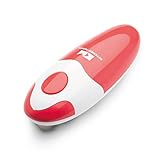


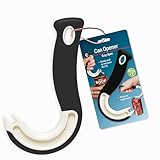
A quality push button can opener reduces that demand to a single button press, making the difference between independence and dependence in the kitchen.
Why Manual Can Openers Fail Senior Users
Occupational therapy assessments consistently document that manual can opening is among the most grip-demanding routine kitchen tasks. The biomechanics involved:
- Pinch grip: Engaging the cutting wheel requires 4–6 kg of lateral pinch force — well above the functional grip strength of many seniors with hand osteoarthritis.
- Wrist rotation: Turning the knob requires repeated wrist supination/pronation through a full range, a motion restricted by carpal tunnel syndrome, rheumatoid arthritis, and post-stroke spasticity.
- Bilateral coordination: One hand stabilizes the can while the other operates the opener — impossible for hemiparetic individuals and difficult for those with essential tremor.
- Sharp edge management: Traditional can openers leave razor-sharp lid edges requiring careful disposal — a laceration risk for seniors with fragile skin.
Occupational therapists in home assessment programs routinely recommend electric can openers as adaptive equipment for older adults with moderate to severe hand function limitations.
Types of Electric Can Openers for Seniors
Three main designs serve the senior market, each suited to different functional profiles:
- One-touch countertop electric opener: Place the can, press the button, and the opener automatically rotates around the rim and stops when complete. No grip required during operation. Best for seniors who can lift a can but cannot grip or twist.
- Hands-free electric opener: Attaches to the can rim with a single placement gesture, then operates entirely automatically. Best for hemiplegia, post-stroke one-handed function, or Parkinson’s with significant tremor.
- Safety electric opener: Cuts the lid from the side rather than the top, leaving a smooth, press-down lid rather than a sharp-edged cut. Eliminates the cut hazard during lid removal. Best for seniors with fragile skin or impaired pain sensation.
Key Specifications for Senior-Safe Can Openers
| Specification | Why It Matters | What to Look For |
|---|---|---|
| Single-button operation | Eliminates grip and rotation demands | One-touch start/stop on same button |
| Auto-stop at completion | Prevents re-cutting and lid drops | Magnetic lid retention + auto-off |
| Magnetic lid retention | Holds cut lid to prevent dropping into food or cutting fingers | Built-in magnet in cutting head |
| Battery or corded power | Battery models work at any position; corded have more consistent torque | Battery: 2xAA standard; corded: at least 3ft cord |
| Non-slip base | Countertop stability during operation without need to hold the device | Rubberized feet on base |
| Dishwasher-safe blade | Hygiene without difficult manual cleaning | Removable blade/drive assembly |
| Smooth-edge cutting | Eliminates sharp lid hazard | Side-cut models; check product specification |
Recommended Push Button Can Opener
The following one-touch electric can opener is widely used in occupational therapy-recommended adaptive kitchen equipment lists. It operates with a single button press, retains the lid magnetically, and requires no grip strength during the cutting cycle.

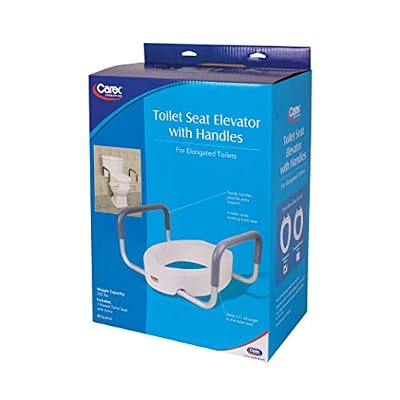
Carex 3.5 Inch Raised Toilet Seat with Arms, Elongated Toilet Seat Riser, Up to 250 lbs Capacity, Elevating & Raising Seat for Elderly & Handicap, Universal, Slip-Resistant with Padded Handles, White


As an Amazon Associate we earn from qualifying purchases. Product prices and availability are accurate as of the date/time indicated.
Carex 3.5 Inch Raised Toilet Seat with Arms, Elongated Toilet Seat Riser, Up to 250 lbs Capacity, Elevating & Raising Seat for Elderly & Handicap, Universal, Slip-Resistant with Padded Handles, White
As an Amazon Associate we earn from qualifying purchases. Product prices and availability are accurate as of the date/time indicated.
Carex 3.5 Inch Raised Toilet Seat with Arms, Elongated Toilet Seat Riser, Up to 250 lbs Capacity, Elevating & Raising Seat for Elderly & Handicap, Universal, Slip-Resistant with Padded Handles, White
As an Amazon Associate we earn from qualifying purchases. Product prices and availability are accurate as of the date/time indicated.
Using a Can Opener Safely with One-Handed Function or Tremor
For seniors with hemiplegia, severe tremor, or significant bilateral weakness, standard electric can openers may still require modification. Occupational therapy-recommended techniques include:
- Dycem mat: Place a non-slip dycem sheet under the can to stabilize it without grip. This allows one-handed placement of the opener on the can rim.
- Countertop clamp: Some seniors use a countertop clamp or suction-cup stabilizer to hold the can while placing the opener with the stronger hand.
- Seated working position: Operating at a seated height reduces the postural stability demands of the task and lowers fall risk if the opener is difficult to engage.
- Hands-free models: For significant one-handed function impairment, a fully automatic hands-free model that clips to the can and runs independently is the appropriate adaptive choice.
Kitchen independence tools work best as part of a broader adaptive equipment assessment. For additional kitchen aids, our adaptive kitchen tools for elderly guide covers jar openers, ergonomic utensils, and one-handed cutting boards. Seniors with significant hand weakness also benefit from the products reviewed in our arthritis aids for seniors article. For grip assistance across daily tasks, the reacher grabber tool guide covers tools that extend reach and reduce bending and gripping effort throughout the home.
Frequently Asked Questions
What is the easiest can opener to use for someone with arthritis?
A one-touch electric can opener requires only enough hand function to press a single button and place the device on the can rim. This is typically achievable even for moderate-to-severe hand osteoarthritis. For individuals who cannot manage even this placement reliably, a fully hands-free automatic model that clips to the rim and operates independently removes all grip requirements. An occupational therapist can assess which design is appropriate for a specific functional profile.
Can a push button can opener be used with one hand after a stroke?
One-touch countertop models require the stronger hand to place the opener on the can and press the button. With a dycem mat to stabilize the can, this is achievable for many post-stroke one-handed users. Fully automatic hands-free models are an even better fit for significant hemiplegia. An OT assessment will identify the most appropriate device and any compensatory techniques needed.
Are battery-operated or corded electric can openers better for seniors?
Both designs work well. Corded models provide consistent torque regardless of battery charge state — important for seniors who may not notice when batteries are low. Battery models offer flexibility and can be stored in any drawer. For seniors who forget to replace batteries, a corded model eliminates that maintenance requirement. Choose based on kitchen layout and whether an accessible outlet is near the working area.
How do I clean an electric can opener safely?
Always unplug the device before cleaning. Most electric can openers have a removable blade and drive assembly that is dishwasher safe or can be rinsed under running water. Wipe the base unit with a damp cloth — never immerse the motor housing. For seniors who find detailed cleaning difficult, models with a one-piece removable cutting head are the easiest to maintain hygienically.
Is a smooth-edge can opener safer for elderly users?
Yes, definitively. Standard can openers cut through the top of the lid, leaving a thin, razor-sharp metal edge that requires careful disposal. Smooth-edge (side-cut) openers cut the lid from the side, leaving a rolled, press-down lid with no sharp edge on either the lid or the can. For seniors with thin skin, neuropathy, or impaired fine motor control, smooth-edge openers eliminate a meaningful cut and laceration risk from what should be a routine kitchen task.
Related Reviews & Guides




How to Pay for Aging-in-Place Home Modifications: Grants and Programs

Lap Tray Feeder Bed: Best Foldable Bed Trays for Seniors…