Last Updated: October 9, 2026
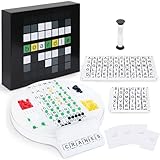
- Top Pick: Hasbro Gaming Wordle The Party Game for 2-4 Players, Official Wordle Board Game Inspired by New York Times, Games for Ages 14+, Word Games
- Best Value: Boardle – Wordle-Inspired Word Game Board for Adults, Families & Couples | 2-Player Word Puzzle Board Game, Educational Vocabulary Challenge, Fun for Family Game Night
- Premium Choice: Wordle Challenge: 500 Puzzles to do anywhere, anytime (Puzzle Challenge, 1)
The wordle board game category has exploded since the New York Times daily puzzle became a cultural fixture, but not every physical version of the concept translates well to a table. A good one should make letter-guessing tactile and social without the frustration of a screen timer or the loneliness of solving alone. The bad ones either strip away the deduction logic that makes Wordle satisfying or add so many components that the game becomes more setup than fun.
We compared published specifications, component counts, player ranges, age ratings, and verified-owner feedback across eight products that either carry the Wordle brand or replicate its core mechanic. What separates the best picks from the rest is how honestly each game preserves the logic of eliminating letters through feedback, how quickly a group can reach meaningful play, and whether the board or pieces hold up after repeated use. For a senior-living audience, we also weighed component size, reading effort, and whether a game works for two people who just want a quiet evening.
As an Amazon Associate we earn from qualifying purchases at no extra cost to you.



Quick Picks
| Product | Best for | Price |
|---|---|---|
| Hasbro Wordle The Party Game | Faithful licensed experience | $45 |
| Boardle 2-Player Board | Couples and solo duels | under $30 |
| Wordle Challenge (500 Puzzles) | Solo puzzle habit | under $10 |
| University Games 5 Letter Wordlet | Multi-generational play | under $30 |
| Puzzle Mania! (NYT Games Books) | Companion to daily solving | $19 |
| USAOPOLY TAPPLE | Active group energy | under $20 |
| Hasbro Boggle Classic | Reliable word-search staple | under $20 |
| MindWare Qwirkle | Strategy without spelling pressure | under $30 |
How We Picked
We focused on four criteria. First, does the game preserve the deduction loop that makes Wordle click — placing a word, seeing which letters are correct, eliminated, or misplaced, then narrowing possibilities? Second, component quality and legibility: oversized tiles and clear markings matter for anyone with reduced vision or dexterity. Third, player-count flexibility: a game that works as well for two as for four earns its place in a senior-living routine. Fourth, value relative to price, considering how many replayable rounds or puzzles you get per dollar and whether the experience holds up beyond the first session.
The 8 Best Wordle Board Game in 2026
Hasbro Wordle The Party Game
This is the only officially licensed wordle board game, and it commits fully to the brand. Players take turns guessing five-letter words on a shared grid, and the feedback mechanic mirrors the digital puzzle closely enough that regular Wordle solvers will feel at home. Owners praise the satisfying tile placement and the built-in word list that removes dictionary disputes.
- Pro: Official rules and word database eliminate the “is that a real word” arguments that plague knockoff versions.
- Pro: Supports 2-4 players, so it scales from a couple’s night to a small group gathering.
- Con: At $45 it carries the highest price in this roundup, and the board footprint requires a full table.
Skip this if you prefer a quieter, two-player rhythm or if the budget is tight — the licensing premium buys authenticity, not more replay value.
Boardle 2-Player Board
Boardle strips Wordle down to a dedicated two-player physical board where each side hides their secret word and takes turns guessing with colored peg feedback. It reads almost like a hybrid of Mastermind and Wordle, and owners consistently call it the best option for couples or one-on-one play. The board is compact enough for a side table or tray.
- Pro: Purpose-built for two players with no compromise on component size or clarity.
- Pro: The peg-and-slot feedback gives instant visual confirmation without requiring reading ability at a distance.
- Con: Only works for exactly two players; it cannot fill a group game night.
Skip this if you regularly play with three or four people or if you want the social chaos of a shared board.
Wordle Challenge: 500 Puzzles
This is not a board game in the traditional sense but a puzzle book with 500 grids to solve by hand. For anyone who already loves the daily NYT puzzle and wants a screen-free stack of challenges, it delivers a lot of content at a very low price. The format is simple: fill in the grid, check the answer, move on.
- Pro: 500 puzzles for under $10 is the best cost-per-hour of any product here.
- Pro: Portable and requires no setup, no table, and no partner.
- Con: Zero social interaction; it is purely a solo activity with no deduction conversation.
Skip this if what you want is a game to share with someone — this is a crossword-book substitute, not a board experience.
University Games 5 Letter Wordlet
Marketized for ages 8 and up with 2-4 players, this is a kid-friendly adaptation of the wordle board game formula. The components are large, the rules are simplified, and the word bank is accessible for younger readers without insulting adult intelligence. Owners note it works well at mixed-age gatherings.
- Pro: Large letter tiles and a forgiving rule set make it the easiest entry point for grandchildren or players with low confidence.
- Pro: For under $30 it undercuts the official Hasbro version by more than half while keeping the core loop recognizable.
- Con: Experienced Wordle solvers may find the simplified scoring and word list less satisfying over time.
Skip this if your group consists entirely of adult power-solvers who want competitive depth.
Puzzle Mania! (NYT Games Books)
This book bundles Wordle grids alongside Connections, Spelling Bee, and mini puzzles from the New York Times ecosystem. It is not a wordle board game per se, but it serves the same audience and often sits on the same shelf. The variety keeps solo puzzle sessions from feeling repetitive.
- Pro: Multiple puzzle types in one volume mean a longer shelf life than a single-format book.
- Pro: Official NYT licensing guarantees the same word-list standards as the daily digital puzzles.
- Con: Still a solo paper activity — it will never replace the conversation a board game generates.
Skip this if your goal is a shared tabletop experience; buy it as a companion for quiet mornings.
USAOPOLY TAPPLE
TAPPLE is a fast-paced word game with a timer that shakes up categories. It is not Wordle-adjacent in mechanics, but it shares the same player base and often appears in “wordle board game” searches from people who love vocabulary challenges with energy. The timer replaces the deduction loop with rapid recall.
- Pro: The timer and buzzer create genuine excitement that calmer word games cannot match at a group size of 4 or more.
- Pro: Category variety means no two rounds feel identical, extending replay value.
- Con: The timer can feel stressful rather than fun, especially for players who prefer a relaxed pace.
Skip this if your priority is thoughtful deduction or a low-pressure evening; it rewards speed, not strategy.
Hasbro Boggle Classic
Boggle predates Wordle by decades and remains the most accessible word-search board game ever made. You shake the grid, set the timer, and find as many words as you can. It is not a wordle board game mechanically, but it scratches the same vocabulary itch and works for a single player against the clock or a competitive group.
- Pro: For under $20 it is the cheapest physical word game in this list, with decades of proven design and parts availability.
- Pro: Supports solo play, which no other board here offers as naturally.
- Con: The small dice letters and shared list can be hard on eyesight, and disputes over valid words require a dictionary.
Skip this if you want the elimination-feedback logic that defines Wordle; Boggle is pure retrieval, not deduction.
MindWare Qwirkle
Qwirkle uses 108 wooden tiles with colored shapes and requires pattern-matching and spatial strategy rather than spelling. It earns a place here because senior-living readers searching “wordle board game” often want the same calm, tile-based, multi-player deduction feel without the pressure of actual vocabulary. The tiles are large, tactile, and visually clear.
- Pro: Zero spelling requirement makes it the most inclusive option for players with word-retrieval anxiety or mild cognitive changes.
- Pro: Wooden tiles and a satisfying weight give it a premium feel that outlasts cardboard competitors.
- Con: Players specifically hunting for letter-guessing deduction will feel the genre mismatch.
Skip this if the five-letter elimination mechanic is the point; Qwirkle is a different game wearing a similar shirt.
Buying Guide
Deduction Mechanic vs. Retrieval Mechanic
Wordle’s core appeal is narrowing possibilities from feedback: green means right letter, right spot; yellow means right letter, wrong spot; gray eliminates. A true wordle board game must replicate this three-state feedback on a physical surface. If the game asks you to generate words as fast as possible (Boggle, TAPPLE) or arrange patterns (Qwirkle), it is a different category. Check whether the rules include a hidden-word phase, turn-by-turn guessing, and colored feedback markers. If those three elements are missing, the product is a word game but not a wordle experience.
Component Size and Readability
For senior players, letter tile height below roughly half an inch becomes a real accessibility concern after 30 minutes of play. Board dimensions matter too: a two-player peg board like Boardle fits a small tray, while the Hasbro party game needs a full dining table. Prioritize products that list tile or board measurements in their specs, and look for high-contrast printing — white letters on dark backgrounds or colored pegs against neutral slots. If a product review mentions “small tiles” or “easy to lose pieces” repeatedly, treat it as a warning regardless of price.
Player Count and Session Length
Match the game to your typical group size. Two-player boards (Boardle) and puzzle books (Wordle Challenge, Puzzle Mania!) are ideal for a couple or a resident who solves alone. Four-player boards (Hasbro Wordle, University Games Wordlet) suit family visits or activity groups but require all seats filled to feel balanced. Check published play-time estimates: anything under 30 minutes per game works well for players who do not want a marathon commitment, while TAPPLE and Boggle rounds can run five to ten minutes each, making them easy to fit into a single session.
Our Verdict
Top pick: Hasbro Wordle The Party Game. It is the only wordle board game with an official license, a built-in word list, and a feedback mechanic faithful enough to satisfy daily solvers. The $45 price is the highest here, but for a shared experience that sparks conversation every round, it earns its cost.
Budget pick: Wordle Challenge for under $10 delivers 500 puzzles of solo engagement for less than the cost of a lunch. If you already love the NYT grid and want paper practice, nothing else in this list comes close on value.
When Boardle wins: if your regular play partner is exactly one person and you want a tactile, screen-free evening ritual, Boardle’s dedicated two-player design outperforms the group-oriented Hasbro version at a lower price.
FAQ
Is there an official wordle board game?
Yes. Hasbro Gaming publishes Wordle The Party Game under license from the New York Times. It is the only product in this list that carries the official brand and uses the NYT word database for validation.
What age is appropriate for a wordle board game?
Most physical Wordle adaptations rate at ages 8 and up, but the vocabulary depth varies widely. University Games Wordlet and Hasbro’s official version both require solid five-letter spelling, while Qwirkle removes spelling entirely for younger or less confident players.
Can you play Wordle on a board game without knowing the digital version?
Absolutely. The physical rules are self-contained, and products like Boardle and the Hasbro Party Game include illustrated instructions that explain the color-feedback logic clearly enough for someone who has never opened the NYT app.
Do wordle board games help with vocabulary retention?
Regular play exposes you to new five-letter combinations and the elimination logic trains recall under mild constraint. Owner feedback across several products mentions noticing the same “near-miss” words in the daily digital puzzle after a few sessions with the physical version, suggesting the transfer is real.
Related Reviews & Guides



Best Bonsai Pots for Indoor Trees

Best Hybrid Bike Tires in 2026: Buying Guide