Last Updated: September 27, 2026
A checklist turns good intentions into action. Families often know the bathroom is risky but are unsure what to check first or what “safe enough” looks like. This bathroom fall prevention checklist for seniors breaks the room into clear items that can be ticked off in a single visit, with notes on why each matters and what a practical fix looks like. Print it, walk through the bathroom with your older relative, and use it again every six months or after any change in health.
Quick answer: Our top pick in 2026 is the Remove loose rugs, add rubber-backed mat — our #1 rated choice. See the full ranked comparison, alternatives and buying advice below.
How to use this checklist
Go through each section with the person who uses the bathroom. Mark each item yes, no or needs attention. Prioritize the items that relate to how they actually move: if they take baths, the tub items come first; if they get up at night, lighting and toilet items come first. Where you are unsure, an occupational therapist can do a professional assessment.
Floor and entry
- No loose rugs or mats without rubber backing.
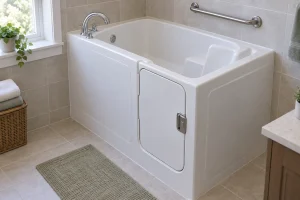
- Non-slip strips or mat inside the tub or shower.
- Door threshold flush or with a gentle bevel, no trip lip.
- Floor dry; towel within reach to wipe spills.
- Clear path of at least about 30 inches to the toilet and shower.
Lighting
- Light switch reachable at the door, ideally illuminated.
- Bright, even overhead lighting without glare.
- Motion-activated night light in the bathroom.
- Lit route from the bedroom to the bathroom.
Toilet
- Seat height lets the user stand with feet flat and minimal strain.
- Grab bar, safety frame or rails beside the toilet.
- Toilet paper reachable without twisting.
- No reliance on towel bars, sinks or roll holders for support.
Tub and shower
- Grab bar at the entry and on the main wall.
- Shower chair, stool or transfer bench if standing is tiring or stepping over is hard.
- Handheld shower head with an easy-to-reach holder.
- Toiletries at seated or chest height.
- Water temperature at or below about 120°F (49°C), or anti-scald valve.
- Glass doors checked for secure tracks, or replaced with a curtain if transfers are difficult.
Sink and storage
- Daily items stored between waist and shoulder height.
- Sink is stable; not used as a support.
- Medications clearly labeled, well-lit area.
- A seat available for grooming if standing is tiring.
Emergency readiness
- Door lock can be opened from outside, or removed.
- Door opens outward or is a pocket/sliding door if possible.
- Waterproof medical alert pendant or phone within reach.
- Family knows the person’s bathroom routine and times.
Priority and cost guide
| Checklist item | Priority | Typical cost | DIY? |
|---|---|---|---|
| Remove loose rugs, add rubber-backed mat | High | $15 to $40 | Yes |
| Night lights | High | $10 to $40 | Yes |
| Grab bars installed into studs | High | $50 to $200 each | Handy DIY or pro |
| Shower seat or transfer bench | High | $30 to $150 | Yes |
| Raised toilet seat or frame | Medium | $30 to $120 | Yes |
| Handheld shower | Medium | $25 to $80 | Usually |
| Anti-scald valve | Medium | $100 to $400 | Plumber |
| Medical alert pendant | Medium to high | $20 to $50/month typical | Yes |
Personal factors to review
The environment is only part of the picture. Talk with the person’s doctor about medications that can cause dizziness or frequent night-time urination, vision checks, foot problems and footwear, and blood pressure drops when standing up. Strength and balance exercise programs, often available through physical therapy or community classes, can reduce fall risk. These personal factors combined with a safer bathroom provide the best protection.
Footwear and clothing
What a person wears in the bathroom also matters. Walking barefoot on wet tile or in loose socks is risky; non-slip bath slippers with a closed heel are safer for moving to and from the shower. Long, trailing bathrobes and pajama bottoms can catch under the feet, so hem them to a safe length. A robe with a simple tie or zip is easier than small buttons. Keep a towel and robe hanging within reach of the shower seat so the person can cover up and dry off while seated, rather than stepping out wet to find them.
FAQ
How often should we review the checklist?
Every six to twelve months, and after any fall, hospital stay, new medication or change in mobility.
Which items should be done first?
Remove loose rugs, add night lights and non-slip surfaces, and install grab bars at the toilet and shower. These address the most common fall points quickly and at low cost.
Bottom line
A bathroom fall prevention checklist makes safety concrete: clear floors, good lighting, support at the toilet and shower, seating, safe water temperature, reachable storage and an emergency plan. Walk through it together, fix the high-priority items first, and revisit it regularly as needs change.
Ready to decide? Our #1 pick for 2026 is the Remove loose rugs, add rubber-backed mat.
Live price & availability on Amazon.
Related Reviews & Guides


Best Magnifying Glass for Seniors with Low Vision

Best Reef Tank Lights for Coral Growth