Last Updated: September 7, 2026
- Top Picks at a Glance
- Why Aging in Place Requires a Whole-Home Approach
- Room 1: The Bathroom (Highest Priority)
- Room 2: The Bedroom
- Room 3: The Kitchen
- Room 4: Living Room / Primary Seating Area
- Room 5: Entryways, Stairs & Exterior
- The 20-Minute Priority Action Plan
- Complete Product Reference for This Checklist
- Frequently Asked Questions
- Related Articles
- Related Guides
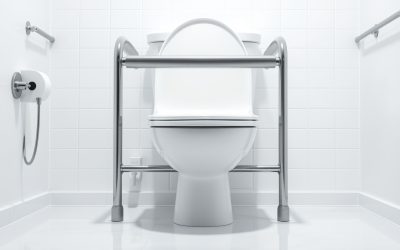
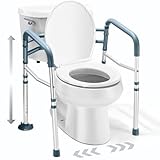
- Top Pick: Lianjindun Toilet Safety Rails, 350 lbs, Adjustable Height & Width
- Best Value: PELEGON Toilet Safety Rails (350 lb) – Adjustable Toilet Safety Frame & Rails, Toilet Safety Rail for Elderly Adults, Toilet Handles for Seniors, Toilet Bars for Elderly & Handicap
- Premium Choice: HOMLAND Toilet Safety Rails for Seniors, Adjustable Height & Width, 350 Lbs
 Bathroom Safety Checklist Aging In Place” style=”max-width:100%;height:auto;margin-bottom:1rem” loading=”lazy”>
Bathroom Safety for Seniors: The 5-Room Aging-in-Place Checklist (2026 Guide)
Quick Answer (TL;DR)
The three highest-impact modifications for aging in place are: (1) grab bars at toilet and shower — every bathroom, no exceptions; (2) a raised toilet seat or comfort-height toilet; (3) removing trip hazards from pathways (rugs, cords, thresholds). These three changes address roughly 70% of home fall risk for adults over 65. This checklist walks through all five rooms with specific product recommendations and internal links to our detailed guides.
🛒 Best Price Today on Amazon
Prime members get fast, free shipping on everything above, plus member-only deals. New members get a 30-day free trial — cancel anytime.
As an Amazon Associate we earn from qualifying purchases at no extra cost to you.




Top Picks at a Glance
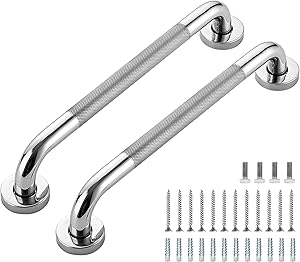
Best Overall Grab Bar
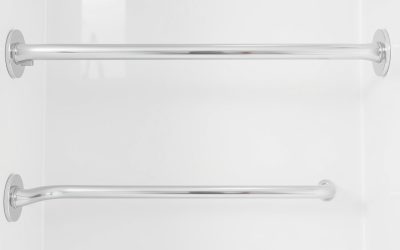
Ravinte Hardware Grab Bar
ADA-compliant 1.5″ diameter, 300-lb rated, multiple lengths, ~$19.99. Install at toilet + shower for ~$40 total.

Grab Bars for Shower, 16 Inch Shower Handle, 2 Pack, Polished Nickel | Grab Bars for Bathroom, Stainless Steel, Anti-Slip Textured Grip, 1-Inch Diameter, Wall-Mounted Safety Support for Seniors


As an Amazon Associate we earn from qualifying purchases. Product prices and availability are accurate as of the date/time indicated.
Best Toilet Safety Aid
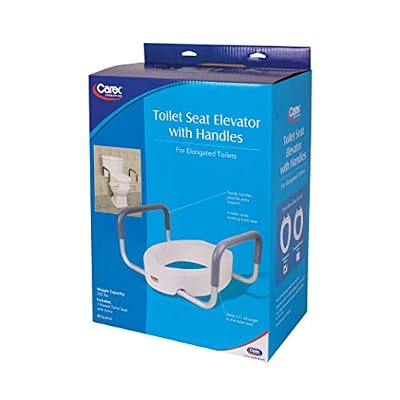
Carex Raised Toilet Seat with Arms
3.5″ height, padded flip-up arms, tool-free install, 250-lb rated. ~$40.99. Immediate sit-to-stand improvement.

Carex 3.5 Inch Raised Toilet Seat with Arms, Elongated Toilet Seat Riser, Up to 250 lbs Capacity, Elevating & Raising Seat for Elderly & Handicap, Universal, Slip-Resistant with Padded Handles, White


As an Amazon Associate we earn from qualifying purchases. Product prices and availability are accurate as of the date/time indicated.
Best Mobility Aid
SOUNDFUSE Rollator Walker
Lightweight aluminum, loop brakes, padded seat + basket, 300-lb rated. ~$79.99. Covers in-home and community walking.

soundfuse Foldable Rollator Walkers for Seniors with 16" Ergonomic Arc Seat | Sturdy Frame, Double Support Bar, 8" Wheels for All Terrain, Padded Seat, Dual Height Adjustable, Tool-Free Assembly


As an Amazon Associate we earn from qualifying purchases. Product prices and availability are accurate as of the date/time indicated.
Why Aging in Place Requires a Whole-Home Approach
The term “aging in place” means living in your own home safely and independently as you age — rather than moving to assisted living or a nursing facility. For most families, this is the preferred outcome. For most seniors, it is achievable with targeted, relatively affordable home modifications.
The data is clear: one in four adults over 65 falls each year. Falls are the leading cause of injury-related death in older adults. But the important context is this — the majority of home falls are preventable. A 2014 study in the Journal of the American Geriatrics Society found that multi-component home safety interventions reduced fall rates by up to 38% in high-risk seniors.
This checklist is designed to be done room by room. Set aside two hours. Walk through the home with your parent or spouse. Mark what needs to change. Prioritize by fall risk, not by cost.
Room 1: The Bathroom (Highest Priority)
The bathroom accounts for more than 80% of home falls in seniors. Every item on this list is either low-cost or DIY-installable. Full detailed guide: learn about ada compliant bathroom grab bars guide.
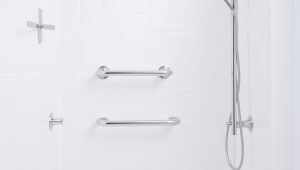
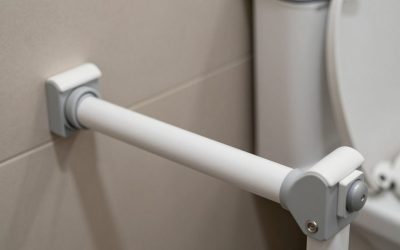
- Grab bar at toilet side wall — 42″ horizontal bar, 33″–36″ from floor, mounted to stud. See: this guide on ada compliant bathroom grab bars. Cost: ~$20 (Ravinte B0BZ41GW6Y)
- Grab bar at toilet rear wall — 36″ horizontal, same height. Often skipped, should not be.
- Raised toilet seat with arms — 3.5″–5″ height add, essential post-surgery or for OA. See: raised toilet seat with arms review. Cost: ~$41 (Carex B005J4E8IC)
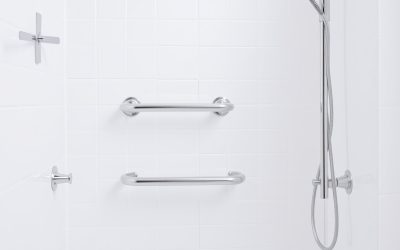
- Grab bar in shower or tub — 36″ horizontal at 33″–36″ height + 18″ vertical at entry. Cost: ~$20–$40
- Non-slip bath mat inside tub/shower — suction-cup base, replace if suction fails. Cost: ~$15–$25
- Non-slip rug outside tub/shower — rubber-backed only, no loose bath rugs
- Shower chair or bench — for any senior who cannot safely stand for full shower duration
- Handheld shower head — for seated bathing; 60″–72″ hose length minimum. Cost: ~$25–$50
- Nightlight — motion-activated, plug-in, bright enough to see floor clearly at 2 AM
- Lever-handle faucet — replace round knobs; lever operation requires significantly less grip and torque
Grab Bars for Shower, 16 Inch Shower Handle, 2 Pack, Polished Nickel | Grab Bars for Bathroom, Stainless Steel, Anti-Slip Textured Grip, 1-Inch Diameter, Wall-Mounted Safety Support for Seniors
As an Amazon Associate we earn from qualifying purchases. Product prices and availability are accurate as of the date/time indicated.
Room 2: The Bedroom
Most bedroom falls happen during nighttime bathroom trips — poor lighting, disorientation on waking, rushing. The pathway from bed to bathroom is the primary intervention target.
- Bed height assessment — seat height should allow feet flat on floor with slight knee bend. Add risers if too low; remove box spring or use low-profile mattress if too high. Correct height: 18″–23″ from floor to top of mattress.
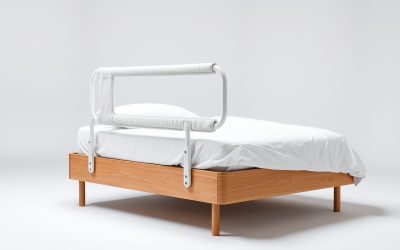
- Bed rail or half rail — assists roll-to-standing transfer. Not to be confused with full-length side rails (which are a restraint risk). Half rails that attach to the bed frame work well. Cost: ~$40–$80
- Motion-sensor nightlights — on the path from bed to bathroom. At minimum: one at the bedside, one in the hallway, one in the bathroom
- Clear path — remove rugs, electrical cords, decorative items, pet items from the nighttime bathroom route. Walk the path in darkness to identify hazards
- Phone or medical alert device within reach — by the bed, plugged in. If your parent uses a medical alert (Life Alert, Bay Alarm Medical, etc.), verify they can activate it from the floor in every room
- Clothing storage accessibility — most-used items at waist to shoulder height. Eliminate reaching above head or bending low as daily routines
Room 3: The Kitchen
Kitchen falls often involve reaching, bending, carrying while distracted, or standing on step stools. The kitchen is also where medication is frequently managed — fatigue and distraction compound fall risk.
- Remove all step stools — if something cannot be reached without a step stool, it should be relocated. No senior should be standing on a step stool alone
- Non-slip kitchen mat at the sink — rubber-backed, beveled edges. Replace if backing deteriorates
- Frequently used items within reach — cups, plates, medications between counter height and shoulder height. Heavy items (pots, cast iron) at counter level or below
- Lever-handle cabinet pulls — replace small knobs. D-ring pulls are adequate; lever handles are better for arthritic hands
- Secure all rugs — kitchen throw rugs are a fall risk. Replace with non-slip mats with low profile edges, or remove entirely
- Anti-fatigue mat at stove/sink — reduces standing fatigue during meal prep, which contributes to balance loss
- Rollator or transport chair within reach — if your parent uses a mobility aid, ensure it is at hand during cooking, not parked in another room. See: the head-to-head breakdown
Room 4: Living Room / Primary Seating Area
Chair height and cushion firmness are underestimated. A soft, low sofa that swallows a person is a fall hazard every time they need to stand. The living room is also where seniors spend the most hours — a power lift recliner changes this room’s safety profile entirely.
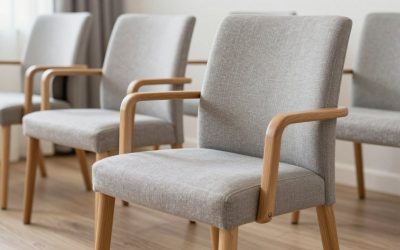
- Chair height assessment — can the user sit with feet flat and stand with minimal pushing? If no: add chair raisers, replace cushions with firmer insert, or replace the chair entirely
- Consider a power lift recliner — for seniors with significant sit-to-stand difficulty. See: Best Power Lift Recliner Elderly. The MCombo B0BG4ZH69G is our top-value pick
- Clear all walking paths — coffee tables, side tables, footstools, electrical cords, decorative items. Leave minimum 36″ clear pathway from seating to doorways
- Secure or remove all throw rugs — this is not negotiable. A rug corner catches a shuffling gait and results in a fall every time. Either double-sided tape, non-slip rug pad, or remove
- Phone and remote accessible without bending/reaching — everything the user needs regularly at arm height from primary seating position
- Adequate lighting — seniors need 2–3x more light than younger adults for the same visual acuity. Replace 60W-equivalent bulbs with 100W-equivalent LEDs. Eliminate glare sources
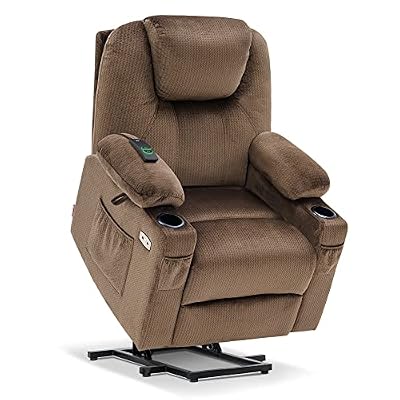
MCombo Small Power Lift Recliner Chair Sofa with Massage and Heat for Petite Elderly, 3 Positions, Cup Holders, and USB Ports, Extended Footrest, Fabric 7141 (Mocha)


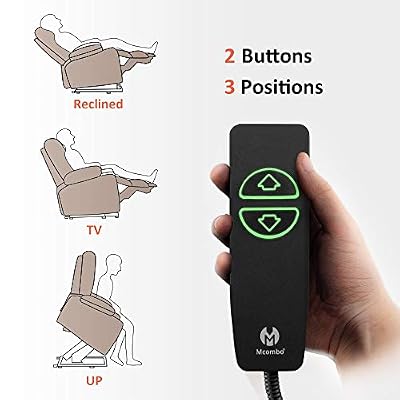


As an Amazon Associate we earn from qualifying purchases. Product prices and availability are accurate as of the date/time indicated.
Room 5: Entryways, Stairs & Exterior
Entry and stair falls are high-consequence because they often involve momentum and height. These modifications are worth professional installation in many cases.
- Stair handrail on both sides — a single handrail on one side is inadequate for most seniors with bilateral weakness. Add second rail if absent. Rails should extend at least 12″ past top and bottom steps
- Step contrast marking — adhesive high-contrast strips on step nosings for users with visual impairment. Particularly important for exterior concrete steps
- Threshold elimination — raised thresholds between rooms cause tripping. Replace with flush transitions or low-profile thresholds (1/4″ or less)
- Exterior grab bar at front door — beside the door handle, mounted to framing. Essential for navigating entry steps. Same product as bathroom grab bars: Ravinte B0BZ41GW6Y works here
- Motion-sensor exterior lighting — bright LED at all entry points. Seniors arriving home at dusk or dark are high-risk if the entry is unlit
- Non-slip exterior door mat — low-profile rubber mat only. High-pile or unstable mats at the front door are a fall at the first step inside
- Ramp assessment — if there are exterior steps that cannot be modified, evaluate a portable ramp. A maximum slope of 1:12 (1″ rise per 12″ run) is the ADA standard for accessibility
The 20-Minute Priority Action Plan
If you walked through this checklist and feel overwhelmed, do this first — three changes that take under 20 minutes and address the highest-risk situations:
- Order grab bars — 42″ for toilet, 36″ for shower. The Ravinte bars ship fast and cost ~$20 each. Install this weekend.
- Remove all loose rugs — today. Every loose rug in the home. Store them or apply non-slip backing. This takes 10 minutes and eliminates one of the most common household fall causes.
- Add nightlights — plug in motion-activated nightlights on the bed-to-bathroom path. Order them on the same Amazon cart as the grab bars. This costs under $20 for a 4-pack.
After those three, work through the rest of this list room by room. A Certified Aging in Place Specialist (CAPS) — a designation from the National Association of Home Builders — can do a professional home assessment for $200–$500 and produce a prioritized modification plan. Many Area Agencies on Aging offer free or subsidized home safety assessments. Search “Area Agency on Aging [your county]” to find local resources.
Complete Product Reference for This Checklist
| Product | Use | Approx. Cost | Guide |
|---|---|---|---|
| Ravinte Grab Bar (B0BZ41GW6Y) | Toilet + shower grab bars | ~$20 | ada compliant bathroom grab bars guide |
| Carex Raised Toilet Seat (B005J4E8IC) | Toilet height + arm support | ~$41 | learn about raised toilet seat with arms review |
| SOUNDFUSE Rollator (B0GLYVMX52) | In-home + community walking | ~$80 | learn about rollator walker seniors comparison |
| MCombo Lift Recliner (B0BG4ZH69G) | Living room sit-to-stand | ~$560 | best power lift recliner elderly |
Frequently Asked Questions
What does aging in place mean and is it realistic for my parent?
Aging in place means living in your own home as independently as possible as you get older, rather than moving to a care facility. For most seniors with moderate health conditions, it is realistic with targeted home modifications, appropriate mobility aids, and either family support or professional in-home care. The key variables are cognitive status (dementia significantly changes the equation), fall history, medication management complexity, and available caregiver support. An occupational therapist can assess your parent’s specific situation and recommend what level of home modification is sufficient vs. when a facility level of care becomes necessary.
How much does a full aging-in-place bathroom modification cost?
DIY material costs for a complete bathroom retrofit (grab bars, raised toilet seat, non-slip mats, handheld shower) run $150–$300. Professional installation adds $200–$600 in labor depending on your market. A full bathroom remodel with roll-in shower, comfort-height toilet, and blocking installed in walls runs $8,000–$25,000. Most families get 80% of the safety benefit with the $150–$300 DIY approach — professional remodels are warranted when the user is wheelchair-dependent or requires full ADA accessibility.
What is a CAPS specialist and should I hire one?
A Certified Aging in Place Specialist (CAPS) is a professional — typically a contractor, OT, or interior designer — certified by the National Association of Home Builders in aging-in-place home modifications. They assess your home and produce a prioritized modification plan with contractor references. Cost: $200–$500 for an assessment. Worth it when: the home has complex layout challenges, the senior has multiple mobility impairments, or you are planning a significant renovation. For a straightforward bathroom safety retrofit, this checklist and our grab bar guide are sufficient.
Does homeowner’s insurance cover aging-in-place modifications?
Standard homeowner’s insurance does not cover elective home modifications. However: some Medicare Advantage plans cover grab bar installation and other home safety modifications as a supplemental benefit (coverage varies widely by plan). Medicaid waiver programs in most states fund home modifications for eligible seniors. The Veterans Administration provides a Specially Adapted Housing grant for veterans with service-connected disabilities. Contact your local Area Agency on Aging for a complete list of funding sources in your state.
When is aging in place no longer safe?
Aging in place becomes unsafe when: the senior has moderate-to-severe dementia and cannot reliably follow safety procedures (using stove, not leaving the home, taking medications), when fall injuries become frequent despite modifications, when medical needs exceed what in-home care can manage, or when the senior or caregiver is in distress about safety on a daily basis. This is a difficult conversation, but the alternative — premature or unnecessary facility placement — carries its own serious health consequences including depression and faster functional decline. A geriatric care manager can help your family assess the genuine threshold for your specific situation.
Related Reviews & Guides




Quick Picks: Best Non-Slip Bath Mats for Shower Safety
11 Best Shower Benches for Seniors: Safe Seating Solutions