Last Updated: September 7, 2026
- Top Picks at a Glance
- Why Grab Bars Are Non-Negotiable (The Data)
- ADA Grab Bar Standards: What the Code Actually Requires
- ADA Grab Bar Specification Table
- Mounting Requirements: This Is Where DIY Installs Go Wrong
- Room-by-Room Placement Guide
- Product Deep Dive: Ravinte Hardware Grab Bar (B0BZ41GW6Y)
- Professional Installation vs. DIY: When to Call a Pro
- Frequently Asked Questions
- Related Articles
- Related Guides
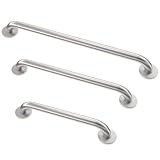
- Top Pick: Grab Bar Bundle for ADA Compliance, Brushed Stainless Steel 1.5" Diameter 3-Piece Set (18", 36", 42") for Commercial Restrooms & Shower Safety Bars for Seniors
- Best Value: ADA Grab Bar Bundle, Brushed Stainless, Pack of 3, 18/36/42 in
- Premium Choice: Prestige Commercial Grab Bar Bundle 3-Pack 1.5in Dia 18/36/42in ADA
ADA Compliant Bathroom Grab Bars: The Complete 2026 Installation & Code Guide
Quick Answer (TL;DR)
ADA-compliant grab bars must be 1.25″–2″ diameter, support 250 lbs minimum, and mount to studs or blocking — not drywall. For most seniors, a 42″ horizontal bar at 33″–36″ height near the toilet and a 36″ angled bar in the shower covers the critical transfer points. Budget-friendly pick: the Ravinte Grab Bar (ASIN B0BZ41GW6Y) at ~$20 nails the spec without the contractor markup.
🛒 Best Price Today on Amazon
Prime members get fast, free shipping on everything above, plus member-only deals. New members get a 30-day free trial — cancel anytime.
As an Amazon Associate we earn from qualifying purchases.


Top Picks at a Glance
Best Overall
Ravinte Hardware Grab Bar for Shower
Stainless steel, 300-lb rated, multiple lengths, ADA dimensions compliant. Ships with mounting hardware.

9


As an Amazon Associate we earn from qualifying purchases. Product prices and availability are accurate as of the date/time indicated.
Runner-Up
Moen Home Care Grab Bar
Lifetime warranty, concealed mounting flange option, 500-lb test. Trusted brand for post-surgery installs.
Search “Moen LR8918” on Amazon for current pricing.
Best Budget
Ravinte 12″ Short Bar
Same series, shorter length for toilet side walls or tub entry. Perfect secondary grab point at under $20.
9
As an Amazon Associate we earn from qualifying purchases. Product prices and availability are accurate as of the date/time indicated.
Why Grab Bars Are Non-Negotiable (The Data)
One in four adults over 65 falls each year. The bathroom is the single most dangerous room in the house — wet floors, awkward postures getting off the toilet, and stepping over tub ledges are responsible for the majority of senior fall injuries that lead to ER visits.
Grab bars are not optional fixtures. They are load-bearing fall-prevention devices. A bar that rips out of drywall when your parent grabs it is worse than no bar at all — it creates a false sense of security and can cause a secondary fall. This guide will make sure that does not happen to your family.
Above-the-fold recommendation for families in a hurry:
9
As an Amazon Associate we earn from qualifying purchases. Product prices and availability are accurate as of the date/time indicated.
ADA Grab Bar Standards: What the Code Actually Requires
The Americans with Disabilities Act (ADA) Standards for Accessible Design (2010 ADA Standards, Sections 604 and 607) set out specific dimensional requirements. While the ADA technically governs public accommodations and commercial facilities, these standards are the gold standard for residential aging-in-place installations. Occupational therapists, certified aging-in-place specialists (CAPS), and home safety assessors all reference ADA specs when recommending residential grab bars.
ADA Grab Bar Specification Table
| Specification | ADA Requirement | Practical Note |
|---|---|---|
| Diameter (circular) | 1.25″ – 2″ | 1.5″ most common; fits most hands regardless of grip strength |
| Clearance from wall | 1.5″ minimum | Allows full hand wrap; critical for users with arthritis |
| Structural load rating | 250 lbs minimum | Choose 300–500 lb rated bars for bariatric users |
| Surface finish | Slip-resistant or rounded edges | Brushed stainless or chrome with knurling preferred |
| Toilet side wall (horizontal) | 42″ length, 33″–36″ high | Measures from finished floor; helps with sit-to-stand |
| Toilet rear wall (horizontal) | 36″ minimum, 33″–36″ high | Centered on toilet; often skipped, don’t skip it |
| Shower/tub horizontal | 24″ minimum at 33″–36″ high | 36″ or 42″ gives more support range |
| Shower vertical (entry) | 18″ minimum, 38″–48″ off floor | Assists step-over and tub transfer |
Mounting Requirements: This Is Where DIY Installs Go Wrong
The most important sentence in this entire guide: grab bars must be anchored to structural backing — wall studs, blocking, or reinforcement plates — not drywall or tile alone.
Standard 1/2″ drywall can hold maybe 20–30 lbs with toggle bolts in a clean pull. A person transferring off a toilet exerts 200+ lbs of lateral and downward force on a grab bar. Do the math.
Your Mounting Options
- Stud mounting (best): Locate 16″-on-center wood studs with a stud finder. Use 2.5″–3″ stainless screws into stud centers. If ADA position doesn’t align with studs, add the next option.
- Blocking (gold standard for remodels): During any bathroom renovation, have a carpenter install a 2×8 or 2×10 horizontal backer board between studs at grab bar height. Covered by drywall, invisible, and bombproof.
- Reinforcement plates: Products like Wingit or Toggler SNAPTOGGLE can hold 300+ lbs in hollow walls. Acceptable for secondary bars not used for primary transfers.
- Never use: Standard plastic anchors, “self-drilling” anchors not rated for shear load, adhesive-only mounting strips for grab bars.
Room-by-Room Placement Guide
Toilet Area
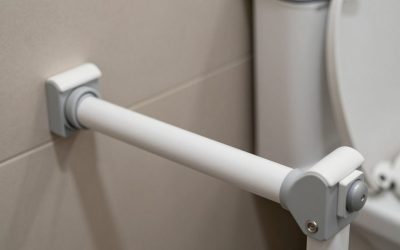
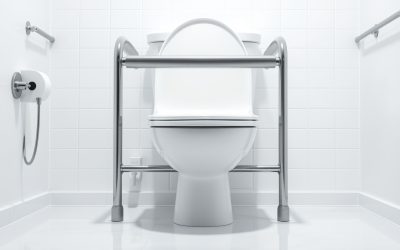
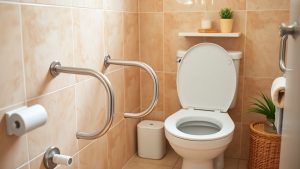
The sit-to-stand transfer is the most fall-prone moment in a senior’s daily routine. Install a 42″ horizontal bar on the dominant side wall (the wall the person turns toward when standing), 33″–36″ above the finished floor. If space permits, add a 36″ rear wall bar as a secondary push-point.
Shower Stall
A roll-in or barrier-free shower needs: one 36″–42″ horizontal bar on the control wall, one 18″ vertical bar at the entry. For seated showering (shower chair or shower bench), add an L-shaped bar: 36″ horizontal + 18″ vertical in one unit.
Bathtub
Three bars recommended: (1) 24″ horizontal on the wall at tub rim height for getting in, (2) 36″ horizontal on the long wall at 33″–36″ for bathing position, (3) 18″ vertical at the faucet end for leverage when standing. See our this bathroom safety checklist aging in place article for a printable room audit.
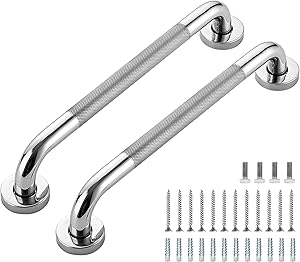
Product Deep Dive: Ravinte Hardware Grab Bar (B0BZ41GW6Y)
| Spec | Details |
|---|---|
| Material | 304 stainless steel |
| Diameter | 1.5″ (ADA compliant) |
| Wall clearance | 1.5″ (ADA compliant) |
| Weight capacity | 300 lbs |
| Available lengths | 12″, 16″, 18″, 24″, 32″, 36″, 42″ |
| Finish | Brushed nickel / chrome / matte black |
| Hardware included | Yes — stainless screws + wall anchors |
| Price (as of 2026) | ~$19.99 |
Pros
- True 1.5″ diameter — not a towel bar marketed as a grab bar
- 304 stainless resists bathroom moisture and rust
- Multiple length options in same series means matching aesthetics throughout bathroom
- Price point allows buying 3–4 bars for a complete bathroom install under $80
- Mounting flanges conceal screw heads for cleaner look
Cons
- Included wall anchors are drywall anchors — ignore these and use stud/blocking mount only
- No textured grip surface — smooth stainless can be slippery with wet hands (consider grip tape overlay)
- Limited finish variety compared to premium brands like Moen or Kohler
9
As an Amazon Associate we earn from qualifying purchases. Product prices and availability are accurate as of the date/time indicated.
Professional Installation vs. DIY: When to Call a Pro
DIY is fine if: you can locate studs confidently, you’re comfortable with a drill and level, and the bar is a secondary safety point. Call a licensed contractor or CAPS-certified specialist if: the primary user is bariatric (250+ lbs), you’re tiling over the mount area, or the bar position falls between studs and you need blocking installed. Medicare Advantage plans and some Medicaid home modification programs cover grab bar installation costs — check with your parent’s insurer before paying out of pocket.
Also see: our raised toilet seat with arms review and rollator walker seniors comparison for a complete fall-prevention setup.
Frequently Asked Questions
Do ADA grab bar codes apply to private homes?
Not legally — ADA technically governs public accommodations. But ADA specs are the recognized safety standard used by occupational therapists and certified aging-in-place specialists (CAPS) for all residential installations. Following ADA dimensions ensures the bar is positioned where a human body can actually use it.
Can I install a grab bar without hitting a stud?
Yes, with proper structural anchors rated for shear loads of 300+ lbs (e.g., Toggler SNAPTOGGLE or similar). However, stud mounting is always the preferred method for bars used in primary transfers like sit-to-stand at the toilet. Never use standard plastic drywall anchors.
What is the correct grab bar height for a 5’4″ woman?
The ADA range of 33″–36″ covers most adults. For shorter individuals, the lower end (33″) is generally better for toilet transfers. For bathing support where the user is seated, a bar between 28″–33″ may be more functional. An occupational therapist can do a personalized assessment in under an hour.
Are suction cup grab bars safe for seniors?
No — not for load-bearing transfers. Suction grab bars are marketed as “temporary” but they fail without warning, especially on textured tile. They may be acceptable as a very light assist (steadying a hand, not supporting full body weight). For any primary transfer point, use only wall-mounted bars anchored to structural backing.
How many grab bars does a typical bathroom need?
At minimum: two at the toilet (side wall + rear wall) and two in the shower or tub (horizontal at bathing height + vertical at entry). A complete ADA-standard bathroom retrofit typically involves 4–6 bars. At ~$20 each with the Ravinte series, a full install costs well under $150 in materials.
Related Reviews & Guides



Bathroom Safety Essentials for Aging in Place

Quick Picks: Best Shower Chairs and Bath Benches for Elderly