Last Updated: October 4, 2026
🛒 Best Price Today on Amazon
Prime members get fast, free shipping on everything above, plus member-only deals. New members get a 30-day free trial — cancel anytime.
Start 30-Day Prime Free Trial →See Today’s Amazon DealsQuick Picks: Best Bed Rails for Seniors at a Glance
Why Trust Our Bed Rail Reviews
Falls during the night are among the most dangerous events for older adults. Our review team evaluates senior bed rails on weight capacity, installation stability, padding quality, fit across different bed types, and FDA safety guidance on entrapment risks. We reference occupational therapy best practices alongside thousands of verified Amazon buyer reviews to give caregivers and seniors honest, practical guidance.
As an Amazon Associate we earn from qualifying purchases at no extra cost to you.


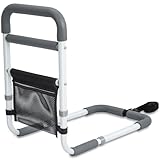

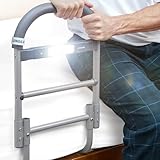


Buying Guide: Choosing the Right Bed Rail for a Senior
Half rail vs. full rail: Half rails (covering roughly half the mattress length) are assist devices for getting in and out of bed. Full-length rails prevent rolling out — typically used for those with dementia or mobility disorders under medical supervision.
Mattress compatibility: Most assist rails require a mattress depth of 6–12 inches for the tuck strap to function safely. Measure before purchasing. Pillow-top and very deep foam mattresses can compress enough to loosen the anchor.
Weight capacity: Always choose a rail rated for the user’s body weight plus a reasonable safety margin. A 300 lb-rated rail is appropriate for seniors up to approximately 250 lbs.
FDA entrapment guidance: The FDA has issued guidance on bed rail entrapment risks. Avoid rails with gaps wider than 4.75 inches to reduce the risk of limb entrapment. Check product compliance statements before purchasing.
Height adjustability: Fixed-height rails work for most standard beds. Adjustable-height rails are worth the extra cost for platform beds, adjustable bases, or hospital-style frames.
Frequently Asked Questions
Are bed rails safe for seniors with dementia?
Full-length bed rails for dementia patients require medical supervision due to entrapment and entanglement risks. Half-rail assist handles are generally safer for seniors with mild cognitive impairment who can still follow simple instructions. Always consult a physician or occupational therapist before installing any bed rail for a senior with dementia.
Will a bed rail work on an adjustable bed base?
Standard tuck-under bed rails may not be compatible with adjustable bases, as the base moves and can loosen the strap. Look for rails specifically designed for adjustable bases, or consult the adjustable bed manufacturer for compatible accessories.
How much weight can a senior bed rail hold?
Most quality bed assist rails support 250–300 lbs. This weight limit refers to the force applied to the handle during use, not the full body weight lying in bed. For heavier seniors, look for bariatric-rated models explicitly tested beyond 300 lbs.
Can bed rails be installed on a hospital bed at home?
Most home hospital beds have their own integrated side rail systems. Standard consumer bed rails are designed for traditional home beds and may not attach correctly to hospital bed frames. If a senior uses a rented or purchased hospital bed, request compatible rails from the same supplier.
Is Medicare coverage available for bed rails?
Medicare Part B may cover bed rails classified as Durable Medical Equipment (DME) when prescribed by a doctor for a medically necessary condition. Coverage requires a Medicare-enrolled supplier. Many over-the-counter bed rails sold on Amazon are not covered; check with your Medicare plan and doctor before purchasing.
Final Verdict
The Stander Security Bed Rail is the best all-around choice for most seniors — its padded handle, solid construction, and built-in organizer pocket make nightly use genuinely comfortable. Seniors who want a rail that folds away during the day will prefer the Drive Medical Folding Rail. Those on a fixed income can trust the Vive Health Bed Assist Rail for reliable core support at a lower price.
Related Reviews & Guides




Best Lift Chair Recliners for Mobility: Fit and Controls

Why Seniors Struggle to Sleep: Causes and Solutions