Last Updated: November 27, 2026
Shopping for a 3-inch lift kit is not like shopping for most truck accessories, because there is no generic version to rank. Every genuine 3-inch kit is engineered for one vehicle, one generation and one drivetrain: a kit built for a 2021-2024 Ford F-150 4WD will not bolt onto a Silverado, and may not even fit another F-150. The real decision is therefore fitment first, then how much hardware your truck actually needs at that height, and what the lift changes afterwards.
This guide is for pickup owners — F-150, Silverado and Sierra 1500, and Tacoma drivers in particular — who want room for larger tires or a level stance. It explains why most kits sold as 3-inch lift the front more than the rear, walks the component ladder from simple spacers up to full kits with control arms and replacement shocks, names the makers and the channels that sell their kits, and covers the follow-on costs, including one many buyers overlook: the extra step up into the cab.
Quick Picks
As an Amazon Associate we earn from qualifying purchases.
How to Choose
Begin With Exact Fitment, Not the Height
Fitment is the first filter, not the last check. Before comparing anything, match your truck’s year, make, model, drivetrain (2WD or 4WD), cab and body generation, and lug count against the kit’s stated application. Then read the maker’s exclusion list just as carefully: a current F-150 kit excludes the Tremor, FX4 and Snow Prep packages, trucks with adaptive CCD damping and the diesel variant; Silverado and Sierra kits split at the 2019 body change and exclude MagneRide trucks; Tacoma kits fit 6-lug models only. The maker’s own fitment guide is the authority — a marketplace fitment checker alone is not.
Decide What “3 Inches” Should Mean
Most kits sold as 3-inch are levelling-style packages, not true full lifts. They raise the front by about 3 inches and the rear by only 1 to 2 inches, which removes the nose-down rake trucks leave the factory with: the F-150 kit mentioned above is roughly 3 inches front and 1 inch rear, and most Silverado and Tacoma kits follow a 3-front, 2-rear pattern. A true full lift raises both ends by the full amount and is a bigger, more involved job. One more subtlety matters: spacer thickness is not lift height, because suspension geometry multiplies the effect — makers state this in their own listings.
Match the Hardware to the Height
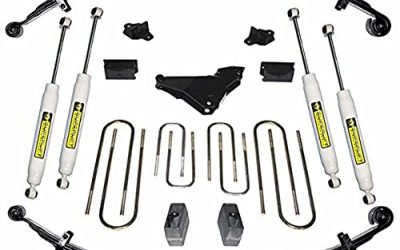
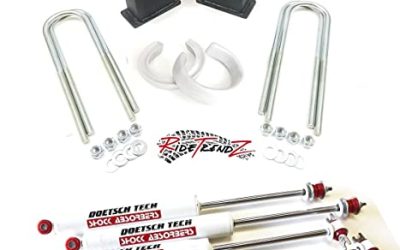
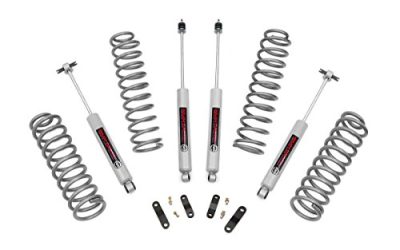
A 3-inch kit can be anything from a pair of front spacers to a boxed system with arms, brackets and shocks, and the difference decides how the truck drives afterwards. Simple spacers are fine for a mild front lift. Add rear blocks and longer U-bolts when the rear comes up too. At a full 3 inches in front, replacement upper control arms stop being an upgrade and become a correction, restoring ball-joint angle and alignment range. On 4WD trucks, a differential drop and sway-bar relocation protect CV joints and steering geometry. The section below walks this ladder rung by rung.
Budget for What Changes Afterwards
The kit price is not the whole cost of a 3-inch lift. A professional alignment after installation is mandatory, not optional. Each kit prints its own tire ceiling — up to 34-inch tires on the F-150 kit, a more modest 32 to 33 inches on typical Tacoma kits — and factory wheels may need small spacers for clearance. Headlight aim, speedometer reading and driver-assist calibration can all shift with the new ride height. Finally, count the human factor: 3 inches of lift is 3 extra inches of step up into the cab, every single trip, for you and your passengers.
The Component Ladder, From Simple to Complete
Front Strut and Coil Spacers
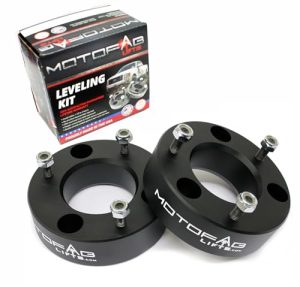
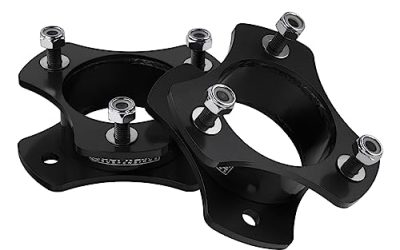
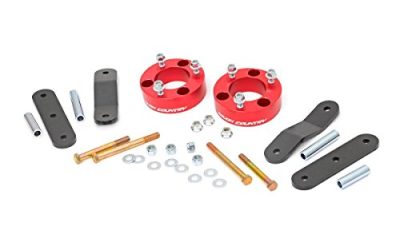
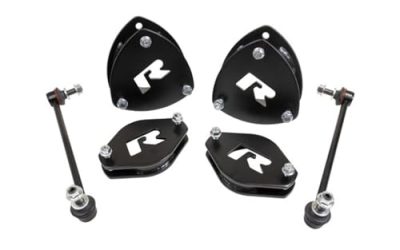
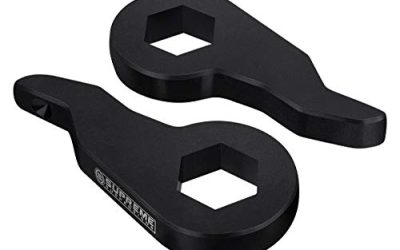
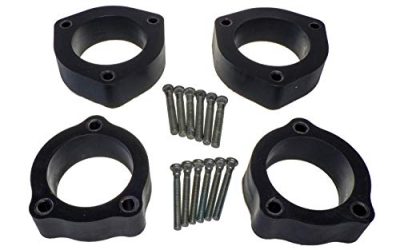
The simplest rung is a spacer that sits on top of the front strut or coil assembly and pushes the suspension down, lifting the front of the truck. Makers such as MotoFab machine theirs from billet aluminium, while KSP forges its budget spacers; both approaches do the same geometric job. Spacers change nothing at the rear and reuse every factory component, which keeps them inexpensive and reversible. Their limit is geometry: because the spacer works through the suspension’s leverage, a spacer thinner than 3 inches can still deliver 3 inches of lift — and the same leverage is why alignment range runs out.
Rear Blocks and Extended U-Bolts
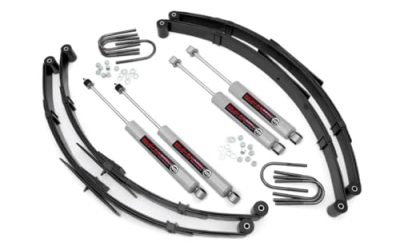
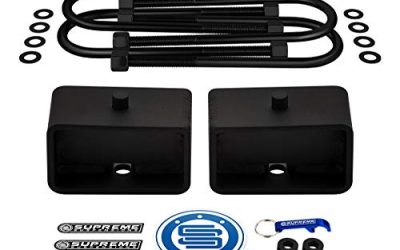
When a kit lifts the rear, it usually does so with blocks between the axle and the leaf springs, clamped by longer U-bolts; MotoFab’s kits use fabricated blocks for this. An add-a-leaf is the alternative, slipping an extra leaf into the spring pack for height and extra load capacity, at the cost of a firmer ride. In levelling-style kits the rear step is small — 1 to 2 inches against 3 at the front — so blocks are more than adequate. What matters is the hardware: U-bolts are structural, and a kit that treats them as an afterthought is one to walk away from.
Replacement Upper Control Arms
At 3 inches of front lift, the factory upper control arms run out of travel: the ball joint sits at a steep angle and the alignment shop may not be able to bring camber and caster back into specification. Kits that include replacement arms — the UCA versions of MotoFab’s Silverado family, and TORCH Off Road’s full Tacoma kits — correct that angle, restore alignment range and slow ball-joint wear. This is the rung where a cheap lift becomes a proper one. If a 3-inch kit for your truck offers an arm-equipped version, that version is the one to take seriously.
Differential Drops and Sway-Bar Relocation
Lifting the front of a 4WD truck steepens the angles of the front CV axles, and steep angles wear joints and can cause vibration. A differential drop lowers the front differential slightly to ease those angles back towards factory, while sway-bar relocation brackets keep the anti-roll bar working at its designed geometry. TORCH builds both into its Tacoma full kits, which is part of what makes them “full” kits. Two-wheel-drive trucks need neither piece, since there is no front differential to drop. One exception worth knowing: makers advise against diff drops on the Tacoma TRD Pro, whose suspension already differs from standard.
Replacement Shocks and Struts
The top of the ladder replaces the dampers themselves. Factory rear shocks can run out of extension travel once the truck sits higher, limiting droop and hurting ride control; kits such as Rough Country’s Tacoma package, built around its N3 shocks, include longer replacement shocks matched to the lift. Some premium systems go further and replace the front struts outright instead of spacing the originals. Replacement dampers cost more and take longer to fit, but they are the only rung that can actually improve how the truck rides rather than simply raising it — worth weighing if the truck is a daily driver.
The Makers and Where Their Kits Are Sold
Rough Country
Rough Country fields the widest 3-inch range of any maker in this class, spanning its bolt-on kit for the 2021-2024 F-150, a Tacoma kit with N3 shocks, and several Silverado and Sierra lines. Its printed fitment notes are unusually detailed, listing excluded trims and factory packages kit by kit, which makes its own website a genuinely useful cross-check before ordering anywhere else. Kits are sold maker-direct, through the brand’s Amazon store, and through off-road retailers. If your truck is a mainstream model, there is a good chance Rough Country is the first catalogue where a 3-inch application for it exists.
MotoFab Lifts
MotoFab builds its name on machined hardware: US-made billet aluminium spacers paired with fabricated rear blocks. Its Silverado and Sierra 1500 family, covering the 2019-and-newer body in 3-front, 2-rear form, is a clean example of the pattern — and it is offered both as a spacer-and-block kit and in a version that adds upper control arms, so buyers can choose their rung on the ladder within one product line. MotoFab sells through its own site and its Amazon store. For owners who want the levelling-style lift done with properly machined parts rather than cast mystery metal, this is the specialist to look at.
TORCH Off Road
TORCH concentrates on the Toyota Tacoma, and its 3-inch full kit for 2005-2023 6-lug 4WD models shows what “full” should mean at this height: strut spacers, an add-a-leaf for the rear, a differential drop, sway-bar relocation, extended rear shocks and upper control arms in one box. That completeness matters on the Tacoma, because piecing the same corrections together separately usually costs more and leaves gaps. TORCH sells through its own channels and marketplace stores. Tacoma owners comparing a bare spacer kit against this package are really comparing two different philosophies: height alone, versus height with its geometry consequences addressed.
ReadyLIFT
ReadyLIFT’s SST line occupies the premium middle ground between levelling kits and full suspension lifts, with engineered arms and brackets rather than spacers alone. It also provides this guide’s favourite cautionary example: its F-150 SST kit is a 3.5-inch lift, not 3 — close enough to appear in every search for 3-inch kits, different enough to change tire clearance and alignment outcomes. Read the actual number on the kit, not the number in the search result. ReadyLIFT sells maker-direct and through a wide dealer and installer network, which suits buyers who plan to pay for fitting rather than do it themselves.
KSP Performance
KSP represents the budget end of the ladder: forged front levelling spacers, including a long-running application for the Silverado 1500 spanning 2007-2026. A front-only spacer set like this is an honest product when the goal is simply to level the truck or gain modest tire room — it makes no claim to be a full lift system. The discipline is in the buying: confirm the exact year range, keep expectations matched to a spacer’s limits, and plan the alignment. KSP sells through its Amazon store and its own site. For an older truck that only needs its nose up, this rung may be all the lift required.
Specialist Retailers and Maker-Direct Sites
Where you buy matters more for lift kits than for most accessories, because the fitment data has to be complete. Maker-direct sites carry each brand’s full fitment guide and exclusion lists. Specialist retailers — RealTruck, Custom Offsets, TrailBuilt Off-Road and Vivid Racing among them — publish detailed application data and vehicle-specific support, and several showed current stock for kits whose marketplace listings could not be verified during this guide’s research. The practical rule: choose the kit on the maker’s fitment guide, then buy from whichever channel presents that same complete data, rather than trusting a one-line compatibility checker.
Which One Fits Your Situation
You Want the Front Level With the Rear
Choose a levelling-style package: roughly 3 inches of front lift with 1 to 2 inches at the rear, built from spacers and rear blocks. This is what most kits wearing a 3-inch label actually are, in the MotoFab and Rough Country pattern. It removes the factory rake, adds modest tire room, and keeps the truck’s manners close to stock.
You Drive a 4WD Truck Off Pavement
Look for a full kit rather than a spacer set: upper control arms, a differential drop, sway-bar relocation and longer rear shocks, in the pattern of TORCH’s Tacoma package or Rough Country’s shock-equipped kits. On dirt, the CV angles and suspension travel that spacers ignore become the things that decide whether parts survive the season.
You Are Chasing a Specific Tire Size
Work backwards from the tire. Every kit prints its own ceiling — up to 34-inch tires on the F-150 application, typically 32 to 33 inches on Tacoma kits — and factory wheels may need small spacers to clear. Pick the kit whose printed ceiling covers your tire with room to spare, instead of lifting first and discovering the limit afterwards.
Easy Entry Matters More Than Clearance
Be honest about the step up. Three inches of lift raises the cab floor and the grab point by the same amount, and that climb happens every trip, for passengers as well as the driver. Solid running boards and a grab handle soften it, but for many older drivers a smaller levelling lift — or none — is the wiser trade.
Common Mistakes
- Ordering by the height in the headline while skipping the maker’s exclusion list, then discovering the kit excludes your trim, damping system or engine.
- Assuming “3-inch” means 3 inches at both ends, when most kits are 3 inches front and 1 to 2 inches rear by design.
- Skipping the post-installation alignment, or treating it as a job for next month rather than the same week.
- Fitting tires beyond the ceiling the kit maker prints, and blaming the kit for the rubbing that follows.
- Trusting a marketplace fitment checker as the final word instead of cross-checking the maker’s own fitment guide.
Frequently Asked Questions
Will any 3-inch lift kit fit my truck?
No. There is no universal 3-inch kit: each one is built for a specific year range, model, drivetrain and often lug count, with an exclusion list for factory off-road packages, adaptive damping systems and certain engines. Match your truck against the maker’s fitment guide line by line. If your exact configuration is not listed, the kit is not for your truck, however close the headline sounds.
Is a 3-inch lift kit the same as a levelling kit?
Often, yes in practice. Most kits sold as 3-inch are levelling-style packages that raise the front about 3 inches and the rear only 1 to 2 inches, cancelling the factory rake. A true full lift raises both ends by the full amount and involves more hardware and cost. The product description’s front and rear figures — not the headline — tell you which one you are looking at.
Do I really need an alignment after fitting a lift kit?
Yes — treat it as part of the installation, not an optional extra. Raising the front changes camber, caster and toe, and driving on the old settings wears tires quickly and dulls steering feel. Book the alignment for as soon as the kit is on, have the headlight aim checked at the same visit, and ask the shop to confirm the truck aligns within factory specification.
Where is the best place to buy a 3-inch lift kit?
Buy where the fitment data is complete. Maker-direct sites carry the full fitment guide and exclusions; specialist retailers such as RealTruck, Custom Offsets and TrailBuilt Off-Road publish detailed application data and support. The same makers also run Amazon brand stores, but a marketplace compatibility checker should only ever be a first pass — the maker’s own guide is the document to trust before money changes hands.
Related Reviews & Guides



5 Best RC Transmitters with Voice Alerts (November 2026)
2 Best Excursion Lift Kits for Diesel 4WD (November 2026)