Last Updated: November 26, 2026
Two-wheel drive trucks need lift kits built for their simpler front suspension, and that is where many buyers go wrong. A kit designed for a four-wheel drive truck will not always bolt onto a two-wheel drive truck, because the front suspension, steering and axle layout are different. The right kit for a 2WD truck raises the stance, clears room for larger tires, and uses hardware rated for the loads your truck actually carries. The wrong kit either does not fit at all or forces the suspension into angles it was never designed for.


This guide is for 2WD pickup owners who want a level stance and extra clearance for work, towing or weekend trails, and for drivers who want larger tires without a full suspension rebuild. The three lift kits below were chosen from the names and specifications shown on their Amazon pages, so every lift height, fitment range and material claim traces back to the listing itself.
Quick Picks
As an Amazon Associate we earn from qualifying purchases
| Product | Best for | Key spec from title |
|---|---|---|
| Supreme Suspensions 3″ Rear Kit | Classic F-150 2WD rear lift | 3-inch rear lift |
| Autsurles 2.5″ Front Level Kit | Ram 1500 2WD front level | 2.5-inch front lift |
| Dynofit 3″ Front & 2″ Rear Kit | Silverado and Sierra 1500 2WD | 3-inch front lift |
How to Choose
Confirm the kit is built for two-wheel drive
The most common mistake with 2WD lift kits is buying a 4WD kit and discovering it does not fit. Two-wheel drive trucks use a different front suspension layout, with coil springs or torsion bars instead of a front differential and CV axles. A kit that says it fits two-wheel drive only is built for that layout, while a kit that fits both two-wheel drive and four-wheel drive has been designed to work with either. Match the kit to your truck’s make, model, model year range and drive type before you order, and read the listing’s compatibility notes. If the listing mentions four-wheel drive only, it is not the kit for your truck.
Decide whether to lift the front, the rear, or both
A front leveling kit raises the nose of the truck to match the rear, which levels the stance and opens room for larger front tires. A rear lift kit raises the bed, which helps when you tow or haul heavy loads and the rear sags. A full lift kit raises both ends, which gives the most clearance and the most aggressive stance. Think about what you want to achieve: a level look, more ground clearance, or a stance that stays level when the bed is loaded. Pick the smallest lift that achieves that goal, because taller lifts change the steering angles and the ride more than modest ones do.
Check the materials and the hardware
A lift kit lives under constant load, so the material and the hardware matter more than the shape of the parts. High-strength steel blocks resist deformation under the weight of the bed, while billet aluminum spacers are light and resist corrosion. Check that the kit includes proper U-bolts or high-grade bolts, because the fasteners carry the same loads as the lift parts and a weak bolt is a failure waiting to happen. Look for a corrosion-resistant finish, since the kit sits under the truck in road salt and mud. Read the listing for the exact material rather than trusting a vague claim about strength.
Plan for installation and alignment
Most lift kits are bolt-on jobs that a home mechanic can finish with basic tools, but they still demand care and patience. You will need a jack, jack stands, a torque wrench and sometimes a spring compressor, so read the instructions before you start. Set aside time for a shop alignment right after the install, since lifting the front alters the camber and toe settings. A truck that tracked straight before the work can drift or scrub its tires afterward when the alignment is left undone. When suspension work feels beyond your comfort level, a shop can fit the kit in a few hours, with the alignment included in that visit.
The 3 Best Options
Supreme Suspensions 3″ Rear Leveling Kit
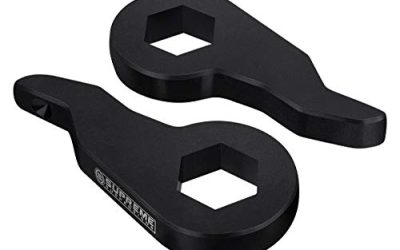
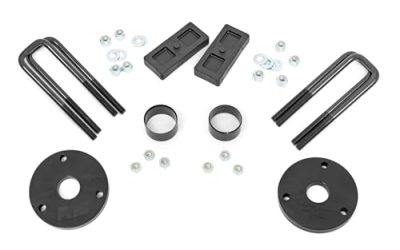
The Supreme Suspensions kit raises the back of a 1997 through 2003 Ford F-150 two-wheel drive by three inches, which is the right fix when the rear of an older truck sags under load. The kit uses high-strength steel tapered lift blocks with round-bend U-bolts, which resist deformation under the weight of the bed. The three-inch rear lift levels the stance when loaded, and it clears room for larger rear tires. Installation is a bolt-on job with no cutting, and the steel construction holds up in winter road salt. It is the best choice for classic F-150 2WD owners who want the rear to sit right.
Specs
- Rear lift: 3 inches
- Material: high-strength steel tapered lift blocks
- Fits: Ford F-150 1997-2003, 2WD only
- Includes: lift blocks and round-bend U-bolts
- Finish: corrosion-resistant steel
- Round-bend U-bolts included with the blocks
- Steel construction holds up in winter road salt
Best for: Classic F-150 2WD owners who want to raise a sagging rear end, with steel blocks and U-bolts built for the bed load.
Watch out for: This kit lifts the rear only, so it does not level a truck whose front sits low, and a wheel alignment is still wise after install to keep steering true and tires wearing evenly.
Autsurles 2.5″ Front Level Kit
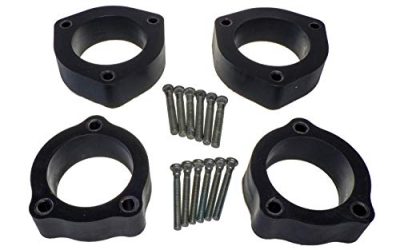
The Autsurles front level kit raises the front of a Ram 1500 two-wheel drive by two and a half inches, leveling the stance. The kit uses aluminum spacers that are light and resist corrosion, and it fits Ram 1500 trucks from 1994 through 2018 in two-wheel drive only. It also fits Ram 2500 and 3500 trucks from 1994 through 2011 in two-wheel drive. Installation is a bolt-on job with no cutting or drilling, so a home mechanic with basic tools can finish it in an afternoon. For Ram owners who want a level stance and a little extra clearance, this is the kit to start with.
Specs
- Front lift: 2.5 inches
- Material: aluminum
- Fits: Ram 1500 1994-2018, 2WD only; also Ram 2500/3500 1994-2011, 2WD
- Includes: front level spacers
- Model: XALLK010FK
- Aluminum spacers are light and resist corrosion
- Fits Ram 2500 and 3500 trucks from 1994 through 2011
Best for: Ram 1500 2WD owners who want a level front stance with wide year coverage, and a 2.5-inch lift that clears larger front tires.
Watch out for: It fits two-wheel drive only, so 4WD Ram owners need a different kit, and a wheel alignment is required after install to keep the truck tracking straight.
Dynofit 3″ Front & 2″ Rear Lift Kit
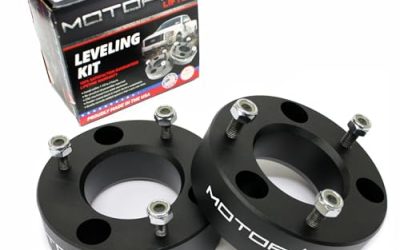
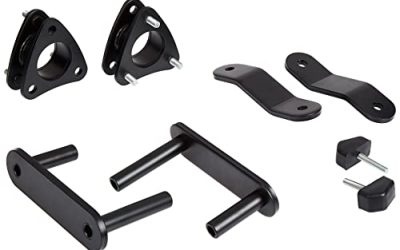
The Dynofit kit is the only full lift, raising the front of a Silverado or Sierra 1500 by three inches and the rear by two. The kit combines aluminum front strut spacers with carbon steel rear blocks and four U-bolts, giving you a complete lift in one box. It fits Silverado 1500 and Sierra 1500 trucks from 2007 through 2024 in both two-wheel drive and four-wheel drive. The three-inch front lift clears room for larger tires, while the two-inch rear lift keeps the stance level. Installation is bolt-on with no cutting, and the kit suits owners who want the most clearance.
Specs
- Front lift: 3 inches; rear lift: 2 inches
- Material: aluminum front spacers, carbon steel rear blocks
- Fits: Silverado 1500 and Sierra 1500, 2007-2024, 2WD and 4WD
- Includes: 2 front strut spacers, rear blocks and 4 U-bolts
- Part: 9K001A-3-3
- Four U-bolts included with the rear blocks
- Complete lift in one box for front and rear
Best for: Silverado and Sierra 1500 owners who want a full front-and-rear lift for maximum clearance, with three inches in front and two inches at the rear.
Watch out for: The three-inch front lift changes steering angles more than a two-inch level, so a professional alignment is essential, and taller lifts wear front-end parts faster over time on daily-driven trucks.
Which One Fits Your Situation
You drive a classic F-150 2WD
Pick the Supreme Suspensions rear kit. It fits F-150 two-wheel drive trucks from 1997 through 2003 and raises the rear by three inches, which fixes the sag that older trucks develop after years of hauling. The high-strength steel blocks and U-bolts hold up under load, and the bolt-on install needs no cutting. It is the right choice when the rear sits low and the front is already where you want it.
You drive a Ram 1500 2WD
Pick the Autsurles front level kit. It fits Ram 1500 two-wheel drive trucks from 1994 through 2018, and the two-and-a-half-inch front lift levels the stance and clears room for larger tires. The aluminum spacers resist corrosion, and the bolt-on install needs no cutting. It is the simplest way to level a 2WD Ram. Book a wheel alignment immediately after the install, since the lift changes your camber and toe.
You drive a Silverado or Sierra 1500
Pick the Dynofit kit if you want the most clearance, because it lifts the front by three inches and the rear by two. It fits Silverado and Sierra 1500 trucks from 2007 through 2024, so 2WD owners get a full lift in one box. The aluminum and carbon steel parts are built for the load. A three-inch front lift changes steering angles more than a two-inch level.
You tow or haul heavy loads
Pick a kit that lifts the rear as well as the front, or add a rear kit to your front level. The Dynofit kit raises the rear by two inches alongside its three-inch front lift, which keeps the stance level. The Supreme Suspensions rear kit is the right choice for a classic F-150 whose rear sags under a trailer. Check your hitch height after the install, because a level stance changes it.
Common Mistakes
- Buying a 4WD lift kit for a 2WD truck and discovering the front suspension does not match, after the truck is on jack stands with the old parts removed.
- Lifting only the front when the rear sags under load, leaving the truck nose-high when towing, with headlights aimed high and the trailer sitting uneven behind it.
- Picking the tallest lift on the shelf instead of the smallest lift that reaches your goal, which strains steering parts and changes the ride more than a modest lift.
- Driving away without an alignment after the install and letting the tires wear down unevenly, which shortens tire life and makes the truck pull to one side.
- Forgetting to re-torque the U-bolts and hardware after the first few hundred miles, when the parts settle and loose fasteners can clunk, shift or wear out early.
Frequently Asked Questions
Can I use a 4WD lift kit on a 2WD truck?
No, a kit designed for four-wheel drive often does not fit a two-wheel drive truck, because the front suspension layout is different. Two-wheel drive trucks use coil springs or torsion bars instead of a front differential and CV axles. Always confirm the listing says it fits two-wheel drive before you order, and match the make, model and year range.
Will a lift kit change how my 2WD truck handles?
Yes, raising the front or rear changes the steering angles and the center of gravity, so the truck feels a little different in corners. A two-inch level changes the handling only slightly, while a three-inch lift is more noticeable. A professional alignment after the install keeps the handling predictable and safe and the tires wearing evenly.
Do I need new shocks with a lift kit?
A modest lift kit works with your factory shocks, since the spacers sit on top of the struts or under the leaf springs. Check the listing for each kit to see whether your shocks will work with it. Worn shocks are worth replacing during the same job, since doing them together avoids paying for the labor twice.
How long does it take to install a 2WD lift kit?
A home mechanic with basic tools can finish a bolt-on lift kit in an afternoon, usually three to five hours including the alignment. The hardest part is freeing the old bolts, which may need penetrating oil and a breaker bar. A shop can complete the install and alignment in a few hours with the right tools.
Related Reviews & Guides
5 Best Flight Simulator Chairs for Home (November 2026)
4 Best Adjustable Lift Kits for Trucks (November 2026)