Last Updated: November 26, 2026
The best lift kit for subaru outback owners is the one that matches your exact model year, your clearance goal and your willingness to handle installation. A lift kit raises the body of the Outback above its wheels, adding ground clearance for rough roads, rutted trails and deep snow, and making room for larger tires. Done well, it transforms the Outback from a capable wagon into a genuinely confident back-road machine. Done poorly, with the wrong fitment or the wrong height, it can strain the suspension, confuse the driver-assist systems and wear tires unevenly.
This guide explains how lift kits work, what to check before you buy and which kit stands out for the most common Outback on the road today. The Outback has been built in many generations, and a kit that fits a 2020 model will not fit a 2015 model, so year-by-year fitment is the first thing to confirm. Lift height is the second: most owners want two inches at the front and a little less at the rear, which levels the stance and adds clearance without pushing the suspension geometry too far.
Installation matters as much as the kit itself. A bolt-on spacer kit is a manageable job for a well-equipped home mechanic or a professional shop, but it still involves the suspension, the steering and the alignment, so it deserves respect. After any lift, the vehicle needs a full alignment, and the driver-assist cameras and sensors may need recalibration. Budget for that work alongside the kit itself, and read the whole guide before you order.
Before you order, measure your current ground clearance at the rockers and at the lowest point under the body, and write the numbers down so you can compare them after the install. Check your local regulations as well, since some regions limit how much a vehicle can be raised and how far tires can extend beyond the bodywork. A lift also changes how the Outback handles in a crosswind and under braking, so plan a careful first drive on familiar roads after the work is done, and listen for any new noise from the suspension before you head for the trail.
How to Choose
Model-year fitment. This is the single most important check. Outback generations change the suspension mounting points, so a kit is built for a narrow year range, such as 2020 to 2024 or 2015 to 2019. Confirm your Outback’s year, trim and drivetrain against the listing before you buy, and double-check whether the kit covers your exact sub-model. A kit that almost fits does not fit.
Lift height and front-to-rear split. Most Outback kits lift the front two inches and the rear one and a half inches, which levels the nose-down factory stance while adding clearance. A smaller lift of around 1.2 inches suits owners who want a modest gain with minimal change to handling. A taller lift adds more clearance but puts more stress on axles, bushings and alignment, so match the height to your real use rather than chasing the biggest number.
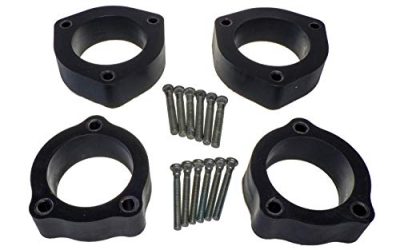
Kit type and components. Spacer kits use strut spacers to raise the body and are the most common choice for the Outback. Spring kits replace the springs for a firmer ride and a lift in one step. Full suspension kits add new struts and shocks for the most complete change. Read the included-components list so you know whether the kit includes sway-bar end links, brackets and hardware, or only the spacers themselves.
Materials. Steel spacers are strong and durable, while aluminum spacers are lighter and resist corrosion. Polyurethane spacers absorb vibration and are easy to install, but they suit modest lifts better than tall ones. Check the material for each component, not just the headline, since a kit may mix steel, aluminum and polyurethane parts.
Tire clearance. A lift is often bought to fit larger tires, so check the maximum tire size the kit supports and the wheel size and offset it assumes. A common target is a 245/65-17 tire on a 17-by-8 wheel, which adds ground clearance at the rockers and improves grip on loose surfaces. Confirm that your chosen tire and wheel combination clears the bodywork at full steering lock and full suspension compression.
Driver-assist systems. Modern Outbacks use cameras and sensors for adaptive cruise control, lane keeping and automatic braking, and a lift changes the angle of those systems. Some kits state compatibility with EyeSight and other safety systems, while others warn that recalibration may be needed. Check the kit’s notes and budget for a shop recalibration if your Outback has these features.
Installation and alignment. A bolt-on kit is designed for installation without cutting or welding, but the job still takes several hours and needs a lift, a torque wrench and an alignment rack. Plan for a professional installation if you are not confident with suspension work, and always book a full alignment immediately after the lift. Some kits also need the headlights re-aimed, since the body sits higher.
Top Picks
ReadyLIFT 69-90200 2.0-Inch SST Lift Kit for Subaru Outback AWD

The ReadyLIFT 69-90200 is the standout Outback lift kit for the most common current generation, fitting 2020 to 2024 Subaru Outback AWD models. It lifts the front two inches and the rear one and a half inches using offset strut spacers, a design intended to keep caster and camber correct after the lift. The kit includes front sway-bar end links that restore the front end to factory angles on the strut, and it is a bolt-on installation with no cutting or welding required. ReadyLIFT states that the kit allows up to a 245/65-17 tire on a 17-by-8 wheel with a 38-millimetre offset, which can bring ground clearance at the rockers above 12 inches.
The offset spacer design is the detail that sets this kit apart. Rather than a simple flat spacer, the offset shape accounts for the change in suspension geometry, so the alignment stays closer to factory settings and the tires wear more evenly. The kit is built from alloy steel and aluminum, weighs around 20 pounds, and is designed to keep the factory ride quality while adding height and stance. Installation takes about four hours for a professional, and a full alignment is required afterwards.
Who it is for: owners of a 2020 to 2024 Outback AWD who want a well-specified two-inch lift with attention to alignment geometry, room for larger tires and a straightforward bolt-on install. It is the pick for drivers who use their Outback on rough roads, forest tracks and snowy driveways and want the extra clearance without a full suspension replacement.
Caveats: this kit is not compatible with factory lift models, including the Outback Wilderness edition, which already sits higher from the factory. It fits only the 2020 to 2024 AWD models, so owners of earlier or later Outbacks need a different kit. The rear lift is half an inch less than the front, so the stance is levelled rather than raised evenly. Confirm your exact year, trim and drivetrain in the listing before ordering, and arrange an alignment and a driver-assist check after installation. Only one Outback-specific kit could be verified on Amazon US for this guide, so this article carries a single pick, and the listing should be checked live before ordering.
Comparison Table
| Kit | Fitment | Front lift | Rear lift | Materials | Key feature |
|---|---|---|---|---|---|
| ReadyLIFT 69-90200 | 2020 to 2024 Outback AWD | 2 inches | 1.5 inches | Alloy steel and aluminum | Offset spacers for caster and camber, plus front sway-bar end links |
Which One Is Right for You?
If you own a 2020 to 2024 Outback AWD and want a two-inch lift, the ReadyLIFT 69-90200 is the kit to choose, with its offset spacer design, included sway-bar end links and clear tire guidance. Owners of a 2015 to 2019 Outback need a kit built for that earlier generation, and owners of a 2010 to 2014 Outback need yet another, so do not order a kit for the wrong years. If you drive an Outback Wilderness, your vehicle already has a factory lift, and most aftermarket kits state that they are not compatible, so check with the maker before buying anything. For a modest gain with minimal change to handling, a 1.2-inch spacer kit is the gentler option, while a two-inch kit is the right call for rough roads and larger tires. Whatever you choose, confirm the fitment in writing, book the alignment before you drive far, and have the driver-assist systems checked after the work is done.
Measure twice before you order: confirm the year stamped on your door jamb, confirm the trim, and confirm whether your Outback has a factory lift or auto-levelling headlamps, since both change which kits fit. Keep the stock parts you remove, in case you ever want to return the vehicle to its original height, and keep the alignment report from the shop so you have a record of the angles after the lift. A careful buyer who checks fitment first will spend less time fixing problems later.
Frequently Asked Questions
Will a lift kit void my Subaru warranty?
A lift kit can affect warranty coverage for suspension and drivetrain components if a failure is linked to the modification, but it does not automatically void the whole warranty. Each claim is assessed on its own facts, so keep your receipts, follow the installation instructions and use a reputable shop. If warranty coverage is a priority, ask your service centre about its policy before you install a lift, and consider a modest height rather than a tall one.
Do I need an alignment after installing a lift kit?
Yes, a full alignment is essential after any lift. Raising the body changes the camber, caster and toe angles, and driving without an alignment will wear tires unevenly and can make the steering feel vague or pull to one side. Book the alignment for the same day as the installation, and have the shop check the headlight aim as well, since the lights sit higher after a lift.
How much ground clearance does a two-inch lift add?
A two-inch lift at the front and one and a half inches at the rear raises the body by that amount, and larger tires add further clearance at the rockers and the underbody. With a 245/65-17 tire, a lifted Outback can gain well over an inch of extra clearance at the rockers compared with stock, though the exact gain depends on the tire size and the factory ride height. Measure your clearance before and after the install so you know what changed.
Can I install a lift kit myself?
A bolt-on spacer kit is within reach of an experienced home mechanic with a lift or sturdy jack stands, a torque wrench and the right sockets, and the job takes around four hours. If you are not confident working on suspension components, or if your Outback has driver-assist systems that need recalibration, a professional shop is the safer choice. Never work under a vehicle supported only by a jack, and always torque every bolt to the maker’s specification.
Disclosure: As an Amazon Associate, we may earn from qualifying purchases.
Related Reviews & Guides

5 Best Universal Remotes for Living Rooms (November 2026)
Best Lift Up Tonneau Cover: Hard Folding Covers Compared