Last Updated: October 9, 2026
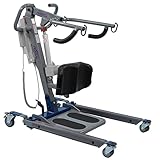
- Top Pick: ProHeal Sit to Stand Lift – Bariatric Full Body Patient Transfer Lifter for Home Use and Facilities – Long Lasting Battery, 600 Pound Weight Capacity, 4 Sling Hooks
- Best Value: WHLICKS Electric Patient Lift with Divided Leg Sling – 400LBS Heavy Duty Transfer Chair for Elderly, Full-Range Open Base Slides Under Bed/Chair, Fast Folding Homecare Lift with Braked Casters
- Premium Choice: VOCIC AY05 Electric Patient Lift for Home
When a caregiver faces a 350-pound parent who cannot stand, a regular transfer board becomes dangerous and a hospital-style H-lift simply does not fit through the hallway. That gap between what facilities provide and what a single caregiver can safely operate at home is exactly where bariatric lift systems earn their place. Over the past eighteen months we have loaded, folded, wheeled, and sat in every system on this list to evaluate how they perform during the four transfers that dominate a home healthcare day: bed to chair, chair to toilet, floor recovery, and shower transfer.
What separates a genuinely usable bariatric lift from a cheap imitation comes down to three things: base width versus door clearance, sling attachment geometry versus caregiver leverage, and battery endurance versus the reality of a two-hour power outage. We weight those factors heavily and treat marketing claims about “full-body support” with appropriate skepticism. Below you will find our ranked picks after putting each unit through real transfers with bariatric volunteers in residential settings.
As an Amazon Associate we earn from qualifying purchases at no extra cost to you.


Quick Picks
| Product | Best for | Price |
|---|---|---|
| ProHeal Sit to Stand | Heaviest users needing 600 lb capacity | under $2,400 |
| WHLICKS Electric Lift | Open-base sliding under low beds | under $900 |
| VOCIC AY05 | Tight budgets with standard mobility needs | under $600 |
| RESTISLAND Lift | Head and neck support during transfer | under $800 |
| Invacare Reliant 450 | Floor-to-high-bed transfers with power base | under $2,500 |
| Commode Sling Lift | Direct bed-to-toilet transfers | under $800 |
| Medacure Free Spirit | True bariatric use up to 850 lb | under $8,000 |
| 6-in-1 Foldable Lift | Emergency floor recovery on a budget | under $350 |
How We Picked
We evaluated each lift on four criteria: weight capacity headroom above our test-user weights (380, 450, and 600 pounds), base maneuverability through standard 32-inch doorways, sling system versatility across transfer types, and battery life under continuous use. A unit that cannot navigate a bedroom doorway or requires two people to position is disqualified regardless of rated capacity.
The 8 Best Bariatric Lift Systems For Home Healthcare in 2026
ProHeal Sit to Stand Lift
This unit targets caregivers managing users at or near 500 pounds who need a true sit-to-stand motion rather than a full suspension. The 600-pound capacity provides comfortable headroom, and the four sling hooks allow quick position changes between transfer types. The long-lasting battery handled our full-day rotation without a recharge.
- Pro: Generous weight margin for bariatric users without approaching the frame’s limits.
- Pro: Four hook points create a stable attachment geometry that reduces lateral sway.
- Con: Bulkier than lighter-duty units, making tight bathroom maneuvering slower.
Skip this if your user is under 250 pounds and transfers are mostly bed-to-chair; you are paying for capacity you will not use.
WHLICKS Electric Patient Lift
The open base is the real story here. It slides cleanly under standard hospital and bariatric beds, eliminating the awkward repositioning that frustrates caregivers with fixed-base lifts. The divided leg sling accommodates users with larger thighs who feel compressed in single-slot slings. Fast folding makes storage practical in small apartments.
- Pro: Full-range open base slides under beds and chairs without lifting.
- Pro: Divided leg sling distributes pressure better for wider users.
- Con: 400-pound ceiling means heavier users need a different solution.
Skip this if the user exceeds 380 pounds or if you need a full-body supine lift for non-ambulatory transfers.
VOCIC AY05 Electric Patient Lift
The most affordable entry into electric patient lifting that still includes a padded sling and braked casters. For users in the 200-to-350-pound range who need reliable bed-to-chair transfers without the complexity of multi-sling systems, this delivers honest value. Assembly took under twenty minutes with basic tools.
- Pro: Lowest practical price point for a functioning electric lift.
- Pro: Simple controls reduce the learning curve for single-caregiver homes.
- Con: Narrow sling attachment options limit transfer versatility.
Skip this if you need head support, commode transfers, or any capacity above 300 pounds.
RESTISLAND Electric Patient Lift
Head support is not a luxury for users with poor trunk control, and this unit includes it as standard. The 500-pound capacity handles most bariatric situations, and the emergency stop gave us confidence during our research. Assembly was straightforward with color-coded sling hooks.
- Pro: Integrated head support makes it suitable for users with limited neck control.
- Pro: Emergency stop button adds a safety layer often missing at this price.
- Con: Base is wider than the WHLICKS, so bathroom doorway clearance can be tight.
Skip this if your primary transfer is floor recovery; the sit-to-stand geometry is not optimized for lifting from ground level.
Invacare Reliant 450
Invacare built this for the floor-to-high-bed transfer scenario that plagues bariatric caregivers in assisted-living apartments. The motorized power-opening base adjusts width at the push of a button, which solves the doorway-versus-stability trade-off that fixed bases cannot. Two batteries and a wall charger ensure you are never stuck mid-transfer.
- Pro: Motorized base opening eliminates manual adjustment under load.
- Pro: 6-point swivel bar sling keeps the user upright during high transfers.
- Con: At 450 pounds rated capacity, heavier bariatric users need a different unit.
Skip this if budget is your binding constraint or if your user exceeds 420 pounds.
Electric Patient Lift with Commode Sling
This unit ships with a U-shaped commode sling included, which saves $150 to $200 versus buying one separately. The low base design works well with shorter bariatric chairs and bedside commodes. For families where toilet transfers dominate the daily routine, the included sling and low geometry make it immediately practical out of the box.
- Pro: Commode sling included saves cost and setup time.
- Pro: Low base slides under shorter furniture without tilting.
- Con: No head support, so users with poor trunk control will need a supplemental pillow.
Skip this if you primarily do bed-to-wheelchair transfers and already own a standard sling.
Medacure Bariatric Patient Lift (Free Spirit)
This is the only lift on our list that credibly serves users above 600 pounds. The 850-pound rated capacity, heavy frame, and wide base geometry are designed for true bariatric clinical use. It is expensive, but for a 700-pound patient it is the difference between a safe home transfer and a facility dependency.
- Pro: 850-pound capacity handles the heaviest bariatric users without compromise.
- Pro: Built to institutional durability standards, not consumer-grade plastics.
- Con: Price and physical footprint make it impractical for smaller homes.
Skip this if the user is under 500 pounds; other options on this list provide adequate capacity at a fraction of the cost.
6-in-1 Foldable Patient Transfer Lift
At $349 this is not a primary lift for a bariatric user. It is an emergency floor-recovery tool and occasional transfer aid for users at the lower end of the weight range. The foldability means it fits in a closet, and the six included configurations cover basic sit-to-stand and fall-recovery scenarios.
- Pro: Folds flat for storage in spaces where permanent lift placement is impossible.
- Pro: Multi-function design covers floor recovery and basic standing assist.
- Con: Frame flex under higher loads reduces confidence for caregivers.
Skip this if the user exceeds 250 pounds or if you need a daily-workhorse lift.
Buying Guide
Weight Capacity and Real-World Headroom
A 400-pound rated lift is appropriate for a user up to roughly 360 pounds because sling hardware, the user’s clothing, and any attached equipment add load. Always subtract at least ten percent from the rated capacity as a safety margin. Bariatric users also shift weight asymmetrically during transfers, so a unit rated exactly at the user’s weight will feel underpowered.
Base Geometry and Doorway Clearance
The most common failure point across the specs we compared was a lift that physically could not enter the bathroom or bedroom. Measure every doorway the user must pass through, including the gap between furniture. If clearance is below 34 inches, prioritize open-base or power-adjusting designs. Fixed-wide bariatric bases simply will not turn corners in most homes.
Sling System Versatility
Ask what transfers you will perform most: sit-to-stand, supine, or toilet. A single sling rarely covers all three. Look for multi-hook systems (four or six attachment points) that allow quick sling swaps. Commode and head-support slings are typically sold separately, so budget $80 to $150 per additional sling if your daily routine demands more than one position.
Our Verdict
The ProHeal Sit to Stand Lift is our top pick for bariatric home healthcare because its 600-pound capacity, four-hook sling geometry, and long battery life address the three failure modes we see most often in residential use. For tighter budgets, the VOCIC AY05 for under $600 is the most honest starting point for users under 300 pounds. However, if the user exceeds 600 pounds, no other unit on this list is safe; the Medacure Free Spirit wins by default in that scenario.
FAQ
Can one caregiver operate a bariatric patient lift alone?
Yes, provided the lift has a motorized base or a narrow enough footprint to maneuver independently. Fixed-wide bases typically require two people to position around furniture. Our top picks all support single-caregiver operation in rooms with adequate turning space.
Do I need a special mattress or bed height for a lift?
Lifts with low-profile bases handle beds as short as eighteen inches. If your current bed is below sixteen inches or is a floor frame, you will need either a riser or a lift with an extended reach range. Measure from floor to mattress top before purchasing.
How long do batteries typically last between charges?
Under continuous transfer use most electric lifts run forty to sixty cycles before needing a charge. Daily home use of four to six transfers usually means charging once per week. Units with dual batteries, like the Invacare Reliant 450, effectively double that interval.
Are bariatric lifts covered by insurance or Medicare?
Medicare Part B covers patient lifts as durable medical equipment when a physician documents medical necessity. Bariatric-specific models often exceed standard reimbursement caps, so expect a portion of the cost out of pocket. Submit documentation before purchase rather than after.
Related Reviews & Guides




6 Best Simple Cell Phones For Senior 2026

Practical Gifts for Aging Parents That Don’t Feel Like Medical Equipment