Last Updated: October 4, 2026
- Top Pick: Vive Hemi Walker for Seniors – Narrow for Small & Tight Spaces, Ultra
- Best Value: Days Hemi Walker – Mobility Aid for Elderly, Handicapped, Disabled Users – One Arm or Hand Support, Folding, Aluminum, Height Adjustable – Weight Capacity Up to 300 Pounds
- Premium Choice: Drive Medical Two-Button Folding Walker with Wheels, Height Adjustable
Choosing between a hemi walker and a standard walker is less about which product is “better” and more about how much support your body—and your home—actually requires. A hemi walker is designed for one-sided use, making it useful when one arm, hand, or side of the body is significantly weaker. A standard walker is held with both hands and generally provides a broader, more stable support base.
The real decision is whether you need maximum stability or easier movement through everyday spaces. Doorways, furniture layout, stairs, flooring, storage, and the user’s ability to grip both handles can matter just as much as price. A physical therapist or other qualified clinician should confirm the appropriate style and height before purchase, particularly after a stroke, surgery, or serious injury.
As an Amazon Associate we earn from qualifying purchases at no extra cost to you.


Quick Verdict
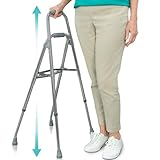
Choose a hemi walker if the user can safely bear weight through only one arm or hand and needs more support than a cane provides. Its narrower profile and one-sided handle are often easier to position beside a chair, bed, or hallway wall.
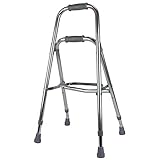
Choose a standard walker if the user can use both hands and needs the most predictable four-point support. Standard walkers are usually the better choice for people who feel unsteady, are learning to walk again, or need to distribute weight across both arms.
For a typical home, the practical difference is significant: a hemi walker often weighs about 4 to 6 pounds and may measure roughly 16 to 20 inches wide, while a standard folding walker commonly weighs about 5 to 8 pounds and measures approximately 22 to 25 inches wide. Exact dimensions vary by model and whether it has wheels.
Side by Side
| Factor | Hemi walker | Standard walker |
|---|---|---|
| Primary support | One hand or one side of the body | Both hands and both sides of the body |
| Stability | More stable than a cane, but less broad than a standard walker | Generally the strongest basic support for standing and walking |
| Comfort | Can reduce strain on a weaker arm; one-sided use may feel uneven | Balanced hand placement, though both wrists and shoulders work |
| Durability | Aluminum frames are commonly durable for daily indoor use | Aluminum frames are commonly durable; moving parts need inspection |
| Typical price range | About $50–$65 for the examples referenced | About $28–$35 for the examples referenced |
| Maintenance | Check rubber tips, height buttons, and frame joints | Check tips, wheels, glides, folding buttons, and frame joints |
| Space needed | Usually narrower; often easier in tight hallways and beside furniture | Usually wider; requires more clearance to turn and pass through doors |
| Look | Compact and closer to a large quad cane | More recognizable as a traditional mobility aid |
| Resale | Smaller buyer pool, but useful for specific one-sided needs | Broader buyer pool, especially for adjustable folding models |
| Best for | One-sided weakness, narrow paths, and users progressing beyond a cane | General balance problems, bilateral weakness, and maximum basic support |
Where Hemi Walker Wins
The biggest advantage is one-sided operation. Someone with weakness or limited coordination in one arm may not be able to lift, push, or steer a standard walker evenly. A hemi walker lets the stronger side do the work while the user keeps the weaker side protected or supported in another way.
Its narrower footprint can also make a noticeable difference at home. A compact model may fit more easily beside a toilet, between a bed and a dresser, or through a narrow passage between a kitchen island and cabinets. It is also less cumbersome when turning into a chair or approaching a countertop.
Compared with a cane, a hemi walker offers a larger base with several contact points. That can provide a useful middle ground for someone who no longer needs a standard walker but is not ready for a single-point cane. However, it still requires controlled balance and safe foot placement; “narrower” does not mean automatically safer.
For reference, the Vive Hemi Walker for Seniors is listed for under $50 and is marketed around a narrow design for tight spaces. The Days Hemi Walker is listed for under $70 and includes folding, aluminum construction, height adjustment, and a stated weight capacity of up to 300 pounds. Those features are convenient, but the user’s safe operating ability matters more than the capacity number alone.
Where Standard Walker Wins
A standard walker usually wins on stability because it gives the user two handgrips and a wider base. When both hands can grip comfortably, the design makes it easier to share weight between the left and right sides. This is often helpful after lower-body surgery, during recovery from an injury, or for people with balance limitations affecting both sides.
It can also be easier to learn. The user advances the frame, steps into it, and repeats the sequence. A clinician may recommend a stationary walker, a two-wheel walker, or a model with rear glides depending on strength, balance, and gait. Models with front wheels reduce the need to lift the entire frame, but they can roll more readily and require good control.
Standard walkers also offer more choice at the entry level. The Drive Medical Two-Button Folding Walker with Wheels is listed for under $30, while the Medline Lightweight Two Button Folding Walker with 5-inch Wheels is listed for under $40 and has a stated capacity of up to 300 pounds. These prices illustrate why a standard walker may be the economical first purchase, although accessories, replacement tips, and wheels can raise the final cost.
The tradeoff is width and maneuverability. A standard walker may catch on chair legs, rugs, or narrow door frames. The user should not lean heavily on a rolling walker without professional guidance, and wheels should be matched to the person’s control and living environment.
Cost Over 5 Years
Purchase price is only the beginning. Using the listed examples, a hemi walker costs roughly $50 to under $70, while the referenced standard walkers cost about $30 to under $40. Over five years, that works out to an initial-equipment cost of approximately $10 to $13 per year for a hemi walker, or about $6 to $7 per year for a standard walker, before maintenance.
A reasonable planning estimate is another $10 to $30 over five years for replacement rubber tips, depending on wear and local pricing. A wheeled standard walker may need replacement wheels or glides as well; budgeting approximately $15 to $50 for those parts is prudent, though some users will spend less and others more. Do not continue using a walker with cracked tips, loose buttons, bent legs, or damaged wheels.
That puts broad five-year ownership estimates at about $60–$95 for a hemi walker and $45–$115 for a standard walker, not including delivery, professional fitting, or a replacement unit. These are budgeting ranges, not guarantees. A walker used outdoors, by a heavier user, or every day will generally experience more wear than one used occasionally indoors.
Which One for Your Home
Small apartment
A hemi walker is often the better spatial fit when hallways, bathroom approaches, or kitchen routes are tight. Measure the narrowest doorway and turning area, not just the hallway. Leave enough room for the user’s feet and body; a device that technically fits but forces sideways shuffling is not a good fit.
Family with kids or pets
Choose based on control first, then convenience. A standard walker may provide better stability, but its wider frame can become a target for toys, pet bowls, and trailing leashes. A hemi walker is easier to tuck against a wall, but one-sided use may be unsuitable if the user needs both hands for balance. Keep pathways clear and avoid loose rugs.
Rental
Either style avoids permanent installation, making both renter-friendly. A folding aluminum walker is easy to store in a closet, but confirm that it fits in the entryway and elevator. A hemi walker can be preferable where doorways cannot be widened or furniture cannot be rearranged. Protect floors with clean rubber tips and avoid dragging the frame.
Long-term home
Prioritize the user’s changing needs rather than today’s lowest price. A standard walker may offer more stable support during an extended recovery, while a hemi walker may make sense if one-sided weakness is expected to persist. Check height adjustment: the handgrips should generally align near the wrist crease when the user stands upright with relaxed shoulders, but a professional should verify the final setup.
FAQ
Is a hemi walker better than a cane?
It can be, when the user needs more support than a cane provides but can safely use one hand. A hemi walker has a broader base and more contact points. It is not automatically appropriate for everyone with weakness, so fitting and gait training are important.
Can a hemi walker be used on either side?
Many hemi walkers can be positioned on the user’s stronger side, but the correct side and technique depend on the injury, weakness pattern, and clinician’s instructions. Do not assume the handle should always be on the painful or weaker side.
Are wheeled standard walkers safer?
Not necessarily. Front wheels can make a walker easier to advance without lifting, but they also change how it moves. A stationary walker may offer more resistance, while wheels require better braking and steering control. The safest configuration is the one the user can operate consistently.
How do I know when to replace a walker?
Replace it if the frame is bent or cracked, height buttons no longer lock, handgrips are loose, rubber tips are worn through, or wheels wobble and fail to roll smoothly. Recheck the device after a fall or collision, even if damage is not immediately visible.
Ready to decide? Our #1 pick for 2026 is the Primary support.
Live price & availability on Amazon.
Related Reviews & Guides


6 Best Compression Socks For Swollen Ankles And Feet 2026

How to Choose Lymphedema Compression Arm Sleeves: What Actually Matters