Last Updated: October 4, 2026
Finding the best bed transfer aid for seniors often starts with a very specific problem: getting from a mattress to a standing position without twisting, sliding, or losing balance. The right solution depends on whether the user needs a little leverage, hands-on caregiver support, help repositioning in bed, or a powered lift for larger transfers.
We evaluated these eight options by transfer type, ease of use, caregiver involvement, stability features, portability, and price. The lineup ranges from a under-$10 standing aid to a under-$700 powered transfer lift, with several practical middle-ground choices for bedrooms, bathrooms, vehicles, and home-care routines in 2026.
As an Amazon Associate we earn from qualifying purchases at no extra cost to you.


Quick Picks
| Product | Best for | Price |
|---|---|---|
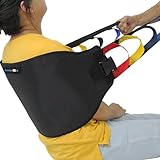
| Transfer Sling, Transfer Belt for Elderly, Gait Belts for Seniors | Caregiver-assisted standing and walking | under $20 |
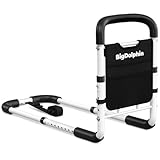
| BigDolphin Bed Rails for Elderly Adults Safety, 350 LB Capacity, Model BS06 | Bedside support with a stated 350-pound capacity | under $40 |
| Bed Rails for Elderly Adults Safety Bed Assist Rails for Seniors | Basic bed entry and exit support | under $30 |
| Car Transfer Aid Easy Slide Sheet Positioning Patient Transfer Device | Sliding transfers between vehicles, wheelchairs, and beds | under $20 |
| VOCIC Electric Transfer Lift for Car, AY06 | Powered car transfers and users needing substantial assistance | under $700 |
| Lift Assist for Elderly with No-Slip Grip Handles | Low-cost standing assistance | under $10 |
| Stander Wonder Pole, Security-Pole and Curve Grab Bar | Floor-to-ceiling stability support | $179 |
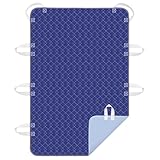
| CUFOTPLS Positioning Bed Pads with Handles | Caregiver-assisted repositioning in bed | under $20 |
How We Picked
We grouped the products by the job they are designed to perform: standing beside the bed, supporting a pivot transfer, repositioning someone who is already lying down, or moving a person between a bed, wheelchair, and vehicle. We also considered whether the device is primarily for the user, the caregiver, or both.
Safety claims were kept specific to the information provided. For example, the BigDolphin rail lists a 350-pound capacity, while the other products do not include a stated capacity here. We did not assign unsupported weight limits, dimensions, battery specifications, or test scores. A transfer aid should supplement an appropriate care plan—not replace professional instruction when a person cannot bear weight, has unpredictable balance, or needs full-body lifting.
The 8 Best Picks
1. Transfer Sling, Transfer Belt for Elderly, Gait Belts for Seniors
This transfer belt is a practical choice when a caregiver needs controlled contact during a sit-to-stand movement, short walk, or pivot from bed to chair. It is aimed at seniors who can participate in the transfer but benefit from steadying support. The sling-and-belt format can give a caregiver a more secure handhold than grabbing clothing or an arm. For under $20, it is also an approachable first step for households building a basic transfer kit.
- Pros: Affordable; designed for caregiver-assisted gait and transfers.
- Con: It still requires a caregiver and does not independently lift the user.
Skip it if the user cannot bear weight, cannot follow transfer instructions, or needs mechanical lifting. Use should follow proper fitting and caregiver training.
2. BigDolphin Bed Rails for Elderly Adults Safety, 350 LB Capacity, Model BS06
The BigDolphin rail is the strongest straightforward pick for someone who mainly needs a handhold beside the mattress. Its stated 350-pound capacity gives buyers a concrete specification to compare when evaluating bedside support. A rail can help a user roll, sit up, and push or pull into a standing position, while also adding a visible boundary at the edge of the bed. For under $40, it offers a relatively low-cost way to address nighttime bed exits or morning transfers.
- Pros: Stated 350-pound capacity; purpose-built for elderly adult bed safety.
- Con: A rail is not a substitute for hands-on assistance or a lifting device.
Skip it if the user may climb over the rail, becomes confused at night, or cannot safely use a fixed handhold. Confirm installation and mattress compatibility before relying on it.
3. Bed Rails for Elderly Adults Safety Bed Assist Rails for Seniors
This general bed-assist rail is a sensible middle-price option for users who need help with the final few inches from sitting to standing. It is less specialized in the product description than the BigDolphin model, but the intended use is clear: supporting seniors at the bedside and making bed entry and exit more controlled. For under $30, it can suit a bedroom where the main challenge is finding a stable point to grip rather than moving someone who is fully dependent.
- Pros: Focused on bedside assistance; costs less than many larger transfer systems.
- Con: The available details do not state a weight capacity.
Skip it when the user needs horizontal repositioning, a powered lift, or a caregiver sling. Buyers should verify how it secures and whether it fits their particular bed.
4. Car Transfer Aid Easy Slide Sheet Positioning Patient Transfer Device
This slide sheet is the best fit for reducing friction during transfers rather than providing a handhold. Its listed uses cover vehicles, wheelchairs, beds, turning, repositioning, hospitals, and home care, making it the most versatile option for caregivers who frequently move someone across a surface. For under $20, it is inexpensive enough to keep with a vehicle or home-care supplies. The key benefit is assisting a controlled slide, which may reduce pulling on the user’s arms or clothing.
- Pros: Designed for multiple transfer settings; low purchase price.
- Con: It requires caregiver technique and does not provide standing support.
Skip it for a user who can no longer participate in transfers unless a trained caregiver is present. Never treat a slide sheet as a replacement for a lift when full support is required.
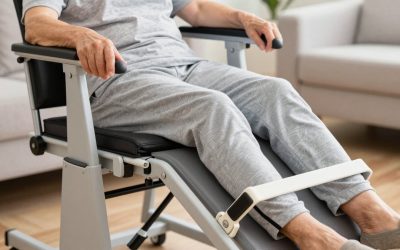
5. VOCIC Electric Transfer Lift for Car, Portable Folding Patient Lift Transfer Chair, AY06
The VOCIC electric transfer lift is the most substantial solution in this group and the clearest choice for car transfers involving a person who needs more than a belt or rail can offer. Its portable folding patient-lift-chair design is intended to support transfers with powered assistance, potentially reducing the physical demand on a caregiver. For under $700, it is a major purchase, but it addresses a different level of need than the manual aids. The electric design also makes it especially relevant for households managing repeated vehicle transfers.
- Pros: Electric assistance; designed for portable car transfers.
- Con: Highest price in the roundup, for under $700.
Skip it if the user only needs a bedside handhold or can transfer independently. Confirm suitability, charging requirements, and caregiver training before use.
6. Lift Assist for Elderly with No-Slip Grip Handles
For under $10, this lift assist is the budget pick for users who need a simple pair of no-slip grip handles while standing or changing position. It may be useful as a compact support aid for a senior who has enough leg strength to rise but wants extra confidence during the movement. The straightforward design is less intimidating than a larger bedside system and costs very little to try. However, a low price should not be confused with a high level of support or a substitute for supervision.
- Pros: Lowest price in the roundup; no-slip grip handles are designed for standing assistance.
- Con: The product details do not state a weight capacity or provide mechanical lifting.
Skip it for users with weak weight bearing, unpredictable balance, or a need for caregiver-controlled transfers. Test positioning carefully before routine use.
7. Stander Wonder Pole, Security-Pole and Curve Grab Bar
The Stander Wonder Pole is the premium choice for a stable vertical support point in a bedroom or bathroom. Its tension-mounted floor-to-ceiling design can help a user pull up, pivot, or steady themselves without relying on a small portable handle. The included security-pole and curve grab bar functions make it a broader stability solution than a basic bed rail. At $179, it costs more than the manual aids, but it is aimed at households that want a dedicated transfer pole for repeated use.
- Pros: Floor-to-ceiling tension-mounted design; useful across bedroom and bathroom routines.
- Con: Installation and placement are more involved than with a handheld aid.
Skip it if the room cannot accommodate a secure floor-to-ceiling setup or if the user needs lifting rather than balance support.
8. CUFOTPLS Positioning Bed Pads with Handles for Elderly & Patients
These positioning bed pads are designed for a different stage of the transfer process: moving or turning someone who is already in bed. Handles give caregivers designated points for repositioning, which can be useful during dressing, pressure-relief routines, or preparation for a bed-to-chair transfer. For under $20, the pads are a reasonably priced addition to a home-care setup, especially when the main difficulty is shifting a person across the mattress rather than helping them stand.
- Pros: Handles are intended for caregiver-assisted positioning; supports in-bed turning and movement.
- Con: It does not provide a standing aid or independent lift.
Skip it if your primary problem is getting up from the side of the bed. Caregivers should use coordinated movements and avoid dragging a person by the limbs.
Buying Guide
Match the aid to the transfer
Choose a rail, pole, or handle for a user who can stand and needs leverage. Choose a belt when a caregiver must guide a participating user. Choose a slide sheet or positioning pad for movement across a mattress or seat. A powered lift is the appropriate category to investigate when the user cannot safely bear weight or requires substantial assistance.
Separate balance support from lifting support
A grab bar can improve stability, but it does not carry the same role as a lift. Likewise, a gait belt gives a caregiver a controlled handhold but does not remove the need for the user to participate. If knees buckle, balance is unpredictable, or the user cannot follow directions, consult a qualified clinician or trained transfer professional before selecting equipment.
Check capacity, placement, and caregiver technique
Among these products, the BigDolphin rail specifically lists a 350-pound capacity. Do not assume other aids have the same limit. Check the manufacturer’s specifications, inspect attachment points, and keep the transfer path clear. For rails and poles, placement matters: the user should be able to grip without twisting or reaching too far. Caregivers should learn safe body mechanics and avoid lifting with the back.
Our Verdict
The BigDolphin Bed Rails are the best overall choice for a senior who mainly needs bedside leverage, thanks to their stated 350-pound capacity and under $40 price. The Transfer Sling is the better low-cost pick when a caregiver is actively assisting a user who can participate. For in-bed movement, the CUFOTPLS positioning pads are more appropriate, while the VOCIC Electric Transfer Lift is the standout for demanding car transfers. The right choice is determined less by price than by whether the user needs stability, guidance, repositioning, or actual lifting.
FAQ
What is the best bed transfer aid for seniors who can still stand?
A bed rail, transfer belt, or transfer pole may work, depending on the person’s balance and strength. A rail or pole provides a fixed handhold, while a belt is intended for caregiver guidance. Choose the least complicated aid that safely addresses the actual movement.
Can a bed rail lift someone out of bed?
No. A bed rail provides a handhold for rolling, sitting, and standing, but it does not mechanically lift the user. Someone who cannot bear weight or follow directions may need professional assessment and a suitable lift system instead.
Are slide sheets suitable for getting out of bed?
Slide sheets are primarily for reducing friction while repositioning or transferring across a surface. They do not offer the standing support of a rail or belt. Use them with proper caregiver technique and skip them as the sole aid when the user needs full-body support.
When should a caregiver choose an electric transfer lift?
An electric transfer lift is worth considering when manual aids are not enough for repeated transfers, especially between a bed, wheelchair, and vehicle. Because equipment needs vary, confirm the device’s specifications, setup, and safe-use instructions before making it part of a daily care routine.
Ready to decide? Our #1 pick for 2026 is the Transfer Sling, Transfer Belt for Elderly, Gait Belts for Seniors.
Live price & availability on Amazon.
Related Reviews & Guides


6 Best Adjustable Quad Canes 2026

How to Choose Professional Patient Lifts for Home Caregivers: What Actually Matters