Last Updated: September 26, 2026
Home blood pressure readings are one of the most useful numbers a doctor can get between appointments, and the good news for anyone on Social Security or a pension is that accuracy does not require an expensive device. A reliable upper-arm monitor often costs $25 to $50. The real risks on a tight budget are buying the wrong cuff size, choosing a gadget that was never validated, or paying for app features you will not use. This guide shows how to spend as little as possible while still getting readings your care team can trust.
Where the Money Should and Should Not Go
Spend on: validation and the right cuff
A monitor is “validated” when it has been tested against a clinical protocol and published results. Independent lists such as validatebp.org in the United States or STRIDE BP internationally let you check a model before buying. A validated $30 monitor beats an unvalidated $90 one. The cuff matters just as much: a cuff that is too small reads high, one that is too large can read low. Measure the middle of your upper arm with a soft tape and match it to the cuff range printed on the box, commonly 22–32 cm (standard) or 22–42 cm (wide-range).
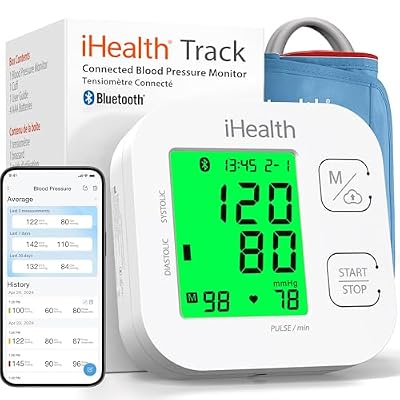
iHealth Track Smart Upper Arm Blood Pressure Monitor with Wide-Range Cuff
Included for 'Best budget blood pressure monitor for seniors on a fixed income' as a relevant option in this category; details come from the product listing.
View on Amazon
Talking Blood Pressure Monitor for Seniors and Low Vision - Hear Your Numbers Aloud - Automatic Upper Arm Cuff, Large Backlit Display, 3 User Memory, Carry Bag and Batteries Included
Included for 'Best budget blood pressure monitor for seniors on a fixed income' because the listing specifies Hear Your Numbers Aloud and Automatic Upper Arm Cuff, details this guide uses to compare options.
View on Amazon
OMRON Bronze Blood Pressure Monitor & Upper Arm Blood Pressure Cuff
Included for 'Best budget blood pressure monitor for seniors on a fixed income' as a relevant option in this category; details come from the product listing.
View on Amazon
OMRON Silver Blood Pressure Monitor & Upper Arm Blood Pressure Cuff
Included for 'Best budget blood pressure monitor for seniors on a fixed income' as a relevant option in this category; details come from the product listing.
View on AmazonSkip: extras you do not need
Bluetooth apps, cloud dashboards and talking displays are useful for some people, but they add $20 to $60. A monitor with two-user memory and a date-time stamp covers most needs if you jot readings in a notebook or photograph the screen for the doctor.
Upper Arm vs Wrist on a Budget
Wrist monitors are cheaper and smaller, but they are sensitive to where the wrist is held relative to the heart. Many older adults, especially those with stiff shoulders or arthritis, struggle to keep the wrist at heart level for the whole measurement. Upper-arm models are usually more forgiving and are what most clinicians recommend for home use. A wrist monitor is a reasonable fallback only when an arm cuff cannot fit or is painful to apply.
Budget Tiers and What You Get
| Price range | Typical features | Good for | Watch out for |
|---|---|---|---|
| $20–$30 | Upper-arm cuff, 60–90 memory, AA batteries | One user, occasional checks | Confirm validation; cuff range may be narrow |
| $30–$45 | Wide-range cuff, 2 users, irregular heartbeat indicator, AC adapter port | Couples, daily logging | Adapter sometimes sold separately |
| $45–$60 | Large backlit screen, averaging of 3 readings, basic Bluetooth | Low vision, sharing with doctor | App may need a smartphone |
| Under $20 | Often unbranded wrist models | Rarely recommended | Frequently not validated |
Ways to Lower the Cost Further
- HSA or FSA funds: Home blood pressure monitors are generally eligible expenses.
- Medicare Advantage OTC allowance: Many plans include a quarterly over-the-counter benefit that can cover a monitor. Original Medicare usually does not pay for a home monitor except in limited circumstances, so check your plan documents.
- Pharmacy and clinic programs: Some community health centers and public libraries lend monitors or run free blood pressure stations.
- Rechargeable batteries: A set of four AA rechargeables pays for itself within a year of daily readings.
Getting Accurate Readings Without Spending More
Technique matters as much as the device. Sit with your back supported and feet flat for five minutes first. Rest the arm on a table so the cuff is at heart level. Avoid caffeine, exercise and smoking for 30 minutes before measuring. Take two readings one minute apart, morning and evening, and write both down. Bring the monitor to your next appointment so the nurse can compare it with the office device; if the numbers differ by more than about 10 points systolic, ask for help checking technique or cuff size.
Features That Help Seniors Specifically
For arthritic hands, choose a cuff with a D-ring and wide Velcro tab that can be pulled with one hand. For low vision, look for digits at least half an inch tall and a backlight. For memory challenges, one-button operation and automatic averaging reduce mistakes. An irregular heartbeat symbol does not diagnose atrial fibrillation, but it is a useful prompt to mention readings to a doctor.
FAQ
Is a $25 blood pressure monitor accurate enough?
It can be, if the model appears on an independent validated device list and the cuff fits your arm. Price alone does not predict accuracy; validation and correct technique do.
How often should I replace a budget monitor?
Many manufacturers suggest checking accuracy every one to two years. Compare it with your clinic’s device at routine visits, and replace the cuff if the Velcro weakens or the bladder develops leaks.
Bottom line
On a fixed income, the best blood pressure monitor is a validated upper-arm model with the correct cuff size, bought with an HSA, FSA or plan allowance if possible. Skip premium extras, learn proper technique, and your readings will be just as useful to your doctor as those from a far more expensive device. Always follow your clinician’s advice on what numbers mean for you.
Related Reviews & Guides


Best All Terrain Electric Wheelchairs for Adults in 2026: Compared and Ranked
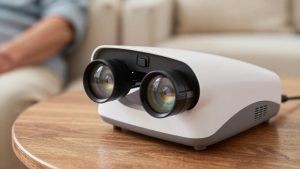
Best Electronic Video Magnifiers for Macular Degeneration in 2026: Compared and Ranked