Last Updated: September 26, 2026
Choosing hearing aids for someone in a nursing home or assisted-living setting is a different problem from choosing them for an independent, tech-comfortable adult. Devices get dropped, misplaced, and handled by rotating caregivers. The right choice leans heavily on durability, easy handling, and simplicity, sometimes ahead of the very latest sound-processing features. This guide walks through what matters in a care setting.
The care-setting reality
Residents may have limited dexterity, memory changes, or vision loss, and the staff who assist them are busy and not audiologists. A device that requires a smartphone app, tiny disposable batteries changed twice a week, or a delicate cleaning routine tends to fail in this environment. Loss and damage are common, so total cost and replaceability matter as much as sound quality.

Oricle Hearing Aids for Seniors - Oricle Hearing Aids for Adults with Advanced Noise Cancellation - Easy Volume Control with Portable Charging Case
Included for 'Best Hearing Aids for Nursing Home Residents' because the listing specifies Easy Volume Control with Portable Charging Case, details this guide uses to compare options.
View on Amazon
Audien Atom X OTC Hearing Aid For Seniors & Adults with Touchscreen Control
Included for 'Best Hearing Aids for Nursing Home Residents' as a relevant option in this category; details come from the product listing.
View on Amazon
Karthus OTC Hearing Aids for Seniors, Rechargeable with Noise Reduction
Included for 'Best Hearing Aids for Nursing Home Residents' because the listing specifies Rechargeable with Noise Reduction, details this guide uses to compare options.
View on Amazon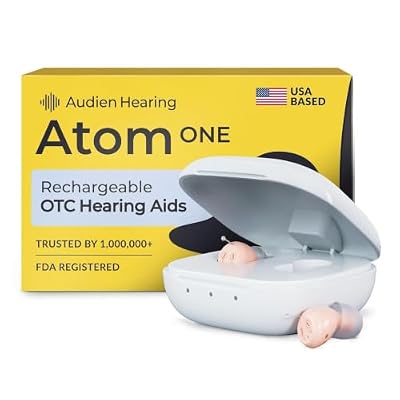
Audien Atom One OTC Hearing Aids
Included for 'Best Hearing Aids for Nursing Home Residents' as a relevant option in this category; details come from the product listing.
View on AmazonFeatures that survive daily care
Rechargeable, drop-in charging
A magnetic charging cradle that a caregiver can simply drop the aids into removes the single biggest failure point: tiny batteries. Overnight charging fits naturally into a bedtime routine and there is nothing small to lose.
Rugged build and moisture resistance
Look for a solid moisture rating (commonly IP67 or IP68) so sweat, humidity, and the occasional splash do not kill the device. Behind-the-ear styles with a sturdy body often withstand handling better than very small in-canal units.
Visible, taggable, and simple
Brightly finished or clearly labeled cases help staff match the right aids to the right resident. Minimal controls reduce the chance a setting gets bumped and never corrected.
| Need in a care setting | Preferred choice | Reason |
|---|---|---|
| Power source | Rechargeable dock | No tiny batteries to change or lose |
| Durability | IP67/IP68, sturdy BTE | Survives handling, sweat, cleaning |
| Controls | Minimal / preset | Fewer settings for staff to manage |
| Cost per unit | Mid-range, replaceable | Loss is common; total cost matters |
| Identification | Labeled case, color | Right aids to right resident |
Working with staff and family
Whatever the device, success depends on a simple written routine: charge overnight, insert in the morning, wipe with a dry cloth, store in a labeled case. Family can help by keeping a spare set of domes and a cleaning tool on hand and by checking fit during visits. If the resident tends to remove aids, a retention cord or a snug custom dome can reduce losses.
When to keep it very simple
For advanced dementia, a full-featured programmable aid may be more than the person can tolerate. A basic amplified device or a personal amplifier used during conversations and activities can sometimes deliver more benefit with far less frustration for everyone.
Building a simple care routine that lasts
The most durable device still fails without a routine everyone follows, so write one down and tape it inside the resident’s drawer. A workable version reads: charge overnight, insert after breakfast, wipe with a dry cloth at bedtime, store in the labeled case. Keeping it to four steps means any staff member on any shift can carry it out without special training, which is exactly what a busy care setting needs.
Family involvement multiplies the benefit. During visits, check that the aids are actually in and working, restock spare domes and wax guards, and note the serial numbers and settings in case a device is lost and must be replaced or reprogrammed. Ask the facility to record the hearing aids in the resident’s formal care plan so their use is expected rather than optional. When staff, family, and a simple written routine pull in the same direction, even a modest device delivers reliable day-to-day hearing, and that consistency, more than any single feature, is what improves the resident’s connection to the people around them.
FAQ
Are expensive premium hearing aids worth it in a nursing home?
Not always. Premium noise features help in complex environments, but in a care setting durability, easy charging, and replaceability often deliver more day-to-day value than top-tier processing. Match the device to how it will actually be handled.
How do we stop hearing aids from getting lost?
Use labeled charging cases, a consistent charge-and-insert routine, retention cords if needed, and keep spares of domes and tools. Ask the facility to note the aids in the resident’s care plan so every shift follows the same steps.
Bottom line
For nursing home residents, the best hearing aids are rechargeable, rugged, simple to handle, and easy to replace. Prioritize a drop-in dock, solid moisture resistance, and a clear caregiver routine over the flashiest features, and the device is far more likely to stay in the ears where it helps.
Related Reviews & Guides

Best Waterproof Seat Cushion for Shower Chair
Best Urinal for Elderly Men 2026