Last Updated: September 26, 2026
Shoppers searching for hearing aids under $100 will find plenty of products at that price, but most of them are not hearing aids in the regulated sense. They are personal sound amplification products, often called PSAPs or hearing amplifiers, which make everything louder rather than adjusting sound to a person’s hearing loss. Genuine over-the-counter (OTC) hearing aids, which the FDA regulates for adults with perceived mild to moderate hearing loss, generally start at around $100 to $200 and often cost much more. This guide explains the difference, when a low-cost device may be reasonable, and how seniors can get real hearing help without a large budget.
Quick answer: For most people in 2026, the best hearing aids under $100 for seniors is the Regulation — our #1 rated choice. See the full ranked comparison, alternatives and buying advice below.
Hearing aid or amplifier?
| Feature | Sound amplifier (PSAP) | OTC hearing aid | Prescription hearing aid |
|---|---|---|---|
| Regulation | Not a medical device for hearing loss | FDA-regulated OTC category | FDA-regulated, fitted by professional |
| Intended user | People with normal hearing wanting a boost | Adults 18+ with perceived mild to moderate loss | Any degree of loss |
| Sound adjustment | Mostly volume, some tone | Self-fitting or presets for different frequencies | Programmed to audiogram |
| Typical price | $20–$100 | $100–$1,500+ per pair | $1,000–$6,000+ per pair |
Why amplifiers are not a substitute for hearing aids
Age-related hearing loss usually affects high frequencies first, which is why consonants like s, f and th become hard to hear and speech sounds mumbled. A simple amplifier boosts all sounds, including low-pitched background noise, which can make restaurants and family gatherings louder but not clearer. Some cheap devices can also produce uncomfortably loud peaks. For someone with mild loss in quiet settings, an amplifier may help with television or one-to-one conversation, but it does not replace an assessment of the hearing loss.
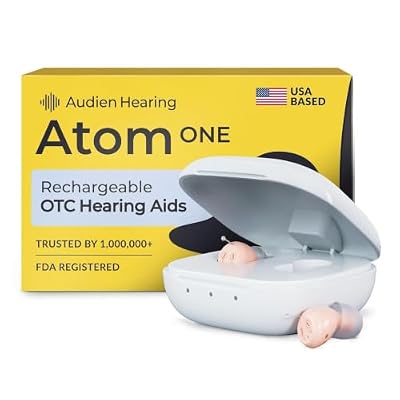
Audien Atom One OTC Hearing Aids
Included for 'Best Hearing Aids Under $100 for Seniors' as a relevant option in this category; details come from the product listing.
View on AmazonWhen an under-$100 device might be reasonable
- As a short-term aid while waiting for a hearing test.
- For specific situations, like watching television, where a TV listening device may work better.
- When the person has been assessed and told the loss is very mild.
Look for adjustable volume with a maximum output limit, comfortable ear tips in several sizes and a clear return policy. Avoid products that claim to cure or reverse hearing loss.
Warning signs that need a professional, not a gadget
The FDA’s OTC hearing aid guidance lists red flags that call for a medical evaluation. These include sudden hearing loss, hearing loss in only one ear, ear pain or drainage, dizziness, a visible deformity of the ear and ringing in only one ear. Sudden hearing loss in particular should be seen urgently, ideally within days, because early treatment can matter.
Getting real hearing help on a small budget
| Option | What it offers |
|---|---|
| Medicare Part B | Covers diagnostic hearing exams when ordered by a clinician; does not pay for hearing aids |
| Medicare Advantage | Many plans include hearing exams and allowances toward hearing aids |
| Medicaid | Covers hearing aids for adults in some states |
| VA audiology | Hearing aids at no cost for eligible veterans |
| Nonprofit programs | Lions Clubs and hearing charities help low-income adults |
| University audiology clinics | Reduced-cost testing and fitting by supervised students |
| HSA and FSA funds | Hearing aids and batteries are generally eligible |
Helpful low-cost alternatives
Captioning on televisions and phones is free and very effective. Captioned telephone services are available at no cost to people with hearing loss in the United States through federally funded programs. Amplified telephones for landlines usually cost $30 to $80. Rearranging seating so the person faces speakers, reducing background noise and using good lighting for lip-reading all help too.
How family members can help
Hearing loss often shows up first as withdrawal: skipping gatherings, nodding along without following, or avoiding the phone. Relatives can help by speaking face to face at a normal pace, rephrasing rather than repeating the same words louder, and gently suggesting a hearing test framed as a routine check rather than a verdict. Offering to go along to the appointment makes it far more likely to happen, and the results give everyone a clearer idea of which device, if any, is worth buying.
FAQ
Are there any real OTC hearing aids under $100?
Occasionally, but they are rare and usually very basic. Most regulated OTC hearing aids cost more. Check the packaging for a statement that the device is an OTC hearing aid rather than a sound amplifier.
Can cheap amplifiers damage hearing?
Poorly designed devices with no output limit can deliver loud sounds that are uncomfortable and potentially harmful. Choose a device with an output limit and keep the volume moderate.
Bottom line
Under $100, you are almost always buying a sound amplifier, not a hearing aid. That can help briefly or in specific situations, but it is no substitute for a hearing test. Use Medicare-covered exams, Medicare Advantage allowances, VA benefits and nonprofit programs to get properly fitted help, and add free captioning in the meantime.
Ready to decide? Our #1 pick for 2026 is the Regulation.
Live price & availability on Amazon.
Related Reviews & Guides

Medline vs Vive Health Rollator Walker
Best Non-slip Plate for Tremors