Last Updated: October 9, 2026
Keeping a driveway, patio, or siding clean is one of those chores that becomes harder every year, especially if you are managing mobility limits or just want to spend less time bending and scrubbing. A pressure washer can turn a two-hour Saturday project into a fifteen-minute task, but the market is flooded with options that range from genuinely useful machines to underpowered toys that leave you frustrated and still reaching for the hose and brush.
When we compared the best inexpensive pressure washers available in 2026, we focused on published specifications, listed prices, and aggregated owner feedback. The machines that stood out balanced real cleaning power with features that matter to everyday users: manageable weight, straightforward setup, and reliable performance over multiple seasons. The ones that did not cut corners showed up here. What separates a good budget pressure washer from a disappointing one is rarely a single spec — it is whether the machine delivers adequate pressure and flow for actual outdoor surfaces without breaking down or requiring an engineering degree to assemble.
As an Amazon Associate we earn from qualifying purchases at no extra cost to you.



Quick Picks
| Product | Best For | Price |
|---|---|---|
| MZK Lightweight Pressure Washer | Light-duty cleaning and vehicle foam washes | under $80 |
| Electric Pressure Washer 4500 PSI | Homeowners wanting strong PSI on a budget | under $100 |
| HoldwellS 2026 New Pressure Washer | Long-reach cleaning without extension cords | under $80 |
| Cordless Pressure Washer 1450 PSI | Portable spot cleaning and car washes | under $70 |
| 21V Cordless Pressure Washer Gun | Smallest budget entry point for light tasks | under $40 |
| Sun Joe SPX100-GO | Dependable brand-name electric cleaning | under $100 |
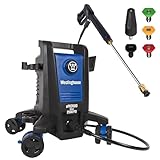
| Westinghouse ePX3500 | Heavy-duty tasks with a steel wand | $169 |
| Westinghouse ePX3050 | Versatile all-around electric washing | $109 |
How We Picked
We evaluated each machine against four criteria that consistently determined whether owners felt satisfied or disappointed. First, cleaning power relative to price: a unit needs to deliver enough PSI and GPM to remove common grime from concrete, siding, and vehicles without multiple passes. Second, ease of use: weight, hose length, nozzle interchangeability, and setup complexity matter more than most buyers realize until they are dragging a heavy unit around the yard. Third, build quality signals from owner reports: leak-prone fittings, thin plastic housings, and early motor failure were disqualifying patterns. Fourth, included accessories: a foam cannon, multiple nozzles, or a soap tank add real value that would otherwise require separate purchases.
The 8 Best Inexpensive Pressure Washers in 2026
MZK Lightweight Pressure Washer
This compact unit is designed for seniors and lighter users who want to clean cars, patios, and garden furniture without wrestling a bulky machine. The foam cannon attachment makes vehicle washing noticeably easier than using a bucket and mitt, and the overall weight is low enough to carry between storage and the driveway without strain.
- Pro: Foam cannon included, ideal for car and bike washing
- Pro: Lightweight design easy to carry and store
- Con: Lower PSI limits effectiveness on deeply stained concrete or stubborn mildew
Skip it if your primary target is large driveway surfaces with years of embedded grime, since it will require repeated passes and more time than the buyer expects.
Electric Pressure Washer 4500 PSI
For homeowners who want the highest rated PSI in this price bracket without spending over one hundred dollars, this electric model delivers strong output and includes anti-tipping technology that keeps the unit stable on uneven ground. Owner feedback suggests it handles fence panels and siding well, though the aggressive spray requires some nozzle discipline to avoid paint damage.
- Pro: 4500 PSI output is among the strongest in the budget tier
- Pro: Anti-tipping feature adds safety on soft or sloped surfaces
- Con: Higher pressure can etch older or weathered wood if not dialed back
Skip it if you mainly wash painted surfaces or vinyl siding, where the raw power is more risk than benefit without careful nozzle selection.
HoldwellS 2026 New Pressure Washer
The 33-foot hose is this unit’s headline feature, giving you genuine reach across a large yard or the full length of a house without repositioning. The 5000 max PSI rating puts it at the top of this roundup for raw power, and for under $80 it represents an unusual price-to-output ratio that owner reviews confirm holds up for general outdoor cleaning.
- Pro: Extra-long hose eliminates most repositioning during cleaning
- Pro: 5000 max PSI handles tough driveway and concrete stains
- Con: Newer brand with less long-term reliability data compared to established names
Skip it if brand track record and warranty support are your top priorities, since the manufacturer has limited history in the pressure washer market.
Cordless Pressure Washer 1450 PSI
This handheld cordless model trades raw power for genuine portability. With two 4.0Ah batteries and a 6-in-1 nozzle, it works well for spot-cleaning a car, rinsing patio furniture, or washing a section of fence without dragging an extension cord outdoors. The 1450 PSI rating is modest, but owner feedback notes it is sufficient for maintenance-level cleaning.
- Pro: Completely cordless, no extension cords or outdoor outlets needed
- Pro: Two batteries included for reasonable working time between charges
- Con: Battery depletion limits it to shorter sessions, not full-house washes
Skip it if you need to clean an entire driveway or house exterior, as you will exhaust the batteries well before finishing.
21V Cordless Pressure Washer Gun
For under $40, this is the lowest-cost entry into cordless pressure washing, and it functions as a powered sprayer with adjustable nozzles and dual batteries. It excels for quick rinses, car detail work, and light cleaning where a full-size machine would be overkill. Owner reports confirm it removes dust and loose dirt effectively but struggles with anything bonded or aged.
- Pro: Lowest price point in the roundup with no compromise on cordless convenience
- Pro: Adjustable nozzles let you switch between rinse and concentrated jet patterns
- Con: Limited power means it cannot replace a full-size unit for serious cleaning
Skip it if you expect to clean anything beyond a car body or a small patio section, as expectations of heavy-duty performance will be disappointed.
Sun Joe SPX100-GO
Sun Joe has built a reputation in the outdoor power equipment space, and this 13-amp electric model benefits from that brand trust. Four nozzles cover everything from gentle rinse to focused scrub, and the included foam cannon adds value for vehicle owners. The under-$100 price lands it squarely in the best inexpensive pressure washers category while offering more refined build quality than the cheapest competitors.
- Pro: Established brand with accessible replacement parts and support
- Pro: Four nozzles plus foam cannon provide genuine versatility
- Con: 13-amp motor produces less output than higher-PSI rivals at similar prices
Skip it if your cleaning tasks demand maximum power and you are willing to sacrifice brand comfort for higher pressure ratings.
Westinghouse ePX3500
This is the most capable machine on the list for heavy-duty work. The 2500 max PSI and 1.76 GPM combination, paired with a pro-style steel wand and onboard soap tank, makes it suitable for large driveways, deck restoration, and persistent grime. At $169 it stretches the definition of inexpensive, but relative to gas models it remains a budget option with meaningful durability advantages.
- Pro: Steel wand construction outlasts plastic alternatives significantly
- Pro: Onboard soap tank eliminates the need for external chemical bottles
- Con: Highest price in this roundup at $169, nearly double the budget entries
Skip it if your cleaning needs are limited to car washes and small patio areas, where you would be paying for capacity you never use.
Westinghouse ePX3050
Sitting between the HoldwellS value play and the ePX3500’s premium build, this 2100 PSI model offers a balanced package with a foam cannon and turbo nozzle included. The 1.76 GPM flow rate matches its sibling, meaning it clears soap and rinsing residue quickly. Owner feedback highlights the anti-tipping design and straightforward assembly as practical advantages for older users.
- Pro: Foam cannon and turbo nozzle both included for vehicle and concrete use
- Pro: Anti-tipping technology and simple setup reduce frustration during use
- Con: 2100 PSI is adequate but not exceptional for deeply embedded stains
Skip it if you need the absolute highest cleaning power and are willing to pay more or accept a lesser-known brand for it.
Buying Guide
PSI and GPM: What Actually Cleans Surfaces
PSI measures how forcefully water exits the nozzle, while GPM measures how much water flows per minute. Cleaning effectiveness depends on both working together. A high-PSI, low-GPM machine cuts grime but takes longer to rinse it away. A balanced unit with moderate PSI and higher GPM clears debris faster. For typical residential use on concrete and siding, anything above 1500 PSI with at least 1.5 GPM will handle most jobs without excessive repeated passes.
Corded vs. Cordless: Trade-offs for Everyday Use
Cordless units offer freedom from extension cords and outdoor outlets, which matters for renters or anyone without conveniently placed power. The trade-off is limited run time, typically 15 to 30 minutes on a full charge. Corded electric models deliver continuous power, which is essential for cleaning a full driveway or house exterior in one session. If you plan short, frequent cleaning tasks, a cordless option wins on convenience. For larger jobs, a corded unit is the only practical choice.
Accessories That Save Money and Time
A foam cannon transforms car washing from a two-step process into a single pass. Multiple nozzle tips let you adjust between gentle rinsing and concentrated scrubbing without changing machines. A built-in soap tank is worth more than it appears because it eliminates the fumbling of holding an external bottle while managing a spray wand. When comparing prices, factor in what each unit includes — a machine that costs slightly more but ships with a foam cannon, four nozzles, and a soap tank can save twenty to forty dollars in separate purchases.
Our Verdict
Our top pick for most senior homeowners is the Westinghouse ePX3050 at $109. It delivers a balanced combination of 2100 PSI power, included foam cannon and turbo nozzle, anti-tipping safety, and the reliability signals of an established brand — all at a price that qualifies it among the best inexpensive pressure washers without forcing compromises on durability.
For the tightest budget, the 21V Cordless Pressure Washer Gun for under $40 is a surprisingly functional entry that handles car rinses, patio spot cleaning, and light fence work without any cord management.
If reach and raw power matter most and you want to save money, the HoldwellS 2026 New Pressure Washer wins for under $80 by pairing 5000 max PSI with a 33-foot hose — a combination no other machine in this roundup matches at that price.
FAQ
Is a pressure washer safe for older siding and painted surfaces?
Yes, if you use the correct nozzle tip and keep adequate distance. A wide-angle fan tip at 25 degrees or higher reduces impact force dramatically. Hold the nozzle at least twelve inches from the surface and test on a hidden area first to confirm the paint or finish holds up.
Do I need a gas pressure washer or is electric sufficient?
For routine homeowner tasks like washing cars, patios, decks, and siding, an electric model in this price range is fully sufficient. Gas units are necessary only for large commercial properties or surfaces with years of accumulated heavy grime that exceed electric capability.
How long do budget pressure washers typically last?
Owner feedback across brands suggests that electric units in the $70 to $120 range deliver two to four seasons of regular use before issues like seal wear or motor strain become common. Proper winter storage — draining the pump and storing indoors — extends lifespan significantly.
What is the most common mistake first-time buyers make?
Choosing based on a single spec like PSI while ignoring GPM, hose length, and included accessories. A machine with a high PSI number but a short hose, thin plastic wand, and no foam cannon will cost you more time and frustration than a slightly lower-PSI unit that includes the right extras.
Related Reviews & Guides
Best Automotive Transponder Key Programming Tools

Best Restaurants in San Francisco in 2026: Compared and Ranked