Last Updated: November 26, 2026
As an Amazon Associate we earn from qualifying purchases.
A portable 2 post lift promises something that sounds almost too good to be true: the open under-car access of a real two-post shop lift, in a home garage, without giving up the parking space forever. When the work is done, the columns unbolt, roll to the wall, and the bay goes back to being a normal garage. For older DIYers who still do their own brakes, exhaust work, and fluid changes, that flexibility is the whole point — no permanent lift eating the garage, and no lying on cold concrete under jack stands for jobs that deserve better access.
But “portable” needs an honest definition before any money moves. A portable two-post lift is not a lift you carry around. The columns are heavy steel, they bolt to anchors set into your concrete floor, and they only become “portable” because those anchors sit flush when the columns are removed. This guide explains how the category works, what separates the main product groups, the concrete and ceiling requirements that decide whether one can live in your garage at all, and the safety routine that matters most when you work alone or with one helper. If you are comparing a best portable 2 post lift against a scissor lift or a four-post storage lift, the sections below will show you exactly where the two-post design wins and where it asks more of you.
Disclosure: This article contains affiliate links. If you buy through a link on this page, we may earn a commission at no extra cost to you.
Our Top Pick
MaxJax M7K Portable Two-Post Garage Lift

The MaxJax name is effectively the reference design for this category, and the M7K is its current higher-capacity model. MaxJax lists the M7K with a 7,000-pound lifting capacity and up to 49 inches of lift height, which is enough rise to work seated on a rolling stool with clear access to brakes, suspension, steering, and the underside of the vehicle. The two columns bolt down to anchors installed flush in the concrete slab; unbolt them, and each column rolls away on its own wheel arrangement so the bay is clear again. The overall column height is about 89.5 inches, which is why this design fits garages with ceilings around nine to ten feet that would turn away a full-height permanent two-post lift. It runs on standard household power rather than requiring a dedicated high-voltage circuit, which keeps the electrical side of the project simple for a residential garage.
Why it suits older home mechanics in particular:
- Seated working height. Roughly four feet of rise means most under-car work happens from a stool or creeper seat instead of flat on your back, which is far kinder on shoulders, knees, and getting up again.
- Real two-post access. Wheels hang free, so brake, hub, and suspension jobs are straightforward in a way that drive-on and scissor lifts cannot match.
- Space returns when you are done. Columns store against a wall, so the garage still parks a car every night.
- Capacity headroom. A 7,000-pound rating covers typical sedans, crossovers, SUVs, and many light trucks with margin to spare — and margin is exactly what you want, as the safety section explains.
Check the MaxJax M7K on Amazon
Be clear-eyed about the trade-offs. The columns are heavy, and while they roll, moving them is a deliberate two-hand job, not a one-finger push. Installation means drilling into your slab and setting anchors accurately — a one-time project that many owners hand to a concrete-savvy helper or a local installer. And the purchase is only the start: you still need the right anchors, a torque wrench, and the discipline to follow the setup routine every single time.
The Other Groups Worth Understanding
Most portable two-post shopping comes down to three groups. Only one product above carries a purchase link in this guide, because it is the one listing we could tie to a verified retail listing; the groups below are described so you can recognise them and ask the right questions wherever you buy.
Lower-capacity MaxJax models (M6K class)
The earlier 6,000-pound class of MaxJax lift trades some capacity for an even lower profile. Published figures for the M6K class cite a 6,000-pound capacity and about 48 inches of lifting height, with third-party ALI/ETL certification noted in retailer materials, and a column height intended to fit under ceilings as low as eight feet. If your vehicles are cars and crossovers rather than trucks, and your ceiling is the binding constraint, this class is the one to measure carefully. The same anchor-and-store concept applies, and the same concrete requirements decide whether it can be installed at all.
Movable-base import two-post lifts
A second group of two-post lifts, sold under various import brands, uses a movable base frame with wheels instead of (or in addition to) floor anchors. Listings for this style cite capacities around 8,000 to 8,500 pounds and lift heights around 51 inches, with a choice of 110V or 220V power units on some models. The appeal is obvious: less drilling, more freedom to reposition. The caution is equally obvious. A lift that carries a vehicle on a mobile base depends entirely on the base design, the floor being flat and sound, and the locks working as intended. Before considering one, ask for the certification documentation, the exact base footprint, the minimum concrete requirements in writing, and how the safety locks engage. If a seller cannot answer those questions on paper, that is your answer.
Fixed two-post lifts (the non-portable benchmark)
Conventional bolt-down two-post lifts from brands such as APlusLift, KATOOL, and BendPak are widely sold and often cost less per pound of capacity — but they are not portable, and they are not what this keyword is about. Their columns stay where they are bolted, they typically need taller ceilings, and they permanently claim the bay. They are the right answer for a dedicated workshop bay. They are the wrong answer if the garage must go back to parking cars, which is the entire reason the portable category exists.
Safety First: The Section to Read Twice
A two-post lift raises a vehicle by four arms contacting the frame or designated lift points, with nothing under the middle. That open access is the benefit — and it is also why the safety routine is non-negotiable. This matters doubly for the readers of this site: many of us work alone, in our own garages, with nobody watching. Build the routine before the lift arrives, not after.
Concrete and anchors
- Portable two-post columns still anchor to the floor. The anchors are what keep a column from tipping under an off-centre load, and they only work in concrete that is thick enough, fully cured, and free of cracks in the anchor zone. Follow the manufacturer’s stated minimum concrete thickness and strength exactly — do not average, estimate, or assume your slab qualifies because it “looks thick at the edge.”
- If you do not know your slab’s thickness, find out before ordering. A small test hole at the planned anchor location, or a call to the builder, is cheap information compared with a lift you cannot safely install.
- Anchors must be set at the specified depth and torqued to the specified value. Re-check torque after the first few lifts and on a regular schedule afterwards. An anchor that has loosened is not a minor maintenance item; it is a stop-work item.
- Never install anchors into expansion joints, cracked sections, or patched areas, and keep the required distance from slab edges and joints that the manual specifies.
Capacity and balance
- The rating on the column is the maximum for the whole vehicle, evenly loaded. Stay comfortably under it. A 7,000-pound lift is a sensible match for a 4,500-pound SUV; it is not an invitation to lift a loaded heavy-duty truck at the limit.
- Each arm and adapter also has a share of the load. Position arms on the vehicle manufacturer’s designated lift points only, use the correct adapters for the frame or pinch weld, and confirm all four pads are seated before raising more than a few inches.
- Raise the vehicle a few inches, stop, and rock-test it gently. If it shifts, creaks oddly, or sits unevenly, lower it and reset the arms. This ten-second check catches most positioning mistakes while they are still harmless.
Locks and working under the vehicle
- Every lift in this category uses mechanical safety locks that engage as the lift rises. Always lower the vehicle onto the locks before going under it — never work under a vehicle held up by hydraulic pressure alone. Hydraulics can drift or fail; locks are the physical barrier that cannot.
- Learn the lock release procedure from the manual and practise it with no vehicle on the lift. Fumbling with an unfamiliar release while a car is in the air is how small problems become big ones.
- Keep the area under and around the lift clear. No storage, no coiled hoses to trip over, no grandchildren or pets in the bay while a vehicle is raised. If you work alone, tell someone the lift is in use and keep a phone within reach of the creeper, not across the garage.
Your own limits
The honest part of any guide for older DIYers: the lift does the heavy lifting, but setup still involves positioning arms, bending, checking pads, and moving columns that weigh a great deal. If your knees, back, or grip strength make the setup routine a struggle, that is real information — a mid-rise scissor lift or a set of quality jack stands and a good creeper may serve you better than a two-post you dread setting up. The best lift is the one you will set up correctly every time.
Before You Buy: The Garage Checklist
Work through this list with a tape measure before ordering anything:
- Ceiling height. Measure floor to ceiling, and account for openers, lights, and beams. Low-profile portable columns around 89.5 inches tall are designed for ceilings near nine to ten feet, but your vehicle’s raised height plus its roof must also fit.
- Concrete. Confirm slab thickness and condition at the anchor locations, as covered above.
- Bay width and door swing. Columns plus a vehicle with open doors need more width than the parking space you are used to.
- Power. Confirm whether the model you are considering needs a standard household outlet or a 220V circuit, and where that circuit will come from.
- Delivery. These lifts arrive as freight, in long, heavy packages. Plan how the crate gets from the truck to the garage — a pallet jack, an engine hoist, or a delivery service that will place it — before the truck is booked.
- Storage spot. Measure the wall space where the columns will live when removed. “Portable” only helps if the stored columns have a home that is not in your way.
Portable Two-Post vs. the Alternatives
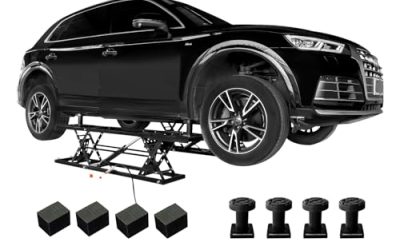
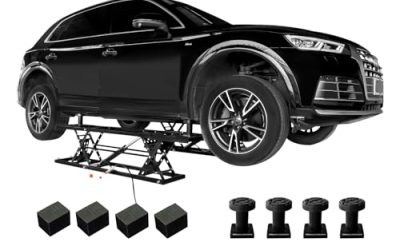
- Versus a scissor or frame-style portable lift (QuickJack type): frame lifts need no anchors and store flat, and they are excellent for wheels, brakes, and oil work at modest height. They do not give the standing or seated open-centre access of a two-post, and the frames sit under the car where a two-post leaves the middle open.
- Versus a four-post lift: four-posts are drive-on simple and double as parking storage, but the runways block some under-car access and the footprint is permanent in practice.
- Versus jack stands: stands are inexpensive and honest tools for one corner at a time. A two-post lift earns its place when you regularly need all four wheels free and the whole underside open — transmission work, exhaust systems, full brake and suspension overhauls.
Frequently Asked Questions
Does a portable 2 post lift really need floor anchors?
Yes, for the MaxJax-style design. The columns bolt to anchors set into the concrete; the portability comes from unbolting and rolling the columns away, leaving the anchors flush. Movable-base designs exist, but they replace the anchor question with base-stability questions you should get answered in writing.
How much ceiling do I need?
Enough for the column height plus the vehicle at working height. Low-profile portable columns are built for garages around nine to ten feet, and some lower-capacity models are marketed for ceilings as low as eight feet — but always run your own numbers with your own tallest vehicle.
Can one person set it up?
The columns roll on wheels and one experienced owner can reposition them, but installation day — drilling, anchoring, aligning — is genuinely a two-person job, and having a second adult present whenever a vehicle is raised is a sound habit at any age.
Is a two-post lift safe for older vehicles with rusty frames?
Only if the lift points are structurally sound. A two-post concentrates the vehicle’s weight on four small contact patches. If the frame or pinch welds at those points are compromised, no lift makes that safe; have the underside inspected first.
Bottom Line
For the home garage that must stay a garage, the portable two-post is a category of one: real two-post access, columns that store away, and a parking bay that comes back at the end of the day. The MaxJax M7K is the reference pick, with a 7,000-pound capacity, up to 49 inches of lift, and a low column height made for residential ceilings. Lower-capacity models in the same family suit lower ceilings and lighter vehicles, while movable-base imports ask harder questions about certification and stability. Whichever direction you go, the decision is made by your concrete, your ceiling, and your willingness to follow the anchor, lock, and balance routine every time. Get those three right, and a portable 2 post lift can make under-car work safer and far more comfortable for years to come.
Related Reviews & Guides





6 Best Gel Cushions For Wheelchair 2026

Amazon Prime Day 2026: Best Deals & Top Picks