Last Updated: October 11, 2026
- The Short Answer
- What “QLED” Actually Means in TCL’s Lineup
- Start With Size: Room Dimensions and Seating Distance
- Brightness: The Specification That Decides Your Room
- Gaming Features: Which TCL Tiers Actually Have Them
- The TCL QLED Tiers at a Glance
- TCL Q5 — The Entry QLED
- TCL Q6 — The Sensible Budget Living Room TV
- TCL Q7 — The First Genuinely Good Tier
- TCL Q8 — Mini-LED Without the Flagship Price
- TCL QM6 — The Value Mini-LED
- TCL QM7 — The Best All-Rounder TCL Sells
- TCL QM8 — The Flagship
- The 98-Inch and Larger Models
- Non-QLED TCL Models Worth Knowing
- Decision Matrix: Match the TV to Your Situation
- Placement, Mounting and Clearance: The Numbers That Matter
- What Wears Out First
- Timing Your Purchase
- Frequently Asked Questions
- The Bottom Line
Quick answer: For most people in 2026, the best tcl qled tvs is the Direct-lit LED (edge-lit on some small sizes) — our #1 rated choice. See the full ranked comparison, alternatives and buying advice below.
The Short Answer
For most living rooms, the best TCL QLED TV to buy in 2026 is a 65-inch mini-LED model from the QM7 tier — it is the point where brightness, local dimming, 120 Hz motion and gaming features all land at a mid-range price, usually somewhere in the $800–$1,200 band depending on size and when in the year you buy. If your budget is tighter, the Q6 tier in 55 or 65 inches (roughly $350–$650) gets you quantum-dot color without mini-LED; if you have a bright, sun-facing room or you want the best HDR picture TCL makes, step to the QM8 tier (roughly $1,100–$2,000 for 65–75 inches). Below 50 inches, and for bedrooms and kitchens, the entry Q5 and Q6 sizes do the job and nothing more is needed.
That is the one-paragraph version. The rest of this guide is the part a product listing will not tell you: how to match a screen size to the actual dimensions of your room, why brightness in nits matters more than any other single specification, which TCL tiers carry real HDMI 2.1 gaming features and which only claim to, what the box weighs and whether it fits through your door, and where to mount the thing so you are not looking up at it for the next eight years.

TCL 65 Inch T7 Series 4K 144Hz QLED Smart Google TV, 65T7 (Latest Model)
Included for 'Best TCL QLED TVs: Top Picks for Every Budget' because the listing specifies 65T7 (Latest Model), details this guide uses to compare options.
View on Amazon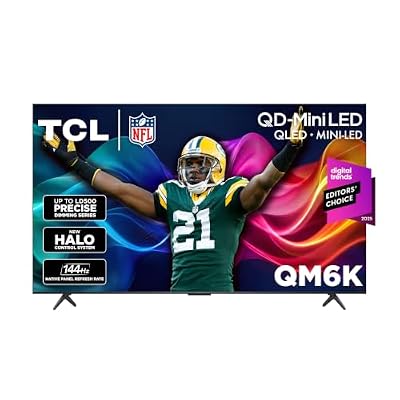
TCL 55 Inch Class QM6K Series | Mini LED QLED 4K HDR | 55QM6K, Latest Model | 120HZ-144HZ High Brightness Smart Google TV Dolby Atmos Onkyo Audio | Voice Remote Alexa Gaming Streaming Television
Included for 'Best TCL QLED TVs: Top Picks for Every Budget' because the listing specifies Mini LED QLED 4K HDR and 55QM6K, details this guide uses to compare options.
View on Amazon
TCL 43-Inch F7D Series QLED 4K UHD HDR Smart Fire TV, 43F7D (2026)
Included for 'Best TCL QLED TVs: Top Picks for Every Budget' because the listing specifies 43F7D (2026), details this guide uses to compare options.
View on Amazon
TCL 40-Inch Class R3D Series QLED Roku Smart TV | FullView Bezel-Less Design, Google Cast & AirPlay 2 | Television for Bedroom, Dorm & Kitchen (40R3D, 2026) Streaming Live Local News, Sports & Movies
Included for 'Best TCL QLED TVs: Top Picks for Every Budget' because the listing specifies FullView Bezel-Less Design and Google Cast & AirPlay 2, details this guide uses to compare options.
View on AmazonWhat “QLED” Actually Means in TCL’s Lineup
QLED is not a panel type. It is a layer — a quantum-dot film — placed in front of the backlight. The dots convert blue LED light into very pure red and green, which widens the color range the screen can reproduce. The panel behind it is still an LCD, and the panel is still lit by LEDs. What changes between TCL’s tiers is not the dots; it is how those LEDs are arranged and how many of them there are.
This matters because two TVs can both say “QLED” on the box and behave completely differently in a bright room. A 55-inch Q5 and a 55-inch QM8 share the quantum-dot layer and share almost nothing else.
| Backlight type | How it works | Typical brightness | Contrast behaviour | Where it sits in TCL’s range |
|---|---|---|---|---|
| Direct-lit LED (edge-lit on some small sizes) | LEDs spread across the back in a coarse grid, dimmed in large blocks or not at all | Roughly 250–350 nits | Black levels rise noticeably in dark scenes; light bleeds from bright areas | Q5, small Q6 sizes |
| Full-array local dimming (FALD) | Dozens of independently dimmed zones behind the panel | Roughly 400–700 nits | Decent blacks, visible blooming around subtitles and bright objects | Q6 (larger sizes), Q7 |
| Mini-LED | Thousands of much smaller LEDs grouped into hundreds of zones | Roughly 700–1,500 nits | Tight blacks, controlled blooming, strong HDR punch | QM6, QM7, Q8 |
| Mini-LED with high zone count (flagship) | Same idea, far more zones, aggressive peak-brightness boosting for highlights | Manufacturer peak claims in the 2,000–5,000 nit range; full-screen brightness far lower | Best-in-class for LCD: near-black bars, bright specular highlights | QM8 |
One caution on brightness numbers: peak brightness figures quoted by any manufacturer apply to a small patch of the screen for a fraction of a second. Full-screen brightness — the number that decides whether you can watch a daytime baseball game with the curtains open — is usually a third to a half of the peak claim. When you compare tiers, compare them within the same brand and the same year, not against a number from a different manufacturer’s marketing sheet.
Start With Size: Room Dimensions and Seating Distance
Buyers agonise over brightness and then pick the wrong size, which is the mistake you actually notice every night. At 4K resolution the picture is sharp enough that you can sit closer than the old 1080p rule of thumb suggested. A practical range for 4K is 1.2 to 1.5 times the screen diagonal in feet of viewing distance — that is, a 65-inch set looks right from about 6.5 to 8 feet, and comfortable at 8 to 9.5 feet.
Here is how that maps onto real rooms. Measure from the wall where the TV will live to the back of your sofa cushion — not to the far wall of the room.
| Room footprint | Seating distance (wall to eye position) | Comfortable size range | Sweet spot | Notes |
|---|---|---|---|---|
| 10 x 12 ft bedroom or small den (120 sq ft) | 6–8 ft | 43–55 in | 50–55 in | A 65 in here overwhelms the wall and forces the sofa back |
| 12 x 14 ft apartment living room (168 sq ft) | 7–9 ft | 50–65 in | 55–65 in | 55 in is the safe default if the TV also has to sit on furniture |
| 13 x 18 ft typical living room (234 sq ft) | 8–11 ft | 55–75 in | 65 in | 65 in suits almost everyone in this footprint |
| 16 x 20 ft open-plan room (320 sq ft) | 10–13 ft | 65–85 in | 75 in | Bigger rooms need bigger sets or the picture feels like a postage stamp |
| 20 x 25 ft great room or finished basement (500 sq ft) | 12–16 ft | 75–98 in | 85 in | Consider the 98-inch class if the wall can carry it |
Two constraints override the table. First, the wall: leave at least 6 inches on each side between the TV and the corner or the window trim, or the room feels pinched. Second, the furniture: a 65-inch TV needs a stand or console at least 57 inches wide, and a 75-inch needs at least 66 inches. If your existing console is 48 inches wide, a 65-inch set will overhang it — and overhang is how TVs get knocked over.
Brightness: The Specification That Decides Your Room
Think of brightness in nits as the TV’s ability to fight the light in your room. The three variables are window placement, time of day you watch, and whether you use a lamp behind the sofa. This is the single most useful way to choose between TCL’s tiers, because it tells you when paying more actually buys something.
| Your room condition | Minimum useful brightness | TCL tier that delivers it | What you gain | What it costs roughly |
|---|---|---|---|---|
| Dark bedroom, evening viewing only, curtains closed | 250–300 nits | Q5 or small Q6 | Nothing more is needed; extra brightness would just be harsh | $250–$450 for 43–55 in |
| Interior room, no direct sun, some overhead light | 350–500 nits | Q6 or Q7 | HDR highlights start to look like highlights rather than slightly brighter grey | $400–$800 for 55–65 in |
| Living room with a window to one side, blinds sometimes open | 600–900 nits | QM6 or QM7 | Local dimming keeps blacks black while the rest of the image stays punchy | $700–$1,300 for 55–75 in |
| Sun-facing room, floor-to-ceiling glass, daytime sports and news | 1,000+ nits | QM7 (large sizes) or QM8 | The picture survives glare without going washed out or grey | $1,100–$2,500 for 65–85 in |
| Dedicated dark room where you want HDR to look like HDR | 1,000+ nits with high zone count | QM8 | Bright specular highlights against genuinely dark backgrounds — the effect HDR was invented for | $1,100–$3,000 for 65–85 in |
A matte, anti-glare coating helps, and TCL applies one across most of the Q and QM range. But a coating diffuses reflection; it does not create brightness. If your sofa faces a west window and you watch at 6 p.m., buy the brightest set you can afford, or buy curtains. Curtains are cheaper than two tiers of upgrade.
Gaming Features: Which TCL Tiers Actually Have Them
“Game mode” appears on every TV. What matters is refresh rate, VRR support, HDMI 2.1 bandwidth and input lag. Here is the honest breakdown by tier.
| Feature | Q5 | Q6 | Q7 | QM6 | QM7 | QM8 |
|---|---|---|---|---|---|---|
| Native panel refresh | 60 Hz | 60 Hz (120 Hz on larger sizes of newer generations) | 120 Hz | 120 Hz | 120–144 Hz | 120–144 Hz |
| HDMI 2.1 ports (4K at 120 Hz) | 0 | 0–1 | 1–2 | 2 | 2 | 2 |
| Variable refresh rate | No | Limited | Yes | Yes | Yes, with wide range | Yes, with wide range |
| Auto low-latency mode | Yes | Yes | Yes | Yes | Yes | Yes |
| Game Accelerator (higher refresh at reduced resolution) | No | Up to 120 Hz | Up to 120 Hz | Up to 120 Hz | Up to 240 Hz at 1080p | Up to 240 Hz at 1080p |
| Typical input lag in game mode | ~15–20 ms at 60 Hz | ~12–15 ms at 60 Hz | ~8–12 ms at 120 Hz | ~8–12 ms at 120 Hz | ~6–10 ms at 120 Hz | ~6–10 ms at 120 Hz |
The practical read: if you own a PlayStation 5, an Xbox Series X or a gaming PC, buy Q7 or above. If you play a Switch, casual mobile-style games or streaming titles, a Q5 or Q6 is genuinely fine and you would be paying for features you cannot use. And note the Game Accelerator caveat: doubling the refresh rate to 240 Hz happens at reduced resolution, which is a trade some competitive players like and most people will not notice either way.
The TCL QLED Tiers at a Glance
| Tier | Backlight | Typical sizes | Brightness class | Best for | General price band |
|---|---|---|---|---|---|
| Q5 | Direct-lit QLED | 43–75 in | Entry (250–350 nits) | Bedrooms, kitchens, second rooms | 43 in: $220–$320 · 55 in: $280–$420 |
| Q6 | Direct-lit or FALD QLED | 43–75 in | Entry to mid (300–500 nits) | The default budget pick for a living room | 55 in: $350–$500 · 65 in: $450–$700 |
| Q7 | Full-array local dimming QLED | 55–75 in | Mid (400–700 nits) | First gaming-capable tier; good value HDR | 55 in: $500–$700 · 65 in: $650–$900 |
| Q8 | Mini-LED QLED | 55–75 in | Upper-mid (700–1,200 nits) | Bright rooms; buyers who want mini-LED without flagship pricing | 65 in: $800–$1,200 · 75 in: $1,100–$1,600 |
| QM6 | Mini-LED QLED | 50–75 in | Mid (600–1,000 nits) | Value mini-LED; entry point to serious HDR | 55 in: $500–$700 · 65 in: $700–$950 |
| QM7 | Mini-LED QLED | 55–98 in | High (1,000–1,500 nits) | The best all-round balance TCL sells | 65 in: $800–$1,200 · 75 in: $1,100–$1,500 · 85 in: $1,600–$2,200 |
| QM8 | High-zone mini-LED QLED | 65–115 in | Flagship (2,000+ nit peak claims) | Bright rooms, dark rooms, big walls, no compromise | 65 in: $1,100–$1,500 · 75 in: $1,500–$2,000 · 85 in: $2,000–$3,000 |
Prices in this category move constantly — Super Bowl season, back-to-school and late autumn are the deep-discount windows, and a model that launched at one price often sits 25–35 percent lower within nine months. Treat every figure here as a market band rather than a fixed price. Also note that TCL renames its lines every spring, usually by appending a letter to the tier (the QM7 of one year becomes the QM7K or similar the next). The tier name is the durable part; the suffix is not.
TCL Q5 — The Entry QLED
Who it is for: a bedroom, a guest room, a kitchen, a covered porch, or anyone buying a second or third television where picture quality is genuinely not the point. It is also the right answer for a small apartment where the sofa is 6 to 7 feet from the wall and a 50-inch screen is the largest that makes sense.
What you get: quantum-dot colour, which is the real reason to choose this over a non-QLED set at the same size — reds and greens look saturated rather than muddy. A 60 Hz panel, which is fine for broadcast, streaming, DVDs and casual gaming. Three or four HDMI inputs, a tuner, and the Google TV interface on most current sizes, which brings a decent voice remote and reasonably large on-screen text. Sizes run from 43 to 75 inches, though the value is concentrated at 43 to 55 inches; past 55 inches the price climbs toward tiers with better backlights, and you should follow it.
What you give up: brightness. A Q5 in a room with an open window will look grey and washed out during the day, and no setting fixes that. Local dimming is absent or minimal, so black bars in letterboxed movies are dark grey, and a bright subtitle on a dark scene produces a visible halo. HDR content is accepted but not really displayed — the set cannot reach the brightness HDR was designed around. There is no meaningful variable refresh rate support, so a modern console will not get the benefit of its 120 Hz output.
Practical notes: the 43- and 50-inch sizes are light enough (roughly 15–25 lb without the stand) for one person to hang on a wall bracket, which makes them a reasonable choice for a senior household doing a simple replacement. The feet are widely spaced on the larger sizes, so measure your existing furniture before buying — a 55-inch Q5 typically needs a surface at least 48 inches wide. If you are replacing a set that is more than eight years old, even this tier will look like a substantial upgrade; expectations should be set against that, not against a flagship.
TCL Q6 — The Sensible Budget Living Room TV
Who it is for: the majority of buyers who want a good, big, inexpensive television and do not care about gaming or HDR showcase material. If you mostly watch news, sitcoms, sports and streaming dramas, this tier is where the value is, and stepping up buys improvements you may never notice.
What you get: everything the Q5 offers plus, on the larger sizes and newer generations, some form of local dimming and a 120 Hz panel. That combination — 120 Hz with dimming at a budget price — is the reason the Q6 is the tier most people should start from. Motion looks smoother for sports, and the picture holds up better in a room with a lamp on. Sizes typically run 43 to 75 inches, with 55 and 65 inches offering the best price-per-inch.
What you give up: brightness headroom and zone count. Dimming zones on this tier number in the dozens rather than the hundreds, so blooming is visible around bright objects on dark backgrounds — think a hockey puck on dark ice, or white credits on black. HDR is better than on the Q5 but still not dramatic. Gaming features are partial: HDMI 2.1 support is limited or absent depending on size, so 4K at 120 Hz from a console is not guaranteed.
Practical notes: the Q6 is where the choice between 55 and 65 inches becomes the real decision. In a 12 x 14 ft apartment living room with a sofa 8 feet back, a 65-inch Q6 is the better buy than a 55-inch Q7 at similar money, because size dominates perceived quality at that distance. The reverse is true in a bright room: a 55-inch Q7 with dimming will look better than a 65-inch Q6 without it, because brightness and contrast survive daylight and size does not help you there.
TCL Q7 — The First Genuinely Good Tier
Who it is for: anyone with a current-generation game console, anyone who watches a lot of HDR film and television, and anyone whose living room has a window they are not willing to cover. It is also the right floor for a household that keeps a TV for eight to ten years and wants it to still feel current at the end of that run.
What you get: full-array local dimming with a meaningful zone count, a native 120 Hz panel, HDMI 2.1 inputs that accept 4K at 120 Hz, variable refresh rate and auto low-latency mode. In practice this means games feel responsive and tear-free, sports and panning shots look clean rather than smeared, and HDR content produces visible highlights. Brightness lands in a range where a room with ordinary daytime light is comfortable. Sizes typically span 55 to 75 inches, with 65 inches the volume seller.
What you give up: the last word in contrast. It is a full-array LED, not a mini-LED, so the dimming zones are larger than the bright objects they are trying to isolate. Dark-room viewing shows some blooming around subtitles and starfields. Peak brightness is good but not flagship; a sun-facing room will still challenge it in the middle of the afternoon.
Practical notes: this is the tier where a soundbar becomes worth budgeting for. The built-in speakers on TCL’s mid-range sets are adequate for news and sitcoms but thin for films — dialogue is intelligible, but there is no weight behind it. A soundbar 2 to 3 inches tall sitting in front of the TV requires roughly 3 inches of clearance on the furniture, or a wall mount that puts the TV above the bar. Plan that before you commit to a furniture arrangement.
TCL Q8 — Mini-LED Without the Flagship Price
Who it is for: buyers who want mini-LED contrast and brightness but who do not need the highest zone count TCL makes. It suits a bright family room, a room with a large window, or a household that watches a lot of HDR content and wants the effect to be obvious.
What you get: a mini-LED backlight, which means hundreds of small LEDs in many more zones than a full-array set. The practical result is noticeably deeper blacks and much tighter control of blooming, plus higher peak brightness for HDR highlights. 120 Hz, HDMI 2.1, VRR and low-latency gaming carry over from the Q7 tier. The picture in a lit room holds up better than anything below it in the range.
What you give up: the top end of the QM8’s brightness and zone count, and sometimes a step in processing and anti-glare coating. In a genuinely dark room the difference between a Q8 and a QM8 is visible but not enormous; in a bright room it is more apparent, because that is where peak brightness earns its keep.
Practical notes: the Q8’s position in the range has narrowed as mini-LED has moved down-market. Before buying, compare it directly against the QM6 and QM7 of the same year and size — the tiers overlap in price more than the naming suggests, and the newer mini-LED generations often beat the older Q8 on zone count at the same money. Buy the newer generation, not the higher-sounding name.
TCL QM6 — The Value Mini-LED
Who it is for: the buyer who has decided they want mini-LED and is looking for the least expensive way in. Typically 50 to 75 inches, this tier is the answer for a mid-size living room where the budget caps out around $700–$950 for a 65-inch set.
What you get: mini-LED backlighting with a zone count that comfortably beats full-array LED, brightness in the range where a room with a window is manageable, 120 Hz, and two HDMI 2.1 ports on most sizes. HDR content looks like HDR rather than slightly brighter SDR. Google TV with voice search, which is genuinely useful for anyone who finds on-screen keyboards fiddly.
What you give up: brightness headroom versus the QM7 and QM8, and some zone count. In a room with direct sun on the screen, the QM6 will look flatter than the tier above it. Processing is good but not the flagship processor, so upscaling of lower-resolution content is slightly softer.
Practical notes: the QM6 is the tier where the value argument changes with size. At 55 inches the QM6 competes directly with a 65-inch Q6, and for most living rooms the bigger Q6 wins. At 65 and 75 inches the QM6 pulls ahead of everything below it. Decide the size first, then the tier — the reverse order is how people end up with a beautiful 55-inch TV in a room that needed 65.
TCL QM7 — The Best All-Rounder TCL Sells
Who it is for: almost everyone with a real budget. If you want one recommendation and you are buying a main television for a living room, this is the tier to buy, and the 65-inch size is the specific model to buy first. It is also the tier to choose if you game on a console and want the features to be genuinely there rather than nominally present.
What you get: high-zone-count mini-LED with brightness in the 1,000–1,500 nit class, which is enough to fight a bright room and enough to make HDR look dramatic in a dark one. Native 120 Hz panels, with 144 Hz on some sizes of newer generations. Two HDMI 2.1 ports that handle 4K at 120 Hz, variable refresh rate with a wide range, auto low-latency mode, and a Game Accelerator mode that pushes to 240 Hz at 1080p. Input lag in game mode sits in the range where competitive players will not blame the television. Sizes run from 55 inches all the way to 98 inches, which makes it the tier that scales with your room rather than forcing a compromise.
What you give up: the absolute peak brightness and highest zone counts of the QM8. In a dark room, black bars in letterboxed films are very dark but not perfectly black, and a bright object on a black background still produces a faint halo if you look for it. The anti-glare treatment is good, not class-leading, so a direct reflection of a window can still be seen as a soft patch.
Practical notes: the 75- and 85-inch QM7 models are the ones that turn a large room from “fine” into “cinema,” and the 85-inch is often the better buy than a 75-inch QM8 for the same money — size beats tier at that distance. Check the wall first: an 85-inch set is roughly 75 inches wide and 43 inches tall, so it needs a wall section of at least 87 inches to breathe, and a 600 x 400 mm VESA mount rated for at least 120 lb. It will not sit on a typical 60-inch console.
TCL QM8 — The Flagship
Who it is for: buyers with a bright, sun-facing room; buyers building a dedicated dark-room setup who want the best LCD picture TCL makes; and buyers with a wall large enough that anything smaller would look wrong. It is also the tier for anyone who wants to stop thinking about televisions for the next decade.
What you get: the highest zone count and the highest brightness in the range, with manufacturer peak claims running into the thousands of nits. In a bright room this is the difference between a watchable picture and a washed-out one. In a dark room it is the difference between HDR that impresses and HDR that convinces — bright highlights against deep black, with blooming tightly controlled. 120–144 Hz, two full-bandwidth HDMI 2.1 ports, VRR, low input lag, and the best anti-glare coating in the line. Sizes start at 65 inches and run to 85 inches and beyond, including a 98-inch class model.
What you give up: money, and the smug feeling of having bought the value pick. The QM8 is often 40–70 percent more expensive than the QM7 at the same size, and in a dim room at 8 feet the difference is a refinement rather than a revelation. If your room is dark and your budget is finite, the QM7 is the better use of the money.
Practical notes: a flagship set deserves a calibration pass. Out of the box, most TVs ship in a vivid, over-bright picture mode that looks impressive in a shop and tiring at home. Switching to a cinema or film-maker preset, turning off motion smoothing, and reducing sharpness to its neutral point takes two minutes and improves the picture more than any upgrade between adjacent tiers. If you wear glasses and watch from a fixed seat, set the TV’s picture mode once, note the settings, and leave them — fiddling with picture settings is a common source of daily frustration in households where two people share a remote.
The 98-Inch and Larger Models
TCL sells 98-inch class sets in the QM7 and QM8 tiers, and has shown a 115-inch class mini-LED model. These are specialty purchases and the logistics matter more than the picture. A 98-inch TV is roughly 85 inches wide and 49 inches tall before packaging. The shipping box adds several inches on every side and typically weighs well over 100 lb. A standard interior door is 30 to 32 inches wide with a 32- to 36-inch opening, so the box cannot pass through upright — it has to go on its edge and be rotated, and even then the diagonal is tight in a hallway with a turn. Measure the path from the front door to the wall, including stair turns and elevator dimensions, before ordering. If it does not fit, the return process is a two-person, two-hundred-pound problem.
The other constraint is the wall. At 12 to 14 feet of viewing distance, a 98-inch set is genuinely justified — below that it dominates the room. You also need a wall section of at least 100 inches, a mount rated for 150 lb or more, and at least two studs to anchor into. On a plaster or brick wall, expect to hire someone.
Non-QLED TCL Models Worth Knowing
TCL also sells non-QLED sets — the S-class line — at the bottom of its range. They are cheaper, sometimes by $100–$200 at the same size, and they are the right answer for a garage, a workshop, a spare room used twice a month, or a place where the TV will be exposed to temperature swings or dust. They are the wrong answer for a main living room, because the absence of the quantum-dot layer shows up most in exactly the content people watch most: sports uniforms, nature footage, anything with strong colour.
Knowing this matters because it prevents a common mistake. A shopper comparing a 65-inch S-class set at $400 against a 65-inch Q6 at $520 may reasonably conclude the $120 is not worth it. It is. The step from non-QLED to QLED is the largest single improvement in TCL’s range, larger than the step from QLED to mini-LED for a casual viewer. Buy QLED at minimum, then decide whether you need mini-LED.
Decision Matrix: Match the TV to Your Situation
| Your situation | Size to buy | Tier to buy | Why | Rough budget |
|---|---|---|---|---|
| Small apartment, one wall, sofa 7–8 ft back | 55 in | Q6 or QM6 | Bigger would overwhelm the room; mini-LED handles a shared living space with a lamp on | $350–$700 |
| Family room with kids and pets | 65 in | Q6 or Q7 | Wall-mount it high enough that a thrown object misses, and spend the savings on a mount with a safety strap | $450–$900 |
| Renters who move every two years | 55 in | Q6 | Lighter (roughly 30–35 lb without stand), fits more walls, easier to move without damage | $350–$500 |
| Sun-facing room, daytime viewing | 65–75 in | QM7 or QM8 | Brightness is the only specification that solves glare; nothing else compensates | $1,100–$2,000 |
| Dark basement or dedicated media room | 75 in | QM7 | In a dark room, size and contrast matter more than peak brightness | $1,100–$1,500 |
| Serious console or PC gaming | 55–65 in | QM7 or QM8 | 120 Hz native, HDMI 2.1, VRR, low input lag — all required, none optional | $800–$1,500 |
| Sports, news and daytime TV | 65 in | Q7 or QM6 | 120 Hz motion handling matters more than HDR for fast-moving ball sports | $650–$950 |
| Bedroom, evening viewing, dim lamp | 43–50 in | Q5 | Extra brightness would be uncomfortable at that distance in the dark | $220–$400 |
| Kitchen or covered porch | 43–50 in | Q5 or non-QLED S-class | Humidity, grease and temperature swings shorten any TV’s life; buy cheap | $180–$350 |
| Buying for an older parent who wears glasses and uses a hearing aid | 50–55 in | Q6 | Moderate size at close range, good contrast for subtitles, plus budget left over for a soundbar | $350–$600 including a soundbar |
| Large great room, 14+ ft viewing distance | 85 in | QM7 | Size beats tier at that distance; an 85-inch QM7 outperforms a 75-inch QM8 in the experience | $1,600–$2,200 |
Placement, Mounting and Clearance: The Numbers That Matter
Most TV disappointment at home is a placement problem, not a hardware problem. These are the measurements to check before you order.
- Eye height when seated: the centre of the screen should sit at roughly 40 to 42 inches from the floor. A typical sofa seat is 18 to 20 inches high and a seated adult’s eyes are 22 to 24 inches above the seat, which puts eye level right in that band. Mounting higher — a common mistake above a fireplace — means you tilt your head back for every viewing session, which is fatiguing within a month and genuinely painful for anyone with neck problems.
- Above a fireplace: avoid unless there is no alternative. Even a mantel-mounted set at 60 inches to centre puts you looking up by 18 to 20 degrees. If you must, choose a tilting mount and keep the viewing distance at the far end of the range.
- Wall clearance: leave 2 to 4 inches behind the set for ventilation. Mini-LED sets run warmer than entry models, and heat is the main long-term enemy of any television.
- VESA mount patterns by size: 43–50 inches usually 200 x 200 mm; 55 inches 300 x 300 mm; 65 inches 400 x 400 mm; 75 and 85 inches 600 x 400 mm. Check your bracket’s weight rating against the TV’s weight without the stand, not with it.
- Weights without the stand, roughly: 43 in ≈ 15–18 lb; 50 in ≈ 22–28 lb; 55 in ≈ 30–38 lb; 65 in ≈ 45–55 lb; 75 in ≈ 60–75 lb; 85 in ≈ 90–105 lb. Anything above 60 lb needs two people and a stud finder, without exception.
- Box weights for delivery: a 65-inch box is typically 55–65 lb, a 75-inch box 75–90 lb, an 85-inch box 110–130 lb. If the delivery is to a third-floor walk-up, plan for it before the truck arrives.
- Doorways: a standard interior door is 30–32 inches wide. A 65-inch box is about 63 x 38 x 8 inches and passes through upright. A 75-inch box is about 72 x 43 x 8 inches and generally still passes upright. An 85-inch box at roughly 81 x 49 x 9 inches does not — it must be tilted and rotated, and tight hallway turns can defeat it entirely.
- Furniture width: allow 6 inches of console beyond the TV on each side. 55 in TV → 48 in console minimum; 65 in → 57 in; 75 in → 66 in; 85 in → 75 in.
- Soundbar clearance: a typical soundbar is 2 to 3 inches tall. If it sits in front of the TV on the same surface, the TV’s stand must be tall enough to clear it, or the bar must go on a shelf below. Check the stand height in the specification before assuming.
- Seating angle: keep the outermost seat within about 30 degrees of the screen centre. Beyond that, off-axis viewing on an LCD panel loses contrast and colour. In a wide room, that argues for a bigger screen rather than more seats.
- Cable routing: budget for one HDMI cable per device plus one spare, and run them in the wall or through a channel before the TV goes up. Adding a cable to a wall-mounted 75-inch set after the fact means taking it down again.
What Wears Out First
Televisions rarely fail dramatically. They degrade, and knowing the order helps you decide how much to spend.
- The backlight, over years. LEDs dim gradually. After six to eight years a set that was bright when new may look slightly flat. This affects cheap direct-lit sets less noticeably in a dark room and more noticeably in a bright one.
- The smart platform, first and hardest. This is the real obsolescence risk. Apps drop support for older operating-system versions, and a TV that is five years old may lose access to a streaming service before the panel has any problem at all. The fix is cheap: an external streaming stick in an HDMI port. Buy the panel you want, and expect to add a $30–$60 streaming device in year four or five rather than replacing the television.
- The remote. Buttons wear, and infrared remotes lose range. Rechargeable or voice remotes with simpler layouts are easier to replace than to repair.
- Ports, from repeated plugging. Leave devices connected rather than swapping cables weekly.
- Physical damage, which is not covered. Cracked panels come from impacts and from tipping. A wall mount with a safety strap, or furniture anchored to the wall, prevents the most common household accident involving a television.
None of this argues for buying the cheapest set available. It argues for buying a good panel at a fair price, and treating the smart platform as disposable. That is a strong argument for the Q7 and QM7 tiers: good enough hardware to last a decade, at a price where replacing the streaming interface later is not a financial event.
Timing Your Purchase
TCL refreshes its line each spring, which means last year’s tier is discounted hardest from late spring through midsummer, and again during the late-autumn sales period. The practical advice is straightforward: if you want the newest mini-LED generation with the highest zone count, buy in spring at full price and accept that. If you want value, buy the previous generation in autumn, when the difference between it and the new model is a modest refinement rather than a new capability.
Two things are worth waiting for and one is not. Worth waiting for: a size you are unsure about, because buying one size too small is the mistake people regret most; and a price drop on a tier you have already decided on. Not worth waiting for: a new model that will fix a limitation of the tier below it. The tiers are separated by hardware, and hardware gaps do not close with a firmware update.
Frequently Asked Questions
Is a TCL QLED as good as an OLED?
They are good at different things. OLED produces perfect blacks and has no blooming at all, which is why it wins in dark rooms and for off-axis viewing. QLED and mini-LED QLED get significantly brighter, which is why they win in bright rooms, and they carry no risk of permanent image retention from static elements like news tickers or channel logos. For a living room with windows and a mix of content, a QM7 or QM8 is the better practical choice. For a dark room used mainly for film, OLED has the edge.
How much brightness do I actually need?
In a dark bedroom, 250–300 nits is plenty and more can be uncomfortable. In an interior room with normal lighting, 350–500 nits is comfortable. In a room with a window to one side, aim for 600–900 nits. In a sun-facing room where you watch during the day, you want 1,000 nits or more. Anything above that is headroom for HDR highlights rather than for general viewing.
Do I need HDMI 2.1?
Only if you own a PlayStation 5, an Xbox Series X, or a gaming PC capable of 4K at 120 Hz. For everything else — streaming boxes, cable boxes, Blu-ray players, a Switch — HDMI 2.0 is sufficient and you should not pay extra for 2.1.
What size should I buy for a 12 x 14 ft room?
55 to 65 inches, with 65 inches the better choice if the sofa is 8 feet or more from the wall. If the sofa is closer than 7 feet, buy 55 inches.
Can I use a TCL QLED as a computer monitor?
Yes, with caveats. A 120 Hz QLED with HDMI 2.1 works well for desktop use at 4K, and the larger sizes make good multi-window displays. The risks are burn-in-free but not fatigue-free: a 55-inch screen at desk distance is too large, and text rendering on a TV panel is softer than on a monitor because of the subpixel layout. Use a 43- to 50-inch size at 4 to 5 feet, and set the picture mode to a low-sharpness, low-brightness preset.
Should I wall-mount or use the stand?
Wall-mount if you have studs in the right place and the screen centre can land at 40–42 inches from the floor. Use the stand if you rent and cannot put holes in the wall, if the wall is plaster or brick and you do not want to hire a professional, or if you move frequently. Whichever you choose, anchor the furniture or use a safety strap if there are children or pets in the house.
How long should a TCL QLED last?
Expect eight to ten years of usable life from the panel. The smart interface will feel slow and may lose app support before then, which is normal and is solved with an inexpensive external streaming device rather than a new television.
The Bottom Line
Buy size first, then brightness, then gaming features, then everything else. For most rooms, that lands on a 65-inch QM7. For a tighter budget, a 65-inch Q6 gives up brightness and dimming but keeps the size, which is the specification you notice every night. For a bright room or a dedicated dark-room setup with the budget to match, the QM8 is the one that leaves nothing on the table. And for bedrooms, kitchens and second rooms, the Q5 is not a compromise — it is the correct answer to a question that does not require a bright screen.
Ready to decide? Our #1 pick for 2026 is the Direct-lit LED (edge-lit on some small sizes).
Live price & availability on Amazon.