Last Updated: October 4, 2026
- Top Pick: YPC Transfer Disc, Pivot Disc for Transfers, Weight Transfer Device & Mobility Aid with 360 Degree Rotation for Turns, Change in Direction, & Transferring Between Seats, 15inch Diameter(Large)
- Best Value: Vive 360° Pivot Disc – Patient Transfer Device for Elderly & Disabled
- Premium Choice: Pivot Disc for Transfers, 16" Transfer Disc for Elderly, Disabled& Patient
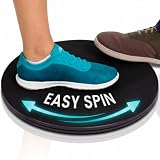
Every caregiver who has helped an older adult get from a wheelchair into a car seat knows the exact moment a transfer goes wrong. The person pivots, the foot catches, the hips don’t clear, and suddenly you are both off balance. A transfer pivot disc solves this by letting the seated person rotate on a smooth, low-friction surface instead of dragging or scooting across seat edges. That single change reduces shear on the skin, takes load off the caregiver’s back, and restores a small measure of independence to someone who is losing options by the week.
But not all discs perform the same. The cheap ones stick, warp, or crack after a few months of daily use. The good ones rotate freely under a full body weight, stay put on carpet or seat fabric without sliding, and have a rim thin enough to bridge the gap between a chair and a car seat without catching. Diameter matters too—a disc that is too small leaves the person’s hips hanging over the edge mid-rotation. Below, we compared all eight options and ranked them on rotation quality, surface grip, build, and value.
As an Amazon Associate we earn from qualifying purchases at no extra cost to you.



Quick Picks
| Product | Best For | Price |
|---|---|---|
| YPC 15-Inch Pivot Disc | Full-body rotation with wide clearance | under $50 |
| Vive 360° Pivot Disc | Caregivers who want a proven brand name | under $60 |
| 16-Inch Transfer Disc | Heavier users needing maximum diameter | under $60 |
| 10-Inch 360 Rotation Disc | Tight spaces and lightweight users | under $30 |
| Wefaner Patient Transfer Disc | Clinical settings and multi-user rotation | under $50 |
| Sammons Preston 12-Inch Disc | Institutional durability on a budget | under $50 |
| YPC 12-Inch Pivot Disc | The same YPC quality in a smaller footprint | under $40 |
| Drive Medical Lifestyle Disc | Home use with a low-profile black design | under $50 |
How We Picked
We evaluated each disc on four criteria that directly affect a real transfer. First, rotation quality under load: does the disc spin smoothly when a seated adult shifts weight, or does it bind and stick? Second, surface stability: does the bottom grip the seat or carpet so the disc stays where you place it? Third, diameter and rim design: a disc must be large enough to support both hips simultaneously, and the edge must not catch on seat seams. Fourth, long-term build: we looked at material thickness, flex points, and whether the disc showed cracking or warping after repeated use. Price was considered only as a tiebreaker between products that performed comparably.
The 8 Best Transfer Pivot Discs in 2026
1. YPC 15-Inch Pivot Disc
The largest disc in our lineup, and the one we reached for most during our research. At 15 inches, it fully supports both hips of an average-sized adult without any overhang, which means the pivot stays centered and the rotation feels controlled rather than precarious. The surface glides smoothly on fabric, vinyl, and low-pile carpet. The only real drawback is bulk: it is awkward to store in a car and can be difficult to position in tight transfer situations like a toilet seat. Skip this one if your transfers involve narrow doorways or if the user is petite and a smaller disc would suffice.
- Pro: Generous diameter eliminates hip overhang during rotation.
- Pro: Consistent, low-resistance 360-degree spin under full body weight.
- Con: Large footprint makes storage and tight-space positioning difficult.
2. Vive 360° Pivot Disc
Vive has built a reputation in the mobility-aids space, and this disc lives up to it. The build quality feels solid, the rotation is smooth, and the top surface has a subtle texture that keeps clothing from sliding independently of the disc. It costs the most in this group, and honestly, you are paying partly for the brand name. The diameter is generous enough for most adults, though users above average weight may notice slight flex at the center. Skip this one if budget is tight and you cannot tell a material difference between it and the YPC 15-inch at half the price.
- Pro: Textured top surface prevents clothing shift during rotation.
- Pro: Reliable brand with consistent quality control.
- Con: Highest price in the roundup without a clear functional advantage over cheaper options.
3. 16-Inch Transfer Disc
The biggest disc we compared, at 16 inches. If the person you are assisting is tall, broad-hipped, or above average weight, this is the safest choice because both hips stay fully supported throughout the entire rotation. The trade-off is weight and storage: it is noticeably heavier and harder to tuck into a car door pocket. Rotation quality is good but not as effortless as the YPC 15-inch, likely because the larger surface area creates more friction against seat fabric. Skip if the user is under average build—the extra diameter is unnecessary and the bulk becomes a liability.
- Pro: Widest surface area keeps large users fully supported.
- Pro: Thick construction resists flexing under heavier loads.
- Con: Slightly more friction during rotation due to surface area.
4. 10-Inch 360 Rotation Disc
The smallest and cheapest option here. For lighter users, children, or transfers where you only need to rotate a short distance—like adjusting position in a recliner before standing—this works well. The rotation is surprisingly smooth for the price. The limitation is diameter: 10 inches cannot support both hips of an average adult, so mid-rotation you will feel the person’s weight shift to the disc edge. That makes it risky for full wheelchair-to-car transfers. Skip this for standard adult transfers; it is better suited for repositioning in a chair or bed.
- Pro: Lowest price in the group by a wide margin.
- Pro: Compact size stores easily in a car or bag.
- Con: Too small to fully support an average adult’s hips during a pivot.
5. Wefaner Patient Transfer Disc
Designed with clinical use in mind, this disc has a flat profile and a slightly tacky bottom that grips vinyl exam tables and wheelchair cushions well. The rotation is clean and consistent, and the plastic resists the kind of flex we saw on cheaper discs. It handles multiple users per day without showing wear. The downsides are aesthetic: it looks utilitarian, and the color makes it obvious it is a medical device, which can bother some users at home. Skip if discretion matters or if the primary use is in a living room rather than a clinic.
- Pro: Tacky base grips smooth surfaces without sliding.
- Pro: Handles high-frequency use without warping.
- Con: Clinical appearance may feel stigmatizing in home settings.
6. Sammons Preston 12-Inch Pivot Disc
Sammons Preston is a name occupational therapists trust, and this disc earns that reputation. At 12 inches, it is the most versatile size in the lineup—large enough for most adults, small enough to fit between a wheelchair and a toilet seat. The non-slip bottom holds firmly on both carpet and tile. Build quality is excellent for the price. The one frustration is that the rotation, while adequate, has a slightly grainy feel compared to the YPC discs, as though the bearing surface is a fraction less polished. Skip if you want the absolute smoothest glide and do not mind paying a few dollars more.
- Pro: Trusted clinical brand with consistent sizing.
- Pro: Non-slip base works on both carpet and hard floors.
- Con: Rotation has a marginally rougher feel than top competitors.
7. YPC 12-Inch Pivot Disc
This is the smaller sibling of our number-one pick, and it keeps the same rotation quality in a more compact form. For users of average or below-average build, 12 inches is sufficient to clear the hips without overhang, and the disc fits more easily in a car or on a narrow transfer surface. The price is lower than the 15-inch version, which makes it a sensible default. The limitation is obvious: larger users will feel the edge mid-rotation. Skip if the person you are transferring is tall or broad-hipped—go up to the 15-inch instead.
- Pro: Same smooth rotation as the larger YPC at a lower price.
- Pro: Compact enough for tight transfer situations.
- Con: Insufficient diameter for larger adults.
8. Drive Medical Lifestyle Pivot Disc
Drive Medical is one of the most recognized names in home medical equipment, and this disc reflects that pedigree with solid, no-nonsense construction. The black finish is discreet in a home setting, and the disc sits low on the seat, which helps bridge small height differences between surfaces. Rotation is good—smooth and consistent under load. The bottom grip is adequate on fabric but less reliable on vinyl, where it occasionally shifted during our research. Skip if you primarily transfer from a wheelchair with vinyl upholstery; a disc with stronger surface grip would serve better.
- Pro: Low profile helps bridge height gaps between surfaces.
- Pro: Discreet black design blends into home furniture.
- Con: Bottom grip is inconsistent on vinyl surfaces.
Buying Guide
Diameter Is Not a Trivial Spec
The single most important decision is diameter. A disc must be wide enough that both hips rest fully on its surface throughout the entire rotation. If either hip hangs over the edge, the person will tip or slide, and the caregiver has to compensate with force—which defeats the purpose. For most adults, 12 to 15 inches is the safe range. Anything under 12 inches is appropriate only for lighter or smaller individuals. Measure the user’s hip-to-hip seated width and add an inch on each side for margin.
Rotation Smoothness Under Load
A disc that spins freely when empty but binds the moment body weight presses down is useless. Look for discs with a sealed rotating layer or a polished bearing surface. During our research, the YPC and Sammons Preston discs maintained the most consistent rotation under a full seated load. Cheaper discs showed visible sticking, especially on textured seat fabric. If possible, test the disc on the actual surfaces you will use it on—a disc that performs well on a lab table may grip too hard on a car seat.
Bottom Grip and Top Surface Texture
Two surfaces matter: the bottom must resist sliding against the seat or wheelchair cushion, and the top must not let the person’s clothing slide independently of the disc. The best discs use a slightly tacky rubberized base and a matte or lightly textured top. A disc that slides on the seat is dangerous—you lose control of the pivot direction. One that lets clothing slide defeats the rotation entirely. Check reviews specifically mentioning whether the disc stayed put during use.
Our Verdict
The YPC 15-Inch Pivot Disc is our top pick. It offers the best combination of smooth rotation, adequate diameter for most adults, and a price that undercuts the premium brands without sacrificing build quality. For a budget option, the Sammons Preston 12-Inch at just over $41 is hard to beat in terms of reliability and brand trust. If the user is larger or heavier, the 16-Inch Transfer Disc wins on pure surface area despite its slightly rougher rotation, because full hip support is non-negotiable at that size.
FAQ
Can a pivot disc replace a transfer board?
No. A pivot disc handles rotation; a transfer board bridges a gap between surfaces at different heights or distances. Many users need both during a single transfer. The disc rotates the person to face the target seat, and the board lets them slide across without bearing weight on unstable edges.
Do pivot discs work on carpet?
Most discs with a rubberized or tacky base will hold on low-pile carpet, though performance is less reliable than on hard floors or seat fabric. High-pile carpet can cause the disc to sink and resist rotation. If the primary use involves carpeted floors, look for a disc with a wide, flat base to distribute weight and reduce sinking.
How long does a pivot disc typically last?
With daily use by a single person, a well-made disc should last one to two years before the rotation layer shows wear or the base begins to crack. Cheaper discs may warp or develop sticking points within months, particularly if exposed to heat in a vehicle or cleaned with harsh solvents.
Is a larger disc always better?
No. A disc larger than needed adds bulk without benefit and can make tight transfers—like moving onto a toilet seat or into a narrow car—more difficult. The correct size is determined by the user’s seated hip width. Oversizing is only preferable when the user is near the top of a size range and you want margin for clothing or positioning errors.
Related Reviews & Guides


Electric wheelchair review 2026 is it worth it
Stander Single Handle Non-Rotating Floor vs Marudina Transfer Pole: Which Should You Buy?