Last Updated: September 7, 2026
- Top Picks at a Glance
- What Makes a Geri Chair Different from a Standard Recliner
- Geri Chair Specification Comparison Table
- Product Deep Dive: Invacare Chadwick Geri Chair (B0GLYVMX52)
- Clinical Indications: When a Geri Chair Is the Right Choice
- Pressure Injury Prevention in Long-Duration Seating
- Frequently Asked Questions
- Related Guides
- Related Articles
- Related Guides
- Top Pick: VEVOR Geri Chair Recliner, 4-Position Reclining Geri Chair with 2 Trays, 250 lbs Capacity Trendelenburg Medical Recliner Chair with 4 Wheels for Hospital, Nursing Home, Geriatric Home Care
- Best Value: VEVOR 3-Position Geri Reclining Chair 500LBS Capacity Geri Chair Recliner
- Premium Choice: VivaComfort Bariatric Geri Chair, 500 lbs Capacity Recliner on Wheels

Geri Chair Recliner: Clinical Guide to Choosing the Right Geriatric Reclining Chair
Quick Answer (TL;DR)
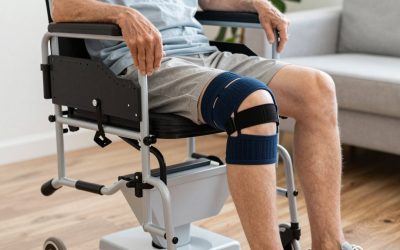
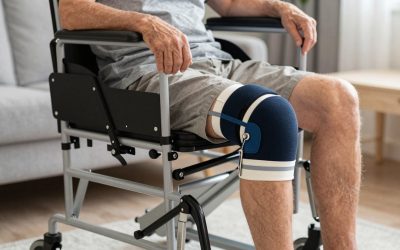
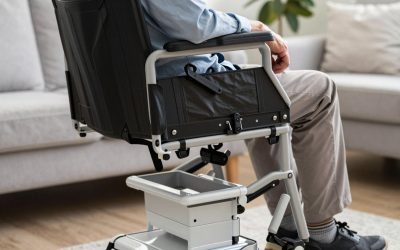
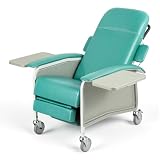
A geri chair recliner is a fully reclining, padded chair designed for long-duration seated care — distinct from a standard recliner by its wider seat, full Trendelenburg or flat recline capability, locking casters, and pressure-redistributing upholstery. It is used in skilled nursing facilities, memory care units, and home care for patients who cannot safely transfer to a standard chair or who require extended positioning for respiratory, circulatory, or wound-prevention reasons. The Invacare Chadwick Geri Chair (ASIN B0GLYVMX52) covers the core clinical requirements: 300-lb weight capacity, full recline, removable armrests for lateral transfer, and vinyl-coated upholstery compatible with hospital-grade disinfectants.
🛒 Best Price Today on Amazon
Prime members get fast, free shipping on everything above, plus member-only deals. New members get a 30-day free trial — cancel anytime.
As an Amazon Associate we earn from qualifying purchases.



Top Picks at a Glance
Best Clinical Grade
Invacare Chadwick Geri Chair
Full recline to flat, removable armrests, vinyl upholstery, 300-lb capacity, locking casters. Standard in skilled nursing and home health settings.

soundfuse Foldable Rollator Walkers for Seniors with 16" Ergonomic Arc Seat | Sturdy Frame, Double Support Bar, 8" Wheels for All Terrain, Padded Seat, Dual Height Adjustable, Tool-Free Assembly


As an Amazon Associate we earn from qualifying purchases. Product prices and availability are accurate as of the date/time indicated.
Best for Home Use
Drive Medical Geri Chair with Footrest
Padded seat and back, three-position recline, swing-away footrests, 325-lb capacity, fabric upholstery for home aesthetics. Easier to clean than standard fabric recliners but not clinical-grade disinfectable.
Search “Drive Medical geri chair” on Amazon for current pricing.
Best Heavy-Duty
Bariatric Geri Recliner 500 lb
Reinforced steel frame, wide seat (24″+), full recline, bariatric-rated upholstery. Required when standard 300-lb-capacity chairs are insufficient; check seat width matches patient’s hip measurement plus 2″ clearance.
Search “bariatric geri chair recliner” on Amazon for current pricing.
What Makes a Geri Chair Different from a Standard Recliner
The term “geri chair” is used informally in clinical settings to describe a reclining geriatric chair, but the design specifications separate it from any recliner sold in a furniture store. Understanding those differences matters when selecting equipment for a patient with complex positioning needs:
Full flat recline. Standard recliners typically achieve 140–160 degrees of recline. A clinical geri chair reclines to 180 degrees (fully flat) for Trendelenburg positioning, post-procedure recovery, or pressure ulcer management on the sacrum. Flat positioning allows the care team to perform certain wound care, catheter care, and respiratory treatments without transferring the patient to a bed.
Removable or swing-away armrests. Lateral transfers (sliding board, Hoyer lift) require unobstructed lateral access. Geri chairs with fixed armrests create a significant transfer barrier and increase the physical demand on caregivers. OSHA ergonomic guidance for healthcare workers specifically recommends equipment that facilitates assisted transfers without bending or lifting over obstacles.
Locking casters. Unlike a residential recliner, a geri chair must remain stationary during transfers, repositioning, and care procedures. Four-caster designs with independent locks allow the chair to be positioned, locked, and remain in place without caregiver assistance holding it steady.
soundfuse Foldable Rollator Walkers for Seniors with 16" Ergonomic Arc Seat | Sturdy Frame, Double Support Bar, 8" Wheels for All Terrain, Padded Seat, Dual Height Adjustable, Tool-Free Assembly
As an Amazon Associate we earn from qualifying purchases. Product prices and availability are accurate as of the date/time indicated.
Geri Chair Specification Comparison Table
| Feature | Clinical Geri Chair | Home Recliner | Standard Wheelchair |
|---|---|---|---|
| Recline range | Up to 180° (fully flat) | 130–160° | 90–120° (tilt-in-space) |
| Armrest type | Removable or swing-away | Fixed or motorized | Desk-length or full removable |
| Caster locks | Yes — all 4 casters | No | Yes — rear wheels |
| Upholstery | Vinyl; hospital disinfectant-compatible | Fabric or leather | Nylon or vinyl |
| Weight capacity (typical) | 300–500 lbs | 250–350 lbs | 250–700 lbs (bariatric) |
| Seat width (typical) | 20″–24″ | 19″–22″ | 16″–30″ |
| Medicare DME classification | Covered (E1295) when criteria met | Not covered | Covered (K0001–K0009) |
Product Deep Dive: Invacare Chadwick Geri Chair (B0GLYVMX52)
| Spec | Details |
|---|---|
| Weight capacity | 300 lbs |
| Seat width | 20″ standard (bariatric version: 22″) |
| Seat depth | 18″ |
| Recline range | Upright to full flat (180°) |
| Armrests | Removable padded armrests |
| Footrest type | Integrated, elevating legrests |
| Upholstery | Vinyl; bleach and quaternary disinfectant compatible |
| Casters | 4 × 3″ casters with independent locks |
| Frame material | Steel |
| Overall dimensions (upright) | Approx. 26″W × 44″H × 36″D |
Pros
- Full flat recline enables lateral repositioning, wound care, and post-procedure positioning without a bed transfer
- Removable armrests facilitate sliding board transfers and Hoyer lift laterals — reduces caregiver injury risk significantly
- Vinyl upholstery is compatible with EPA-registered hospital disinfectants; critical for infection control in home care and facility settings
- Independent caster locks on all four wheels provide reliable stability during personal care procedures
- Invacare’s clinical DME track record means replacement parts (armrests, caster wheels, upholstery panels) remain available over the chair’s lifespan
Cons
- Vinyl upholstery is warmer than fabric in home settings; add a moisture-wicking seat pad for patients who perspire or have incontinence
- At 20″ seat width, not appropriate for patients with hip measurement over 18″ — verify hip width plus 2″ clearance before ordering
- 300-lb weight limit is standard, not bariatric — patients over 275 lbs should consider the bariatric Invacare model or a dedicated 500-lb-rated chair
soundfuse Foldable Rollator Walkers for Seniors with 16" Ergonomic Arc Seat | Sturdy Frame, Double Support Bar, 8" Wheels for All Terrain, Padded Seat, Dual Height Adjustable, Tool-Free Assembly
As an Amazon Associate we earn from qualifying purchases. Product prices and availability are accurate as of the date/time indicated.
Clinical Indications: When a Geri Chair Is the Right Choice
A geri chair is not appropriate for all patients. Prescribing it inappropriately can impair mobility rehabilitation. The following clinical scenarios represent appropriate use:
- End-stage dementia or frailty: Patients who can no longer safely transfer to or from a standard chair independently, and who require supervised seated positioning for meals and personal care
- Post-operative recovery: Patients recovering from hip replacement, abdominal surgery, or cardiac procedures who require semi-reclined positioning but cannot remain in bed without deconditioning risk
- Active pressure ulcer management: Flat recline offloads sacral pressure; elevating legrests reduce heel pressure; together they allow extended off-loading without returning to bed
- Respiratory positioning: Semi-reclined positioning at 30–45 degrees reduces aspiration risk in patients with dysphagia; elevating the head of a flat recliner achieves the same positioning as a hospital bed head-of-bed adjustment
- Edema management: Bilateral leg elevation via integrated legrests reduces dependent edema without requiring the patient to return to bed between activity periods
When NOT to use a geri chair: Patients with rehabilitation potential who are expected to regain independent ambulation should not be positioned in a geri chair for extended periods — it reinforces a sedentary pattern and impedes rehab progress. A standard wheelchair or chair is appropriate for mobile patients who need positioning support, not full recline.
Pressure Injury Prevention in Long-Duration Seating
The National Pressure Injury Advisory Panel (NPIAP) guidelines identify seated patients as high-risk for pressure injuries at the ischial tuberosities, sacrum, and heels. For patients in a geri chair for more than 2 hours per session, the following interventions are standard of care:
- Pressure-redistributing seat cushion: A standard vinyl seat cushion provides no pressure redistribution; add a gel-foam or air-cell cushion (ROHO or equivalent) rated for the patient’s weight
- Repositioning schedule: Every 2 hours at minimum; set a recurring alert if the caregiver cannot reliably maintain the schedule
- Heel float: When legrests are elevated, the heel should not contact the legrest surface — place a pillow under the calf to float the heel clear
- Moisture management: Vinyl upholstery traps moisture; inspect skin at clothing interfaces (waistband, bra line, brief edge) with each repositioning
For complementary positioning equipment, see our guide on pressure relief seat cushions for elderly adults and our anti-tip rocker recliner guide.
Frequently Asked Questions
What is a geri chair and how is it different from a regular recliner?
A geri chair (geriatric chair) is a clinical-grade reclining chair designed for long-duration seated care of elderly or medically dependent patients. It differs from a residential recliner in four key ways: it reclines to fully flat (180°), has removable armrests for assisted transfers, has locking casters for stability during care procedures, and uses vinyl upholstery compatible with hospital disinfectants. Residential recliners typically lack all four of these features.
Does Medicare cover a geri chair recliner?
Medicare Part B covers geriatric reclining chairs under HCPCS code E1295 (heavy-duty, extra wide; power) when prescribed by a physician for a patient with a qualifying medical condition — typically severe neuromuscular disease, spinal cord injury, or a condition that prevents independent repositioning. Standard geri chairs without power features may be covered under different codes. Work with the DME supplier and the prescribing physician to complete the Certificate of Medical Necessity (CMN) correctly; coverage is not automatic.
What seat width do I need for a geri chair?
Measure the patient’s hip width at the widest point and add 2″ (one inch clearance per side). For a patient with a 19″ hip measurement, a 21″ seat is the minimum; a 20″ standard seat is too narrow and will cause pressure at the greater trochanters. If the measurement exceeds 22″, select a bariatric model. Seat depth should match thigh length from the back of the buttocks to 2″ behind the knee — standard 18″ depth fits most adults but verify for patients with very long or short femurs.
How do I transfer a patient from a bed to a geri chair safely?
For patients who cannot bear weight, a Hoyer (full-body sling) lift is the standard method: position the chair beside the bed, lock all four casters, remove the armrest on the transfer side, perform the lift, lower into the chair, reattach the armrest. For patients with minimal weight-bearing, a two-person pivot transfer using a transfer belt is appropriate. Single-caregiver lifts without mechanical assistance are not recommended for patients over 35 lbs net transfer weight — the physical injury risk to the caregiver is too high.
How do I clean vinyl geri chair upholstery?
Wipe down with an EPA-registered hospital disinfectant (quaternary ammonium or bleach-based at the manufacturer’s recommended dilution) after each use. Allow the surface to remain visibly wet for the product’s required contact time (typically 1–3 minutes) before wiping dry. Inspect the vinyl seams monthly for cracking or separation — compromised vinyl harbors pathogens and cannot be disinfected effectively. Replace the upholstery panel when cracking begins; most clinical geri chairs have replaceable upholstery available from the manufacturer.
Related Guides
- Walker Tray Bag Organizer
- Best Lightweight Transport Wheelchair for Seniors in 2026
- Walker vs Rollator: Which Do You Need
- Best Hearing Aid: Top Picks Reviewed and Compared (2026)
Related Reviews & Guides



How to Choose Heavy Duty Mobility Scooters: What Actually Matters

Step Stool with Grab Bar for Elderly