Last Updated: September 27, 2026
Medicare does not hand out wheelchairs for free in the literal sense, but many seniors end up paying little or nothing once the right pieces line up: a doctor’s order, a Medicare-enrolled supplier that accepts assignment, and secondary coverage that picks up the leftover 20 percent. Miss one step and the claim can be denied, leaving a family with a bill for a chair that sits in the hallway. This guide walks through the process in the order it actually happens, so you know what to ask at each stage and where out-of-pocket costs usually creep in.
Quick answer: Our top pick in 2026 is the Original Medicare Part B only — our #1 rated choice. See the full ranked comparison, alternatives and buying advice below.
How Medicare Treats Wheelchairs
Wheelchairs fall under Medicare Part B as durable medical equipment (DME). Part B covers DME that is medically necessary for use in the home, prescribed by a treating clinician, and supplied by a company enrolled in Medicare. After the annual Part B deductible is met, Medicare typically pays 80 percent of the approved amount and the beneficiary owes the remaining 20 percent coinsurance.
The “in the home” rule
This is the detail that trips people up. Medicare covers a wheelchair when the person needs it to move around inside the home to do daily activities such as getting to the bathroom, kitchen, or bedroom. A chair wanted only for trips to the mall or doctor’s appointments is usually not enough on its own to qualify, even though the chair will of course be used outside as well once approved.
Rent versus buy
Many manual wheelchairs are handled as capped rentals: Medicare pays monthly rental for a set period (commonly 13 months), after which ownership transfers to the beneficiary. Some lower-cost items are purchased outright. Ask the supplier which arrangement applies before delivery so the monthly statements do not come as a surprise.
Step-by-Step: Getting the Chair Approved
1. Schedule a face-to-face visit
Book an appointment specifically to discuss mobility. The clinician needs to document why walking, a cane, or a walker is no longer safe or sufficient, what the person cannot do at home without a wheelchair, and whether the person (or a caregiver) can operate the chair. For power wheelchairs, Medicare requires this face-to-face examination and a written order within a defined window before delivery, so timing matters.
2. Get a detailed written order
The order should name the type of chair (standard manual, lightweight, heavy-duty, or power), the diagnosis, and the expected length of need. Vague notes such as “patient needs wheelchair” are a common reason for denial.
3. Choose a supplier that accepts assignment
A supplier that accepts assignment agrees to take the Medicare-approved amount as full payment, so you only owe the deductible and coinsurance. Suppliers that are enrolled but do not accept assignment can charge more. Use the supplier directory on Medicare.gov or call 1-800-MEDICARE to confirm.
4. Let the supplier submit the claim
The supplier bills Medicare directly. For some power mobility devices it may request prior authorization first. Keep copies of the order and chart notes in case the claim is questioned.
Where the Remaining Cost Can Be Covered
| Coverage layer | What it typically pays | What you might still owe |
|---|---|---|
| Original Medicare Part B only | 80% of approved amount after deductible | Deductible + 20% coinsurance |
| Part B + Medigap (most plans) | 80% + most or all of the 20% | Often $0 to the Part B deductible |
| Part B + Medicaid (dual eligible) | 80% + Medicaid covers cost sharing | Usually $0 with a Medicaid-enrolled supplier |
| Medicare Advantage plan | Plan’s DME benefit, network rules apply | Plan copay or coinsurance, often 10%-20% |
For a standard manual chair with an approved amount in the low hundreds of dollars, 20 percent may be modest. For a power wheelchair that can run into several thousand dollars, the coinsurance becomes significant, which is why secondary coverage matters.
Other Routes to a Low-Cost or Free Chair
Loan closets and nonprofits
Many churches, senior centers, ALS and MS chapters, and local Area Agencies on Aging run equipment loan closets. Chairs are usually lightly used standard models, fine for short-term recovery after surgery.
Veterans benefits
Eligible veterans can often obtain wheelchairs through the VA’s prosthetics service with no cost share, sometimes with better customization than Medicare allows.
State assistive technology programs
Every state has an assistive technology program that may offer short-term loans, refurbished equipment, or low-interest financing.
Common Reasons Claims Are Denied
Denials usually come down to paperwork: the face-to-face note does not describe in-home limitations, the order lacks a diagnosis, the supplier is not enrolled, or the person already has a similar item Medicare paid for within its useful lifetime (generally five years). If denied, you have the right to appeal, and the first level of appeal is free and done in writing.
FAQ
Will Medicare pay for a wheelchair if I only need it outside the home?
Generally no. Coverage is based on need inside the home. If a person can move around the house safely but tires on longer outings, a transport chair purchased privately or borrowed from a loan closet may be the practical answer.
How often will Medicare replace a wheelchair?
Medicare usually expects equipment to last about five years. Earlier replacement may be approved if the chair is lost, stolen, damaged beyond repair, or if the person’s medical condition changes enough that the current chair no longer meets their needs.
Bottom Line
A “free” wheelchair through Medicare is realistic when three things align: a clinician who documents in-home need clearly, a supplier that accepts assignment, and a secondary payer such as Medigap or Medicaid for the 20 percent. Start with a dedicated mobility appointment, ask the supplier to confirm coverage in writing before delivery, and keep every document. If the paperwork holds up, the out-of-pocket cost can drop to zero or close to it.
Ready to decide? Our #1 pick for 2026 is the Original Medicare Part B only.
Live price & availability on Amazon.
Related Reviews & Guides




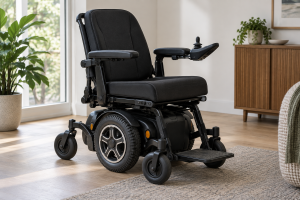
Best Power Wheelchair Under $300 for Seniors

Best Smart Pill Dispenser with Alerts