Last Updated: September 27, 2026
Durable medical equipment, or DME, covers the items that let people manage health conditions at home: walkers, hospital beds, oxygen concentrators, CPAP machines, commode chairs, and wheelchairs. Two public programs can pay for it, Medicare and Medicaid, but they operate on different rules, different budgets, and different ideas of what counts as necessary. Families often assume the two are interchangeable and then discover that one program covers a bath bench while the other does not. Understanding how each one thinks saves time, denied claims, and money.
Quick answer: Our top pick in 2026 is the Who qualifies — our #1 rated choice. See the full ranked comparison, alternatives and buying advice below.
The Core Difference in One Sentence
Medicare is a federal health insurance program based mainly on age or disability, with the same DME rules nationwide. Medicaid is a joint federal-state program based on income and assets, and every state writes its own coverage list, limits, and approval process.

Drive Medical Two-Button Folding Walker with Wheels, Height Adjustable
Included for 'Medicare vs Medicaid for Durable Medical Equipment' because the listing specifies Height Adjustable, details this guide uses to compare options.
View on Amazon
Drive Medical Rollator Walker with Seat, 7.5 Inch Wheels, Blue
Included for 'Medicare vs Medicaid for Durable Medical Equipment' because the listing specifies 7.5 Inch Wheels and Blue, details this guide uses to compare options.
View on Amazon
Drive Medical Trigger Release Folding Walker with Contoured Hand Grips
Included for 'Medicare vs Medicaid for Durable Medical Equipment' as a relevant option in this category; details come from the product listing.
View on Amazon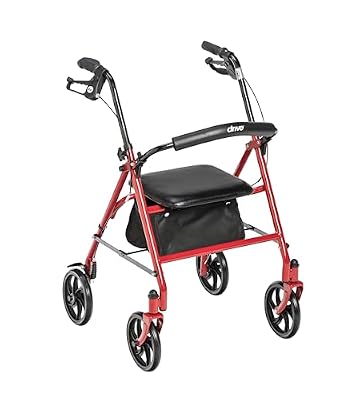
Drive Medical Rollator Walker with Seat, 7.5 Inch Wheels, Red
Included for 'Medicare vs Medicaid for Durable Medical Equipment' because the listing specifies 7.5 Inch Wheels and Red, details this guide uses to compare options.
View on AmazonSide-by-Side Comparison
| Factor | Medicare (Part B) | Medicaid |
|---|---|---|
| Who qualifies | Age 65+, certain disabilities, ESRD | Low income and limited assets (state thresholds) |
| Cost to beneficiary | Part B deductible + 20% coinsurance | Usually $0 or a small copay |
| Coverage rules | National, uniform | Vary by state |
| Bathroom safety items | Rarely covered (grab bars, shower chairs usually excluded) | Often covered, sometimes via waiver programs |
| Prior authorization | Required for some power mobility and select items | Common for many items |
| Supplier requirement | Medicare-enrolled, ideally accepts assignment | Medicaid-enrolled in your state |
How Medicare Decides
Medical necessity in the home
Medicare Part B covers DME that is reusable, serves a medical purpose, is used in the home, and is expected to last at least three years. The treating clinician must order it, and records must support why it is needed. Items considered primarily for comfort or convenience, such as stair lifts, bath lifts, and most grab bars, are typically excluded.
Competitive bidding and approved amounts
In some areas Medicare sets payment amounts for certain DME through competitive bidding, which can limit which suppliers you can use. The approved amount, not the supplier’s list price, is what the 80/20 split is based on.
How Medicaid Decides
State plans and waivers
Every state Medicaid program covers some DME, but the details are local. Many states also run Home and Community-Based Services (HCBS) waivers aimed at keeping seniors out of nursing homes. These waivers can pay for things Medicare will not, such as bathroom modifications, ramps, or personal emergency response systems.
Payer of last resort
Medicaid pays after every other source. If a person has both programs, Medicare is billed first for anything it covers, and Medicaid then picks up cost sharing and, in some cases, items Medicare denied.
When You Have Both: Dual Eligibility
About one in five Medicare beneficiaries also qualifies for Medicaid. For these “dual eligible” seniors, the typical flow for a hospital bed or oxygen concentrator is: Medicare pays 80 percent, Medicaid covers the 20 percent coinsurance, and the beneficiary owes nothing, provided the supplier is enrolled with both programs. If the supplier is not enrolled in Medicaid, the coinsurance may be billed to you, so always confirm enrollment in both before ordering.
Dual Eligible Special Needs Plans
D-SNPs are Medicare Advantage plans built for people with both programs. They often coordinate DME approvals in one place and may add extras such as over-the-counter allowances for bathroom safety items.
Practical Examples
Walker after a hip replacement
Medicare usually covers a standard walker with a doctor’s order. A Medicaid-only senior typically gets one too, sometimes with fewer paperwork steps.
Shower chair for a frail senior
Medicare generally treats shower chairs as convenience items. Many state Medicaid programs, or their waivers, will cover one with an order and justification.
Power wheelchair
Both programs can cover one, but both require detailed documentation. Medicare requires a face-to-face exam and may need prior authorization; Medicaid often requires a seating evaluation by a physical or occupational therapist.
Tips to Avoid Denials Under Either Program
Ask the clinician to describe specific daily tasks the equipment enables. Confirm the supplier’s enrollment status by phone. Request written confirmation of what you will owe before delivery. Keep copies of all orders, and if denied, file an appeal promptly; both programs have strict deadlines, often 60 to 120 days depending on the program and level.
FAQ
Can Medicaid pay for equipment Medicare denied?
Sometimes. If the item is on your state’s Medicaid list and Medicare issued a formal denial, Medicaid may cover it. The Medicare denial notice is often required as part of the Medicaid request.
Do I need a different doctor’s order for each program?
Usually one well-written order works for both, but Medicaid may ask for additional forms or a therapist evaluation. Ask the supplier which documents each program needs.
Bottom Line
Medicare offers consistent, nationwide DME coverage with a 20 percent share and tight limits on convenience items. Medicaid varies by state but often costs little or nothing and can reach into home safety through waivers. If you qualify for both, use a supplier enrolled in both programs and let Medicare pay first. That combination is the closest thing to zero-cost equipment most seniors will find.
Ready to decide? Our #1 pick for 2026 is the Who qualifies.
Live price & availability on Amazon.
Related Reviews & Guides


How to choose the best mobility scooter for elderly parents

Best OXO Good Grips for Arthritis