Last Updated: September 7, 2026
- Top Pick: Medline Aluminum Quad Cane with Small Base, 300 lb Capacity, for Balance, Knee Injuries, Leg Surgery Recovery & Mobility, Portable, Sturdy Walking Aid for Seniors & Adults
- Best Value: KINGGEAR Self Standing Walking Cane Quad Base for Seniors
- Premium Choice: Medline Aluminum Quad Cane with Large Base for Balance, Knee Injuries, Leg Surgery Recovery & Mobility, Portable, Lightweight Walking Aid for Seniors & Adults
Introduction
Quad canes — also called four-point canes — are designed for seniors who need more stability than a standard single-tip cane can provide. With a four-legged base that spreads the user’s weight over a wider area, quad canes can stand on their own, provide support during weight-bearing transitions, and handle uneven surfaces more reliably. They are frequently recommended by physical therapists for seniors recovering from strokes, hip fractures, or those managing balance disorders.
Key Features to Look For
- Base Size: Small-base quad canes are easier to maneuver indoors; large-base models offer maximum stability but require more floor clearance. Match base size to the environment.
- Handle Style: Offset handles reduce wrist and forearm fatigue and are preferred for daily long-term use. Ensure the handle fits the user’s hand size comfortably.
- Weight Capacity: Most quad canes support 250–300 lbs. Verify the user’s weight is within range for safe use.
- Adjustability: Push-button height adjustment allows quick fitting without tools, which is important for caregivers assisting multiple users or for the cane to be properly fitted.
Top Quad Cane Picks for Elderly
Drive Medical Deluxe Aluminum Quad Cane
The Drive Medical Deluxe Quad Cane is a therapist-recommended staple in the mobility aid world. Available in both small-base and large-base versions, it allows users to choose the stability level they need. The contoured offset handle reduces wrist strain significantly during extended use. Height adjusts from 28 to 37 inches in 1-inch increments, and all four rubber tips are replaceable. With a 300 lb weight capacity and a durable aluminum shaft, it is a reliable long-term investment for seniors with balance challenges.
As an Amazon Associate we earn from qualifying purchases at no extra cost to you.


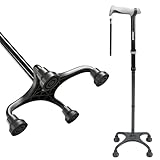


Medline Offset Quad Cane with Comfortable Grip
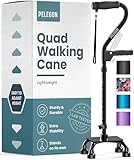
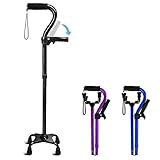
Medline’s offset quad cane is another highly rated option for seniors transitioning from a walker to a cane, or those who need more support than a single-point cane offers. The foam grip handle is gentle on arthritic hands, and the wide base ensures the cane stays upright when set down — a small but meaningful feature for seniors managing multiple tasks while standing. It supports up to 350 lbs and is available in several height ranges to suit petite or taller users.
Hugo Mobility Quadpod Cane
The Hugo Quadpod Cane stands out for its pivoting quad base, which adjusts automatically to uneven terrain — a feature more commonly found on all-terrain standard canes. This makes it an excellent choice for seniors who split time between indoors and outdoors. The ergonomic grip is designed to minimize pressure on the palm, and the matte finish gives the cane a sleeker, less clinical appearance than typical hospital-style quad canes. Adjusts from 30 to 39 inches and supports up to 350 lbs.
How to Choose the Right Quad Cane
A quad cane stands on four feet, giving a wider, more stable base than a single-tip cane, which makes it a good option for seniors who need extra steadiness or have had a fall. Choosing one starts with the base size. A large-base quad cane offers maximum stability and can even stand on its own, while a small-base model is lighter and easier to maneuver in tight spaces and on stairs. Matching the base to the person’s balance needs and home layout is key. Height is just as important: with the user standing upright and arms relaxed, the handle should reach the wrist crease so the elbow bends slightly when gripping, and an adjustable shaft makes this easy to set.
Comfort and grip influence how willingly the cane gets used. An ergonomic handle that fills the palm eases pressure on arthritic hands compared with a thin grip, and some handles are shaped for the left or right hand. A lightweight yet sturdy aluminum frame is easier to lift with each step. All four rubber tips should provide solid, non-slip contact and be replaceable. Because choosing and fitting a quad cane correctly affects both safety and confidence, it is wise to have a doctor or physical therapist confirm the right base size, height, and walking technique for the individual.
Using a Quad Cane Safely Every Day
A quad cane only delivers its stability benefit when all four feet are placed flat and used correctly. Make sure the entire base contacts the floor with each step, rather than rocking on two feet, which can throw off balance. As a general guide, the cane is held on the stronger side and advanced together with the weaker leg so they share the load, with smooth, unhurried steps. Because the wide base can catch on edges, take extra care near rugs, thresholds, and tight corners, and consider a small-base model where space is limited.
On stairs, a quad cane can be awkward because the base may not fit fully on a step, so using a handrail is especially important; many people are advised to lead with the stronger leg going up and the cane and weaker leg going down, but a therapist can tailor this. Routine maintenance keeps the cane dependable: check all four rubber tips often and replace any that are worn smooth or cracked, and confirm the height adjustment is locked before each use. Keeping walkways clear and well lit further reduces fall risk. For hands-on training that fits the cane to the person, a physical therapist is the best resource.
Frequently Asked Questions
Is a quad cane better than a regular cane?
A quad cane offers more stability thanks to its four-footed base and is often recommended for those who need extra support or have had a fall. A standard cane is lighter and easier to maneuver for people needing only light support. The best choice depends on individual balance needs.
Should I choose a large-base or small-base quad cane?
A large base gives maximum stability and can stand on its own, while a small base is lighter and easier in tight spaces and on stairs. Match the base size to the user’s balance needs and home layout, ideally with a therapist’s input.
How do I set the right height for a quad cane?
Standing upright with arms relaxed, the handle should reach the wrist crease, giving a slight elbow bend when held. An adjustable shaft makes this easy to set; a physical therapist can confirm the proper height.
How should a quad cane be used on stairs?
Quad canes can be awkward on steps because the base may not fit fully, so use a handrail whenever possible. Many people lead with the stronger leg going up and the cane and weaker leg going down, but ask a therapist for technique suited to you.
Final Thoughts
Quad canes are an excellent step up in stability from standard canes, particularly for seniors recovering from neurological events or those with significant balance impairment. For users who need support on both sides, a rollator walker or forearm crutches may be more appropriate — always work with a physical therapist to determine the right assistive device for the individual’s current condition and goals.
Related Reviews & Guides




11 Best Knee Braces for Elderly: Support & Pain Relief for Arthritic Knees
6 Best Mobility Scooter Useds For Sale 2026