Last Updated: October 4, 2026
- Top Pick: Memory Games for Seniors — Alzheimer's and Dementia Must Haves for Elderly
- Best Value: Large Print Memory Puzzles: 175+ Puzzles and Activities for Adults to Exercise Memory and Improve Focus – Includes Spiral Bound / Lay Flat Design and … Font for Easy Reading (Brain Busters)
- Premium Choice: TieGokii Dementia Activities for Seniors
Introduction
Engaging the mind through games and activities is one of the most evidence-supported strategies for supporting cognitive health in older adults, including those living with mild cognitive impairment or dementia. Memory care games stimulate recall, encourage social interaction, and bring joy and purpose to daily routines. The right games are simple enough to reduce frustration while offering enough engagement to hold attention.
Key Features to Look For
- Safety: Games with small pieces may pose a choking risk for seniors with significant cognitive decline. Choose sets with large, chunky pieces and durable construction that withstand repeated handling without splintering or breaking.
- Ease of Use: Games should feature large, high-contrast images and simple rules that can be explained in one or two sentences. Activity sets that allow varying levels of participation enable both capable and impaired seniors to play together without exclusion.
- Comfort: Games that evoke familiar memories—such as vintage photographs, classic songs, or nostalgic themes—are more emotionally engaging for seniors with dementia, reducing agitation and increasing willingness to participate.
Top Picks for Seniors
Lumosity Brain Training (Tablet/Subscription)
Lumosity is a well-known brain training platform offering a suite of scientifically designed cognitive games targeting memory, attention, processing speed, and problem-solving. The senior-friendly interface adjusts game difficulty automatically based on performance, preventing frustration. A monthly or annual subscription provides unlimited access to 40+ games, and progress reports allow caregivers and family members to track cognitive engagement over time.
As an Amazon Associate we earn from qualifying purchases at no extra cost to you.


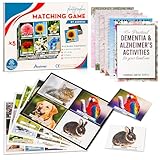


Regal Games Old Maid Card Game (Large Print)
The Regal Games Old Maid card set with large-print, colorful illustrations is ideal for seniors in memory care settings. The simple matching and avoidance rules require no reading and minimal instruction, making it accessible even for those with moderate cognitive impairment. Playing cards with familiar characters and bold imagery stimulate visual recognition and encourage social interaction with family, friends, or care staff.
Ravensburger Memory Matching Game for Adults
The Ravensburger Memory matching game for adults uses large, high-quality picture tiles with vivid imagery that appeals to all ages. The classic matching format exercises visual memory and concentration, and the game can be simplified by using fewer pairs for those with more advanced cognitive impairment. It is a particularly good choice for intergenerational play, as grandchildren and grandparents can enjoy it together at the same table.
What to Look for in Memory and Cognitive Games for Seniors
Games and activities that keep the mind engaged can be an enjoyable part of a senior’s day, and the best ones meet the person where they are. Look for activities matched to current abilities, since a game that is too hard causes frustration while one that is too easy loses interest; many products come in varying difficulty levels for this reason. Large print, bold colors, and big, easy-to-handle pieces make games accessible for those with low vision or arthritis. Clear, simple instructions and a familiar format, such as classic card games, matching games, puzzles, or word and trivia activities, help a senior join in without a steep learning curve.
Comfort, familiarity, and social value also matter. Activities tied to a person’s interests and life experiences, like music, photographs, gardening, or favorite hobbies, tend to be the most engaging and meaningful. Games that can be played together invite connection with family or caregivers, which is often as valuable as the mental exercise itself. Durable, easy-to-clean materials hold up to repeated use. Choosing activities that the individual genuinely enjoys, rather than ones that feel like a test, makes them something to look forward to and easier to return to day after day.
How to Use Memory Games to Support Engagement
The way an activity is offered often matters as much as the activity itself. Choose a calm, well-lit, low-distraction setting and a time of day when the person tends to be most alert and relaxed. Keep sessions short and pressure-free, focusing on enjoyment and connection rather than scores or right answers, and be ready to simplify or switch activities if frustration appears. Joining in alongside the person, offering gentle encouragement and patience, turns a game into shared time rather than a quiz, which helps everyone enjoy it more.
Familiar, meaningful activities can be especially comforting, so revisiting favorite songs, looking through old photos, or playing a long-loved card game can spark conversation and positive feelings. Celebrate participation rather than performance, and let the person set the pace. It is worth remembering that games and activities are for enjoyment and engagement and are not a medical treatment; results vary, and they should not replace medical care. Families noticing changes in memory, mood, or thinking should speak with a doctor, who can evaluate the situation and suggest appropriate support and resources tailored to the person’s needs.
Related Guides
- Best Hobbies for Seniors: Ideas to Stay Engaged at Home
- How to Start a Walking Program for Seniors
- Senior Fitness Resistance Band Light Review
Frequently Asked Questions
What kinds of games are good for seniors with memory changes?
Familiar, enjoyable activities matched to current abilities work best, such as simple card and matching games, large-piece puzzles, music, photos, and word or trivia activities. Large print and easy-to-handle pieces help with vision and dexterity.
Can memory games improve a senior’s cognition?
Engaging activities can be enjoyable and provide mental stimulation and connection, but results vary and they are not a medical treatment. They should complement, not replace, medical care and a doctor’s guidance.
How do I keep a memory game from frustrating a loved one?
Match the difficulty to their abilities, keep sessions short and pressure-free, focus on enjoyment over scores, and be ready to simplify or switch activities. Joining in with patience and encouragement helps a lot.
Should I talk to a doctor about memory concerns?
Yes. If you notice changes in memory, mood, or thinking, speak with a doctor, who can evaluate the situation and recommend appropriate support and resources. Games are for engagement, not a substitute for medical care.
Final Thoughts
Memory care games are most effective when incorporated into a broader cognitive wellness plan that includes physical activity, social engagement, and adequate sleep. Consult with your loved one's neurologist or certified dementia care specialist to identify the most appropriate activities for their current cognitive stage and individual interests.
Related Reviews & Guides





Caregiver Burnout: Signs, Prevention and Self-Care Strategies

Lap Tray Feeder Bed: Best Foldable Bed Trays for Seniors…