Last Updated: September 26, 2026
A power wheelchair can restore independence for an older adult who can no longer walk far or push a manual chair. The category covers everything from a 45-pound folding travel chair to a custom rehab system with tilt and elevating legs. Choosing well means understanding which type matches the user’s body, home and daily routine. This comparison explains the five main power wheelchair types in 2026 without naming specific models, which change frequently.
Quick answer: Our top pick in 2026 is the 1. Folding lightweight — our #1 rated choice. See the full ranked comparison, alternatives and buying advice below.
The five types side by side
| Type | Weight with battery | Range per charge | Turning ability | Typical price |
|---|---|---|---|---|
| 1. Folding lightweight | 40 to 60 lb | 8 to 15 miles | Good | $1,500 to $3,500 |
| 2. Standard rear-wheel drive | 100 to 150 lb | 10 to 20 miles | Wider turns | $1,500 to $4,000 |
| 3. Mid-wheel drive | 120 to 250 lb | 12 to 25 miles | Excellent, turns in place | $2,500 to $8,000 |
| 4. Heavy-duty or bariatric | 150 to 300 lb | 12 to 20 miles | Moderate | $3,000 to $9,000 |
| 5. Complex rehab with power seating | 250 to 400 lb | 10 to 20 miles | Excellent | $10,000 to $30,000 or more |
1. Folding lightweight power chairs
These fold in seconds and can be lifted into a car trunk, sometimes in two pieces. They use lithium batteries that are usually airline-friendly. The tradeoff is comfort: seats are thinner, suspension is limited, and they are best on smooth surfaces. They suit seniors who walk short distances and need help for outings and travel.

32lbs Lightweight Electric Wheelchair, Foldable Electric Wheelchair for Adults, Seniors, 360W Dual Motor Power Wheelchair for Indoor and Outdoor, 12.5 Miles, 220 lbs Capacity, 16.5" Seat
Included for 'Top 5 Power Wheelchair Types for Seniors Compared' because the listing specifies Foldable Electric Wheelchair for Adults and Seniors, details this guide uses to compare options.
View on Amazon
Power Wheelchair, Electric Mobile Chair for Seniors, Heavy Duty Motorized Wheelchair with 480 LBS Load Capacity, Foldable
Included for 'Top 5 Power Wheelchair Types for Seniors Compared' because the listing specifies Electric Mobile Chair for Seniors and Heavy Duty Motorized Wheelchair with 480 LBS Load Capacity, details this guide uses to compare options.
View on Amazon![[2026 Upgrade] Hassky Electric Wheelchair for Adults Foldable, 15 Miles Range Motorized Wheelchair, All Terrain Power Wheelchairs for Seniors Supports Up to 350 lbs Black](https://m.media-amazon.com/images/I/51QzPgPeKgL._SL400_.jpg)
[2026 Upgrade] Hassky Electric Wheelchair for Adults Foldable, 15 Miles Range Motorized Wheelchair, All Terrain Power Wheelchairs for Seniors Supports Up to 350 lbs Black
Included for 'Top 5 Power Wheelchair Types for Seniors Compared' because the listing specifies 15 Miles Range Motorized Wheelchair, details this guide uses to compare options.
View on Amazon
Paiseec Q5 22lbs Lightest Folding Electric Wheelchair, 100% Carbon Fiber
Included for 'Top 5 Power Wheelchair Types for Seniors Compared' because the listing specifies 100% Carbon Fiber, details this guide uses to compare options.
View on Amazon2. Standard rear-wheel drive chairs
The traditional design with drive wheels at the back. They track straight at speed and handle outdoor paths reasonably well. The larger turning circle can be awkward in small kitchens and bathrooms.
3. Mid-wheel drive chairs
With drive wheels under the user’s center of gravity, these can turn in their own footprint, typically a turning radius around 20 inches. That makes them the most practical choice for navigating tight indoor spaces. They are heavier and are not designed to be lifted, so transport requires a vehicle lift or ramp.
4. Heavy-duty chairs
Reinforced frames and stronger motors support users up to about 450 to 600 pounds and cope better with ramps and uneven ground. Check doorway widths and vehicle transport options carefully.
5. Complex rehab chairs
These are prescribed and configured by a seating specialist for people who spend most of the day in the chair or who have conditions such as ALS, MS or advanced Parkinson’s. Power tilt, recline and elevating leg rests redistribute pressure and support posture. They require an evaluation by a physical or occupational therapist and are fitted to the individual.
Key fit and safety questions
Seat width and depth
Seat width should allow roughly one inch on each side of the hips. Depth should leave two to three finger-widths between the seat edge and the back of the knee. A poor fit can cause pressure sores or sliding.
Controls
Most chairs use a joystick, but users with weak hands, tremor or limited arm movement may need alternative controls. A therapist evaluation identifies the right interface.
Home access
Measure doorways, hallways and the space beside the bed and toilet. Consider whether a ramp is needed at entrances, using the common guideline of one foot of ramp length for each inch of rise.
How Medicare handles power chairs
Medicare Part B can cover power wheelchairs when a doctor documents in a face-to-face exam that the person cannot perform daily activities at home with a cane, walker or manual wheelchair, and can safely operate a power chair. Coverage is based on in-home need. Complex rehab chairs typically require a specialty evaluation and prior authorization. Consumer folding chairs bought online are often not covered.
FAQ
Is a mobility scooter or power wheelchair better for seniors?
Scooters suit people who can sit upright, steer with a tiller and transfer on and off easily, mainly for outdoor use. Power wheelchairs suit people who need more support, better indoor maneuverability or all-day seating.
Can a power wheelchair go on an airplane?
Many folding power chairs are designed for air travel, but airlines have battery rules. Contact the airline in advance with the battery watt-hour rating.
Bottom line
Choose a folding chair for travel and part-time use, a mid-wheel drive chair for tight homes and daily use, and a complex rehab chair when posture and pressure care matter. Get a professional evaluation before buying anything beyond a basic folding model, and involve Medicare or your plan early if you want coverage.
Ready to decide? Our #1 pick for 2026 is the 1. Folding lightweight.
Live price & availability on Amazon.
Related Reviews & Guides



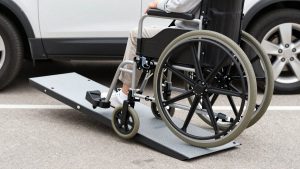
Best Portable Wheelchair Ramp for Cars
Top 5 Stair Lift Types for Seniors Compared (2026)