Last Updated: September 27, 2026
Home blood pressure monitors come in two main styles: those with a cuff around the upper arm and those that wrap around the wrist. Both can give useful readings, but they are not equally forgiving. Many older adults choose a wrist monitor because it seems easier to put on, then wonder why their numbers bounce around. This guide explains the accuracy differences, why they happen, and how to decide which style suits a particular person.
Why Accuracy Differs
Blood pressure changes with height relative to the heart. A cuff on the upper arm sits close to heart level when the arm rests on a table, so positioning errors are small. The wrist is farther from the heart and moves more, so small changes in hand position can shift the reading. Research and guidance from medical organizations generally favor upper arm monitors for home use, noting that wrist monitors can be accurate when used carefully but are more prone to error.

OMRON Bronze Blood Pressure Monitor & Upper Arm Blood Pressure Cuff
Included for 'Upper Arm vs Wrist Blood Pressure Monitor Accuracy' as a relevant option in this category; details come from the product listing.
View on Amazon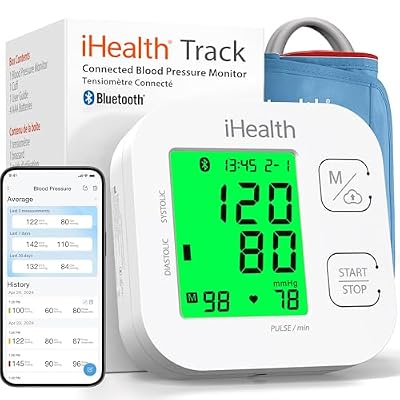
iHealth Track Smart Upper Arm Blood Pressure Monitor with Wide-Range Cuff
Included for 'Upper Arm vs Wrist Blood Pressure Monitor Accuracy' as a relevant option in this category; details come from the product listing.
View on Amazon
OMRON Gold Blood Pressure Monitor & Upper Arm Blood Pressure Cuff
Included for 'Upper Arm vs Wrist Blood Pressure Monitor Accuracy' as a relevant option in this category; details come from the product listing.
View on Amazon
OMRON Gold Wireless Wrist Blood Pressure Monitor for Home Use
Included for 'Upper Arm vs Wrist Blood Pressure Monitor Accuracy' as a relevant option in this category; details come from the product listing.
View on AmazonArteries also differ. The brachial artery in the upper arm is larger and closer to where clinical measurements are taken. Wrist arteries are narrower and more affected by wrist position and bending.
Head-to-Head Comparison
| Factor | Upper arm monitor | Wrist monitor |
|---|---|---|
| General accuracy with proper use | High | Good, more technique-dependent |
| Sensitivity to position | Lower | High; wrist must be at heart level |
| Ease of putting on | Moderate; one-handed cuffs help | Easy |
| Portability | Bulkier | Compact |
| Cuff size options | Wide range, including large | Limited |
| Typical price | About $30 to $120 | About $25 to $80 |
| Recommended by guidelines | Generally preferred | Alternative when arm cuff not feasible |
When a Wrist Monitor Makes Sense
- The upper arm is too large for available cuffs, even extra-large ones.
- Pain, injury, or limited shoulder movement makes an arm cuff hard to use.
- The person has had lymph nodes removed or has a condition where the doctor advises against arm cuffs on one or both arms.
- Travel or portability is a priority, and the user is disciplined about positioning.
Using a Wrist Monitor Correctly
- Sit with back supported and feet flat for 5 minutes.
- Place the cuff on bare skin about a finger-width below the wrist crease.
- Bend the elbow and raise the wrist to heart level, often by resting the elbow on a table and supporting the arm with a cushion.
- Keep the wrist straight, not bent up or down.
- Stay still and silent during measurement.
- Take two readings a minute apart.
Some wrist monitors have position sensors that signal when the wrist is at the right height. These can help reduce errors.
Using an Upper Arm Monitor Correctly
- Sit with back supported, feet flat, legs uncrossed.
- Rest the arm on a table so the cuff is at heart level.
- Place the cuff on bare skin about an inch above the elbow crease.
- Make sure the cuff is the right size for the arm circumference.
- Stay still and quiet during the measurement.
Checking Your Monitor
Whichever type you use, bring it to a clinic appointment and compare readings with the office device. If readings differ consistently by a large margin, the monitor, cuff size, or technique may need adjustment. Choose monitors that have been clinically validated.
Special Considerations for Seniors
Arthritis can make wrapping an arm cuff difficult; pre-formed or one-piece cuffs help. Tremors can affect wrist readings more than arm readings. Irregular heart rhythms can affect both types; some monitors display an irregular heartbeat indicator. People with stiff arteries, which is common with age, may see more variation, so averaging several readings is helpful.
Frequently Asked Questions
Why does my wrist monitor read higher than my arm monitor?
Wrist readings can differ due to position, wrist bending, or arterial differences. If the wrist is below heart level, readings tend to be higher. Check technique and compare with a clinic reading.
Can I use a wrist monitor if my doctor recommends home monitoring?
Often yes, especially if an arm cuff is not practical. Ask the doctor and bring the device to an appointment to check its readings against the clinic’s equipment.
Bottom Line
Upper arm blood pressure monitors are generally more reliable and forgiving, making them the first choice for most seniors. Wrist monitors can work well when used with careful positioning, especially for people who cannot use an arm cuff. Whatever the choice, consistent technique and validation against clinic readings matter most.
Related Reviews & Guides



6 Best Walking Canes For Ladies 2026
Best Google Hard Drive in 2026: Top Picks Compared