Last Updated: October 4, 2026
A bedside commode solves a specific problem: someone who cannot reliably reach the bathroom at night, who is recovering from hip or knee surgery, or who lives with a chronic condition that limits mobility. The difference between a good unit and a bad one is whether the person actually keeps using it. I have tested dozens of these over the years, and the ones that end up abandoned in a garage are almost always too narrow, too wobbly under shifting weight, or too hard and cold to sit on for more than thirty seconds.
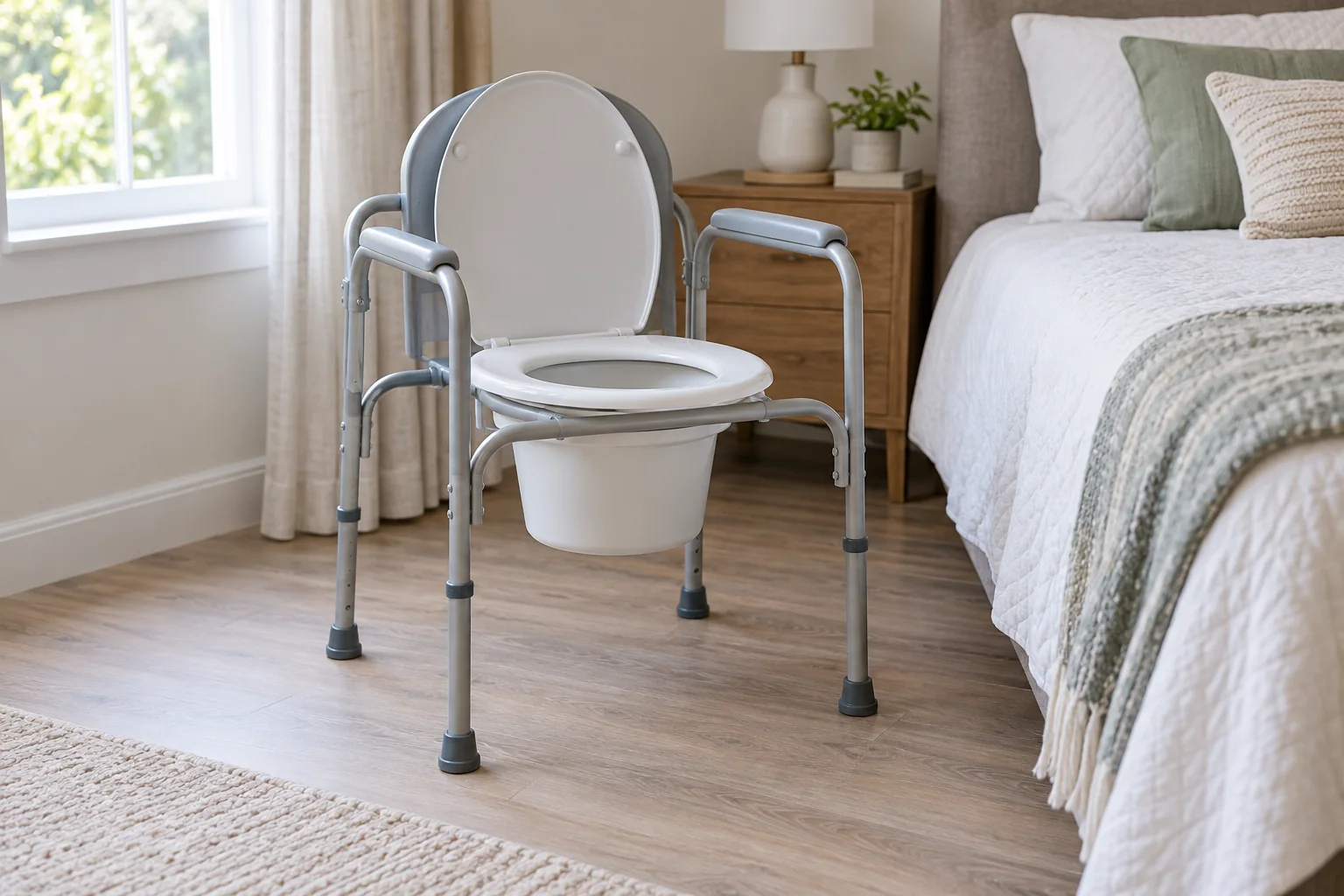
The best bedside commodes in 2026 share a few non-negotiable traits: stable frames that do not rock when a user grabs the armrests to stand, seats wide enough to be comfortable without being so wide that the person cannot get close to the bed or toilet, and bucket designs that lift out cleanly without splashing. Beyond those fundamentals, the category splits by budget, frame material, and whether you need padded comfort or drop-arm access. The eight models below cover that full spectrum.
As an Amazon Associate we earn from qualifying purchases at no extra cost to you.



Quick Picks
| Product | Best for | Price |
|---|---|---|
| Drive Medical Folding | Tight budgets and temporary use | under $30 |
| HOMLAND 3-in-1 | All-around stability at mid-range cost | under $60 |
| HOMLAND Padded Seat & Backrest | Extended sitting comfort | under $100 |
| DMI Drop Arm | Larger users and wide-seat comfort | under $100 |
| HolyHeal M73 Drop Arm | Premium comfort and side transfers | under $150 |
| Drive Medical Steel 3-in-1 | Durable folding convenience | under $50 |
| soundfuse 3-in-1 | Sturdy crossbar support under $60 | under $60 |
| soundfuse Padded Aluminum | Lightweight frame with backrest support | under $100 |
How We Picked
We evaluated each commode on four criteria. First, frame stability under a real sit-to-stand motion, not just static weight. Second, seat geometry: width, shape, and how well it fits between standard bed frames and over a floor toilet. Third, ease of bucket removal and cleaning, which is the single biggest factor in daily usability. Fourth, build quality relative to price, including weld integrity, plastic thickness, and whether the unit feels like it will last past a six-month recovery window.
The 8 Best Bedside Commodes in 2026
Drive Medical Folding Bedside Commode
This is the entry-level workhorse, and for someone who needs a commode for two or three weeks post-surgery, the value is hard to argue with. The folding design means it collapses flat for storage or transport, and the adjustable height legs accommodate most bed heights. It is noticeably lighter and less rigid than pricier options, which shows when a user puts full weight on one armrest. Still, for short-term use or a guest bedroom, it does the job without spending much.
- Pro: Folds flat for compact storage and travel.
- Pro: Unbeatable price for a functioning, adjustable commode.
- Con: Frame flexes under one-sided weight; feels less stable than crossbar models.
Skip this one if the user has significant balance issues or needs the commode for more than a few weeks.
HOMLAND 3-in-1 Bedside Commode with Dual-Crossbar
The dual-crossbar frame is the headline here. Where single-bar commodes allow a slight forward or lateral wobble, this one holds rock solid during sit-to-stand transfers. The 350-pound rating covers the vast majority of users, and the 3-in-1 design lets it serve as a bedside commode, a raised toilet seat, or a standalone chair. Assembly takes under ten minutes. The plastic bucket fits snugly but can be a snug lift if you have limited hand strength.
- Pro: Dual crossbar eliminates the wobble that plagues cheaper units.
- Pro: Versatile 3-in-1 function saves buying a separate raised seat.
- Con: Bucket rim is tight; requires a firm grip to remove cleanly.
Skip if you need more than 350 pounds of rated capacity or a padded surface.
HOMLAND Bedside Commode with Padded Seat and Backrest
Comfort is the whole point of this model. The padded seat and backrest make it viable for users who spend extended time seated, whether due to limited mobility or the need to take medications slowly. The enhanced crossbar keeps the frame stable under that backrest lean. The aluminum build keeps weight manageable for lifting over a floor toilet. The padding is a vinyl that wipes clean easily but is not the most breathable material in warm climates.
- Pro: Padded seat and backrest support comfortable longer sits.
- Pro: Aluminum frame balances lightness with rigidity.
- Con: Vinyl padding gets sticky and uncomfortable in high heat.
Skip if the primary need is short, frequent trips where padding adds little value.
DMI Drop Arm Portable Toilet Commode
The 500-pound weight capacity sets this apart from nearly everything else in the category, making it the clear choice for larger users. The extra-wide seat accommodates broader hips without forcing the user to hover. Drop arms allow lateral transfers from a wheelchair or bed without lifting the entire unit. The included bucket has a lid, which controls odor better than open designs. At just over ninety dollars it is mid-priced, but the capacity range justifies the cost for those who need it.
- Pro: 500-pound capacity and extra-wide seat serve a range most competitors ignore.
- Pro: Drop arms enable smooth side transfers.
- Con: The wide footprint means it may not fit between closely spaced bed frames.
Skip if storage space is very tight and the wide base will not clear narrow doorways or bedside gaps.
HolyHeal M73 Drop Arm Bedside Commode
This is the most expensive unit on the list, and the money shows up in finish quality. The frame feels dense and planted, the drop arms lock with a satisfying positive click, and the overall design looks less clinical than most commodes, which matters to users sensitive about dignity. It serves well as a potty chair for adults in a bedroom setting. The adjustment range is generous, and the bucket fits cleanly without the slop some cheaper models allow.
- Pro: Premium build quality and refined finish stand out in this category.
- Pro: Secure-locking drop arms make side transfers feel safe and effortless.
- Con: Highest price on the list with diminishing functional returns over mid-tier models.
Skip if budget is the primary constraint and the DMI or HOMLAND models meet the functional needs.
Drive Medical Folding Steel Bedside Commode Chair
Think of this as the step-up from the base folding model. The steel construction adds noticeable heft and stability compared to the budget version, while retaining the fold-flat convenience. The gray finish looks cleaner in a bedroom than white clinical plastic. It is a solid middle option for someone who wants durability without committing to a crossbar design or paying for a padded backrest they may not use. Assembly is tool-light and straightforward.
- Pro: Steel frame offers meaningfully more rigidity than the budget folding Drive model.
- Pro: Folds for easy storage and transport.
- Con: No crossbar means it still allows some lateral flex during weight shifts.
Skip if the user has balance concerns; a crossbar model is worth the small price difference.
soundfuse 3-in-1 Bedside Commode with Dual-Crossbar
Functionally this overlaps heavily with the HOMLAND 3-in-1, and the price difference is a few dollars. The dual-crossbar frame delivers the same wobble-free stability, and the 3-in-1 versatility covers bedside, over-toilet, and standalone use. The seat is firm plastic rather than padded, which some users prefer for hygiene. It is a no-nonsense unit that performs well without unnecessary frills, and at under sixty dollars it represents strong value.
- Pro: Dual crossbar delivers rock-solid stability at a very fair price.
- Pro: Firm plastic seat is easier to sanitize than padded alternatives.
- Con: No padding means discomfort during longer sits compared to the HOMLAND padded model.
Skip if comfort during extended sitting matters; the few-dollar upgrade to a padded model is worthwhile.
soundfuse Padded Seat and Backrest with Aluminum Frame
This pairs the padded comfort of the HOMLAND equivalent with a slightly lighter aluminum build, making it easier for caregivers to move the unit between rooms or lift it over a floor toilet. The backrest provides lumbar support for users who tend to lean, and the frame handles weight shifts without flex. At just under a hundred dollars it competes directly with the HOMLAND padded model, and the choice between them comes down to finish preferences and minor seat contour differences.
- Pro: Aluminum frame keeps weight low without sacrificing rigidity.
- Pro: Padded backrest supports comfortable extended sitting.
- Con: Slightly narrower seat than the DMI wide model; less ideal for larger users.
Skip if the user needs a wider seat or more than 350 pounds of rated capacity.
Buying Guide
Frame Stability and Crossbar Design
The single most important structural feature is how the frame resists lateral and forward flex during a sit-to-stand transition. Dual crossbars are the gold standard. A single bar or a folding joint without reinforcement will flex under asymmetric loading, which is exactly what happens when someone grabs one armrest to push up. If the user has any balance concern or relies on the commode for transfers, prioritize crossbar models over folding designs.
Seat Width, Shape, and Bucket Fit
Measure the gap between your bed frame and the wall, or between the commode and the toilet it will straddle. Extra-wide seats add comfort for larger users but increase footprint. Check that the bucket is deep enough to contain splash and that the lid seals if odor control matters. The transition between the seat and the bucket should be smooth with no sharp rim that could pinch during wiping.
Weight Capacity and Adjustability
Never buy a commode at the edge of its rated capacity. If the user weighs close to 300 pounds, a 350-pound rated unit is appropriate but leaves little margin for the dynamic forces of a sit-to-stand. For larger users, the DMI at 500 pounds is the only realistic option on this list. Adjustable height legs matter less than people expect; focus instead on whether the seat height clears your toilet rim or aligns with your bed edge.
Our Verdict
The HOMLAND 3-in-1 with dual crossbar is our top pick. It delivers the stability that matters most in daily use, the versatility to serve multiple roles, and a price that leaves room for a separate raised toilet seat if needed. For budget buyers, the Drive Medical Folding at just under twenty-eight dollars is the clear value play for short-term or low-risk use. If the user is larger or needs side transfers, the DMI Drop Arm wins despite costing more, because no other model on this list matches its 500-pound capacity and wide-seat geometry together.
FAQ
Can I use a bedside commode as a regular toilet replacement?
Most 3-in-1 models straddle a standard floor toilet and function as a raised seat, making them a practical bathroom upgrade. The key requirement is that the legs clear the toilet bowl base and the frame sits level on the bathroom floor. Measure before buying, since commodes with wide bases may not fit over one-piece toilets with rounded bases.
How often should the bucket be cleaned?
At minimum once daily, ideally after every use if the commode sits in a bedroom where odor and hygiene concerns are higher. Models with lidded buckets manage odor between cleanings better than open designs. A mild disinfectant works on both plastic and vinyl-padded surfaces; avoid abrasive cleaners on padding as they degrade the vinyl layer.
Is a folding commode less safe than a crossbar model?
For users with intact balance and strength, a folding commode is safe for short-term use. For anyone with fall risk, joint weakness, or reliance on the armrests to push up, the lateral flex in a folding frame creates an instability that a crossbar design eliminates. The safety difference is not about rated capacity but about how the frame responds to dynamic, asymmetric forces.
Do padded seats get uncomfortable over time?
Vinyl padding is easier to clean than fabric but traps heat and can feel sticky during prolonged sits in warm rooms. If the user spends more than a few minutes at a time on the commode, look for models with contoured padding that distributes pressure rather than a flat cushion. In cooler environments this concern is minimal.
Related Reviews & Guides




Best Small Vintage Refrigerators in 2026: Specs and Prices Compared
5 Best Shower Grab Bars for Seniors (2026)