Last Updated: September 26, 2026
Falls in Parkinson’s disease follow patterns that matter when you choose a fall detection wearable. People with Parkinson’s often fall while turning, when their feet freeze in a doorway, when steps speed up and shorten, or backward because the body’s automatic balance reactions are slower. Involuntary movements can also look like falls to a sensor. The best fall detection wearable for seniors with Parkinson’s detects real falls reliably, copes with tremor and dyskinesia without constant false alarms, and is easy to put on with stiff hands. Here is what to look for.
How Parkinson’s falls are different
Understanding the typical fall helps you choose the device and set it up.

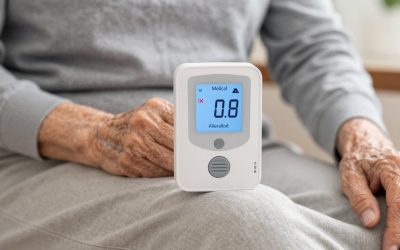
SecuLife Medical Alert Pendant for Seniors, Alerts Go Direct to Family, No Call Center, Auto Fall Detection, GPS Tracking, 2-Way Calling, Water Resistant Necklace
Included for 'Best fall detection wearable for seniors with Parkinson's' because the listing specifies Alerts Go Direct to Family and No Call Center, details this guide uses to compare options.
View on Amazon- Freezing of gait: the feet feel stuck, usually when starting to walk, turning, or passing through doorways, and the upper body keeps moving.
- Festination: steps become shorter and faster, and the person may pitch forward.
- Postural instability: balance reactions are slower, so a small bump or a step backward can lead to a fall.
- Low blood pressure on standing: dizziness when getting up, sometimes related to medications.
- Slow, sliding falls: sinking to the floor from a chair or while turning.
The last type is the hardest for any sensor to detect, because there is no sharp impact.
Fall detection and involuntary movement
Fall detection sensors look for a sudden drop, an impact and a period of stillness. Tremor alone rarely looks like a fall, but large dyskinesia movements, or plopping heavily into a chair, can occasionally trigger an alert. The countdown before the device calls for help, often about 10 to 30 seconds, lets you cancel false alarms. If false alarms become frequent, ask the provider whether sensitivity can be adjusted.
Wearable forms compared
| Form | Fall detection reliability | Parkinson’s considerations |
|---|---|---|
| Pendant on breakaway lanyard | Often good, torso-worn | Easy to wear; large button helps shaky hands |
| Belt or waistband clip | Often good, close to center of mass | Clips can be fiddly; ask for help fastening |
| Wrist watch | Can be less reliable | Easy to keep on; small buttons may be hard |
| Smartwatch with fall detection | Varies | May lack 24/7 monitoring; small screens |
Features that matter
- Large button with a press-and-hold action, easier than precise taps with tremor.
- Voice activation as a backup to the button, though a soft voice can reduce reliability.
- Loud speaker and sensitive microphone, since many people with Parkinson’s speak softly.
- Easy clasp or lanyard, since fine finger movements may be difficult.
- Long battery life and a simple charging cradle.
- Fall history log, useful for your neurologist and physical therapist.
Using fall data with your care team
If the device records when falls or near-falls happen, share that information with your care team. Falls during off periods, when medication is wearing off, may point to a change in timing or dose. Falls when turning may suggest targeted physical therapy. Physical therapy programs focused on balance, big movements and turning strategies can reduce falls in many people with Parkinson’s.
Night-time and bathroom
Night-time bathroom trips combine drowsiness, low blood pressure, and stiffness after lying still. Wear the device at night, use night lights, and consider a bedside commode if trips are risky. Shower chairs, grab bars and a water-resistant device make bathroom routines safer.
Home strategies against freezing
- Visual cues such as tape lines across doorways can help some people step through.
- Rhythmic cues, like counting or a metronome app, can help restart walking.
- Clear space around doorways and in turning areas.
- Turn in a wide arc instead of pivoting.
Cost and coverage
Original Medicare generally does not cover medical alert or fall detection devices. Some Medicare Advantage plans include them. Monitoring commonly costs around $25 to $50 or more per month.
Frequently asked questions
Will dyskinesia set off fall detection all the time?
Usually not, but it can happen. Use the cancel countdown and ask about sensitivity settings. Tell the monitoring center about the condition so operators understand.
Is a pendant or watch better for Parkinson’s?
Torso-worn pendants and clips are often more reliable at detecting falls and have larger buttons. A watch may be easier to keep on. Choose the one you will wear consistently.
Bottom line
For seniors with Parkinson’s, a torso-worn pendant or clip with fall detection, a large button, voice backup and 24/7 monitoring is often the best choice. Use the fall log with your neurologist and physical therapist, and combine the device with cueing strategies and home changes that reduce freezing.
Related Reviews & Guides


How to Choose Bedside Commodes: What Actually Matters

Best Transfer Boards in 2026: Compared and Ranked