Last Updated: October 9, 2026
A medical alert watch can give a family real peace of mind when a loved one has dementia, but only if it matches the realities of the condition. People with dementia may forget what the button does, remove a device that feels unfamiliar, wander without warning, or be unable to explain where they are when help answers. The best medical alert watch for dementia patients is therefore less about features on a spec sheet and more about GPS location, caregiver visibility and a design the wearer will actually keep on. This guide explains how to choose.
Why dementia changes the requirements
The Alzheimer’s Association estimates that six in ten people living with dementia will wander at least once, and wandering can happen even in the early stages. A standard help button assumes the wearer will recognize an emergency and press it. With dementia, that assumption often fails. The device has to work for the caregiver as much as for the wearer.

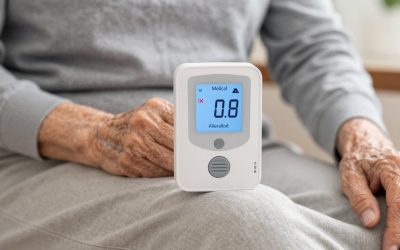
Dementia Alert Watch Mobile Seniors Fall Detection GPS $14.99 Mo.
Included for 'Best medical alert watch for dementia patients' as a relevant option in this category; details come from the product listing.
View on Amazon
Home & WELLNESS co. SENIOR SAFETY SYSTEM Stride Medical Alert Watch- Assistance Device with GPS Tracking, Emergency Call Button, AT&T Network, Stylish Design
Included for 'Best medical alert watch for dementia patients' because the listing specifies Emergency Call Button and AT&T Network, details this guide uses to compare options.
View on Amazon
Fajocru Fall Detection Watch for Seniors, GPS Tracker for Elderly with SOS Button, Real-Time Location Tracking, Two-Way Voice, Heart Rate & Step Counter, Medical Alert Watch, No Monthly Fee(Red)
Included for 'Best medical alert watch for dementia patients' because the listing specifies GPS Tracker for Elderly with SOS Button and Real-Time Location Tracking, details this guide uses to compare options.
View on Amazon
NO Monthly FEES | Mobile Watch Medical Guardian Alert System Fall Detection
Included for 'Best medical alert watch for dementia patients' because the listing specifies Mobile Watch Medical Guardian Alert System Fall Detection, details this guide uses to compare options.
View on AmazonTwo different jobs
A watch for someone with dementia is usually doing two things at once: acting as an emergency button when the wearer can use it, and acting as a location tracker for caregivers when the wearer cannot. The second job is often the more important one.
Features that matter most
| Feature | Why it matters with dementia | What to look for |
|---|---|---|
| GPS with caregiver app | Find someone who has wandered | Frequent location updates, map view |
| Geofencing | Alerts when the wearer leaves a safe zone | Adjustable zones around home and day programs |
| Cellular connection | Works away from home | 4G LTE, no home base needed |
| Simple, familiar look | Less likely to be removed | Looks like an ordinary watch |
| Secure or hard-to-remove band | Reduces removal | Clasp that needs two steps to open |
| Auto-answer calls | Caregiver can talk without the wearer pressing anything | Two-way speaker, auto-answer setting |
| Fall detection | Covers falls when the wearer does not call | Optional, expect some false alarms |
| Battery life | Charging relies on caregivers | Aim for at least 1 to 2 days |
Choosing between a watch and other forms
Watches
A watch looks familiar, which helps acceptance. The downside is that most need charging every day or two, and a person with dementia may not remember to do it. Caregivers need a routine, such as charging during a morning bath.
Pendants and GPS insoles
Pendants have longer battery life and larger buttons, but may be removed or left on a nightstand. GPS insoles and clip-on trackers are less likely to be removed, but have no help button. Some families use a combination.
Monitoring center or caregiver app?
Some devices connect to a 24/7 monitoring center staffed by trained operators; others send alerts only to family members through an app. For dementia, many families want both: a caregiver app for location and geofence alerts, and professional monitoring for falls and emergencies. Monitoring plans commonly cost around $25 to $50 or more per month.
Introducing the watch
- Present it as an ordinary watch or a gift, rather than a medical device.
- Put it on at the same time each day, as part of the morning routine.
- Choose a comfortable band in a style the person likes.
- Avoid loud or confusing alerts, such as frequent voice prompts.
- Test it together in a calm moment, without pressure.
Privacy and dignity
GPS tracking raises questions about privacy. Where possible, involve the person in the decision early in the disease, while they can express their wishes. Use location data to keep them safe, not to monitor every move.
Cost and coverage
Original Medicare generally does not cover medical alert systems. Some Medicare Advantage plans and state Medicaid waiver programs offer them as a benefit, and some long-term care insurance policies may help. Check with the plan directly.
Frequently asked questions
Will a person with dementia remember to press the SOS button?
Often not, especially as the disease progresses. That is why GPS tracking, geofencing, fall detection and auto-answer calls matter more than the button itself.
What if they keep taking the watch off?
Try a band with a more secure clasp, a style they like, or a different form such as GPS insoles or a clip-on tracker. Some families use a device the person cannot easily remove.
Bottom line
For dementia patients, choose a cellular medical alert watch with strong GPS, geofencing, auto-answer calls and a caregiver app, in a familiar style that is hard to remove. Build daily charging into the caregiver’s routine, and combine it with a secure home and a wandering plan.
Related Reviews & Guides



When to enroll in medicare without penalty in 2026
Best Rollator with Seat for Tall Users in 2026: Compared and Ranked