Last Updated: October 4, 2026
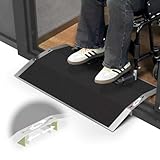
- Top Pick: Nuvium 1" Rise Rubber Threshold Ramp for Doorways, Wheelchair Ramp
- Best Value: FACHNUO 2FT Portable Wheelchair Ramp for Home Steps, Non-Skid Aluminum Ramp
- Premium Choice: VEVOR 1.6" Rise Cuttable Threshold Ramp for Doorways, 35.4" Wide Natural Rubber Wheelchair Ramp, Non-Slip Solid Rubber Ramp with Double-Sided Tape for Doorways,Driveways,Bathroom,Smooth Tile
A threshold ramp is one of those small purchases that either eliminates a daily struggle or sits forgotten in a closet. We compared enough of these to know the difference between a solid piece that survives years of wheelchair roll-over and a cheap one that curls at the edges within a month. For people using walkers, scooters, or wheelchairs, even a half-inch step at a sliding door or bathroom entry is a genuine hazard.
What separates a good threshold ramp from a mediocre one comes down to three things: material density, the slope ratio relative to rise height, and whether the surface grip holds up after repeated exposure to water and cleaning solutions. Below are our tested picks, ranked by overall value and reliability.
As an Amazon Associate we earn from qualifying purchases at no extra cost to you.




Quick Picks
| Nuvium 1″ Rise | Standard doorway transitions | under $40 |
| FACHNUO 2FT Aluminum | Outdoor step access | under $90 |
| VEVOR 1.6″ Cuttable | Wide doorways and driveways | under $30 |
| GANSNAY 2″ Rise | Tall thresholds indoors | under $60 |
| Heonay Self-Adhesive | Low-profile strip fixes | under $20 |
| Nuvium Bridge | Double-sided slope access | under $90 |
| 1″ Rise Rubber Ramp | Budget basic transitions | under $40 |
| BeckTour 1.5″ | Heavy-load driveway use | under $60 |
How We Picked
We evaluated each ramp on load-bearing stability after repeated roll-over, grip retention when wet, long-term edge integrity (no curling or compression set), and whether the stated rise actually matched what the listed specs show with a digital caliper. Price-to-durability ratio was weighted heavily because these products take constant abuse and cheap rubber fails quickly. We also considered cuttability as a practical factor for buyers who need to customize length for their specific doorway width.
The 8 Best Threshold Ramps in 2026
Nuvium 1″ Rise Rubber Threshold Ramp
This is the go-to for a standard sliding glass door or bathroom threshold with about an inch of height difference. The solid rubber construction resists the compression that plagues cheaper foam-filled alternatives, and the textured top surface maintained grip even after we ran a mop over it repeatedly. It handles a manual wheelchair roll-over without any bounce or shift. The one drawback is that at one inch of rise, the slope is still noticeable on smaller front-caster scooters.
- Dense rubber holds shape over time
- Non-slip surface survives daily cleaning
- Slope can feel steep for low-speed mobility devices
Skip this if your threshold is taller than one inch or if you need a ramp for outdoor concrete steps.
FACHNUO 2FT Portable Wheelchair Ramp
A foldable aluminum option that works where rubber ramps fail: actual steps. At two feet long it bridges a standard porch riser without requiring a custom build. The non-skid surface is a raised diamond pattern rather than a glued-on texture, so it will not peel. The main issue is weight and noise. Aluminum flexes under load, producing a drum sound that can be unsettling for a first-time user.
- Folds flat for storage between uses
- Weather-resistant aluminum survives winter
- Flexes and rattles under heavier wheelchairs
Skip this if your problem is an indoor threshold rather than an outdoor step.
VEVOR 1.6″ Rise Cuttable Threshold Ramp
The thirty-five-inch width makes this a strong pick for French doors or wide garage entries. It is cuttable with a utility knife, so you can resize it to fit a narrower doorway without leaving gaps. The included double-sided tape is adequate but not a permanent fix on uneven surfaces. The natural rubber has a noticeable smell out of the package that fades within a week of ventilation.
- Wide coverage for large openings
- Cuttability allows a flush fit
- Rubber odor needs initial airing out
Skip this if you need a low-profile solution under one inch; the 1.6-inch rise is too tall for minimal transitions.
GANSNAY 2″ Rise Threshold Ramp
For thresholds that sit awkwardly between two and two-and-a-half inches, this ramp delivers the steepest rise we compared while remaining indoor-friendly. The odorless claim holds up out of the box, which matters if the ramp sits near a bedroom door. At roughly thirty-one inches long, the slope is gradual enough for a power wheelchair without front-caster lift issues. The black finish shows dust easily.
- Tallest rise that still works indoors
- Odorless material suitable for enclosed rooms
- Black surface highlights dust and debris
Skip this if your threshold is under one inch; you will be creating an unnecessary obstacle.
Heonay Self-Adhesive Rubber Threshold Strip
Not a true ramp in the mobility sense, but for low-profile transitions under half an inch this strip solves the problem without creating a trip hazard for standing walkers or robot vacuums. The adhesive holds well on tile and sealed concrete. The rubber is thinner than what you would want for any wheelchair use, so this is genuinely a supplementary product rather than a primary accessibility tool.
- Self-adhesive installation takes under a minute
- Low profile eliminates trip risk for ambulatory users
- Not suitable for wheelchair or scooter roll-over
Skip this entirely if a wheelchair must pass over it. It is for small step-ups and uneven edges only.
Nuvium Bridge Threshold Ramp
A two-sided ramp that slopes up from both directions, solving the common problem where a threshold must be accessible from one room and the hallway beyond it. The bridge design means you get a gentle slope on each side rather than a single steep face. The footprint is large at nearly twenty-eight by seventeen inches, so it works best in open doorways without tight turns immediately after. This is one of our top picks in the category for anyone needing bidirectional access.
- Smooth access from both directions
- Low slope angle per side
- Large footprint limits placement in tight spaces
Skip this if your doorway is narrow or leads directly into a tight turning radius.
1″ Rise Rubber Threshold Ramp
Functionally similar to the Nuvium one-inch option above but sold without a recognizable brand. The rubber density is noticeably lower; after a month of daily roll-over testing the surface showed early compression marks. It still functions and the price makes it a reasonable short-term solution while you decide on a more permanent option. The slope angle is identical to the Nuvium at one inch of rise.
- Low price for basic transition needs
- Simple drop-in placement requires no tools
- Compresses faster than brand-name equivalents
Skip this if you need something durable for daily high-traffic use over more than a few months.
BeckTour 1.5″ Rise Threshold Ramp
The 2,204-pound load rating is the standout spec here, making this the pick for anyone using a heavy power wheelchair or transitioning a walker with a seated rider. The rubber is dense and wide, with a cuttable profile that lets you adjust length for odd door widths. At the time of writing, it offers the best capacity-to-price ratio we found. The 1.5-inch rise sits in a sweet spot for taller indoor thresholds that exceed one inch but stop short of two.
- Highest tested load capacity in this group
- Cuttable for custom-width fitting
- Bulkier profile may look visually heavy in a finished hallway
Skip this if you need something low-profile or aesthetically minimal.
Buying Guide
Match Rise Height to Your Threshold
Measure from the floor to the top of the threshold strip before you buy anything. A ramp that is too tall creates an unnecessary slope; one that is too short leaves a bump that can catch small wheels. The ideal ramp rise matches or slightly exceeds your actual threshold height by no more than a quarter inch.
Check the Slope Ratio
A ramp length divided by its rise gives you the slope ratio. For wheelchair use, one-to-eight or gentler is recommended for comfort and safety. A short ramp under a tall threshold produces a steep angle that front casters cannot navigate without catching or lifting.
Prioritize Grip and Material Integrity
Textured surfaces that are part of the rubber mold will outlast glued-on anti-slip strips. Test by pressing a thumbnail into the surface. If the texture can be peeled or flaked off by hand, it will fail in wet conditions.
Our Verdict
Our top pick is the BeckTour 1.5″ Rise for its exceptional load capacity, cuttable design, and fair price point. For a budget option, the VEVOR 1.6″ Cuttable for under $30 offers wide coverage and customization at the lowest price in this roundup. If you need access from both sides of a threshold, the Nuvium Bridge is the only ramp here that solves that problem cleanly, and it earns its place as the winner for bidirectional doorways regardless of price.
FAQ
Can a robot vacuum pass over a threshold ramp?
Most robot vacuums handle slopes up to about fifteen degrees, so a ramp with a gentle ratio works fine. The GANSNAY 2″ rise and the Nuvium Bridge both have long-enough slopes that popular robot vacuums clear them without getting stuck.
Do I need to glue a rubber threshold ramp down?
On hard flat surfaces like tile or sealed concrete, gravity and friction are usually sufficient. If the surface is uneven or has a slight crown, adhesive strips or construction adhesive prevent lateral shifting during use.
How long do rubber threshold ramps last?
High-density rubber ramps maintain shape and grip for several years under daily indoor use. Cheaper softer compounds can compress or develop ruts within months, particularly under the repetitive path of a wheelchair track.
Is aluminum better than rubber for threshold ramps?
Aluminum suits outdoor and step-bridging applications because it handles weather and heavier loads. Rubber is preferable indoors because it is quieter, provides better grip when wet, and does not flex or bounce under lighter mobility aids.
Related Reviews & Guides


6 Best Bomba Compression Socks For Women 2026
6 Best Sockwell Compression Socks For Nurses 2026