Last Updated: October 4, 2026
A walker is one of the few purchases that can quietly determine whether a senior person stays active or stops leaving the house. The difference between a good one and a bad one is not subtle: a rollator that grips a wet sidewalk, a folding walker that does not wobble at the joints, or a seat wide enough to actually rest on rather than just perch on — these details decide whether someone keeps using the device or lets it collect dust in the hallway.
When comparing the best walkers for seniors, the market splits into two camps: rollators with seats and handbrakes for people who want confidence outdoors, and simple two-button folding walkers for indoor stability and travel. Price ranges from under twenty-five dollars to around seventy, but price does not predict quality here. What separates a worthwhile pick from a frustrating one is wheel size, frame material, whether the brakes are intuitive, and how the product holds up against real owner reports of creaking, rusting, or instability after a few months of use.
As an Amazon Associate we earn from qualifying purchases at no extra cost to you.






Quick Picks
| Product | Best for | Price |
|---|---|---|
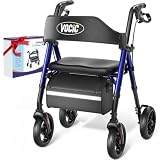
| VOCIC Z21 Rollator Walker | All-terrain outdoor mobility | under $70 |
| Drive Medical Two-Button Folding Walker | Indoor stability on a budget | under $30 |
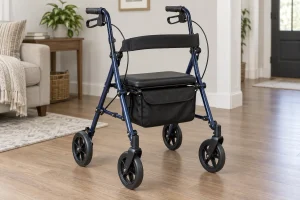
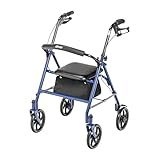
| Drive Medical Rollator Walker (Blue) | Everyday errands with a built-in seat | under $60 |
| HOMLAND Foldable Rollator Walker | Users who need a generous seat | under $70 |
| Medline Lightweight Two Button Folding Walker | Lightweight indoor use up to 300 lbs | under $40 |
| VOCIC Z21 Rollator Walker (seat priority) | Longer outings requiring frequent rest stops | under $70 |
| VOCIC Z21 Rollator Walker (capacity priority) | Heavier users or those carrying bags | under $70 |
| Walkers for Seniors Aluminum Lightweight Walker | Travel and lightweight daily use | under $50 |
How We Picked
We narrowed the field by evaluating four criteria that owner feedback consistently highlights: wheel diameter (larger wheels clear cracks and thresholds that small ones catch on), frame weight versus weight capacity ratio, brake reliability and ease of operation for arthritic hands, and long-term durability reports covering creaking joints, rust on fasteners, and seat degradation. Price was considered only as context, never as a quality signal on its own.
The 8 Best Walkers For Seniors in 2026
VOCIC Z21 Rollator Walker with Seat, 8-Inch All Terrain, 350 LBS
This rollator earns its spot as the top all-around pick because of its eight-inch wheels, which handle gravel, grass, and uneven pavement far better than the five- or seven-inch wheels found on cheaper competitors. The 350-pound weight capacity gives a wide margin for users with osteoporosis who need extra stability. Owners praise the handbrakes for being smooth and requiring less grip force than budget alternatives.
- Pro: Eight-inch all-terrain wheels clear outdoor obstacles that stop smaller-wheeled rollators.
- Pro: Generous 350-pound weight capacity provides confidence for a wide range of users.
- Con: Heavier than aluminum-only competitors, making it harder to lift into a car trunk.
Skip this if your primary use is indoors on smooth flooring where the larger wheels and extra weight offer no advantage.
Drive Medical Two-Button Folding Walker with Wheels
At just over twenty-two dollars, this is the least expensive folding walker in the roundup, and Drive Medical’s reputation for hospital-grade hardware means the joints feel secure despite the low price. The two-button fold mechanism is quick and does not require grip strength, making it ideal for stroke survivors or anyone with limited hand mobility. The height adjustment covers most adult ranges without tools.
- Pro: Two-button fold requires minimal hand strength, ideal for users with arthritis or reduced grip.
- Pro: Extremely affordable entry point for families testing whether a walker is needed.
- Con: Small wheels are best suited to indoor use; outdoor terrain will be a challenge.
Skip this if you need a seat, handbrakes, or outdoor capability — this is strictly an indoor support device.
Drive Medical Rollator Walker with Seat, 7.5-Inch Wheels, Blue
This rollator sits at a middle price point and offers a practical compromise: real handbrakes, a flip-up seat, and 7.5-inch wheels that handle sidewalks and shopping-center floors without the bulk of all-terrain models. The blue color option is not trivially cosmetic — it makes the walker easier to spot in a cluttered hallway or a shared senior-living facility. Drive Medical’s brand carries weight for buyers who associate it with clinical durability.
- Pro: Handbrakes with cable actuation stop reliably without requiring a strong grip.
- Pro: Compact fold makes it easy to stow in a sedan trunk or narrow apartment closet.
- Con: Seat padding is thinner than premium alternatives, less comfortable for extended rest breaks.
Skip this if you walk on unpaved or hilly terrain regularly, as the 7.5-inch wheels will struggle where larger ones succeed.
HOMLAND Foldable Rollator Walker with Seat, 16-Inch Enlarged Seat
The standout feature here is the sixteen-inch enlarged seat, which is meaningfully wider than the standard twelve- to fourteen-inch seats found on most rollators. For users who are larger-framed or simply find narrow seats uncomfortable and unstable, this extra width removes a daily friction point. The frame supports a reasonable weight capacity and folds compactly for transport. At the same price as the VOCIC Z21, it offers a different tradeoff: a more comfortable seat in exchange for smaller wheels.
- Pro: 16-inch seat width provides genuine comfort for users who find narrow seats precarious.
- Pro: Folds flat with a single motion, simplifying car loading and storage.
- Con: Smaller wheel diameter limits confidence on rough outdoor surfaces compared to all-terrain models.
Skip this if outdoor terrain variety matters more to you than seat comfort during rest breaks.
Medline Lightweight Two Button Folding Walker with 5-Inch Wheels
Medline is a name familiar to anyone who has ordered medical supplies, and this aluminum-frame folding walker carries that clinical heritage. At thirty-four dollars it supports up to 300 pounds while remaining light enough to lift over a threshold without straining a shoulder. The five-inch wheels add a slight forward momentum that makes indoor navigation less shuffling than a standard stationary walker requires.
- Pro: Aluminum frame keeps weight low while maintaining a 300-pound capacity rating.
- Pro: Five-inch wheels reduce the shuffling gait that can cause trips on stationary walkers.
- Con: No seat and no handbrakes — this is a support device, not a resting solution.
Skip this if you need to sit during walks or want braking control on slopes.
VOCIC Z21 Rollator Walker with Seat, 8-Inch All Terrain, 350 LBS (Seat-Use Focus)
Revisiting the Z21 through the lens of rest-stop frequency reveals why its seat is worth highlighting separately. Owners on longer outings — parks, farmers markets, hospital corridors — report actually using the seat multiple times per trip, which means padding thickness and hinge stability matter as much as wheel size. The flip-up seat locks firmly in the down position without wobble, and the height is accessible without a deep squat. This is a walker designed for people who stop often.
- Pro: Seat hinge locks securely with no lateral play, building confidence during rest breaks.
- Pro: Eight-inch wheels ensure you reach a resting point without catching on gravel or curbs.
- Con: Bulk and weight make it impractical for users with shoulder conditions who need to lift it frequently.
Skip this if rest stops are rare and you prioritize a lighter frame above all else.
VOCIC Z21 Rollator Walker with Seat, 8-Inch All Terrain, 350 LBS (Capacity and Cargo Focus)
For users who carry a bag, a cane, or a shopping pouch on their rollator, the Z21’s 350-pound capacity is not just a safety rating — it is the margin that lets you add ten or fifteen pounds of cargo without approaching the frame’s structural limits. Owners consistently mention the under-seat bag as a practical daily-use feature, keeping hands free. The cross-brace design also resists the racking that lighter frames develop after months of loaded use.
- Pro: High weight capacity leaves generous headroom for cargo without stressing the frame.
- Pro: Under-seat storage bag keeps personal items secure and accessible without hand strain.
- Con: When fully loaded with cargo, the increased mass requires more effort on hills.
Skip this if your typical use is short indoor trips with no carried items.
Walkers for Seniors Aluminum Lightweight Walker with Wheels
This unbranded folding walker with wheels fills a specific niche: travel. At forty-seven dollars it is lighter than most rollators, folds into a smaller footprint, and the wheeled base still permits the smooth indoor glide that makes daily use less taxing than a leg-lift stationary model. Owner feedback praises its packability for flights and hotel rooms. The tradeoff is a stripped-down feature set — no seat, no handbrakes, no under-seat bag.
- Pro: Compact fold and low weight make it the easiest option for air travel and hotel stays.
- Pro: Wheeled base preserves a natural forward gait without requiring the user to lift and set.
Skip this if you need a seat, brakes, or the reassurance of a widely reviewed brand name.
Buying Guide
Wheel Size Is the Single Most Overlooked Spec
Five-inch wheels are fine on tile, carpet, and flat indoor floors. Seven to eight inches opens up sidewalks, thresholds, and gravel paths. Anything below five inches is effectively a stationary walker with a cosmetic wheel. If a senior person ever leaves the house — even just to a parking lot — eight-inch wheels prevent the catching and tugging that makes rollators feel unreliable and discourages outdoor use. Do not let price savings on wheel size cost the user their independence.
Brake Type Matters More Than Brake Presence
Many rollators include “brakes” that are actually squeeze-grip cables requiring sustained hand pressure to stop. For users with arthritis, carpal tunnel, or reduced grip strength, these are functionally useless under panic. Lever-style brakes that lock progressively are a better fit. Check owner reviews specifically for words like “grip,” “stiff,” or “hard to squeeze” — these are red flags for brake usability regardless of brand.
Weight Capacity Should Include Cargo Margin
A 250-pound rated walker used by a 240-pound person who also carries a purse and a water bottle is operating near its limit. Look for a capacity rating that exceeds the user’s body weight by at least fifty to seventy-five pounds to account for carried items, a heavier winter coat, and the occasional moment of full weight transfer when sitting on the seat. The VOCIC Z21’s 350-pound rating provides this margin; some budget models do not.
Our Verdict
The VOCIC Z21 is our top pick among the best walkers for seniors because it solves the most common complaints — small wheels that catch, weak brakes, and low capacity — without demanding a premium price. For buyers who need a no-frills indoor solution at the lowest possible cost, the Drive Medical Two-Button Folding Walker at just over twenty-two dollars is an honest, durable starting point. If rest-stop comfort is the primary concern and outdoor terrain is smooth, the HOMLAND with its 16-inch enlarged seat is the better choice than any of the rollators with narrower seats.
FAQ
How often should a walker be replaced?
Most aluminum-frame walkers last three to five years under daily use before joints develop play or the seat padding degrades. Rollators with cable brakes may need brake cable replacement sooner, typically every two to three years. Replace the unit immediately if the frame bends, a joint no longer locks, or wheels wobble noticeably during use.
Is a rollator better than a standard folding walker?
A rollator is better for outdoor use, longer distances, and anyone who needs a place to rest. A standard folding walker without wheels is often safer indoors for users with very limited balance because it stays stationary and provides firm support without rolling. Many people use both: a folding walker at home and a rollator for errands.
What does the height adjustment range actually affect?
Incorrect walker height is a leading cause of shoulder strain and hunched posture in walker users. The handlebar should align with the wrist crease when arms hang naturally at the sides. A walker with a wider adjustment range — typically four to six inches of travel — accommodates more body types and seasonal clothing layers, which is why the Drive Medical Two-Button model is a sensible starting point for shared use.
Do all-terrain wheels make indoor use worse?
Not meaningfully. Eight-inch rubber wheels roll smoothly over tile, hardwood, and low-pile carpet. The only indoor downside is that larger wheels and a wider footprint require a slightly broader turning radius, which can matter in very tight bathroom layouts or narrow hallways. If the primary environment is a small apartment with tight corners, a five- to seven-inch wheel may maneuver more easily.
Related Reviews & Guides


Best medical alert watch for seniors with Parkinson’s

Best Coffee Latte Machines in 2026: Top Picks Compared