Last Updated: October 4, 2026
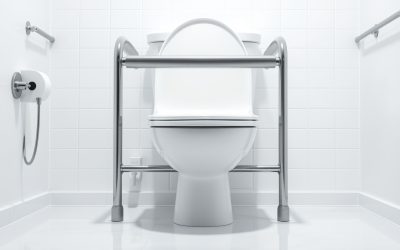
Choosing between a grab bar and a toilet safety frame is less about which product is “safer” and more about where support is needed, how much space is available, and whether the bathroom can accommodate a permanent installation. A grab bar helps you move through a specific transition—such as stepping into a shower, standing from a seated position, or steadying yourself near a tub. A toilet safety frame surrounds the toilet and provides armrests that make sitting down and standing up easier.
For a homeowner planning long-term accessibility, a properly installed grab bar is usually the more stable and versatile choice. For a renter, short-term recovery, or bathroom where drilling is not practical, a toilet safety frame is often the simpler solution. The right decision also depends on the user’s strength, balance, body weight, toilet height, and whether assistance is needed only at the toilet or throughout the bathroom.
As an Amazon Associate we earn from qualifying purchases at no extra cost to you.


Quick Verdict
Choose a grab bar if you want a permanent, low-profile support that can handle repeated use and improve safety near a shower, tub, or toilet. When anchored into wall studs or properly installed with an approved mounting system, a grab bar offers excellent stability and does not shift as you pull or push against it.
Choose a toilet safety frame if the main difficulty is lowering onto or rising from the toilet. It installs around the toilet, usually without wall drilling, and can often be adjusted for height and width. It is particularly useful after surgery, during rehabilitation, in a rental, or when a person needs arm support but does not need permanent bathroom modifications.
In many homes, the best answer is not grab bar versus toilet safety frame, but both: a frame at the toilet and one or more correctly positioned grab bars near the bathing area.
Side by Side
| Factor | Grab Bar | Toilet Safety Frame |
|---|---|---|
| Primary use | Steadying, transferring, and entering or exiting a shower or tub | Supporting the user while sitting down or standing from the toilet |
| Comfort | Varies by diameter, texture, and placement; typically a firm hand grip | Padded or contoured armrests can provide a more natural two-arm push |
| Durability | High when mounted into studs or a suitable reinforced wall surface | Good, but depends on frame construction, floor contact, fasteners, and fit |
| Price range | About $20–$150 for the bar; professional installation may add $100–$300 or more | About $30–$150, with no-drill installation commonly possible |
| Maintenance | Usually limited to cleaning and checking mounting hardware | Requires cleaning, checking adjustment knobs, and confirming the frame has not shifted |
| Space needed | Minimal wall space; a typical 16-inch bar projects about 2–4 inches | Uses floor space on both sides and in front of the toilet; commonly 20–25 inches wide |
| Appearance | Low-profile finishes can blend with bathroom hardware | More noticeable because of its legs and armrests around the toilet |
| Portability | Not portable once installed | Can usually be removed or moved to another compatible toilet |
| Resale and long-term value | May improve overall accessibility, but installation quality matters | Retains usefulness as a removable piece of equipment rather than a home fixture |
| Best for | Long-term stability, bathing safety, and users who need support at multiple points | Temporary recovery, renters, and people whose main challenge is toilet transfers |
Where Grab Bar Wins
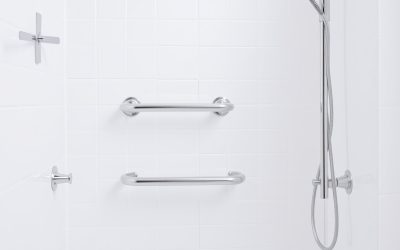
A grab bar provides support exactly where a fall risk occurs. Near a shower, it can help a person step over a tub wall, turn, wash, or exit a wet enclosure. Beside a toilet, it can assist with a lateral transfer or provide a stable handhold while standing. Unlike a freestanding frame, it does not occupy floor space or interfere with a walker’s approach.
Proper installation is the key advantage. A horizontal bar mounted into wall studs can resist the repeated pulling and pushing that occurs during transfers. The wall structure, fasteners, and mounting method must all be appropriate; a bar attached only to drywall with ordinary plastic anchors is not automatically safe. If stud locations do not align with the desired position, use a qualified installer or an approved reinforcement system rather than guessing.
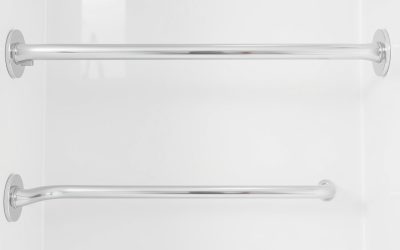
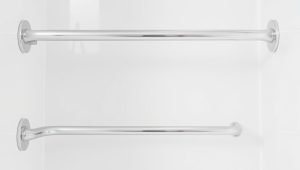
Grab bars also offer more placement flexibility. Common lengths include 12, 16, 18, and 24 inches, while vertical and angled bars can address different movement patterns. A 16-inch model is compact enough for many bathrooms. For example, the two-pack of 16-inch polished-nickel shower grab bars priced for under $20 and the two-pack of 16-inch anti-slip bath handles priced for under $20 illustrate the lower end of the product price range. The finish and grip texture may matter as much as the length, especially for wet hands.
Another benefit is a cleaner footprint. A wall-mounted bar remains in place without blocking the toilet base, bathroom door, or cleaning path. It can also be easier to sanitize than a frame with several floor-level joints. However, a grab bar is not automatically the right solution for someone who needs broad armrests to push up from the toilet. Its narrow grip may require more hand and wrist strength.
Where Toilet Safety Frame Wins
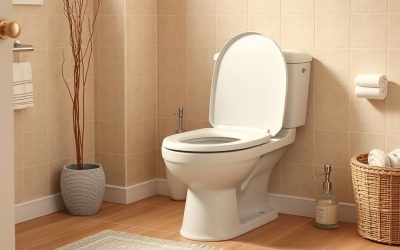
A toilet safety frame surrounds the toilet like a compact set of arm supports. Many models attach to the toilet bowl using the existing seat bolts, while adjustable legs rest on the floor. This configuration spreads support across the frame rather than requiring a wall modification. It is often a practical choice after hip, knee, or abdominal surgery when the user needs help for several weeks or months.
The armrests allow a person to use both arms, which can make the sit-to-stand motion feel more controlled. Adjustable width is useful when the bathroom is tight or when the user needs more room to position their elbows. Adjustable height can also improve comfort, although the frame should not be raised so high that the user’s feet lose stable contact with the floor.
Weight capacity is an important specification, but it is not the only one. A frame rated for 300 or 350 pounds still needs to be assembled correctly and placed on a level, solid floor. For reference, the Carex Toilet Safety Frame is listed for under $40 with a 300-pound capacity, while the Lianjindun Toilet Safety Rails are listed for under $50 with a 350-pound capacity. These products fit within the common $30–$150 range for toilet frames; confirm the manufacturer’s instructions, toilet compatibility, and actual user weight before buying.
The drawbacks are bulk and movement. Legs can reduce clearance for a walker, narrow the route through the bathroom, or catch a vacuum. A frame can also loosen or shift if adjustment knobs are not tightened or if the floor is uneven. It should be checked regularly, especially during the first week of use. Never use a toilet safety frame as a substitute for a grab bar in the shower, where water and sideways movement create different hazards.
Cost Over 5 Years
The purchase price alone favors a toilet safety frame, but the five-year cost depends heavily on installation and how long the equipment is needed. A basic grab bar may cost $20–$60, with higher-priced designer or specialty models reaching $150. If a professional installs one, labor may add roughly $100–$300 or more depending on wall access, reinforcement, and the number of bars. A two-bar setup could therefore cost approximately $240–$900 over five years, before any wall repair or replacement.
A toilet safety frame commonly costs $30–$150 and generally has no professional installation cost. Assuming it remains functional for five years, the total may be about $30–$150. If it is used only for a three-month recovery period, its effective cost can be low if it is stored for later use or resold. Replacement costs may arise from worn rubber feet, loose hardware, bent tubing, or a change in the user’s needs.
These are planning ranges, not guarantees. A permanent grab bar can deliver more value over five years when multiple household members use the bathroom or when bathing support is needed every day. A frame is usually more economical when the need is temporary or when drilling would be costly.
Which One for Your Home
Small apartment
Start with a toilet safety frame if floor clearance allows it and the primary issue is standing from the toilet. Measure the space from the toilet’s sides to the nearest wall, cabinet, and door swing. If the bathroom is too narrow for a frame, a professionally installed 16-inch grab bar may provide support without reducing aisle width. Avoid relying on suction-cup bars for full body weight unless the product is specifically engineered and approved for that purpose.
Family with kids or pets
A wall-mounted grab bar usually creates fewer obstacles for children, dogs, and cats. It does not have legs to bump, drag, or climb around, and it leaves more floor area for cleaning. Use a frame only if an adult needs its armrests and the household can keep toys, towels, and pet bowls away from the legs.
Rental
A toilet safety frame is generally the easiest temporary option because it can be removed without drilling. Keep the instructions and original hardware, and verify that the toilet bowl, seat bolts, and floor layout are compatible. If a grab bar is preferred, ask the landlord about an approved installation; a poorly patched wall can create both safety and security-deposit problems.
Long-term home
Invest in properly installed grab bars at the locations where support is consistently needed. Consider a toilet frame as an additional aid if the user benefits from two armrests or has limited ability to grip a wall bar. Have the bathroom evaluated by a qualified occupational therapist, aging-in-place professional, or experienced installer when balance, wheelchair transfers, or significant mobility limitations are involved.
FAQ
Is a grab bar safer than a toilet safety frame?
Neither is universally safer. A correctly installed grab bar is usually more resistant to shifting, while a toilet frame may offer more comfortable two-arm support. The safest choice is the one designed for the specific transfer and installed according to its instructions.
Can a toilet safety frame fit every toilet?
No. Check the frame’s minimum and maximum width, height range, attachment method, and clearance around the toilet. Some frames may not work with unusual bowl shapes, elongated seats, wall-hung toilets, pedestal-style fixtures, or bathrooms with uneven floors.
How high should a grab bar be?
Height depends on the user, the task, and local accessibility guidance. A shower bar, toilet-assist bar, and vertical entry bar may all be positioned differently. The user should be able to grasp it without reaching, twisting, or lifting the shoulder uncomfortably. A professional assessment is worthwhile when the bar will support transfers.
Should I buy both products?
Often, yes. A toilet safety frame addresses sitting and standing at the toilet, while a grab bar addresses movement near the shower or tub. If falls are a concern in more than one area, combining the two can provide more complete support than trying to make one product perform every job.
Ready to decide? Our #1 pick for 2026 is the Primary use.
Live price & availability on Amazon.
Related Reviews & Guides



Senior Bath Soak Epsom Salt Arthritis Review
11 Best Bath Mats with Rubber Backing for Senior Safety