Last Updated: October 7, 2026
Quick answer: For most people in 2026, the best commode chairs is the Small apartment or bathroom — our #1 rated choice. See the full ranked comparison, alternatives and buying advice below.
Best Commode Chairs: Comfortable, Stable Picks for Home
The best commode chairs are matched to the user’s transfer needs, available floor space, and cleaning routine—not simply chosen by the highest weight rating. For most homes, a height-adjustable steel bedside commode with a padded seat, 3-in-1 frame, non-slip rubber feet, and a capacity of at least 300 pounds is the most adaptable choice.
Quick picks by situation
| Home situation | Best configuration | Key specifications to seek | Typical price range |
|---|---|---|---|
| Small apartment or bathroom | Narrow, folding bedside commode | 18–20 inch overall width, 16–18 inch seat width, 250–300 lb capacity | $50–$130 |
| Beside a bed at night | Height-adjustable 3-in-1 commode | Seat height of 18–22 inches, removable bucket, swing-back or removable arms | $70–$180 |
| Higher body weight or need for extra stability | Bariatric steel commode | 22–26 inch seat width, 400–1,000 lb rated capacity, reinforced cross-braces | $150–$450 |
| Transfer over a toilet | Drop-arm or toilet-commode chair | Removable arms, adjustable height, clearance above the toilet bowl | $150–$500 |
| Living room or shared bedroom | Padded, upholstered commode chair | Water-resistant vinyl, sealed seams, removable cover, discreet furniture styling | $180–$600 |
What to compare before buying
Seat height and width
Seat height affects both sitting down and standing up. A seat that is too low increases knee and hip flexion; one that is too high can leave the feet dangling and make the transfer unstable. Measure from the floor to the back of the user’s knee while wearing normal footwear. The commode seat should usually be close to that measurement, with the feet resting flat.

Drive Medical Folding Steel Bedside Commode Chair, 3-in-1, Gray
Included for 'Best Commode Chairs: Comfortable, Stable Picks for Home' because the listing specifies 3-in-1 and Gray, details this guide uses to compare options.
View on Amazon
DMI Drop Arm Portable Toilet Commode, Extra-Wide Seat, 500 Pound Weight Capacity, Bucket with Lid Included, Adjustable Legs, Elderly Assistance Products, Grey
Included for 'Best Commode Chairs: Comfortable, Stable Picks for Home' because the listing specifies Extra-Wide Seat and 500 Pound Weight Capacity, details this guide uses to compare options.
View on Amazon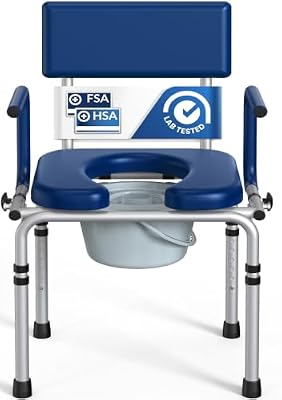
HolyHeal M73 Drop Arm Bedside Commodes for Seniors, Potty Chair for Adults
Included for 'Best Commode Chairs: Comfortable, Stable Picks for Home' because the listing specifies Potty Chair for Adults, details this guide uses to compare options.
View on Amazon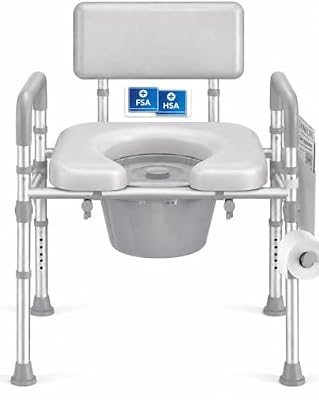
Steadyjoy Bedside Commode Toilet, Padded Seat & Backrest, Height Adjustable Aluminum Potty Chair | 350lb, Tool-Free Assembly, Removable Bucket, Portable Toilet for Adults & Seniors
Included for 'Best Commode Chairs: Comfortable, Stable Picks for Home' because the listing specifies Padded Seat & Backrest and Height Adjustable Aluminum Potty Chair, details this guide uses to compare options.
View on AmazonMost standard commodes adjust from approximately 17 to 22 inches. A taller user, someone with painful knees, or a person transferring from a higher bed may need 20–24 inches. A shorter user may need a lower range, but avoid choosing a height that prevents the user from placing both feet securely on the floor.
Seat width is equally important. Measure the user’s seated hip width and add about 2 inches for comfortable clearance. A 16–18 inch seat suits many adults, while a 20–24 inch seat can be more comfortable for larger users. Extra width is not automatically safer: if the armrests are too far apart, they may be difficult to use during a transfer.
Weight capacity and stability
Use the manufacturer’s stated weight capacity as a minimum, not a target. Include clothing, footwear, and any force created when the user lowers onto the chair or pushes up from the arms. For example, a person weighing 280 pounds may reasonably prefer a chair rated for 350 or 400 pounds, particularly when balance is limited.
Look for four independently adjustable legs, locking push buttons, wide non-slip feet, and a frame that does not rock when pressure is applied to one arm. A wider base improves stability but may make the chair difficult to position beside a bed or pass through a bathroom doorway. Drop-arm models can simplify side transfers, but the arms must lock firmly in the raised position and should never be used as a substitute for a caregiver’s support when one is needed.
Frame materials: steel, aluminum, and reinforced plastic
| Frame material | Advantages | Trade-offs | Best fit |
|---|---|---|---|
| Powder-coated steel | Strong, stable, affordable, widely available | Heavier; chipped coating can eventually rust if left wet | Bedside use and everyday home care |
| Aluminum | Lightweight, corrosion-resistant, easier to move | Often costs more; can feel less substantial if the frame is narrow | Travel, frequent repositioning, and smaller caregivers |
| Reinforced plastic | Easy to wipe, quiet, and resistant to rust | May have fewer height or width adjustments; inspect for flexing | Occasional use and households prioritizing simple cleaning |
For most buyers, powder-coated steel offers the best balance of cost and rigidity. Aluminum is useful when the commode must be moved every day, but a light chair can be easier to push sideways during a transfer. Frame weight matters: a basic steel model may weigh 15–25 pounds, while a wide bariatric version can exceed 30 pounds.
Which design works beside a bed or in a bathroom?
Bedside commodes
A bedside commode should leave a clear route for approaching, turning, and sitting. Allow at least 24 inches of open space on the transfer side when possible; 30–36 inches is more comfortable for a walker or caregiver. Avoid placing the chair where bedding can catch on the armrests or where the user must step over a footboard.
Measure the gap between the bed and the nearest wall or furniture. A standard commode is often 20–24 inches wide, so a gap narrower than 24 inches may require a narrow model or moving the bed. Keep the chair close enough to reduce walking—often within 3–6 feet—but far enough from the bed that the user can turn without twisting.
Small bathrooms
In a compact bathroom, measure the clear floor area rather than the room’s advertised dimensions. A commode that is 20 inches wide may need an additional 24 inches on the open side for a safe approach. For a 5-by-7-foot bathroom, a narrow chair may fit beside the toilet only if the door swing, sink, and toilet do not consume the same transfer space.
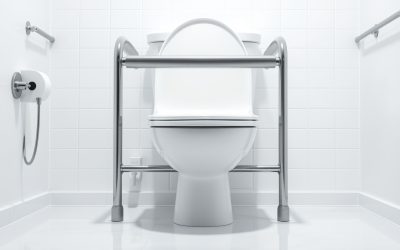
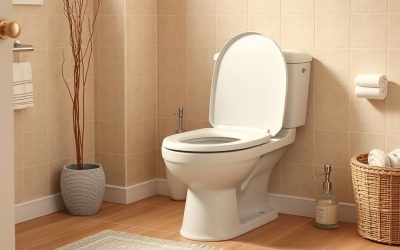
A 3-in-1 commode can sometimes serve as a raised toilet seat by positioning it over the toilet, but check the chair’s underside clearance and the toilet’s bowl height first. The legs must sit flat on the floor, and the chair must not rest on the toilet itself unless specifically designed for that purpose. A drop-arm model is particularly useful when a user cannot comfortably step or pivot around fixed arms.
Cleaning and comfort details that matter
For easiest cleaning, choose a removable bucket with a handle, a splash guard, a smooth seat underside, and a lid that fits securely. Plastic is generally easier to disinfect than porous upholstery. Look for a seat with rounded edges and few crevices where moisture can collect.
Padded seats are more comfortable for longer sitting, but the cover should be medical-grade vinyl or another closed-cell, water-resistant material. Fabric can feel warmer yet absorb odors and spills. A contoured plastic seat cleans quickly but may feel hard for someone who spends more than a few minutes at a time on the commode. Replace damaged padding or cracked buckets promptly.
Follow the chair’s care instructions. In general, remove waste promptly, wash the bucket with household detergent, rinse, and use a compatible disinfectant. Do not mix bleach with ammonia or other cleaners. Dry metal joints and leg openings thoroughly, especially in humid bathrooms.
Decision matrix for common household needs
| Need | Recommended choice | Why | Potential compromise |
|---|---|---|---|
| Back or hip pain | Height-adjustable padded chair with supportive arms | Reduces deep bending and provides leverage for standing | Padded covers require more careful cleaning |
| Kids or pets in the home | Stable steel frame with locking bucket lid and covered storage | Less likely to tip or expose the bucket | Heavier to move |
| Renter or temporary recovery | Folding aluminum or steel 3-in-1 model | Stores in a closet and can be transported through a doorway | Folding joints need regular inspection |
| Caregiver-assisted side transfer | Drop-arm model with clearly locking arms | Allows lateral movement without stepping around fixed arms | Usually costs more and has more moving parts |
Assembly, moving, and durability realities
Most basic commodes require attaching legs, arms, or a backrest. Before use, confirm that every push button has fully emerged through its adjustment hole, all screws are tight, and the chair sits level on all four feet. Recheck fasteners after the first week and periodically afterward.
Check the packed dimensions before ordering or transporting a chair. A fully assembled wide commode may not pass comfortably through a 24-inch doorway, while a folding model usually will. Do not assume a chair fits under a bed: measure both the folded height and the bed’s clearance.
The parts most likely to wear are rubber feet, bucket lids, seat hinges, armrest locks, and height-adjustment buttons. Replacement parts are preferable to improvising with tape, loose padding, or mismatched buckets. Stop using the chair if the frame bends, a weld cracks, a leg will not lock, or the feet become smooth and slippery.
Bottom line
Choose a narrow adjustable commode for limited space, a padded 3-in-1 chair for versatile bedside and toilet use, a reinforced bariatric frame for higher weight requirements, or a drop-arm model for assisted transfers. Measure the user, bed, doorway, toilet, and available transfer space before comparing prices. The best commode chairs combine a properly fitted seat with a rigid frame, reliable locking parts, and a bucket that can be cleaned without dismantling the entire chair.
Ready to decide? Our #1 pick for 2026 is the Small apartment or bathroom.
Live price & availability on Amazon.
Related Reviews & Guides





11 Best Home Safety Grab Bar Kits for Seniors: Complete Installation Solutions

11 Best Long Handled Bath Sponges for Seniors: Top Picks