Last Updated: October 9, 2026
- Top Pick: TLC Safety By Design Childcare Babysitter Checklist Magnetic Dry Erase with Marker Emergency Info List for Refrigerator – 8.5” x 11” for Family Fridge
- Best Value: Bathroom Safety for Seniors: A Plain-English Guide to Grab Bars, Shower Chairs, Toilet Safety, Non-Slip Surfaces, Lighting, Layout, and Safer Daily Routines (Home Safety After 60 Book 3)
- Premium Choice: Safe Bathroom Setup Guide for Seniors | Elderly Home Safety Checklist | Digital Resource for Loved Ones
Bathrooms cause more falls among older adults than any other room in the home — wet surfaces, awkward transfers, hard fixtures, and confined spaces combine to create real danger. The good news: most bathroom falls are entirely preventable with proper safety equipment and a few thoughtful modifications. This checklist walks through every aspect of bathroom safety for seniors in 2026, prioritized by impact so you can address the highest-risk areas first.
As an Amazon Associate we earn from qualifying purchases at no extra cost to you.


Why Bathroom Safety Matters Specifically
Falls are the leading cause of injury death among adults 65+, and bathrooms account for nearly 80% of fall-related home injuries in older adults. The reasons are practical: wet floors reduce traction, transitions in and out of tubs/showers require balance, and small spaces force tight movements. Even one bad fall can trigger a cascade of decline — hospitalization, loss of independence, depression, reduced mobility. Bathroom modifications cost a few hundred to a few thousand dollars; a single hospital stay from a fall costs $10,000-$50,000+.
Priority 1: Shower and Bathtub Safety
The transition into and out of bathing areas creates the highest fall risk in the entire home. Address these first:
Grab Bars
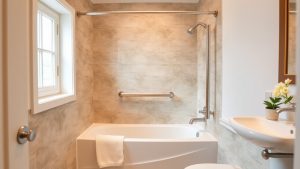
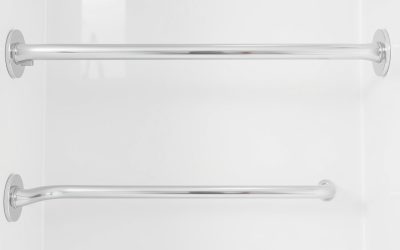
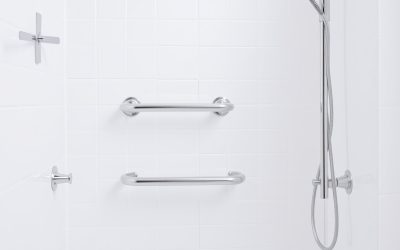
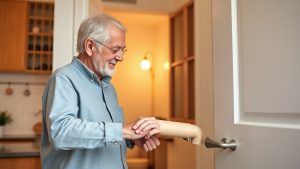
Install three grab bars in every shower or tub: one at the entry/exit point, one vertical for stepping in, and one horizontal at chest height for stability while bathing. Choose bars rated for 250-300+ pounds, mounted into wall studs (not just drywall anchors).

Dementia Activities Pack for Seniors: 120+ Simple, Large-Print Games, Puzzles, and Memory Exercises to Boost Engagement, Spark Conversation, and Strengthen Connection with Loved Ones
As an Amazon Associate we earn from qualifying purchases. Product prices and availability are accurate as of the date/time indicated.
Suction-cup “grab bars” are NOT safe — they detach unpredictably under stress. Permanent installation requires either screwing into studs or using specialized hollow-wall anchors rated for the weight. Toilet paper holders, towel bars, and shower curtain rods are not grab bars regardless of how they look — never use them for support.
Shower Seat or Bench
A stable shower seat eliminates the danger of standing on wet, soapy surfaces. Choose models with:
- Aluminum or hard plastic construction (no rust)
- Adjustable legs with rubber non-slip tips
- Weight rating matching user (most seniors need 300+ lb rated)
- Optional backrest for users with balance issues
- Optional armrests for easier transfers
Non-Slip Surfaces
Bath mats inside the tub or shower prevent slips on wet surfaces. Options:
- Suction-cup bath mats: Easy installation, removable for cleaning. Replace yearly as suction degrades.
- Adhesive non-slip strips: Permanent application, last 2-3 years
- Textured anti-slip coatings: Professional application creates permanent non-slip surface
Bath mats outside the tub or shower also matter — wet feet on tile is dangerous. Use rubber-backed bath mats that grip the floor (not loose woven rugs that slide).
Handheld Shower Head
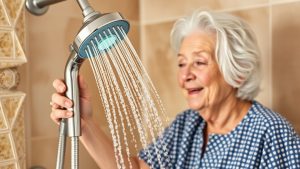
Handheld shower heads allow bathing while seated and reduce the need to twist or reach. Install on a slide bar for height adjustment. Most installs require no plumbing changes — just unscrew the existing shower head and attach the new one.

KITCHENMUH One Touch Electric Can Opener Fits All Can Sizes for Seniors with Arthritis, Battery Operated Can Opener with Smooth Edge, Food Safe Automatic Can Opener for Kitchen (Black+Grey)


As an Amazon Associate we earn from qualifying purchases. Product prices and availability are accurate as of the date/time indicated.
Walk-In Shower or Tub Cut
For seniors with significant mobility issues, removing the tub barrier (or converting to a walk-in shower) eliminates the highest-risk transition entirely. Costs range from $3,000-$15,000 depending on whether you tub-cut, replace with walk-in tub, or remodel completely.
Priority 2: Toilet Area Safety
Toilet Safety Frame or Grab Bars
Sitting on and standing from low toilets stresses knees and balance. Solutions:
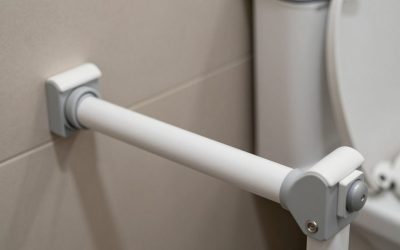
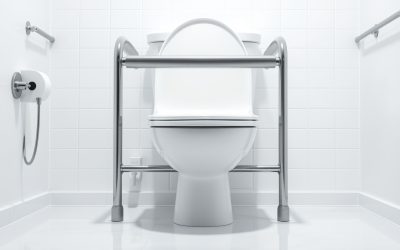
- Toilet safety frames: Free-standing rails on either side of the toilet, no installation needed. $50-100.
- Wall-mounted grab bars: Permanently installed into studs, more stable but require installation
- Raised toilet seats: Add 3-5 inches to toilet height, reducing knee strain. $30-80.
- Toilet replacement: ADA-compliant toilets (17-19″ seat height) cost $200-500
Toilet Paper Holder Placement
Place toilet paper within arm’s reach without leaning or twisting. Many older bathrooms have it placed for ambulatory adults but it requires problematic reaching for seniors.
Priority 3: Floor Safety
Slip-Resistant Flooring
If renovating, choose textured tile or vinyl flooring rated for wet areas. Polished marble, glossy ceramic tile, and standard vinyl create dangerous slip hazards when wet. Cork flooring is naturally non-slip and warm underfoot — increasingly popular for senior-friendly bathrooms.
Non-Slip Bath Mats
Place rubber-backed bath mats at:
- Tub/shower exit (most critical)
- In front of toilet
- In front of sink/vanity
Replace bath mats when the rubber backing starts cracking — usually every 1-2 years. Wash regularly (most are machine washable on gentle cycles).
Clutter and Cord Management
Remove items from the floor that could cause trips:
- Scales (use only when needed, store away)
- Trash cans with low profiles (use taller ones with closer placement)
- Hair dryers and electric razors (mount on walls or store in drawers)
- Step stools (have one available but stored when not in use)

25 Miles Range Electric Wheelchairs for Adults - 500W All Terrain Power Wheelchair with 13'' Large Tires, 20'' Wider Seat Lightweight Foldable Mobility Motorized Wheelchair for Seniors, 400lb Capacity


As an Amazon Associate we earn from qualifying purchases. Product prices and availability are accurate as of the date/time indicated.
Priority 4: Lighting
Most bathrooms are poorly lit for older eyes that need 2-3x more light than younger eyes:
Overhead Lighting
Replace dim incandescent or fluorescent fixtures with bright LED equivalents (2,000+ lumens for the main bathroom light). Daylight color temperature (4000-5000K) reveals true colors and reduces shadows.
Task Lighting
Add lights at the vanity for shaving, makeup, and medication tasks. Above-mirror sconces or recessed lights at face level prevent shadows.
Night Lighting
Motion-activated night lights at floor level guide safe nighttime bathroom trips. Plug-in LED versions with motion sensors cost $10-30 and last 5+ years. Consider one in the hallway leading to the bathroom and one inside the bathroom itself.
Emergency Lighting
Battery-powered emergency lights that activate during power outages prevent dangerous fumbling in the dark.
Priority 5: Emergency Response
Personal Emergency Response Systems (PERS)
Medical alert devices with fall detection (Life Alert, Bay Alarm Medical, Medical Guardian, Aloe Care) can summon help if a fall occurs in the bathroom. Modern systems work in the shower (waterproof devices) and via mobile cellular (no landline needed). Monthly costs run $25-50.
Phone Access
If not using a medical alert system, ensure a phone is accessible in the bathroom. Cordless phones can be placed on the counter, and many smartwatches with cellular service can call from the wrist.
Door Considerations
If a senior falls in the bathroom, locked doors can prevent rescue. Options:
- Replace locking knob with non-locking knob (simplest solution)
- Install privacy locks that can be unlocked from outside with a tool or key
- Use indicator locks that show occupancy without locking
Bathroom Safety Checklist Summary
Print this checklist and verify each item in your or your loved one’s bathroom:
Shower/Tub
- ☐ Grab bars installed into wall studs
- ☐ Non-slip surface inside tub/shower
- ☐ Shower seat or bench available
- ☐ Handheld shower head with slide bar
- ☐ Bath mat outside with rubber backing
Toilet Area
- ☐ Grab bars or safety frame around toilet
- ☐ Raised toilet seat if needed
- ☐ Toilet paper within easy reach
Floor
- ☐ All loose rugs and mats with non-slip backing
- ☐ No cords running across walkways
- ☐ Trip hazards minimized
Lighting
- ☐ Bright overhead lighting (2,000+ lumens)
- ☐ Vanity task lighting
- ☐ Motion-activated night light
- ☐ Emergency/backup lighting
Emergency
- ☐ Medical alert device or accessible phone
- ☐ Door can be unlocked from outside
- ☐ Emergency contact info accessible
Frequently Asked Questions
How much does basic bathroom safety equipment cost?
Essentials (grab bars, shower seat, non-slip mat, raised toilet seat, night light): $200-400 total. A full bathroom safety upgrade with quality components runs $500-1,000. Professional installation adds $100-300 if needed.
Are grab bars covered by Medicare?
Original Medicare generally doesn’t cover bathroom safety equipment as “durable medical equipment.” Some Medicare Advantage plans cover them — check your specific plan. Some long-term care insurance policies cover modifications. Veterans Affairs benefits often cover home modifications for service-connected disabilities.
Can I install grab bars myself?
If you can locate wall studs (with a stud finder) and use a drill confidently, yes. Critical: bars must anchor into studs, not just drywall. If unsure, professional installation costs $50-150 per bar and ensures proper anchoring for safety-critical equipment.
Are walk-in tubs worth the cost?
For seniors with serious mobility issues who can’t safely step over standard tubs, yes. They cost $3,000-$10,000 installed but eliminate the most dangerous transition. For seniors with moderate mobility, a walk-in shower or tub-cut conversion offers similar safety at lower cost.
How often should bathroom safety equipment be inspected?
Quarterly: Verify grab bars remain solid (no movement when pulled). Annually: Replace bath mats showing wear, check non-slip surfaces still effective, inspect any wear on shower seats or transfer benches.
Final Thoughts
Bathroom safety modifications don’t just prevent injuries — they preserve independence and dignity. A senior who fears falling in the bathroom often reduces bathing frequency, becomes isolated, and accelerates physical decline. Proper safety equipment removes that fear, allowing continued comfortable use of the bathroom for years longer. Start with grab bars and a shower seat (the two highest-impact additions), add lighting and emergency response capability, then address remaining items as budget allows. The few hundred dollars and afternoon of installation pay back many times over in prevented falls, maintained independence, and peace of mind for family members.
Related Reviews & Guides

10 Best Handheld Showerheads for Elderly: Easy Bathing
11 Best Home Safety Grab Bar Kits for Seniors: Complete Installation Solutions