Last Updated: October 7, 2026
Hearing aid prices range from a couple of hundred dollars for an over-the-counter pair to several thousand for premium prescription devices fitted by an audiologist. The price gap reflects differences in technology, customization and services, not simply brand names. For older adults deciding whether to invest, understanding what the money buys helps choose the right level of care. This guide breaks down typical hearing aid costs in 2026 and how to reduce them.
Quick answer: Our top pick in 2026 is the Over-the-counter (OTC) — our #1 rated choice. See the full ranked comparison, alternatives and buying advice below.
The three main price tiers
| Tier | Price per pair | How they are fitted | Best for |
|---|---|---|---|
| Over-the-counter (OTC) | $200 to $1,500 | Self-fitted, often via app | Perceived mild to moderate loss |
| Prescription, basic to mid-level | $1,500 to $4,000 | Audiologist or hearing specialist | Moderate loss, quieter lifestyles |
| Prescription, premium | $4,000 to $7,000 or more | Audiologist with ongoing adjustments | Complex loss, busy listening environments |
What drives the price
Technology level
More advanced processors handle background noise better, adjust automatically between environments and offer finer tuning. The difference is most noticeable in restaurants, family gatherings and group conversations.
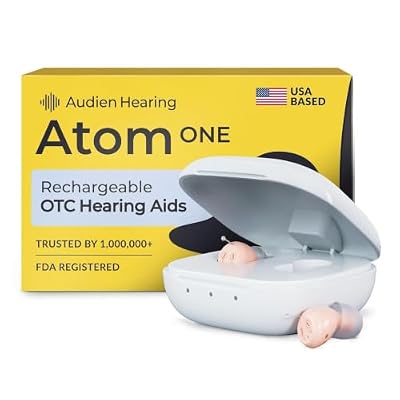
Audien Atom One OTC Hearing Aids
Included for 'How Much Do Hearing Aids Cost in 2026?' as a relevant option in this category; details come from the product listing.
View on Amazon
OTC Hearing Aids, Rechargeable Hearing Aids for Senior with Noise Cancelling, Behind-The-Ear Hearing Amplifier for Adults Hearing Loss with Volume Control, Long Battery Life, Lightweight
Included for 'How Much Do Hearing Aids Cost in 2026?' because the listing specifies Rechargeable Hearing Aids for Senior with Noise Cancelling and Long Battery Life, details this guide uses to compare options.
View on Amazon
OTC Hearing Aids for Seniors, 2026 Rechargeable Amplifier with Noise Cancelling for Adults, Lightweight Beginner-Friendly Hearing Aids(White)
Included for 'How Much Do Hearing Aids Cost in 2026?' because the listing specifies 2026 Rechargeable Amplifier with Noise Cancelling for Adults and Lightweight Beginner-Friendly Hearing Aids(White), details this guide uses to compare options.
View on Amazon
OTC Hearing Aids for Seniors & Adults, Rechargeable Hearing Aids with Noise Cancelling & Clear Sound, 16-Channel Digital DSP & 2 Environment Modes, 80+ Hour Battery Life, Deep Black
Included for 'How Much Do Hearing Aids Cost in 2026?' because the listing specifies 16-Channel Digital DSP & 2 Environment Modes and 80+ Hour Battery Life, details this guide uses to compare options.
View on Amazon
HEARO OTC Hearing Aids for Seniors, Rechargeable CIC Invisible, Pair
Included for 'How Much Do Hearing Aids Cost in 2026?' because the listing specifies Rechargeable CIC Invisible and Pair, details this guide uses to compare options.
View on AmazonProfessional services
Prescription hearing aids often include a hearing evaluation, fitting, real-ear measurement to confirm the aids deliver the right sound, follow-up adjustments, and cleanings for a period of years. These services can account for a large share of the price.
Features
Rechargeable batteries, Bluetooth streaming, telecoils, tinnitus features and custom earmolds add cost.
Bundled versus unbundled pricing
Traditionally, audiology clinics bundle the devices and several years of services into one price. Some now offer unbundled pricing, where you pay less for the devices and pay per visit for adjustments. Unbundled pricing can save money for people who need few follow-ups, but may cost more for those who need frequent adjustments.
Ongoing costs
- Batteries: disposable batteries cost roughly $50 to $150 per year; rechargeable models avoid this but their batteries may need replacement after several years.
- Domes, wax guards and tubes: about $20 to $80 per year.
- Repairs: out-of-warranty repairs may cost $150 to $400 per aid.
- Loss and damage coverage: often included for one to three years, sometimes with a deductible.
- Replacement: most hearing aids last about four to six years.
Cost over five years
An OTC pair at $800 with supplies may cost around $1,000 to $1,200 over five years. A mid-level prescription pair at $3,000 with bundled services and supplies might total $3,300 to $3,600. The right choice depends on the degree of hearing loss and how much support the user needs.
Ways to lower the cost
Insurance and benefits
Original Medicare does not cover hearing aids, although it may cover diagnostic hearing exams ordered by a doctor. Many Medicare Advantage plans include hearing aid benefits, often through a network provider. Some state Medicaid programs cover hearing aids. Veterans may be eligible for hearing aids through the VA. Some employer or retiree plans also include benefits.
Warehouse clubs and discount programs
Some retailers and membership programs offer prescription-level hearing aids and fitting at lower prices than private clinics.
Nonprofit help
Nonprofit organizations and service clubs sometimes provide hearing aids to people with limited income.
HSA and FSA
Hearing aids and batteries are generally eligible, allowing pretax dollars to be used.
When OTC is not enough
If you have severe hearing loss, hearing loss in only one ear, sudden hearing changes, ear pain or drainage, dizziness or ringing in one ear, see a doctor or audiologist before buying. Those symptoms can signal conditions that need medical care.
Is the money worth it?
Untreated hearing loss makes conversation tiring, can lead people to withdraw from social activities, and is associated with a higher risk of falls and cognitive decline in research studies. Hearing aids do not reverse those risks by themselves, but staying engaged in conversation matters for quality of life. When weighing a $3,000 purchase, it can help to think of the cost per day over five years, roughly $1.60, and to use the trial period fully in the places where hearing is hardest, such as family dinners and places of worship.
FAQ
Why are prescription hearing aids so expensive?
The price usually includes the hearing test, professional fitting, verification, multiple follow-up visits, cleanings and warranty coverage for several years, as well as the device technology.
Are cheaper OTC hearing aids worth it?
For many adults with mild to moderate hearing loss, OTC hearing aids provide real benefit at a lower cost. Choose one with a good return window and consider a hearing test first.
Bottom line
In 2026, hearing aids generally cost $200 to $1,500 per pair over the counter and $1,500 to $7,000 or more for prescription devices with professional care. Consider ongoing costs, ask about bundled and unbundled pricing, and check Medicare Advantage, Medicaid, VA and HSA options to reduce what you pay.
Ready to decide? Our #1 pick for 2026 is the Over-the-counter (OTC).
Live price & availability on Amazon.
Related Reviews & Guides



Best Video Calling Device for Seniors With No Computer 2026

Power Wheelchair vs Mobility Scooter Which Is Better for Seniors