Last Updated: October 9, 2026
- Top Picks at a Glance
- Understanding Low Vision: What Accessibility Features Actually Help
- Low Vision Accessibility Features by Platform
- Setting Up a Samsung Galaxy for Low Vision: Step-by-Step
- Key Display Specifications for Low Vision Use
- Recommended Accessories for Low Vision Smartphone Users
- Frequently Asked Questions
- Related Articles
- Related Guides
- Top Pick: Magnifying Glasses for Seniors Watching TV for Low Vision and Independent Living NOT for Severe Low Vision
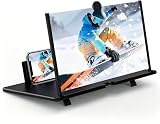
- Best Value: 10'' Screen Magnifier,3D HD Mobile Phone Magnifier Projector Screen Enlarger for Movies, Videos, and Gaming,Foldable Cell Phone Stand with Screen Amplifier,Supports All Smartphones(Black)
- Premium Choice: Gigglizio 4G Senior Cell Phone Unlocked, Unlocked 4G Smartphone for Seniors, 6.56" HD+ Display, 3GB RAM 32GB ROM, 4000mAh Battery, IP52 Rating, eSIM Support, Compatible with AT&T, T-Mobile

Low Vision Smartphone for Seniors: Best Options and Accessibility Setup Guide
Quick Answer (TL;DR)
The best low vision smartphone for seniors combines a large display (6.5″+ screen), strong built-in accessibility features (screen magnification, high contrast, voice control), and a simple enough interface that caregivers can set it up without technical expertise. Both Android and iPhone platforms have mature low vision accessibility suites — the choice comes down to display quality, interface simplicity, and the patient’s existing device familiarity. The Samsung Galaxy A-series (ASIN B0BZ41GW6Y) provides a bright AMOLED display, Samsung’s Easy Mode large-icon interface, and full Android accessibility including TalkBack screen reader and up to 10x font magnification at a mid-range price point accessible to most families.
🛒 Best Price Today on Amazon
Prime members get fast, free shipping on everything above, plus member-only deals. New members get a 30-day free trial — cancel anytime.
As an Amazon Associate we earn from qualifying purchases.




Top Picks at a Glance
Best Android for Low Vision
Samsung Galaxy A-Series
6.5″ AMOLED display, Easy Mode large-icon interface, TalkBack screen reader, 10x font scale, high-contrast theme, loud speaker. Best combination of display quality and accessibility out of the box.

Grab Bars for Shower, 16 Inch Shower Handle, 2 Pack, Polished Nickel | Grab Bars for Bathroom, Stainless Steel, Anti-Slip Textured Grip, 1-Inch Diameter, Wall-Mounted Safety Support for Seniors


As an Amazon Associate we earn from qualifying purchases. Product prices and availability are accurate as of the date/time indicated.
Best iPhone for Low Vision
Apple iPhone SE (3rd Gen) or iPhone 14
VoiceOver screen reader, Zoom (up to 15x magnification), Display Accommodations (color filters, reduce white point), AssistiveTouch. Apple’s accessibility ecosystem is the most comprehensive available; slightly steeper learning curve for Android users.
Search “iPhone SE 3rd generation” or “iPhone 14” on Amazon for current pricing.
Best Simple Interface
Doro 8110 Senior Smartphone
Pre-configured for seniors with large text, simplified menu, dedicated emergency call button, and magnifier app pre-installed. Runs Android but with a highly simplified launcher that reduces cognitive load. Best for patients with both low vision and mild cognitive impairment.
Search “Doro 8110 senior smartphone” on Amazon for current pricing.
Understanding Low Vision: What Accessibility Features Actually Help
Low vision is defined clinically as best-corrected visual acuity of 20/70 or worse in the better eye, or significant visual field loss — and it is not correctable to normal with glasses alone. The leading causes in older adults are age-related macular degeneration (AMD), diabetic retinopathy, glaucoma, and cataracts (post-operatively when surgery is not indicated or has not yet occurred). Each condition affects vision differently, which means the most useful smartphone accessibility features vary by diagnosis:
Macular degeneration (AMD): Central vision loss with preserved peripheral vision. High contrast interfaces, screen magnification (which lets the patient use peripheral vision to read zoomed text), and dark mode are most effective. Standard brightness settings may be tolerable; the problem is detail discrimination, not brightness.
Glaucoma: Peripheral field loss with preserved central vision. Large text and simple layouts help; the patient may navigate better with reduced clutter on screen. AssistiveTouch and simplified launchers (Easy Mode) reduce required visual scanning area.
Diabetic retinopathy: Patchy central and peripheral loss; variable by stage. Voice control and screen readers become more important as vision becomes unpredictable. TalkBack (Android) or VoiceOver (iPhone) allow full phone use without visual reference.
Grab Bars for Shower, 16 Inch Shower Handle, 2 Pack, Polished Nickel | Grab Bars for Bathroom, Stainless Steel, Anti-Slip Textured Grip, 1-Inch Diameter, Wall-Mounted Safety Support for Seniors
As an Amazon Associate we earn from qualifying purchases. Product prices and availability are accurate as of the date/time indicated.
Low Vision Accessibility Features by Platform
| Feature | Android (Samsung) | iPhone (iOS) | Best For |
|---|---|---|---|
| Screen magnification | Up to 10x (Magnification gestures) | Up to 15x (Zoom) | AMD; detail discrimination loss |
| Font scaling | Up to ~200% system-wide | Up to ~235% system-wide | All low vision conditions |
| High contrast text | Yes (Visibility enhancements) | Yes (Increase Contrast) | Contrast sensitivity loss |
| Color filter / inversion | Yes (Color adjustment, grayscale) | Yes (Color Filters, Smart Invert) | Color blindness; contrast issues |
| Screen reader | TalkBack (Google) | VoiceOver (Apple) | Severe low vision; blindness |
| Voice control | Voice Access (Google) | Voice Control (Apple) | Cannot read screen reliably |
| Simplified launcher | Easy Mode (Samsung) or third-party | Not native; Guided Access limits | Cognitive impairment + low vision |
| Built-in magnifier app | Magnifier (camera-based) | Magnifier (camera-based) | Reading labels, menus, print |
Setting Up a Samsung Galaxy for Low Vision: Step-by-Step
The following setup sequence covers the most impactful accessibility changes for a senior with low vision on Samsung’s Android platform. A caregiver can complete this in approximately 15 minutes during initial device setup:
- Step 1 — Enable Easy Mode: Settings → Display → Easy Mode → On. This replaces the standard launcher with large icons, simplified layout, and larger default text. Single-tap navigation replaces double-tap for all actions.
- Step 2 — Maximize font size: Settings → Display → Font Size and Style → drag font size slider to maximum. Set Font Style to a clean sans-serif (Samsung Sans or default); avoid decorative fonts.
- Step 3 — Enable High Contrast theme: Settings → Accessibility → Visibility Enhancements → High Contrast Theme → On. Increases text-to-background contrast ratio across system apps.
- Step 4 — Enable Magnification: Settings → Accessibility → Visibility Enhancements → Magnification → On. Triple-tap anywhere to zoom; pinch to adjust level. Teach this gesture to the patient during setup.
- Step 5 — Maximize display brightness and screen timeout: Settings → Display → Brightness → 100%. Screen Timeout → 5 minutes minimum (reduces re-authentication friction for users who take longer to read).
- Step 6 — Add Magnifier shortcut: Add Samsung’s built-in Magnifier app to the home screen. For users who regularly read print, the phone’s camera functions as a portable magnifying glass at up to 10x zoom with the light on.
- Step 7 — Set up emergency contact shortcut: Add the primary caregiver’s number to a prominent home screen quick-dial tile. In Easy Mode, large contact tiles are built into the simplified interface.
Key Display Specifications for Low Vision Use
Not all smartphone screens are equal for low vision users. These are the specifications that matter most for clinical usability:
- Screen size: Minimum 6.4″ diagonal for comfortable text reading without maximum magnification engaged full-time. The Samsung Galaxy A54 (6.4″) and A55 (6.6″) are the relevant A-series models; both qualify.
- Display technology: AMOLED or OLED provides true black pixels (zero light emission) that create higher effective contrast ratio than LCD displays — important for reading dark-text-on-light interfaces.
- Brightness (nits): Minimum 400 nits peak brightness for indoor use; 600+ nits for outdoor readability. Low vision users who are also sensitive to glare may need to reduce brightness despite the lower nit count.
- Pixel density: 400+ PPI ensures text remains sharp at high magnification levels without pixelation artifacts that confuse letter recognition.
Grab Bars for Shower, 16 Inch Shower Handle, 2 Pack, Polished Nickel | Grab Bars for Bathroom, Stainless Steel, Anti-Slip Textured Grip, 1-Inch Diameter, Wall-Mounted Safety Support for Seniors
As an Amazon Associate we earn from qualifying purchases. Product prices and availability are accurate as of the date/time indicated.
Recommended Accessories for Low Vision Smartphone Users
- Large-button phone case with stand: A case with a built-in kickstand keeps the phone propped at reading distance and angle without requiring the user to hold it during extended reading — reduces fatigue and tremor-related movement blur
- Bluetooth keyboard with large keys: For patients who use the phone for email or messaging but cannot reliably tap the on-screen keyboard; a physical keyboard eliminates the visual precision requirement of touchscreen typing
- Screen protector with anti-glare coating: Matte anti-glare protectors reduce specular reflection — a significant barrier for AMD patients who are sensitive to point-source glare from windows and overhead lighting
- External Bluetooth speaker: For patients using TalkBack or VoiceOver, an external speaker significantly improves speech intelligibility compared to the phone’s built-in earpiece
For additional communication aids, see our loud alarm clock guide for seniors and our large display digital clock guide — both address the broader challenge of visual and auditory accessibility in the senior home environment.
Frequently Asked Questions
What smartphone features are most important for low vision seniors?
The five most impactful features for low vision use are: (1) screen magnification up to 10–15x, (2) font size scaling up to 200%+, (3) high-contrast display mode or theme, (4) a voice assistant or screen reader for when vision is insufficient for visual navigation, and (5) a simplified large-icon interface to reduce the visual scanning burden. Both Android and iOS provide all five natively; the difference is in default usability and ease of caregiver configuration.
Is Android or iPhone better for low vision seniors?
Both platforms have comparable low vision accessibility when properly configured. Android (particularly Samsung’s Easy Mode) is generally easier for a caregiver to set up quickly, with more flexible launcher customization. iPhone’s VoiceOver and Zoom features are considered best-in-class by assistive technology specialists and the American Foundation for the Blind. If the patient has no prior smartphone experience, either platform works; if they previously used one platform, stay with it — familiar interface patterns reduce cognitive friction more than any specific feature advantage.
Can a senior with macular degeneration use a smartphone independently?
Yes, with appropriate accessibility configuration. Many adults with moderate to severe AMD use smartphones daily with a combination of screen magnification (using peripheral vision to read zoomed text), voice assistants for search and messaging, and large-text interfaces for reading. An assistive technology specialist (available through state vocational rehabilitation programs or the American Council of the Blind) can perform a formal device assessment and configuration session specific to the patient’s vision profile.
What is the best font size setting for low vision on a smartphone?
Occupational therapists specializing in low vision typically recommend a minimum on-screen font size equivalent to 18pt print for comfortable reading without strain. On most smartphones at maximum font scale, body text reaches approximately 22–28pt equivalent, which is within the comfortable range for 20/200 vision. If maximum font scaling still produces eyestrain during extended reading, enable screen magnification as a secondary enlargement layer — this allows the user to zoom to a comfortable level for the specific task.
Are there smartphones specifically made for visually impaired seniors?
Purpose-built senior smartphones (Doro, Emporia, Jitterbug) pre-configure large text, simplified menus, and emergency call buttons, reducing the setup burden for caregivers. However, they often run older Android versions with fewer accessibility updates and more limited app ecosystems. For most patients, a current mainstream Android or iPhone with proper accessibility configuration provides better long-term support, more frequent security updates, and a richer app ecosystem including low vision-specific apps (KNFB Reader, Seeing AI, Be My Eyes).
Related Reviews & Guides




The Complete Aging-in-Place Home Modification Checklist

3 Best Adaptive Kettles for Arthritis and Seniors